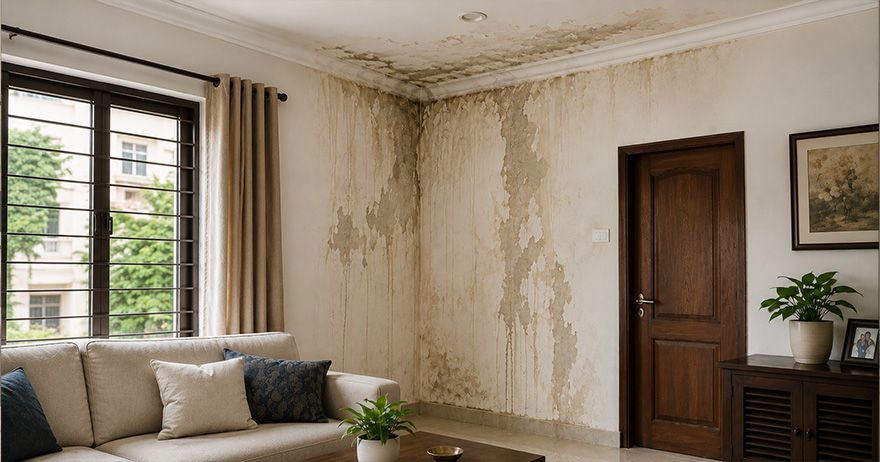




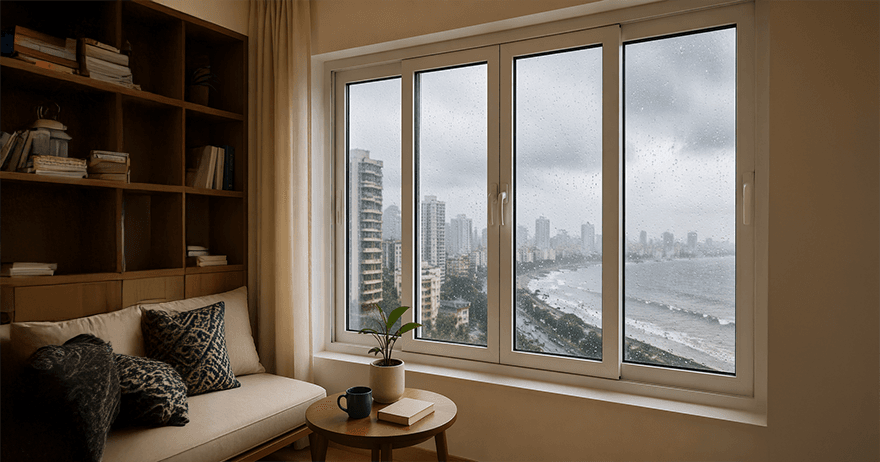
If you live in a city, you already know what extreme rainfall does to your windows. The paint peels around the frame. The handle becomes stiff. Damp patches appear on the wall below the sill, and with each passing monsoon season, the damage worsens.
Traditional wooden and aluminium windows are the ones that face extreme issues. Not just rain, but also salt air eats through metal hardware, humidity that never really drops, and wind-driven water that finds every gap a poorly sealed frame leaves open.
uPVC windows have become the go-to solution for these environments, and for good reason. But buying uPVC isn't enough on its own. The profile quality, hardware grade, sealing system, and installation method all determine whether your windows hold up for twenty years or start failing in two. This guide breaks down exactly what to look for.
Why Climate Matters for Window Performance
Climate plays a major role in how well your window will perform over time. Different regions face different climatic conditions, like heavy rain, high humidity, coastal salt air, and extreme heat. And all these conditions badly affect the durability and overall lifespan of the windows.
In Chennai, salt in the air is very prominent, which causes rusting of metal windows. And if windows are not designed for the local climate, they may warp, leak, corrode, or lose efficiency quickly. That is why choosing climate-appropriate windows is important.
Key Challenges in Monsoon & Coastal Regions
Understanding what your windows are actually up against makes it much easier to evaluate what features matter and which ones are just marketing.
Heavy Rainfall
India's western and eastern coastlines see some of the highest annual rainfall in the world. Horizontal, wind-driven rain pushes actively into gaps, travels along frame edges, and exploits any weakness in the seal. During cyclonic weather, sustained winds create significant pressure against window surfaces.
High Humidity
Coastal cities stay humid for most of the year, and not just during the monsoon season. And that moisture leads to warping of wood, metal oxidation, and discolouring over time.
Salt Air & Corrosion
Sea air carries salt particles much further from the shoreline than most people expect. Handles stiffen, hinges seize, and locking mechanisms fail. And what starts as an inconvenience becomes a security concern. In coastal architecture, corrosion resistance is a basic requirement, not a premium feature.
Features of uPVC Windows That Work Best
When you are buying a window, it is easy to focus on how it looks. But mere looks don't protect your home. What actually matters is how well the window performs against the specific weather conditions in your region.
Marine-Grade Hardware
The frame is what you see, and the hardware is what determines whether the window still works in five years. You need to use marine-grade hardware that uses stainless steel grade 316.
Multiple Seal Gaskets
A single gasket works fine in moderate climates, but not in heavy monsoon or coastal conditions. Quality windows use two or three-layered gaskets so that if wind load compromises the outer seal, the inner ones hold. These should be EPDM rubber that is flexible, UV-resistant, and far more durable than cheaper PVC-based alternatives.
Effective Water Drainage
Even a well-sealed window allows trace amounts of water into the frame during extreme weather. Properly designed profiles route it out through drainage slots at the lowest point of the sill. Some manufacturers add baffled drainage openings that let water escape while blocking wind-driven water from re-entering.
Corrosion-Resistant Frames
uPVC doesn't rust, giving it a clear advantage over wood and metal. Lower-grade uPVC, however, yellows and becomes brittle under sustained UV and humidity tolerance. Quality profiles use higher concentrations of UV stabilisers and titanium dioxide to hold their colour and integrity.
Top uPVC Window Types for Monsoon & Coastal Use
The opening mechanism of a window has a direct impact on its weather performance. Here's how the main types compare for monsoon and coastal applications. The best window will underperform if installed poorly. In monsoon and coastal contexts, installation quality matters as much as product quality.
Sliding uPVC Windows
Sliding windows are the most common choice in Indian residential buildings, practical for balconies and apartments. The limitation is sealing, sliding sashes use brush pile seals rather than compression gaskets, making them less weather-tight. Quality versions compensate with elevated track systems, deep drainage channels, and well-sloped outer sills.
Casement uPVC Windows
When a casement window closes, the sash compresses against the frame around its full perimeter, creating a continuous gasket seal. This makes it more effective against wind-driven rain than any sliding window.
Double Glazed Windows
The sealed cavity in a double-glazed unit keeps the inner glass closer to room temperature, reducing interior condensation in humid environments. It also provides better sound insulation, relevant in coastal cities where storm noise is a reality.
Installation Tips for Weather Resistance
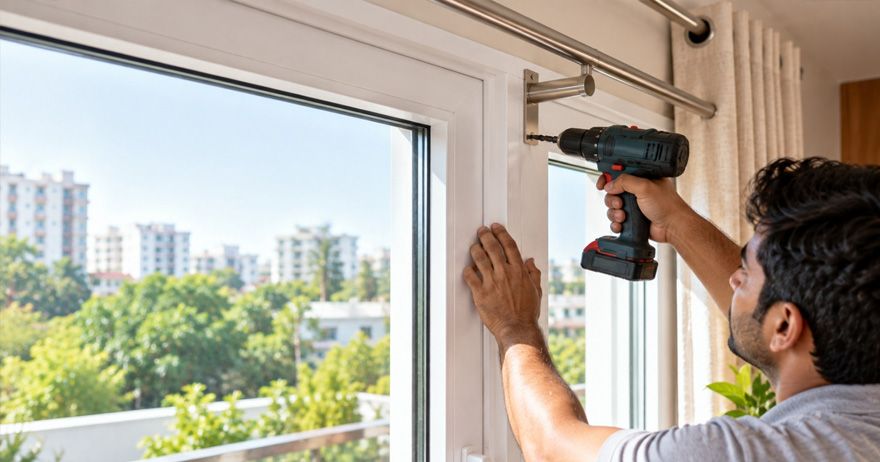
Your best uPVC windows for coastal climate India, will underperform if not installed properly. In monsoon and coastal climates, installation quality matters as much as the quality of the windows.
Perimeter seal: Makesure you are filing the gaps between the frame and wall with weatherproof sealant. Tool it to a smooth, slightly concave profile to shed water. Even a small break gives wind-driven rain a direct path into the wall cavity.
Outer sill slope: Install the outer sill with a minimum five-degree outward slope. This ensures water drains away from the frame rather than pooling against it. It's a simple detail that's frequently missed on rushed installations.
Expansion gaps: uPVC windows expand and contract with heat. And coastal cities get a lot of it. So, if your window frame is installed too tightly with no room to move, it will slowly bend or warp over time.
Clear drainage slots: Check and clean all drainage slots in the frame before handover. Construction debris blocks them easily during the build.
Cost Implications for Monsoon & Coastal-Ready uPVC
Properly specified coastal windows cost roughly 20–40% more than basic uPVC ones. As these windows have marine grade hardware, better profiles, EPDM gaskets, quality double-glazed units. Also, it includes professional installation as well.
But the costs make sense when you compare them with the lifecycle costs of a regular window. Hardware replacement at year three, rainwater sealing at year five, and possible full replacement within a decade make the cheaper window far more expensive overall. Hence, it’s better to invest in uPVC windows for coastal climate India.