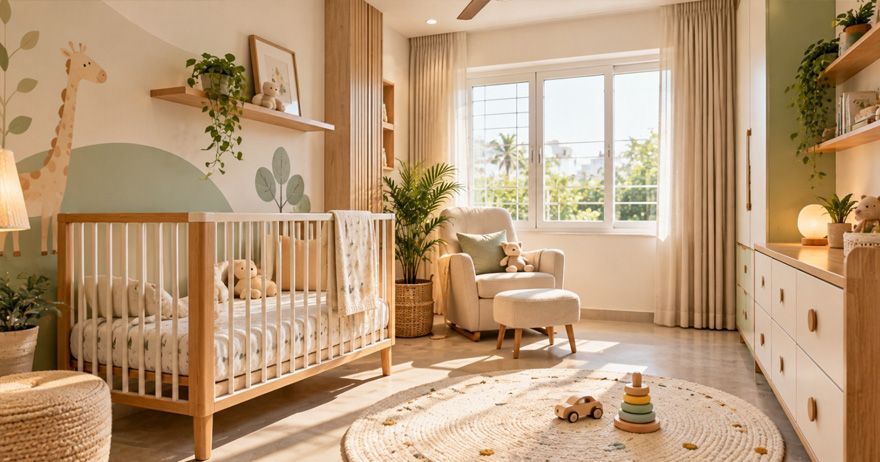
Designing a baby room is about creating a space that feels comfortable, calming, and safe while making everyday routines easier for parents. A thoughtful baby room design for Indian homes should consider the room's size, ventilation, natural light, furniture placement, storage, and ease of cleaning. Soft colours, comfortable lighting, secure furniture, and clutter-free layouts can create a soothing environment for sleep and play. Indian homes may also need to account for seasonal temperature changes, dust, humidity, and limited space.
From compact nurseries with smart storage to spacious baby bedrooms with dedicated feeding and changing areas, the right design can combine functionality, safety, and aesthetics without making the room feel overwhelming.
What Should You Consider When Designing a Baby Room?
Safety should always come before decoration. Furniture stability, crib placement, electrical points, ventilation, window treatments, and easy access should be considered during the planning stage. Before choosing furniture or décor, think about how the room will be used throughout the day. Parents may need space for feeding, changing, dressing, storing clothes, and settling the baby to sleep. A practical room can still look beautiful. The key is to choose simple finishes, useful furniture, and décor that does not create unnecessary clutter.
Img
Choose a Safe and Practical Baby Room Layout
The layout should make everyday care convenient while leaving enough space to move around safely. Avoid placing too many large furniture pieces in the room. A simple layout can be divided into four main zones which are sleeping, changing, storage and feeding. Also keep the crib away from hazards and movement areas clear. These baby room design ideas can make everyday routines easier without requiring a large room.
Best Colour Ideas for a Calming Nursery
Colours play a major role in Nursery room design for baby. Soft, muted shades are often suitable for nurseries because they create a calm visual environment. Pastel shades like soft sage green, pale blue, muted yellow, dusty pink, peach, and lavender can introduce colour without making the room feel visually crowded. Go for neutral tones and use accent colours carefully. The same colour can look very different depending on whether the room receives strong morning sunlight or limited daylight. When selecting baby room colour ideas, prioritise a comfortable visual environment and finishes that are easy to maintain.
Baby Room Furniture: What You Really Need
A baby's room does not need to contain every piece of nursery furniture available. A smaller selection of sturdy, useful furniture can make the room safer and easier to clean. These below baby room furniture ideas focus on functionality rather than filling the room with furniture.
| Furniture | Main Purpose |
|---|---|
| Crib or cot | Baby's sleeping space |
| Changing table | Diaper and clothing changes |
| Dresser | Clothes and small essentials |
| Wardrobe | Clothing and larger items |
| Comfortable chair | Feeding and soothing |
Safe Sleeping Area and Crib Placement
The sleeping area should be planned around current infant safe-sleep recommendations and the manufacturer's instructions for the crib or cot. You should keep the sleep space clear, check the crib regularly, avoid hanging decorations over the crib and keep the crib away from windows. A baby bedroom design should therefore make safe sleep the central consideration rather than treating the crib as simply another decorative furniture piece.
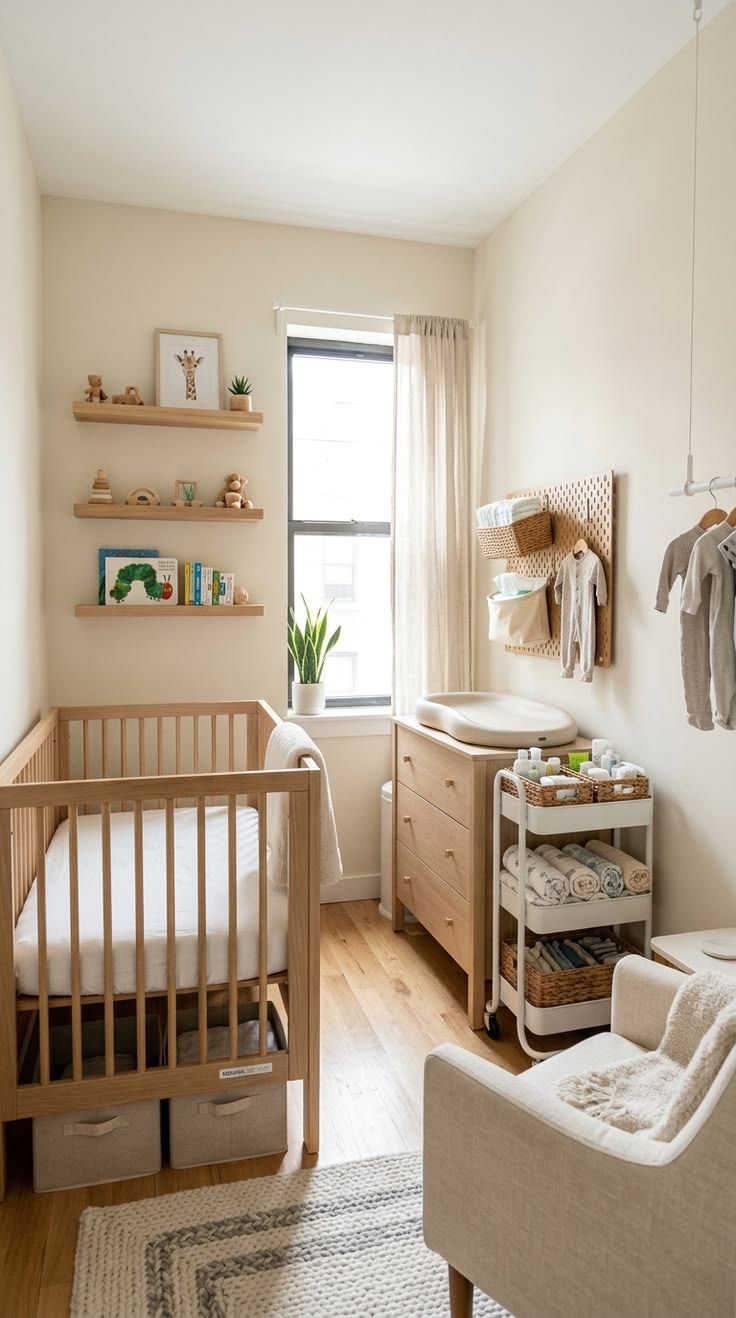
Smart Storage Ideas for Baby Clothes, Toys, and Essentials
Practical baby room storage ideas should make essential items accessible to parents while keeping the room organised and easy to clean.
- Use Drawer Dividers: Separate socks, bibs, caps, small clothes, and accessories into dedicated compartments.
- Add Storage Baskets: Baskets can hold blankets, toys, or frequently used items. Choose sturdy designs without sharp edges or loose components.
- Use Vertical Space: Wall-mounted shelves can make use of otherwise unused wall space. However, shelves must be securely installed and kept away from areas where the baby could reach or pull them.
- Label Storage: Simple labels can help parents quickly identify clothing sizes, diaper supplies, medicines, toys, or seasonal items.
- Rotate Toys: Keep only a selection of toys accessible at a time and store the rest safely. Rotating them can help reduce clutter.
Lighting and Ventilation Ideas for a Baby Room
Lighting should be soft, practical, and adjustable. A nursery may need different lighting levels for daytime activities, feeding, changing, and nighttime care. A combination of general ceiling lighting and softer task or bedside lighting provides greater flexibility. Ensure you make use of natural light effectively, and ventilation. Fresh airflow helps maintain a comfortable room environment. Fans, lamps, heaters, chargers, and electrical equipment should be positioned safely.
Baby-Proofing Tips for a Safe Nursery
A safe nursery design for babies should be treated as an ongoing process rather than something completed only before birth. You should choose secure furniture, cover or protect electrical points, keep small objects away, secure windows, remove accessible cords and avoid sharp edges.
Small Baby Room Design Ideas for Indian Homes
For a smaller room, the secret is to prioritise essential furniture and make better use of vertical space. A small baby room design can include a compact crib, narrow storage unit, comfortable chair, and wall-mounted storage while leaving a clear central area. You should choose multi-functional furniture, use wall space, choose light visual elements, keep the floor clear and use a compact feeding chair. For Indian baby room ideas, consider the home's climate, available space, storage needs, and the amount of natural ventilation when selecting furniture and materials.
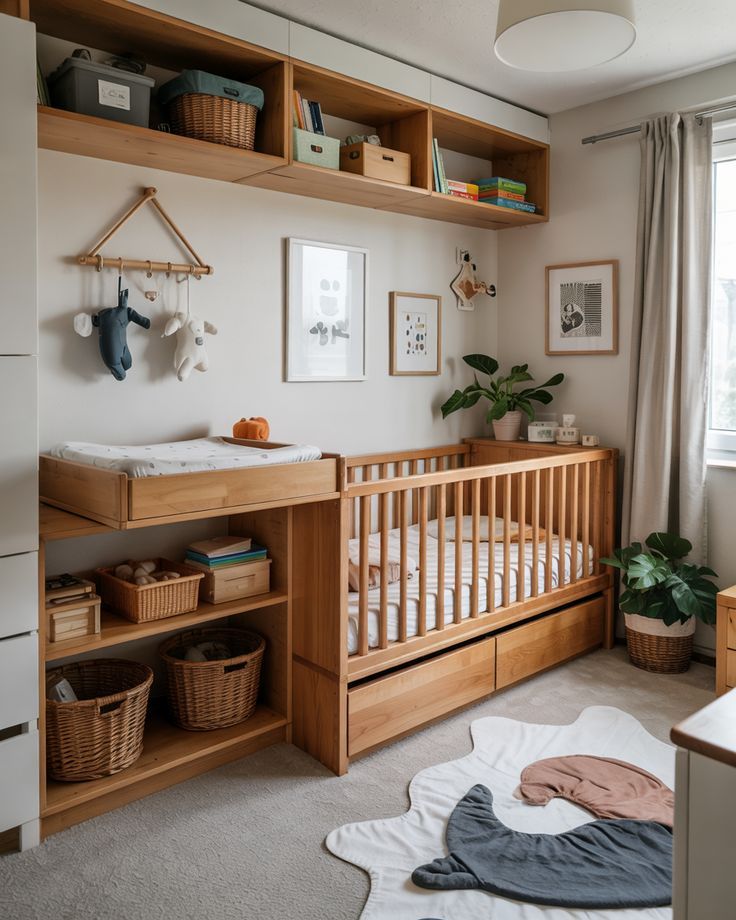
Common Baby Room Design Mistakes to Avoid
Choosing furniture before measuring the room: Large furniture can quickly make a nursery feel cramped.
- Overcrowding the nursery: Too many cabinets, chairs, shelves, and decorative items reduce usable space and make cleaning harder.
- Ignoring furniture anchoring: Tall storage units can become dangerous if they are not securely fixed.
- Using unsafe crib accessories: Loose bedding, pillows, toys, and bumpers can create hazards in an infant's sleep space.
- Placing the crib near windows: Window cords, furniture access, drafts, and direct sunlight can create avoidable risks.
- Installing bright lighting everywhere: Strong lighting may be uncomfortable during nighttime feeding and settling.
- Ignoring ventilation: Plan airflow and temperature control carefully.
- Using difficult-to-clean materials: Highly textured finishes and delicate fabrics can make regular cleaning unnecessarily difficult.
- Leaving electrical cables exposed: Chargers, lamps, fans, and other cables should be organised and kept safely out of reach.
- Designing only for the newborn stage: The room will need to evolve as the baby begins crawling, standing, and walking.
Final Thoughts
A successful baby room design for Indian homes should balance safety, comfort, functionality, and aesthetics. The room does not need expensive furniture or elaborate décor to feel special. Start with the basics: a safe sleeping area, practical storage, comfortable lighting, good ventilation, easy-to-clean materials, and enough space for parents to move around easily. The baby room design for Indian homes is one that supports everyday family life while remaining calm, uncluttered, and easy to maintain.