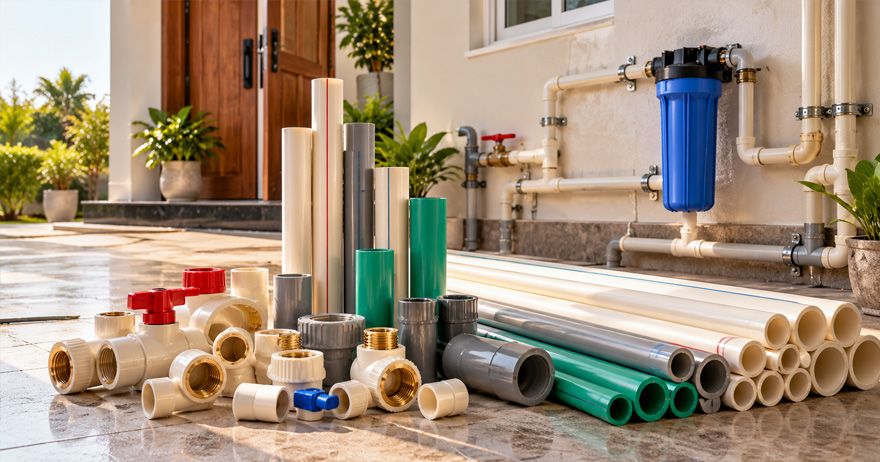
Choosing the best water pipes for your home is essential for a reliable plumbing system that delivers clean water and lasts for decades. The right pipes can prevent leaks, corrosion, pressure loss, and expensive repairs while ensuring a consistent water supply throughout your home. With options like CPVC, uPVC, PPR, PVC, and HDPE pipes available in the market, selecting the right material depends on factors such as water temperature, pressure, budget, and application.
In this guide, we'll compare the most common plumbing pipes, their advantages, disadvantages, and help you choose the best option for your home's plumbing system.
Why Choosing the Right Water Pipes Matters
Pipes are the backbone of a home's water supply system. Once they are concealed behind walls, floors, or ceilings, repairing them can become disruptive and expensive. Good-quality water pipes for home should be selected according to their intended application rather than simply based on price.
The best water pipes prevent leaks, handle water pressure, support hot-water applications, reduce corrosion problems, and improve long-term reliability. For a new house plumbing guide, pipe selection should be considered alongside water quality, building layout, pressure requirements, and installation conditions.
Different Types of Water Pipes Used in Homes
Understanding the main plumbing pipe types makes it easier to choose the appropriate option for each part of your home.
CPVC Pipes
CPVC, or chlorinated polyvinyl chloride, is widely used for residential hot- and cold-water supply. It can tolerate higher temperatures than standard PVC. It is resistant to corrosion, lightweight, easy to install and has a smooth internal surface. It requires compatible CPVC fittings and solvent cement.
uPVC Pipes
uPVC, or unplasticized polyvinyl chloride, is commonly used for cold-water applications, drainage, and certain external plumbing systems. It is lightweight, corrosion-resistant, easy to handle, and generally economical. It is not generally the first choice for high-temperature hot-water applications.
PPR Pipes
PPR, or polypropylene random copolymer, is another option used for residential hot- and cold-water systems. PPR pipes are joined using heat fusion, creating continuous joints when installed correctly. It is corrosion-resistant, smooth internal surface and good thermal performance. It requires specialized fusion equipment and installation quality is important
PVC Pipes
PVC is commonly associated with cold-water, drainage, and other plumbing applications. It is lightweight and widely available. It is a practical material for several residential uses. However, standard PVC products should not automatically be used for hot-water applications.
HDPE Pipes
HDPE, or high-density polyethylene, is frequently used for underground water supply and other applications requiring flexibility and impact resistance. It is corrosion-resistant, suitable for underground applications, strong resistance to many chemicals and fusion joining can provide reliable connections.
CPVC vs uPVC vs PPR vs PVC: Which Is Better?
The right option depends mainly on whether the line carries hot or cold water, where it is installed, the expected pressure, and the installation method.
| Feature | CPVC | uPVC | PPR | PVC |
|---|---|---|---|---|
| Hot Water | Suitable | Generally not preferred | Suitable | Generally not preferred |
| Cold Water | Suitable | Suitable | Suitable | Suitable for applicable systems |
| Corrosion Resistance | High | High | High | High |
| Joining Method | Solvent cement | Solvent cement | Heat fusion | Solvent cement or system-specific joints |
| Flexibility | Moderate | Low to moderate | Moderate | Low to moderate |
| Common Residential Use | Hot/cold water | Cold water and drainage | Hot/cold water | Cold water & drainage |
| Installation | Relatively simple | Simple | Requires fusion equipment | Relatively simple |
When comparing the best plumbing pipes, focus on the intended application instead of choosing solely based on the material's popularity.
How to Choose the Best Water Pipes for Your Home
The best water pipes for home are the ones that match the specific application, comply with applicable standards, and are installed correctly. The steps to choose the water pipes are given below.
1. Identify the Application
Determine whether the pipe will be used for cold-water supply, hot-water supply, underground water lines, internal distribution, drainage and external plumbing. A material suitable for one application may not be suitable for another.
2. Consider Water Temperature
If the line carries hot water from a geyser or boiler, choose a pipe specifically rated for the expected temperature.
3. Check Pressure Requirements
Consider the pressure generated by the municipal supply, overhead tank, pump, or other water source. The selected pipe and fittings should be rated appropriately.
4. Consider Installation Method
Some systems require solvent cement, while others require heat fusion or specialized fittings. Choose a system your plumber can install correctly.
5. Evaluate Water Quality
Water chemistry can influence the performance and lifespan of plumbing components. If your water supply has unusual characteristics, discuss suitable materials with a plumbing professional.
6. Look at the Complete System
Don't evaluate pipes separately from fittings, valves, joints, supports, and installation methods. A reliable plumbing system requires compatible components throughout.
7. Consider Long-Term Maintenance
A slightly higher initial investment in suitable materials and professional installation can be worthwhile if it reduces the likelihood of leaks and premature repairs.
Hot Water vs Cold Water Pipe Selection
Hot and cold water systems place different demands on plumbing materials. Always check the manufacturer's technical specifications and applicable plumbing standards before finalizing the material.
- For Hot Water: Hot-water lines should use products specifically rated for elevated temperatures. CPVC and PPR are commonly considered for residential hot-water distribution.
- For Cold Water: There are more options for cold-water distribution, including uPVC, CPVC, PPR, and appropriate PVC systems.
Factors That Affect Pipe Performance and Lifespan
A well-designed water supply pipes network combines suitable materials with correct installation and appropriate system design. Some of the factors that affect the pipe performance are given below.
Water Pressure
Excessive pressure can place additional stress on pipes, joints, and fittings. If your home uses a pressure pump, make sure the plumbing system is appropriately rated.
Water Temperature
Repeated exposure to hot water can affect materials that aren't designed for elevated temperatures. Always use temperature-rated pipes for hot-water applications.
Installation Quality
Even high-quality pipes can fail prematurely if joints are poorly made, pipes aren't properly supported, or installation instructions aren't followed.
Water Quality
Water containing aggressive chemicals, excessive minerals, or other contaminants can affect certain plumbing materials and fittings over time.
UV Exposure
Some plastic pipes can deteriorate when exposed to prolonged direct sunlight. External installations should use products and protective measures appropriate for outdoor exposure.
Pipe Supports
Long unsupported pipe runs can experience movement, sagging, or stress at joints. Appropriate supports help maintain the system's stability.
Quality of Fittings
Pipes are only as reliable as their connections. Compatible elbows, tees, valves, couplers, and other fittings should be used throughout the system.
Common Plumbing Mistakes to Avoid
These below basic mistakes need to be avoided before installing reliable plumbing materials for home.
- Choosing Pipes Only by Price: The cheapest option may not be suitable for your home's temperature, pressure, or installation conditions. Select the material based on application and specifications.
- Using Cold-Water Pipes for Hot Water: Not every plastic pipe is designed to handle elevated temperatures. Use a product specifically rated for hot-water service.
- Mixing Incompatible Systems: Combining different pipe materials without compatible transition fittings can create weak or unreliable connections.
- Ignoring Pipe Size: Undersized pipes can reduce water flow and pressure, while unnecessarily oversized pipes can increase material costs.
- Poor Joint Preparation: Improper solvent application, inadequate fusion, or contaminated joining surfaces can cause leaks.
- Skipping Pressure Testing: Concealed plumbing should be tested before walls and floors are closed to identify leaks while repairs are still accessible.
- Installing Pipes Without Adequate Support: Unsupported runs can move or sag and place stress on joints.
- Ignoring Future Maintenance: Concealing every valve and connection without considering access can make future repairs unnecessarily difficult.
- Using the Wrong Pipe for the Application: A material that works well for drainage may not be appropriate for potable water or hot-water distribution.
Maintenance Tips to Extend the Life of Water Pipes
Plumbing pipes for house need regular checks that can help identify problems before they become expensive repairs. With appropriate care and correct installation, water pipes for home can provide reliable service for many years.
Check for Visible Leaks
Inspect exposed pipes, valves, joints, and connections periodically. Even a small leak can cause significant water wastage over time.
Monitor Water Pressure
Unusually high or fluctuating pressure can indicate a problem with the plumbing system or pressure-control equipment.
Look for Damp Areas
Unexpected dampness, mould, peeling paint, or water stains around walls and ceilings can indicate a concealed plumbing leak.
Inspect External Pipes
Outdoor plumbing should be checked for physical damage, UV exposure, or deterioration.
Don't Ignore Low Water Pressure
A sudden drop in pressure may indicate a leak, blockage, damaged valve, or other plumbing issue.
Maintain Water-Heating Equipment
Geysers and other water-heating systems should be maintained according to their manufacturer's recommendations to reduce stress on connected plumbing.
Address Problems Early
Replacing a damaged fitting or repairing a small leak is generally easier than dealing with extensive water damage later.
Best Water Pipe Brands in India
When choosing a brand related to the best water pipes for home, compare the specific product's application, certifications, pressure rating, temperature rating, warranty, and compatibility with fittings.
| Brand | Common Product Categories | What to Check Before Buying |
|---|---|---|
| Astral | CPVC; uPVC and plumbing systems | Product application and specifications |
| Ashirvad | CPVC; uPVC and plumbing products | Temperature and pressure ratings |
| Finolex | PVC and plumbing systems | Intended application and product rating |
| Supreme | PVC; CPVC; HDPE and plumbing systems | System compatibility and specifications |
| Prince Pipes | CPVC; uPVC; PPR and other piping systems | Application-specific product details |
| Jain Irrigation | PVC; HDPE and piping solutions | Product suitability for residential use |
Final Thoughts
Choosing plumbing pipes is an important decision during home construction because much of the system eventually becomes concealed behind walls, floors, and ceilings. A reliable plumbing system is not created by choosing an expensive pipe alone. Spending a little more time on planning before construction can help reduce leaks, maintenance problems, and costly repairs in the future.