



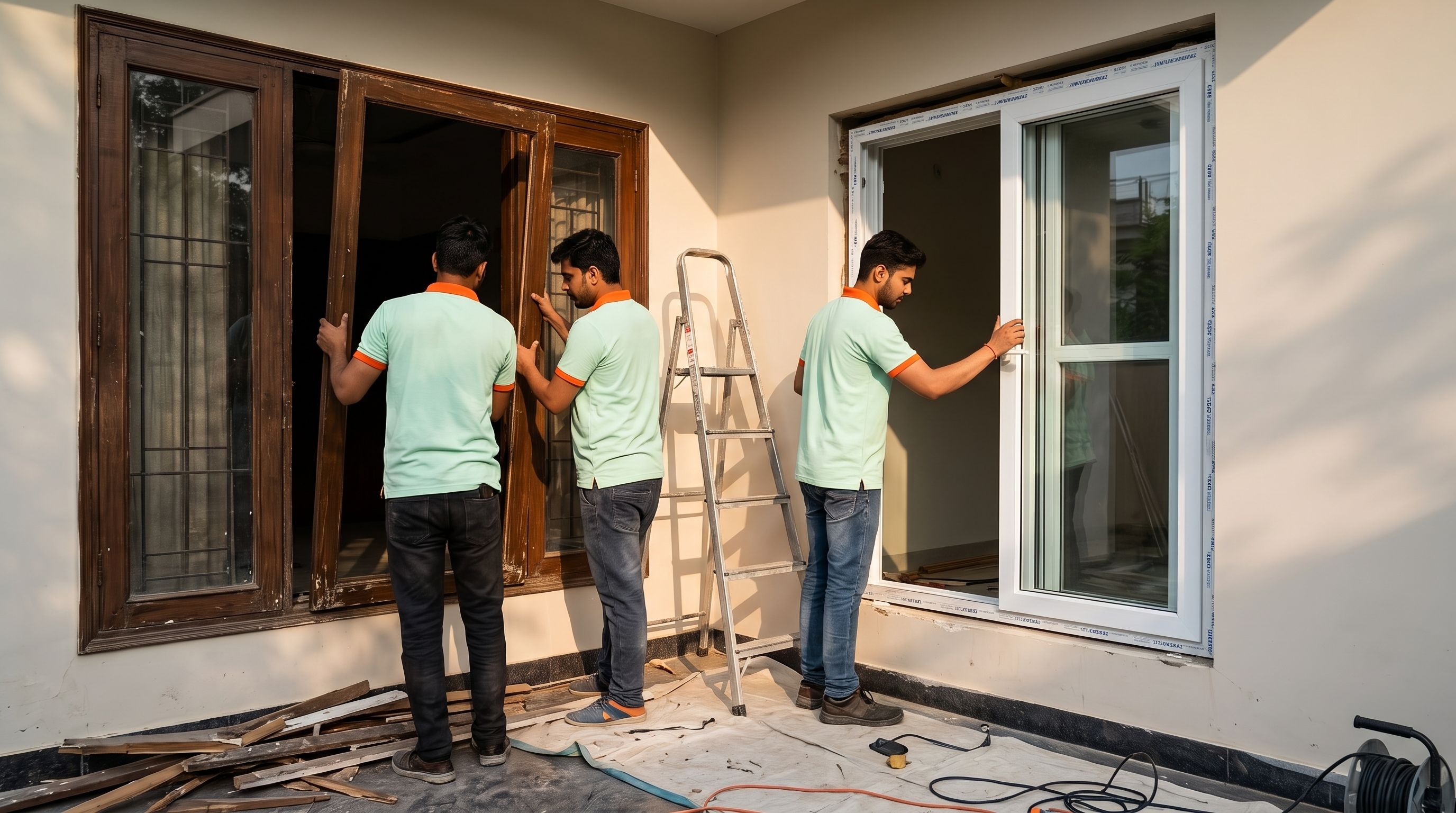
The cost of replacing old wooden windows with uPVC in India typically starts from ₹1,200 per sq ft, with the final price depending on factors such as the window size, profile series, glass specification, hardware, and overall design. Since every window is custom-manufactured, there isn't a fixed replacement cost for an entire home. The total investment varies based on the number of windows, their dimensions, and the specifications selected. Replacing wooden windows with uPVC is a popular choice for homeowners seeking a more durable, low-maintenance solution with improved weather resistance and long-term performance. In this guide, we'll break down the factors that influence replacement costs and what you can expect before making the switch.
What Is the Cost of Replacing Wooden Windows with uPVC in India?
If you're hoping for a single number, you're probably going to be disappointed.
If you're replacing old wooden windows with uPVC, there's no single price that fits every home—and that's actually a good thing.
Unlike many building materials sold by area, uPVC windows are custom-manufactured for each opening. The final cost depends on the size of your windows, the profile series you choose, the type of glass, the hardware, and the complexity of the installation.
As a general benchmark, IndiFrame’s quality uPVC window replacements typically start from around ₹1,200 per sq ft, but the final quotation is always based on your exact window specifications.
Price Per Sq Ft for uPVC Window Replacement
Don't judge a window by its price per square foot. It may sound like the easiest way to compare quotations, but it's rarely the most accurate one. Two windows with the same area can have completely different prices depending on the profile, glass, hardware, and overall design.
There's another detail most homeowners don't realise: smaller windows often cost more per sq ft than larger ones. Why? Because a compact window still needs hardware, fabrication, quality checks, and installation, even though its glass area is smaller. Larger windows spread these costs over more square footage, making them relatively better value.
That's why the lowest per-sq-ft price doesn't always translate into the lowest project cost.
Total Cost Estimate for Different Home Sizes
Forget the size of your home. Count your windows instead.
A 2 BHK with six small windows could cost less than a 1 BHK with four large floor-to-ceiling openings. That's because replacement costs are driven by the windows themselves—not the number of bedrooms.
Two 2 BHK apartments can have completely different replacement costs depending on:
- the number of windows,
- their dimensions,
- the window configurations,
- the glass selected, and
- the profile series.
A site measurement is the only way to arrive at an accurate estimate. Those answers will give you a far more accurate estimate than your home's square footage ever will.
Factors Affecting Replacement Cost
Two homes can replace the same number of windows and still receive very different quotations. Here's why.
Window size matters—but not the way most people think. Larger windows often have a lower per-sq-ft cost, while smaller ones tend to cost more because many manufacturing and hardware costs remain the same.
Your profile choice also makes a difference. Different profile series are designed for different performance requirements and, naturally, come at different price points.
Glass plays a bigger role than most homeowners expect. Whether you choose toughened, laminated, double-glazed, or acoustic glass will influence both performance and price.
And finally, there's the installation itself. Every home is different, and replacement work may involve varying levels of preparation, removal, and finishing.
Wooden vs uPVC Windows Cost Comparison
While the cost of a window depends on its size, specifications, and manufacturer, wooden windows generally cost more than uPVC windows.
Standard wooden windows typically start at around ₹1,200 per sq ft, while premium teak options can range from ₹1,300 to ₹1,800 per sq ft or more. In comparison, quality uPVC windows generally start from around ₹1,200 per sq ft, with the final price depending on the profile series, glass specification, hardware, and window design.
Wooden windows may require periodic polishing, painting, or termite treatment throughout their lifespan, whereas uPVC windows require little more than routine cleaning. Factoring in these ongoing maintenance costs provides a more accurate picture of the overall investment.
Installation Process & Labour Charges
One of the biggest concerns homeowners have when replacing wooden windows is whether the quoted price includes installation or if there are additional labour charges. The answer varies from one manufacturer to another, which is why it's important to understand exactly what your quotation covers before making a decision.
In many window replacement projects, the total cost may be broken down into separate components such as fabrication, installation, hardware, transportation, or finishing work. While the base price may appear attractive, these additional charges can significantly increase the final project cost.
When experts at IndiFrame prepare quotations, they include the complete uPVC window system and installation, so you don't have to coordinate with multiple vendors or calculate separate labour costs. This not only makes budgeting easier but also helps ensure that the windows are installed by trained professionals who are familiar with the product.
When comparing quotations, it's always worth asking whether installation, hardware, glass, transportation, and finishing are already included. A comprehensive quotation is often more valuable than one that appears cheaper initially but adds costs later in the project.
Hidden Costs in Window Replacement
When replacing wooden windows, the quoted price is only one part of the equation. What matters just as much is understanding what's included in that price.
One quotation may include only the window, while another could also cover the glass, hardware, installation, transportation, and other essentials needed to complete the project. Without looking beyond the final number, you're not really comparing like for like.
That's why it's always worth asking for a detailed breakdown before making a decision. A clear quotation gives you a much better understanding of the overall investment and helps avoid unexpected costs once the replacement work begins.
With Indiframe, the quotation includes the complete window system along with installation, so you know exactly what you're paying for from the outset.
Tips to Reduce Replacement Cost
Replacing wooden windows is one of those decisions where choosing purely on price can work against you. The final cost is influenced by factors such as the window size, the profile series, and the type of glass you choose. Changing any one of these can affect both the price and the window's performance. Rather than trying to reduce costs at any expense, focus on choosing specifications that suit your home and requirements.
It's also worth understanding exactly what the quotation includes. Comparing two prices without considering the scope of work can lead to an incorrect conclusion. Looking at the complete picture makes it much easier to judge whether you're actually getting better value.
Is It Worth Replacing Wooden Windows?
If your wooden windows have started showing signs of age—whether it's warping, sticking, frequent maintenance, or weather-related wear—replacing them with uPVC is a practical upgrade worth considering.
While the initial cost depends on the size, specifications, and design of your windows, the long-term benefits often outweigh the investment. uPVC windows require minimal maintenance, resist moisture and termites, and are designed to perform consistently for years without the need for regular painting or polishing.