


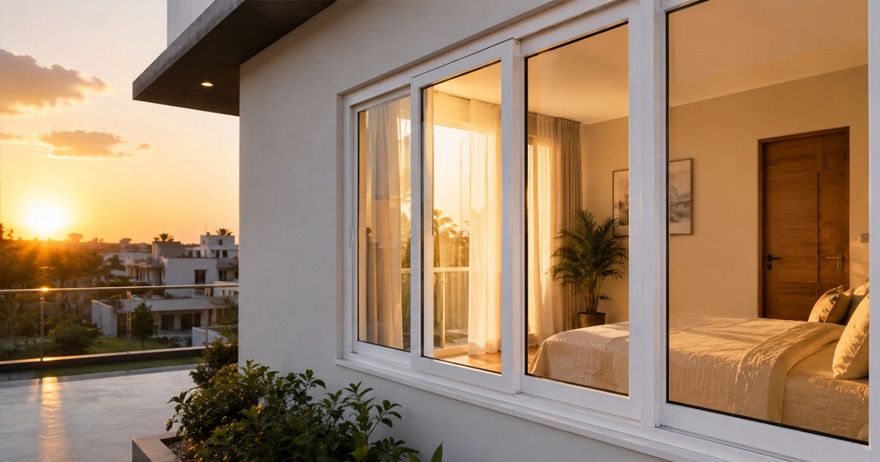
East facing vs west facing windows is one of the most important considerations when designing a comfortable and energy-efficient home. East-facing and west-facing windows affect how much sunlight, heat, and natural light enter your home throughout the day. East-facing windows receive gentle morning sunlight, making rooms feel brighter and cooler, while west-facing windows are exposed to stronger afternoon sun that can increase indoor temperatures. The better choice depends on your climate, room usage, energy-efficiency goals, and comfort preferences. Understanding how window orientation impacts heat gain and daylight can help homeowners make smarter design decisions.
Why Window Orientation Matters?
Many homeowners focus on window style and size but overlook orientation. In reality, how window orientation affects heat gain can have a significant impact on day-to-day comfort and electricity bills. The debate around east facing vs west facing windows is fundamentally a question about time of day and heat management.
The direction your windows face directly affects:
- Natural lighting
- Indoor temperature
- Ventilation
- Energy efficiency
- Comfort levels
- Cooling costs
Understanding East-Facing Windows
East-facing windows receive sunlight during the morning hours when temperatures are generally lower. The sunlight entering through these windows is soft, pleasant, and less intense than afternoon sunlight. It makes east-facing windows a popular choice for homeowners who want bright interiors without excessive heat buildup.
East facing windows advantages, disadvantages and which window direction is best for a house are given below.
Advantages of East-Facing Windows
Gentle Morning Sunlight
One of the biggest east facing windows benefits is access to soft morning sunlight. It creates bright interiors without causing excessive heat.
Lower Afternoon Heat
Because the sun moves away from the east face by late morning, east-facing windows accumulate significantly less solar heat than west-facing ones which makes rooms remain cooler later in the day.
Reduced Cooling Costs
Because east-facing rooms absorb less heat over the course of the day, they require less cooling to maintain temperatures.
Better Indoor Comfort
Bedrooms and living spaces tend to remain more comfortable throughout the day.
Perfect for Hot Climates
East-facing windows are often considered among the best windows for hot climates because they minimize exposure to harsh afternoon sun.
Disadvantages of East-Facing Windows
Less Evening Light
Rooms may become darker earlier in the evening.
Limited Winter Warmth
In colder regions, east-facing windows may not provide enough solar heat during the afternoon.
May Require Supplemental Lighting
Certain rooms may need artificial lighting compared to west-facing rooms.
Understanding West-Facing Windows
West-facing windows receive direct sunlight during the afternoon and evening. The sunlight is stronger and more intense because outdoor temperatures are typically at their highest during these hours. As a result, west-facing rooms often experience greater heat gain.
West facing windows advantages and disadvantages you need before finalizing a design are given below.
Advantages of West-Facing Windows
Bright Evening Light
West-facing rooms are well-lit through the afternoon and receive the warm golden light of late afternoon and early evening
Warmer Interiors in Winter
In cooler climates or during Indian winter months, west-facing rooms benefit from passive solar heat gain in the afternoon, which can reduce heating needs.
Beautiful Sunset Views
West-facing windows often offer dramatic sunset lighting and scenic views.
Disadvantages of West-Facing Windows
Increased Heat Gain
Afternoon sun is the most intense, and west-facing glass accumulates heat over an extended afternoon period.
Higher Cooling Costs
Rooms exposed to direct western sunlight may require more cooling.
Glare Problems
Strong sunlight can create uncomfortable glare on screens and furniture.
Potential Furniture Damage
Prolonged exposure to sunlight can fade fabrics, flooring, and furnishings.
East-Facing vs West-Facing Windows: Key Differences
The comparison between east facing vs west facing windows becomes easier when evaluating key performance factors. When comparing east facing windows vs west facing windows for sunlight, east-facing options generally provide softer and more comfortable daylight.
Natural Light
Natural light improves mood, comfort, and productivity.
East-Facing Windows
- Bright mornings
- Soft daylight
- Less glare
West-Facing Windows
- Bright evenings
- Stronger sunlight
- Greater glare potential
Choosing the best window placement for natural light depends on when you use a room most frequently.
Heat Gain
Heat gain is often the deciding factor in the east facing vs west facing windows debate.
East-Facing Windows
- Receives cooler morning sunlight
- Low to moderate warmth
West-Facing Windows
- Receives intense afternoon sunlight when outdoor temperatures peak.
- Difficult to manage with overhangs alone
This difference significantly affects indoor temperatures, particularly in warm regions.
Energy Efficiency
Energy efficiency is closely linked to solar heat gain.
East-Facing Windows
- Lower cooling loads
- Improved comfort
- Reduced AC usage
West-Facing Windows
- More electricity bill
May require:
- Solar control glass
- Low-E glass
- Double glazing
- Exterior shading
These solutions help create energy efficient windows for west facing homes.
Indoor Comfort
Comfort depends on balancing natural light and temperature.
East-facing rooms generally feel:
- Cooler
- Brighter in the morning
- More comfortable during hot afternoons
West-facing rooms may feel:
- Warmer
- Brighter in the evening
- More dependent on cooling systems
An indoor comfort is the most important aspect to consider for a better living.
Ventilation
Orientation also affects airflow. The ideal window direction for Indian homes depends on local wind patterns, surrounding buildings, and climate conditions. Proper placement of windows on multiple sides improves cross-ventilation and overall indoor comfort.
Which Rooms Benefit from East-Facing Windows?
East-facing windows work particularly well in:
Bedrooms
Morning sunlight helps regulate sleep cycles and creates a pleasant waking environment.
Kitchens
Natural morning light is useful during breakfast preparation.
Home Offices
Soft daylight reduces glare and at the same time maintains brightness.
Which Rooms Benefit from West-Facing Windows?
West-facing windows are often suitable for:
Living Rooms
Evening light can make gathering spaces feel warm and inviting.
Family Rooms
Perfect for spaces used after work hours.
Dining Areas
Natural evening light creates an attractive dining atmosphere.
How Modern Windows Reduce Heat Gain?
The east facing vs west facing windows debate changes significantly when high-performance glazing is part of the specification. Modern window systems significantly improve performance.
Features include:
- Multi-chamber frames
- Double glazing
- Low-E coatings
- Airtight seals
- Thermal breaks
These technologies help reduce solar heat gain and maintain natural light. uPVC windows are particularly effective because they combine insulation, durability, and low maintenance.
Best Glass Options for West-Facing Windows
If your home includes west-facing openings, selecting the right glass becomes essential. Some of the options are given below that help manage heat and improve energy efficiency.
| Glass Type | Solar Heat Gain Coefficient (SHGC) | Heat Reduction | Light Transmission | Best For |
|---|---|---|---|---|
| Standard clear glass | ~0.86 | Minimal | Very high (90%) | Not mostly recommended for west-facing windows |
| Tinted glass | ~0.55–0.70 | Moderate | Moderate (50–70%) | Budget upgrade and reduces glare |
| Low-E glass | ~0.40–0.60 | Good | High (70–80%) | West-facing rooms with moderate heat exposure |
| Solar control glass | ~0.25–0.40 | Very Good | High (60–75%) | West-facing living rooms and bedrooms |
| Double glazed (solar control + Low-E) | ~0.20–0.30 | Excellent | Good (55–70%) | Best option for west-facing windows in hot climates |
Window Orientation Tips for Indian Homes
Some of the window orientation tips for homeowners in India are given below.
- Prioritize east-facing openings where possible
- Limit large west-facing glass areas
- Use shading devices on western facades
- Select energy-efficient glazing
- Consider local climate conditions
- Maximize cross-ventilation
Common Window Planning Mistakes to Avoid
- Ignoring window orientation
- Installing oversized west-facing windows
- Choosing glass based only on appearance
- Neglecting shading systems
- Overlooking ventilation requirements
- Not considering climate conditions
A well-planned window strategy improves both comfort and long-term performance.