



Choosing between an independent house and an apartment is one of the biggest financial decisions homebuyers make. While apartments often have lower upfront costs and shared amenities, independent houses offer greater privacy, flexibility, and land ownership. The true cost comparison goes beyond purchase price and includes construction expenses, maintenance, property taxes, repairs, security, utility costs, and long-term appreciation potential.
Understanding these factors can help buyers make a more informed investment decision. Knowing the complete independent house vs apartment cost comparison can help you avoid expensive surprises later.
Independent House vs Apartment: What's the Difference?
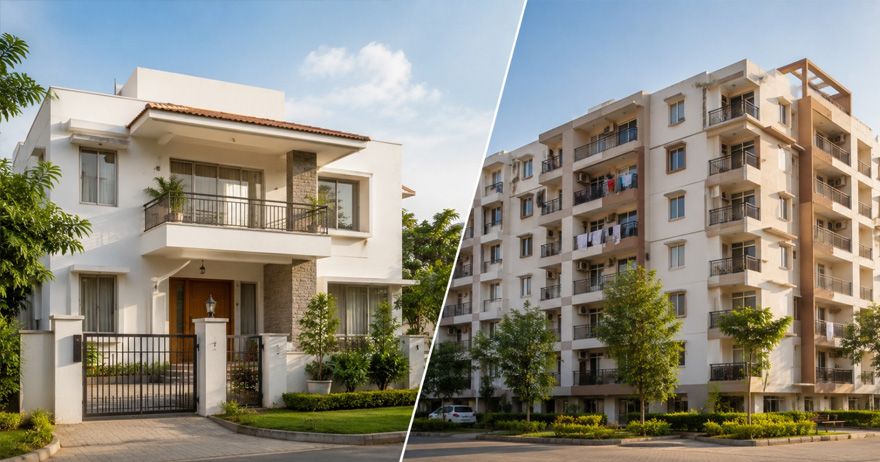
An independent house is a standalone residential structure on a privately owned plot. The homeowner owns both the land and the building, controls all structural and design decisions, manages all maintenance, and has no shared governance obligations.
An apartment, by contrast, is a unit within a multi-storey building where the homeowner owns the individual unit but shares the land, structure, common areas, and building management with other residents through a housing society.
If you are wondering about apartment vs house which is better, there isn't a single answer. The right choice depends on your budget, lifestyle, family size, and long-term financial goals.
Upfront Cost Comparison
Buying an apartment usually requires a lower initial investment because the cost of the land is shared among multiple homeowners. In most cities, apartments are also available with flexible payment plans and easier financing options which are attractive for first-time buyers.
An independent house, on the other hand, often involves two major expenses which are buying the land and constructing the house, or purchasing a completed villa. Land prices have increased significantly in many Indian cities, which makes the initial investment much higher.
Land Ownership and Property Value
One of the biggest advantages of owning an independent house is the land itself. Buildings naturally age over time, but land usually appreciates in value, especially in growing residential areas. It is one reason why independent houses often deliver stronger long-term returns.
Apartment owners also benefit from property appreciation, but the value is largely linked to the apartment unit rather than exclusive land ownership. As the building gets older, maintenance requirements generally increase, which can influence resale demand.
Construction Cost vs Apartment Purchase Cost
The cost of building a house vs buying an apartment can vary significantly from one city to another. If you already own land, building a house may offer better value because you have complete control over the design, materials, and construction quality.
On the other hand, buying an apartment offers convenience. The property is usually ready to move into, and you don't have to manage contractors, approvals or construction timelines.
Maintenance Costs Over Time
Maintenance is where the comparison between apartment maintenance cost vs house maintenance becomes important. With an apartment, maintenance is predictable. Every month, residents pay maintenance charges that usually cover security, housekeeping, landscaping, lift maintenance, power backup, common lighting, and repairs to shared facilities.
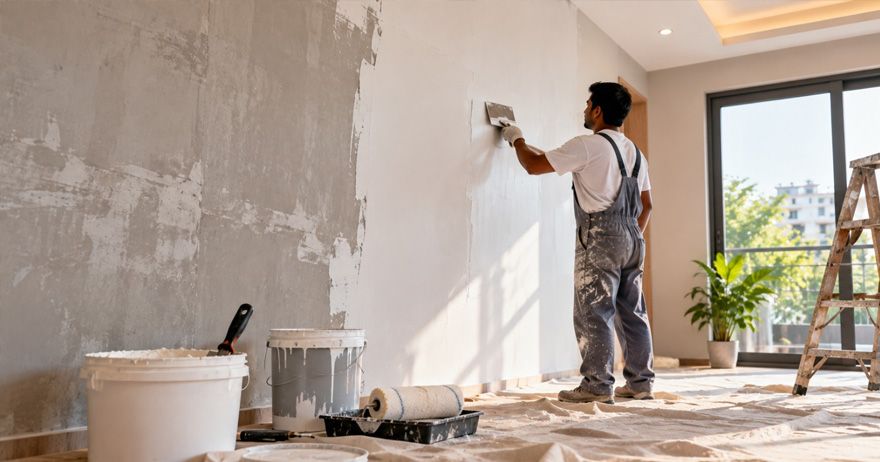
An independent house works differently. There are no monthly maintenance fees, but every repair becomes your responsibility. Painting the exterior, repairing the roof, maintaining the compound wall, plumbing issues, electrical work, or replacing gates all need to be managed individually.
Property Tax and Utility Expenses
Property tax for an independent house is often calculated based on the size of the land, built-up area, and local municipal rules. Since homeowners own the entire property, they are responsible for paying these charges directly.
Apartment owners also pay property tax, but the land component is shared among all residents. In addition to taxes, they usually contribute towards common electricity usage, water supply systems, and maintenance of shared infrastructure through society charges.
Utility bills such as electricity, water, and internet are generally similar for both property types and depend more on household usage than the type of home. However, apartments may include additional charges for common facilities like clubhouses, gyms, swimming pools, and backup generators.
Security and Community Charges
Most modern apartments come with gated entry, CCTV surveillance, security guards, visitor management systems, and access-controlled entrances. These facilities are maintained by the housing society, giving residents added peace of mind without having to manage them individually.
With an independent house, the responsibility rests entirely with the homeowner. You may need to install CCTV cameras, smart door locks, motion sensor lights, boundary walls, or even hire private security depending on the neighbourhood.
Renovation and Customization Costs
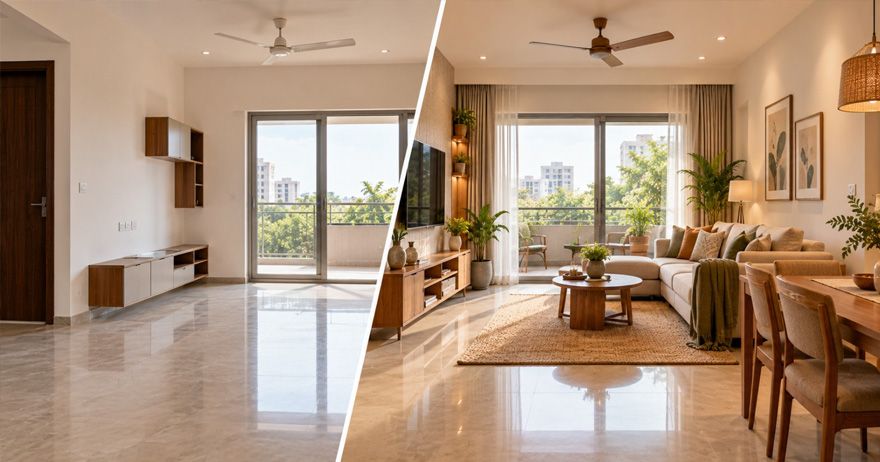
Since you own both the building and the land, you have complete freedom to renovate, extend, or remodel your home, provided local building regulations are followed. You can redesign the façade, build an additional floor, or even create outdoor spaces like gardens and patios. Flexibility is one of the biggest independent house benefits and costs that buyers should consider.
Apartment owners usually have more restrictions. While interior renovations are possible, structural changes often require approval from the apartment association and cannot affect common areas or the building structure.
Long-Term Appreciation Potential
The long term cost of owning a house may seem higher. In many parts of India, land appreciates faster than buildings. An independent house often enjoys stronger long-term value appreciation, especially in developing suburbs and growing cities.
Apartments also appreciate in value, particularly when they are located in well-developed neighbourhoods with good infrastructure, schools, hospitals, and public transport. However, as apartment buildings age, maintenance requirements increase, which can influence resale prices.
Rental Income Opportunities
Apartments generally enjoy consistent rental demand, especially in cities where professionals, students, and small families prefer gated communities with modern amenities. Finding tenants is often easier because apartments offer security, maintenance services, and convenient locations.
Independent houses can also generate attractive rental income, particularly if they have multiple floors or separate entrances. Some homeowners rent out one floor while living on another, creating an additional source of income.
When comparing house vs apartment investment comparison, there is no universal winner.
Independent House vs Apartment: Pros and Cons
Understanding the independent house vs flat pros and cons helps buyers choose a property that matches both their lifestyle and financial expectations.
Independent House
Advantages
- Complete ownership of land and building
- Greater privacy
- Freedom to renovate or expand
- Better long-term appreciation potential
- No monthly society restrictions
Limitations
- Higher upfront investment
- Individual responsibility for maintenance
- Additional spending on security and repairs
- Longer construction timeline if building from scratch
Apartment
Advantages
- Lower initial investment
- Shared amenities and maintenance
- Better security
- Easier access to community facilities
- Convenient for busy lifestyles
Limitations
- Limited customization
- Monthly maintenance charges
- Less privacy
- Shared ownership of common spaces
Which Option Is Better for Families?
Apartments are often a practical choice for families with children because they offer parks, play areas, clubhouses, gyms, and 24-hour security within the community. Parents also like having neighbours nearby and access to shared recreational facilities.
Independent houses are best for larger families who value privacy and extra living space. They also offer the freedom to modify the home as family needs evolve, whether it's creating an additional bedroom, home office, or outdoor seating area.
There is no single answer to buying a flat or building a house. The right decision depends on your family's lifestyle, long-term plans, and financial comfort.
Which Option Offers Better Investment Returns?
Independent houses generally perform well over the long term because land continues to appreciate. They also provide opportunities for redevelopment or expansion, which can further increase their value.
Apartments, however, can deliver excellent returns when located in high-demand urban areas with strong rental demand and good infrastructure.
Rather than asking which is cheaper house or apartment, it is often better to ask which option aligns with your investment goals.
Factors to Consider Before Making a Decision
- Budget and financing: Independent house construction requires managing disbursements across a 12 to 18 month build. Apartments can be financed through straightforward home loans on a completed or under-construction property.
- Location priorities: In city cores where land is scarce and expensive, apartments are often the only practical option. In city peripheries and Tier-2 cities, independent house plots are available at prices that make the total cost competitive with equivalent apartments.
- Time horizon: Short-term buyers (under 5 years) are better served by an apartment's liquidity. Long-term owners benefit more from the land appreciation component of an independent house.
- Family size and structure: Multi-generational families and large families benefit significantly from the space, privacy, and layout flexibility of an independent house. Nuclear families with a preference for low-maintenance living may prefer an apartment's managed environment.
- Maintenance appetite: Independent house ownership requires active involvement in maintenance management. Homeowners who do not have time or inclination for this are better served by an apartment's outsourced maintenance model.