



When you buy a flat in India, you will come across three property area terms: carpet area, built-up area, and super built-up area. Understanding these measurements is essential because they directly affect the property's usable space, pricing, and overall value.
While carpet area refers to the actual usable floor space inside your home, built-up area includes the thickness of walls, and super built-up area also accounts for common shared spaces.
Knowing the difference between carpet area vs built-up area vs super built-up area helps homebuyers compare properties accurately, avoid confusion, and make informed real estate decisions.
Below is the apartment area explained.
What Is Carpet Area Meaning?
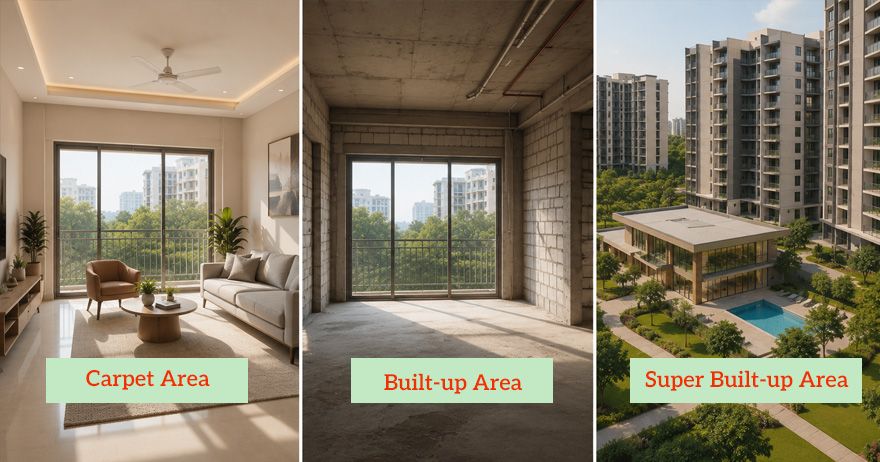
Carpet area is the actual floor space inside your apartment, measured wall to wall. It is the area where you could physically lay a carpet. This includes the space taken up by internal partition walls, but it does not include external walls, balconies, or shared spaces like lobbies and staircases.
When you sit in your living room, sleep in your bedroom, or cook in your kitchen, you are standing on the carpet area. Since 2016, builders in India are legally required to price and sell homes based on this number alone.
What Is Built-Up Area Meaning?
Built-up area is the carpet area plus the space taken up by your apartment’s walls. It also includes your balcony and any utility area attached to your flat.
Builders usually calculate built-up area by adding around 10% to 15% to the carpet area. This number tells you the total covered area of your flat, not just the part you can use.
What Is Super Built-Up Area Meaning?
Super built-up area is the built-up area plus a share of the common areas in the building. These common areas include the lobby, staircase, lift, corridors, and sometimes a clubhouse or garden.
Builders add up the total common area of the project and divide it among all the flats. Each flat’s share is then added to its built-up area to get the super built-up area. This is also called the saleable area. It is usually 25% to 35% larger than the carpet area.
Before 2026, most builders priced flats based on the super built-up area, which made homes look bigger on paper than they actually were.
Carpet Area Vs Built-Up Area Vs Super Built-Up Area
Here is the real estate measurement explained.
| Measurement | What It Includes | Typical Size Vs Carpet Area |
|---|---|---|
| Carpet Area | Usable floor space and internal walls | Base figure (100%) |
| Built-up Area | Carpet area plus external walls and balcony | 10% to 15% more |
| Super Built-Up Area | Built-up area plus a share of common areas | 25% to 35% more |
If a flat has a carpet area of 1,000 square feet, its built-up area can come around 1,120 square feet, and its super built-up area could be around 1,300 square feet. The exact difference depends on the building’s design, height, and the number of shared amenities.
Why Do These Measurements Matter When Buying A Home?
Carpet area, built-up area, and super built-up area numbers decide how much you pay and how much usable space you actually get in return.
If you compare two flats only by their super built-up area, you could end up paying more for a smaller livable home. Banks also calculate your home loan eligibility using carpet area, not super built-up area, so this figure directly affects how much loan you can get.
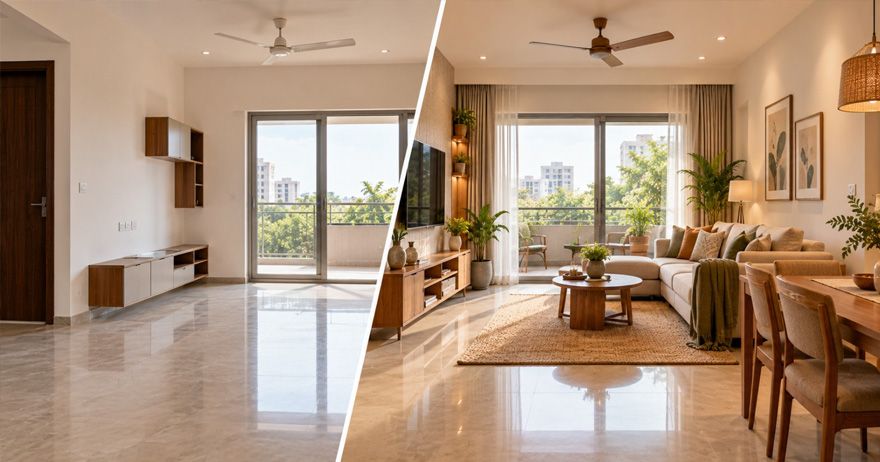
Knowing the exact carpet area also helps you plan furniture placement, decide on interior work, and check if the space truly fits your family’s daily needs.
How RERA Defines Carpet Area
Section 2(k) of the Real Estate (Regulation and Development) Act, 2016, gives carpet area a fixed legal meaning.
RERA defines carpet area as the net usable floor area of an apartment, including the area under internal partition walls, but excluding external walls, service shafts, exclusive balconies, and open terraces.
RERA carpet area applies to every RERA-registered project in India, regardless of the developer or the city. RERA also requires builders to price a flat based on carpet area alone, not built-up or super built-up area.
If the carpet area delivered turns out to be smaller than what was promised, the builder must refund the difference along with interest. This single rule has given homebuyers a level of legal protection that did not exist before 2016.
Common Misconceptions About Carpet Area vs Built-up Area vs Super Built-up Area Calculations
Here are the common misconceptions about flat area calculation.
Many buyers think built-up area and super built-up area mean the same thing. But they do not. Built-up area only adds wall thickness and balcony space, while super built-up area also adds a share of the building’s common areas.
Another common mistake is assuming carpet area includes the balcony. RERA carpet area specifically excludes balconies, verandahs, and open terraces.
Some buyers also believe the gap between super built-up area and carpet area stays the same across every project. But it is not true. The loading factor, or how much extra space gets added for common areas, changes based on the building’s design, floor count, and amenities. A project with a large clubhouse and several lifts usually has a higher loading factor than a smaller, simpler building.
Tips To Verify Property Area Before Buying
Here is the home buying guide India.
- Check the project’s RERA registration number on your state’s official RERA portal, since every registered project must list its carpet area there.
- Ask the builder for a written breakup of carpet area, built-up area, and super built-up area for your specific flat.
- Match this breakup against the numbers mentioned in your sale agreement and payment schedule.
- Once the flat is ready, get an independent architect or engineer to physically measure the carpet area.
- Compare the loading factor of your project with similar projects in the same area, so you know if you are paying a fair price for the common place.
How Property Area Affects Window And Interior Planning
Carpet area directly affects how much natural light and ventilation each room in your home gets, since window sizes and placements are planned around this usable space.
A flat with a smaller carpet area and poorly placed windows can feel cramped and dark, even if its super built-up area sounds spacious on paper.
When you know the exact carpet area of each room, you can plan furniture layout, wardrobe sizes, and window treatments with more accuracy. This also helps architects and interior designers choose the right window sizes for proper cross ventilation, especially in bedrooms and kitchens where daylight matters most.
Final Thoughts: Carpet Area vs Built-up Area vs Super Built-up Area
Carpet area shows how much space you can actually use. Built-up area adds the walls and balcony to that number. Super built-up area adds a share of the building’s common spaces on top of that.
Since 2016, RERA has made carpet area the only legal basis for pricing a flat, which protects buyers from inflated figures.
Before you buy a home, always ask for extra carpet area in writing and verify it against the RERA portal. This one step can save you from paying for space you will never actually use.