



Modular kitchen shutters are one of the most visible and functional elements of a modern kitchen. They not only define the overall look of your kitchen but also impact durability, maintenance, and daily usability. With options ranging from laminate and acrylic to aluminium and glass, choosing the right shutter material can be overwhelming.
Understanding the different materials, their costs, and the latest design trends helps homeowners create a stylish, long-lasting, and practical kitchen. In this guide, we'll compare popular modular kitchen shutter materials, discuss pricing factors, and explore the latest design ideas for contemporary homes.
What Are Modular Kitchen Shutters?
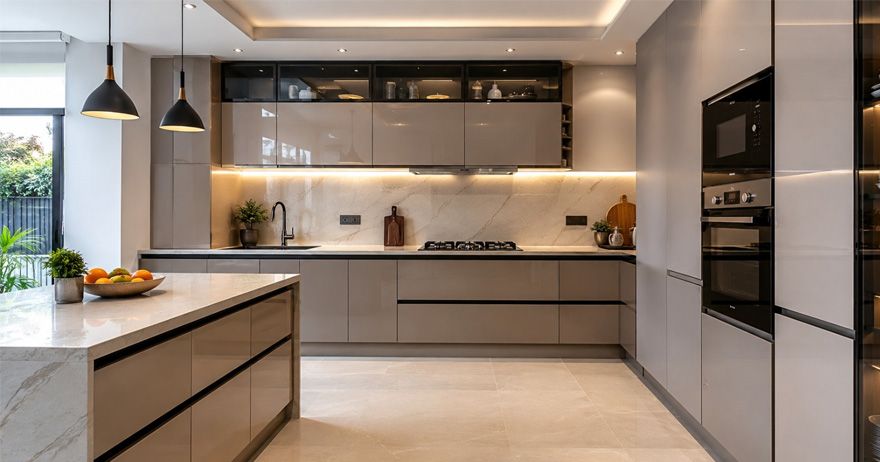
Modular kitchen shutters are the face or front panels attached to kitchen cabinets and drawers. They are the most visible component of any kitchen and cover the storage units. Modular kitchen shutter design options are available in a wide variety of colours, textures, finishes, and materials. The best choice depends on your lifestyle, cooking habits, budget, and the overall style of your home.
Shutters play an important role in protecting cabinets from dust, moisture, and daily wear.Apart from aesthetics, modern shutters such as soft-close hinges, moisture-resistant finishes, and scratch-resistant surfaces are designed to improve functionality.
Popular Materials Used for Modular Kitchen Shutters
Each modern kitchen shutters offer their own advantages depending on your priorities, durability, appearance, maintenance, or budget.
Laminate Kitchen Shutters
Laminate kitchen shutters are made by pressing decorative laminate sheets onto engineered wood boards such as MDF or plywood. They are cost-effective and available in hundreds of colours, patterns, and finishes, including wood grain, stone textures, matte, and high-gloss designs. They are easy to maintain and suit perfectly in busy family kitchens.
Acrylic Kitchen Shutters
Acrylic kitchen shutters use a high-gloss acrylic sheet bonded to an MDF or HDF substrate. They create a smooth, reflective surface that gives kitchens a bright and luxurious appearance. They work well in contemporary and minimalist homes. The only downside is that glossy surfaces may show fingerprints more easily than matte finishes.
Aluminium Kitchen Shutters
Aluminium kitchen shutters use an aluminium frame profile filled with glass, acrylic, or a solid panel insert. They do not absorb moisture and are highly durable. They become popular in modern apartments and premium homes. Even though aluminium shutters are expensive, many homeowners consider them a worthwhile long-term investment.
Aluminium vs Laminate vs Acrylic Kitchen Shutters
Understanding trendy kitchen shutter materials, pricing, and other factors will help you make an informed decision.
| Factor | Aluminium Shutters | Laminate Shutters | Acrylic Shutters |
|---|---|---|---|
| Price range | ₹900 to ₹2000 and above per sq ft | ₹350 to ₹900 per sq ft | ₹600 to ₹1400 per sq ft |
| Moisture resistance | Excellent and will not swell or warp | Good if edges are sealed but vulnerable at damaged edges | Good surface but vulnerable at edges and corners |
| Heat resistance | Excellent | Moderate and avoid direct heat contact | Moderate and acrylic can yellow near heat sources over time |
| Scratch resistance | Good with frame and depends on insert material | Good and matte textures hide minor scratches | Lower and surface scratches show easily on gloss acrylic |
| Fingerprint visibility | Low to moderate (matte finishes) | Low on matte and moderate on gloss | High as gloss acrylic shows fingerprints easily |
| Design options | Frame colours and panel insert variety | Widest range with hundreds of colours and patterns | Solid colours with mostly gloss finishes |
| Lifespan | 15 to 25+ years | 8 to 15 years depending on edge maintenance | 8 to 12 years depending on surface care |
| Maintenance | Wipe clean with very low maintenance | Easy to maintain and avoid abrasive cleaners | Frequent wiping needed and avoid scratching |
| Best for | High-use Indian kitchens coastal homes and long-term investment | Budget to mid-range kitchens with wide design choices | Contemporary high-gloss look and controlled-use kitchens |
Factors That Affect Modular Kitchen Shutter Costs
The kitchen shutter price depends on several factors beyond the material itself.
- Material: Laminates are generally the most affordable, while acrylic and aluminium options usually fall into higher price categories.
- Quality of the core board: Marine plywood, HDHMR boards, and premium MDF increase durability but also influence overall cost.
- Hardware: Soft-close hinges, premium drawer channels, lift-up systems, and concealed fittings can significantly change the final quotation.
- Customisation: Preferred colours, designer finishes, integrated handles, glass inserts, and special edge treatments may further increase pricing.
- Kitchen size and complexity: More running metres of cabinetry, more individual shutters, and more non-standard sizes increase the total cost.
Spending slightly more today may reduce repair and replacement costs in the future.
Latest Modular Kitchen Shutter Design Trends
Modern kitchen shutter designs in Indian homes in 2026 reflect a strong shift toward simplicity and material mixing.
1. Matte Finishes
Matte finish shutters have overtaken high-gloss finishes as the dominant choice in contemporary kitchens, especially the warm tones. Matte surfaces are more forgiving of fingerprints, and hide minor surface wear.
2. Two-Tone Kitchen Design
Modular kitchen trends have moved toward two-tone kitchen designs which is a lighter colour or finish for upper wall cabinets and a contrasting, often darker or warmer tone for lower base cabinets.
3. Aluminium Frame Shutters
The thin aluminium profile creates a sophisticated, architectural appearance. The frame-and-panel construction allows glass or coloured back-panel inserts that add depth and texture.
4. Fluted and Textured Surfaces
Fluted (ribbed) surfaces on kitchen shutters and patterns in laminate, glass, or aluminium create an architectural quality that has moved from statement pieces to full-cabinet applications.
5. Handle-less Designs
Handle-less kitchens have a cleaner, more seamless appearance and eliminate the hardware that catches grease and requires separate cleaning. They also reduce the number of components that can come loose or fail over time.
6. Natural Wood Tones
Warm wood tones like oak, walnut, teak grain, and natural timber patterns have returned strongly after years of white kitchen dominance. The appeal is residential that feels less clinical than all-white or all-grey kitchens.
How to Choose the Right Kitchen Shutter Material
When choosing the best shutters for modular kitchen, don't focus only on appearance. Think about how the kitchen will be used every day.
| Requirement | Right Kitchen Shutter Material |
|---|---|
| High-use Indian kitchen | Aluminium shutters or high-quality BWP plywood-based laminates with premium edge banding |
| Moderately-used Indian kitchen | Laminate and acrylic shutters |
| Kitchens in coastal homes | Aluminium shutters or marine-grade plywood laminates |
| Budget-constrained kitchens | Laminate shutters on HDHMR substrate with 2 mm ABS edge banding |
Maintenance Tips for Modular Kitchen Shutters
Even the good-quality Kitchen cabinet shutters perform well only with proper maintenance.
- Clean shutters regularly with a soft damp cloth and mild detergent.
- Avoid using harsh chemicals or abrasive scrubbers, as they may damage the surface finish.
- Check edge banding annually and have any lifting or damaged edges re-bonded promptly.
- Clean the hinges and handles occasionally as dust accumulation around hardware can affect smooth operation over time.
- Avoid placing hot pans or appliances directly against shutter surfaces.
- Use a chimney or exhaust fan while cooking to reduce steam and grease in the air.
Common Mistakes to Avoid When Selecting Kitchen Shutters
Many homeowners choose kitchen shutters based only on looks or price, only to realise later that the material doesn't suit their daily needs.
- Don’t select glossy finishes without considering maintenance.
- Ignoring moisture resistance is another issue. Kitchens experience constant exposure to steam, water, and temperature changes.
- Don’t choose low-cost materials without checking the quality of the core board or hardware.
- Extremely bold colours or fashionable finishes may lose their appeal after a few years.
- Don't overlook installation quality. Look for skilled workmanship like you choose the right material.
Why Aluminium Kitchen Shutters Are Gaining Popularity
One of the reasons why aluminium shutters have become one of the fastest-growing choices for modern kitchens is their exceptional durability. They do not warp, swell, or crack when exposed to moisture. They are the best for Indian kitchens, where humidity and frequent cooking are common.
Another advantage is low maintenance and offers a long life span. They retain their appearance without requiring polishing or repainting. They are available in a wide range of colours, powder-coated finishes, and textured designs, giving homeowners far more design flexibility than before.
Final Thoughts
Choosing the right Modular kitchen shutters is about finding the perfect balance between appearance, durability, maintenance, and budget. Rather than selecting a material based only on current trends, consider how it will perform five or ten years from now. A well-planned modular kitchen should not only look beautiful on the day it's installed but should also remain practical, functional, and easy to maintain for many years.