



The right living room lighting can completely transform the look, feel, and functionality of your home. Whether you have a compact apartment or a spacious villa, a well-planned lighting design enhances comfort, highlights décor, and creates the perfect ambience for relaxing or entertaining guests.
From elegant pendant lights and recessed LEDs to floor lamps and accent lighting, today's living room lighting solutions combine style with energy efficiency. In this guide, we'll explore living room lighting ideas that suit every home size and help you create a warm, inviting, and beautifully illuminated space.
Why Good Living Room Lighting Matters
A perfectly designed lighting plan does more than brightening a room. It creates different moods for different occasions and makes the space more easier for daily activities. Even for reading, watching television, working from home, or entertaining guests, proper lighting ensures every activity is comfortable. A balanced living room lighting design also highlights your interiors and makes it more visually appealing.
A good living room lighting offers an elegant atmosphere, makes small rooms appear larger, and increases energy efficiency with modern fixtures. When you follow the right living room lighting ideas, it creates a living space that is both functional and aesthetically pleasing.
Layered Lighting for a Balanced Look
Professional interior designers rarely rely on a single light fixture. Instead, they combine multiple light sources to create depth, flexibility, and visual balance. It is known as layered lighting ideas.
Ambient Lighting
Ambient lighting provides overall illumination throughout the room. It usually comes from ceiling fixtures, recessed lights, or cove lighting.
Task Lighting
Task lighting focuses on specific activities such as reading, working, or hobbies. Floor lamps and table lamps are popular choices.
Accent Lighting
Accent lighting highlights artwork, textured walls, indoor plants, display shelves, or decorative features. Spotlights, wall washers, and LED strips are commonly used.
When you combine all three layers, it creates an environment that adapts to different moods and occasions.
Ceiling Lights That Make a Statement
Ceiling fixtures often become the focal point of the living room and provide the primary source of illumination. Choosing the right ceiling lights for living room depends on the room size, ceiling height, and interior style.
Chandeliers
Elegant chandeliers add luxury to spacious living rooms. It works well with traditional, contemporary, and transitional interiors.
Pendant Lights
Pendant lights provide focused illumination and serve as decorative elements. They are particularly suitable for seating areas or double-height living spaces.
Flush Mount Fixtures
Flush-mounted lights are best for homes with lower ceilings. They provide uniform illumination without occupying much visual space.
Semi-Flush Ceiling Lights
These fixtures offer a decorative appearance and maintain sufficient ceiling clearance. It is suitable for medium-height ceilings.
Selecting a modern living room lighting fixture that complements your furniture and décor creates a cohesive interior design.
Recessed and Cove Lighting Ideas
Recessed lighting has become one of the most popular choices for modern homes because it provides unobtrusive illumination. When you install them within the ceiling, recessed lights distribute light evenly without occupying visual space.
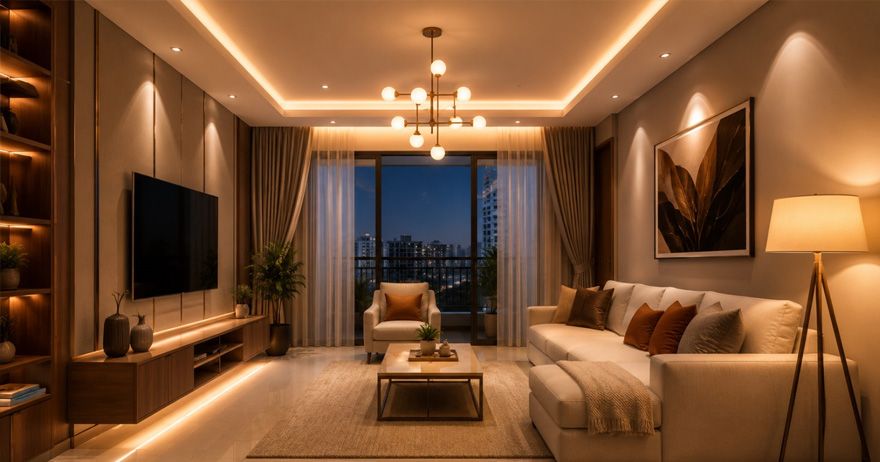
On the other hand cove lighting hides LED strips within ceiling recesses to produce soft indirect illumination. It creates a luxurious ambience while reducing glare. Some of the popular applications include false ceiling perimeter lighting, television wall illumination, ceiling coves, floating shelves and decorative niches.
Using LED lighting for living room spaces improves energy efficiency, reduces maintenance, and provides longer operating life compared to conventional lighting. Combining recessed lighting with cove lighting creates a layered effect that enhances depth and sophistication.
Floor Lamps and Table Lamps for Cozy Corners
Floor lamps and table lamps provide flexibility and add personality to the living room. Portable lamps can be repositioned whenever furniture layouts change. A stylish floor lamp beside a reading chair creates a comfortable reading nook, and table lamps on side tables provide gentle lighting for evening relaxation.
Some of the excellent choices include arc floor lamps, tripod floor lamps, adjustable reading lamps, ceramic table lamps, glass-base decorative lamps and fabric shade table lamps.
These lighting fixtures also complement the overall living room light design without requiring structural modifications. They are especially useful for apartments where installing additional ceiling fixtures may not be practical.
Accent Lighting to Highlight Décor
Accent lighting is designed to draw attention to specific features in your living room. Some popular ambient lighting ideas include LED strip lights behind the TV panel, picture lights for artwork, wall sconces, and spotlights for decorative shelves. These lighting elements make the room feel more luxurious.
You can also use accent lighting to emphasize textured feature walls, indoor plants, display cabinets, bookshelves, sculptures and artwork and decorative niches. A well-planned living room interior lighting creates a layered effect that enhances your décor without overwhelming the space.
Smart Lighting Solutions for Modern Living Rooms
Technology has transformed home lighting and it has become more convenient, energy-efficient, and customizable. Smart lighting systems allow homeowners to control brightness, colour temperature, and schedules through smartphones or voice assistants. They also help reduce electricity consumption by automatically switching lights on or off based on occupancy or time.
Some of the smart lighting features include voice control using smart assistants, mobile app control, adjustable brightness, colour-changing LED lights, automated lighting schedules, motion sensor lighting and energy usage monitoring.
When you integrate smart technology with your living room lighting ideas, it adds long term value to your home.
Lighting Ideas for Small vs Large Living Rooms
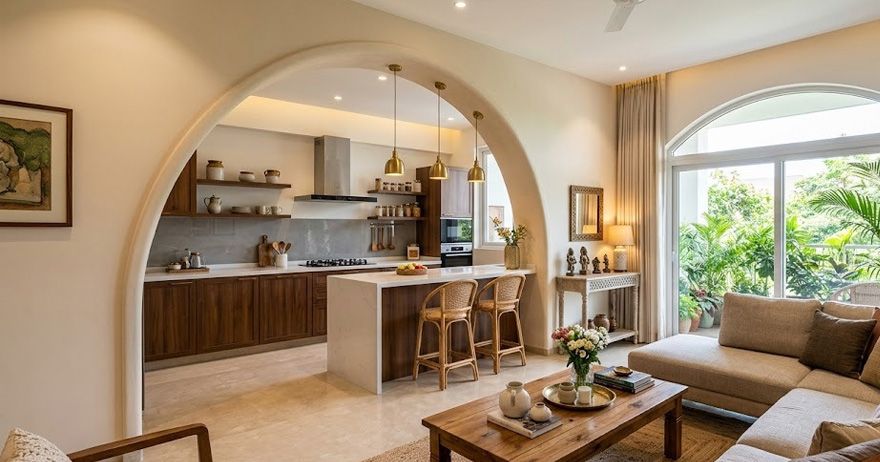
Following the right living room lighting ideas ensures every room, regardless of size, feels comfortable, functional, and visually balanced. For small living room lighting, choose bright ceiling fixtures, mirrors, and light-coloured interiors to reflect natural light. For larger homes can combine chandeliers, recessed lighting, floor lamps, and accent lights.
| Feature | Small Living Rooms | Large Living Rooms |
|---|---|---|
| Main Lighting | Flush-mounted ceiling lights | Chandeliers or large pendant lights |
| Secondary Lighting | Wall sconces | Floor lamps and table lamps |
| Accent Lighting | LED strips behind TV | Cove lighting and spotlights |
| Decorative Fixtures | Compact pendants | Statement lighting pieces |
| Lighting Goal | Make the room appear larger | Create warmth and define zones |
Common Living Room Lighting Mistakes to Avoid
Avoid these below common mistakes when planning your living room lighting.
- Using Only One Ceiling Light: A single light source creates uneven illumination and leaves dark corners.
- Ignoring Natural Light: Position lighting fixtures to complement daylight instead of competing with it.
- Choosing the Wrong Colour Temperature: Extremely cool white lighting can make the room feel harsh, whereas overly warm lighting may reduce visibility.
- Improper Fixture Size: Oversized fixtures overwhelm small rooms and tiny lights can look out of place in larger spaces.
- Skipping Dimmers: Dimmer switches allow you to adjust brightness for different moods and activities.
- Poor Furniture Planning: Install lighting after finalizing the furniture layout to ensure every seating and activity area is properly illuminated.
- Overusing Decorative Fixtures: Too many decorative lights can create visual clutter instead of enhancing the room.
Final Thoughts
Lighting is one of the most important elements of interior design. The right lighting transforms your living room into a space that is comfortable, spacious, and functional throughout the day.
Remember that the lighting strategy should vary depending on the size of your living room. Invest in quality fixtures, plan your lighting layout carefully, and choose solutions that complement your home's size and decor.