Understanding plywood grades is essential before buying plywood for furniture, kitchens, wardrobes, doors, or home interiors. Different grades of plywood are designed for different applications, with variations in strength, moisture resistance, durability, and cost. From MR (Moisture Resistant) plywood for indoor furniture to BWR and BWP grades for wet areas and marine plywood for demanding environments, choosing the right type can improve the lifespan and performance of your furniture.
In this guide, we'll explain the different plywood grades, their uses, advantages, and how to select the best plywood for your home.
What Are Plywood Grades?
Plywood grades refer to classifications or product categories that indicate characteristics such as moisture resistance, construction quality, intended application, and performance. The exact grading terminology can vary between manufacturers and standards, so buyers should always check the product's technical specifications rather than relying only on a label. Different categories of plywood should be compared according to their actual product specifications, applicable standards, and intended use.
Different Types of Plywood Used in Indian Homes
There are several types of plywood available for residential construction and furniture. When plywood grades explained in simple terms, it makes it easier to select a suitable material for each room.
MR Plywood
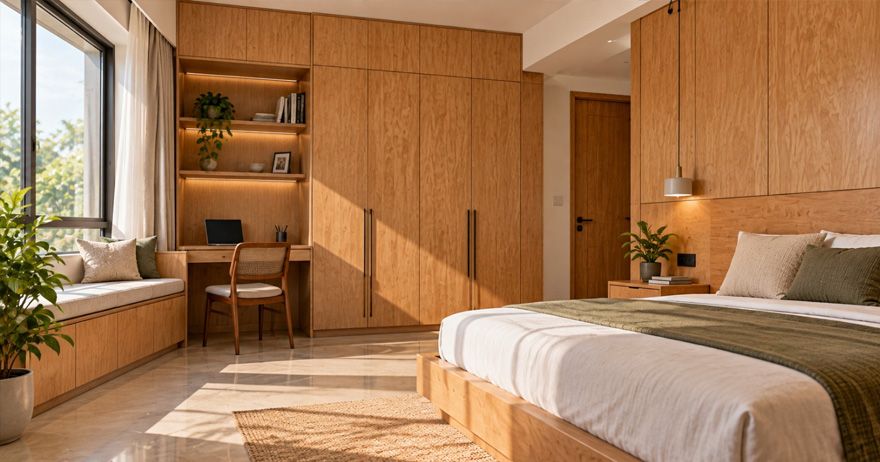
MR stands for Moisture Resistant. MR grade plywood is commonly used for bedroom furniture, wardrobes, study tables, bookshelves, and other interior applications where persistent moisture isn't expected.
BWR Plywood
BWR stands for Boiling Water Resistant.BWR plywood products can be considered for areas with greater exposure to humidity and occasional moisture. They may be used for selected kitchen and utility applications.
BWP Plywood
BWP stands for Boiling Waterproof. BWP plywood products offer higher water resistance and are commonly considered for demanding interior applications, particularly where water exposure is more likely.
Marine Plywood
Marine plywood is designed for demanding environments and is generally used where high moisture performance is required. It can also be considered for premium furniture applications where its performance characteristics justify the additional cost.
Flexible Plywood
Flexible plywood is designed to bend around curves and is used for specialized furniture and interior designs.
Fire-Retardant Plywood
Some manufacturers offer fire-retardant plywood designed to provide enhanced fire performance.
MR, BWR, and BWP Plywood: What's the Difference?
MR, BWR, and BWP are frequently discussed when choosing plywood for Indian homes, but they are not interchangeable. The difference between the MR, BWR and BWO plywood are given below.
| Feature | MR | BWR | BWP |
|---|---|---|---|
| Full Form | Moisture Resistant | Boiling Water Resistant | Boiling Waterproof |
| Moisture Performance | Suitable for moderate indoor conditions | Higher resistance to water exposure | Higher water resistance |
| Typical Use | Bedrooms; wardrobes; dry furniture | Humid and selected semi-wet applications | Kitchens and demanding interior applications |
| Relative Cost | Generally lower | Generally higher | Generally higher |
| Suitable for Prolonged Water Exposure | No | Not automatically | Product-specific; follow manufacturer specifications |
| Selection Priority | Dry interiors | Greater moisture exposure | Higher moisture-demand applications |
Marine Plywood vs Commercial Plywood
Commercial plywood is a broad term commonly used in the Indian market for plywood intended primarily for interior applications, particularly where extreme moisture resistance isn't required.
Marine plywood, on the other hand, is manufactured to more demanding specifications and is intended for applications requiring higher moisture performance.
| Factor | Commercial Plywood | Marine Plywood |
|---|---|---|
| Typical Application | Interior furniture | Demanding moisture environments |
| Moisture Performance | Depends on specific grade | Generally designed for higher moisture exposure |
| Cost | Usually more economical | Usually more expensive |
| Common Uses | Wardrobes; furniture; interior partitions | High-moisture and premium applications |
| Quality Variation | Can vary considerably | Should meet relevant product specifications |
| Selection Priority | Dry or controlled environments | More demanding moisture conditions |
Choosing the Right Plywood for Different Applications
The right plywood should be selected according to the environment and purpose of the furniture or structure.
- Bedroom Furniture: For wardrobes, dressing units, beds, and other furniture in relatively dry rooms, MR plywood can often be a practical option.
- Kitchen Cabinets: Kitchens experience steam, splashes, spills, and changing humidity. A moisture-resistant product appropriate for kitchen use is therefore generally preferable.
- Bathroom Furniture: Bathroom cabinets are exposed to considerably more moisture than bedroom furniture. Select a plywood product specifically suitable for the conditions and protect exposed edges carefully.
- Doors: Door selection depends on whether the door is internal or external, its exposure to moisture, its size, and the required structural performance.
- Custom Furniture: For custom furniture, don't simply specify a plywood grade. Discuss the thickness, internal support, hardware, edge treatment, finish, and expected loading with the furniture manufacturer.
If you are planning plywood for home interiors, choosing the appropriate product for each application can be more economical than using the most expensive plywood throughout the entire house.
Factors to Consider Before Buying Plywood
The plywood material should match the room, expected usage, moisture exposure, structural requirements, and finish. A practical plywood buying guide should consider the following factors before you place an order.
Intended Application
First determine where the plywood will be used. A bedroom wardrobe has different requirements from a kitchen cabinet, bathroom vanity, door, or structural component.
Moisture Exposure
Consider how much moisture the material will encounter. Dry interiors may require a different grade from kitchens, utility areas, or bathrooms.
Thickness
Plywood thickness should be selected according to the component's size, span, load, and construction method. Using an unnecessarily thick sheet can increase costs, while inadequate thickness can compromise strength.
Core Quality
Inspect the plywood for visible voids, gaps, delamination, warping, or poorly bonded layers. A consistent core generally contributes to better performance.
Surface Quality
If the plywood will be laminated, veneered, painted, or polished, check whether its surface is appropriate for the intended finish.
Standards and Certifications
Check the manufacturer's documentation, applicable Indian standards, product markings, and certifications where relevant. These can help verify the product's claimed properties.
Manufacturer and Warranty
Choose products from established manufacturers with clear technical specifications and warranty terms. Keep purchase invoices and product documentation for future reference.
Total Project Cost
Don't compare only the price of the plywood sheet. Include transportation, cutting, edge treatment, laminate or veneer, hardware, fabrication, and installation when preparing your budget.
Common Mistakes to Avoid When Choosing Plywood
Avoid these below common mistakes when purchasing plywood for your home.
- Choosing Only by Price: The cheapest sheet may not provide the required moisture resistance, strength, or durability. Compare specifications rather than price alone.
- Using MR Plywood in Wet Areas: Moisture-resistant plywood isn't automatically suitable for prolonged water exposure.
- Assuming BWP Means Completely Waterproof: Product performance still depends on manufacturing quality, installation, exposed edges, and actual conditions.
- Choosing the Highest Grade for Every Room: Premium plywood may be unnecessary for dry applications where a suitable lower-cost product can perform adequately.
- Ignoring Thickness: The correct grade won't compensate for an incorrectly sized or inadequately supported component.
- Not Checking the Core: A good-looking surface can hide poor internal construction. Inspect the edges and sheet quality before purchase.
- Ignoring Edge Protection: Proper sealing and finishing are important, particularly in kitchens and bathrooms.
- Buying Without Documentation: Avoid products with unclear specifications or unsupported performance claims.
- Confusing Water Resistance With Overall Quality: Strength, bonding, dimensional stability, and construction quality also matter.
Tips to Check Plywood Quality Before Purchase
A basic inspection can help identify visible quality issues before the plywood reaches your workshop or construction site. The best plywood for furniture should combine suitable grade, consistent construction, appropriate thickness, and reliable manufacturing rather than simply carrying the highest price tag.
Examine the Edges
Look at the edge of the sheet for uniform veneer layers. Large gaps, visible voids, or poorly bonded layers can be warning signs.
Check for Warping
Place the sheet on a reasonably flat surface or visually inspect it from different angles. Excessive bending or twisting can make installation difficult.
Inspect the Surface
Look for cracks, blisters, delamination, holes, or significant surface defects that could affect the intended finish.
Check Thickness
Measure the sheet if necessary rather than relying solely on the stated thickness. Slight manufacturing tolerances may exist, but significant inconsistencies deserve attention.
Verify Product Markings
Check the manufacturer's markings, grade, thickness, batch information, and applicable certification details where provided.
Ask About Intended Application
Don't assume that a plywood product is suitable for a particular room simply because it has a familiar grade name. Confirm its recommended applications.
Check the Documentation
Technical data sheets and manufacturer information can provide more reliable information than salesperson claims alone.
Best Plywood Brands in India
Some of the best plywood manufacturing brands in India are given below that offer products across different grades and applications.
| Brand | Common Product Categories | What to Check |
|---|---|---|
| CenturyPly | MR; BWR; BWP and specialty plywood | Specific grade and certification |
| Greenply | Interior and moisture-resistant plywood ranges | Application and product specifications |
| Kitply | Interior and waterproof plywood products | Grade; thickness and documentation |
| Archidply | Commercial; waterproof and specialty plywood | Intended application |
| Merino | Plywood and interior materials | Product specifications and warranty |
| National Plywood | Various plywood grades and interior products | Grade and applicable standards |
Final Thoughts
Understanding Plywood grades makes it easier to choose materials that are appropriate for different parts of your home. The right choice should balance moisture exposure, strength, thickness, core quality, finish requirements, budget, and installation conditions. Before buying, inspect the sheets, verify product documentation, compare manufacturers, and make sure the selected grade matches the intended application. Don't automatically assume that the most expensive plywood is the best choice for every room.