



Planning the pooja room as per Vastu is believed to create a peaceful and spiritually positive environment in your home. According to Vastu Shastra, the location, direction, layout, and placement of the home temple can influence the flow of positive energy. While the northeast (Ishan) corner is traditionally considered the most auspicious, factors such as idol placement, entrance direction, lighting, and room design also play an important role.
Whether you're building a new house or setting up a small mandir in an apartment, this guide explains the ideal pooja room position according to Vastu principles and practical home planning.
Why Pooja Room Placement Matters in Vastu Shastra
According to Vastu Shastra, every direction in a home is associated with a particular element and energy. The placement of a pooja room is believed to influence harmony, positivity, and spiritual well-being. A properly planned pooja room vastu layout aims to create a calm and distraction-free environment that encourages daily worship and meditation.
Some of the commonly believed benefits such as it creates a peaceful atmosphere, encourages regular prayer and meditation, helps organize a dedicated spiritual space, improves natural lighting and ventilation, promotes a clean and clutter-free environment and enhances the overall aesthetics of the home. Following all these traditional pooja room vastu tips can also help homeowners thoughtfully integrate the prayer room into their home's layout.
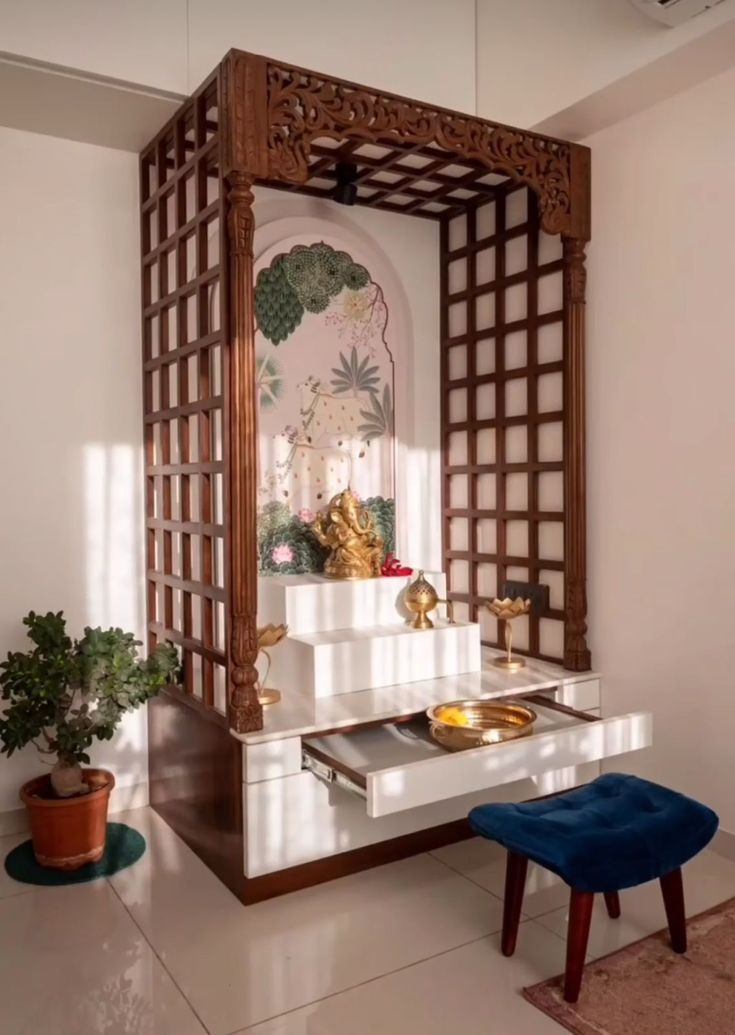
Best Direction for a Pooja Room as per Vastu
The direction of a pooja room is one of the most important aspects of Vastu planning. Traditionally, the North east pooja room (Ishan corner) is considered the most auspicious location because it receives gentle morning sunlight and is associated with spirituality. If the northeast corner isn't available, other directions may also be considered.
| Direction | Vastu Recommendation |
|---|---|
| North-East | Highly Recommended |
| East | Very Good |
| North | Good |
| West | Acceptable (if other options are not possible) |
| South | Generally Avoided |
| South-West | Generally Avoided |
When planning the pooja room direction, it is generally recommended that the person praying faces east or north, as these directions are traditionally associated with positive energy. Homes with limited space can still create a dedicated prayer area by carefully choosing an appropriate location and maintaining a clean and peaceful environment.
Ideal Location for a Pooja Room in Different House Layouts
The best location varies depending on the size and layout of your home. It is definitely possible to create a functional prayer space even if you live in a spacious villa or a compact apartment. The following table provides general recommendations.
| Home Type | Recommended Pooja Room Location |
|---|---|
| Independent House | Dedicated room in the northeast corner |
| Villa | Northeast portion of the ground floor |
| Apartment | Quiet corner in the living or dining area facing east or north |
| Duplex | Ground floor northeast section |
| Small Home | Compact wall-mounted mandir in a peaceful area |
When deciding the pooja room location, choose a place that remains quiet, clean, and free from heavy daily movement. Many homeowners also consider the temple direction in house while planning the overall layout to ensure the prayer area remains easily accessible without disturbing other living spaces.
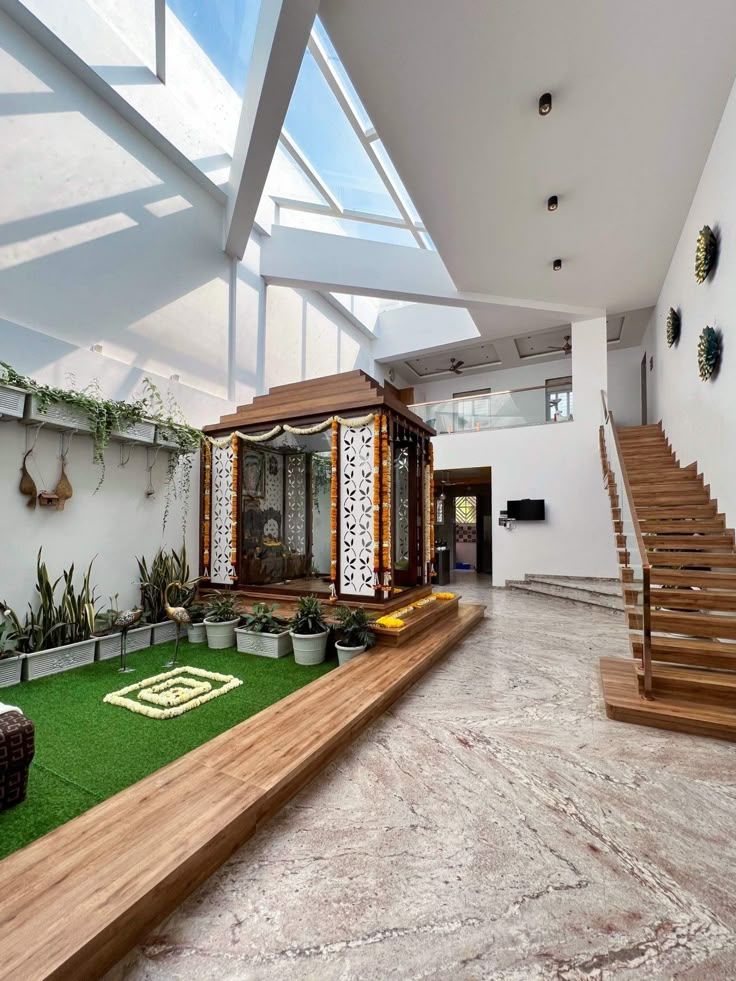
Vastu Guidelines for Idols, Doors, and Windows
Apart from location, Vastu also offers recommendations regarding the placement of idols, room openings, and ventilation. These guidelines are commonly followed while designing a home temple.
Idol Placement
- Place idols on an elevated platform.
- Avoid placing idols directly on the floor.
- Leave a small gap between the idol and the wall.
- Arrange deities neatly without overcrowding the space.
Doors
- Prefer double-door or wooden doors where possible.
- Ensure the doors open inward.
- Keep the entrance unobstructed.
Windows
- Allow natural light to enter the room.
- Provide adequate ventilation.
- Use soft curtains if necessary without blocking sunlight completely.
Following these traditional principles of home mandir vastu helps create a bright, peaceful, and well-ventilated prayer room.
Pooja Room Design Tips for Apartments and Small Homes
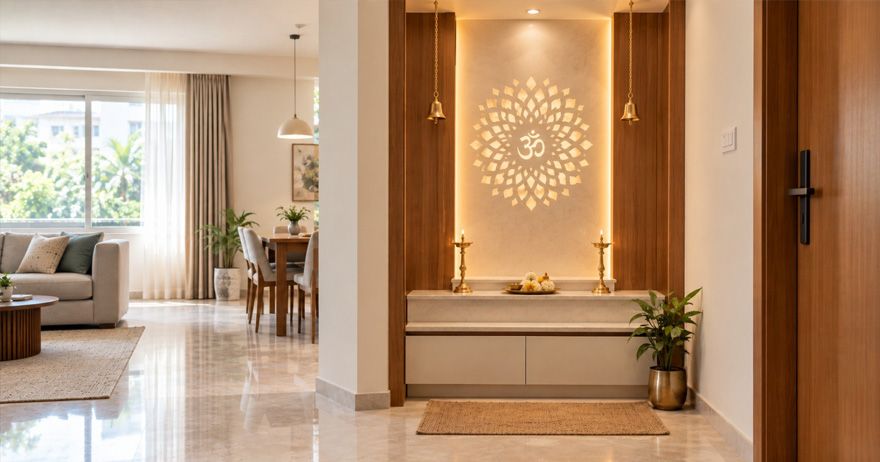
Modern apartments often have limited space, but that does not mean you need to compromise on creating a meaningful prayer area. A thoughtfully planned pooja room design can fit comfortably into compact homes while maintaining functionality and visual appeal. Some of the practical ideas are given below.
- Choose Compact Wall-Mounted Mandirs: Wall-mounted temples save floor space and create a clean and organized appearance.
- Use Natural Materials: Wood, stone, and subtle finishes create a calm and welcoming atmosphere.
- Keep the Space Well Lit: Natural daylight is ideal, but warm LED lighting can also create a peaceful ambience.
- Maintain Proper Ventilation: Fresh air helps keep the prayer area comfortable and pleasant throughout the day.
- Avoid Excessive Decoration: A simple, uncluttered design often feels more peaceful and is easier to maintain.
Even in compact apartments, careful planning allows homeowners to follow vastu for pooja room principles while creating a beautiful and functional spiritual space.
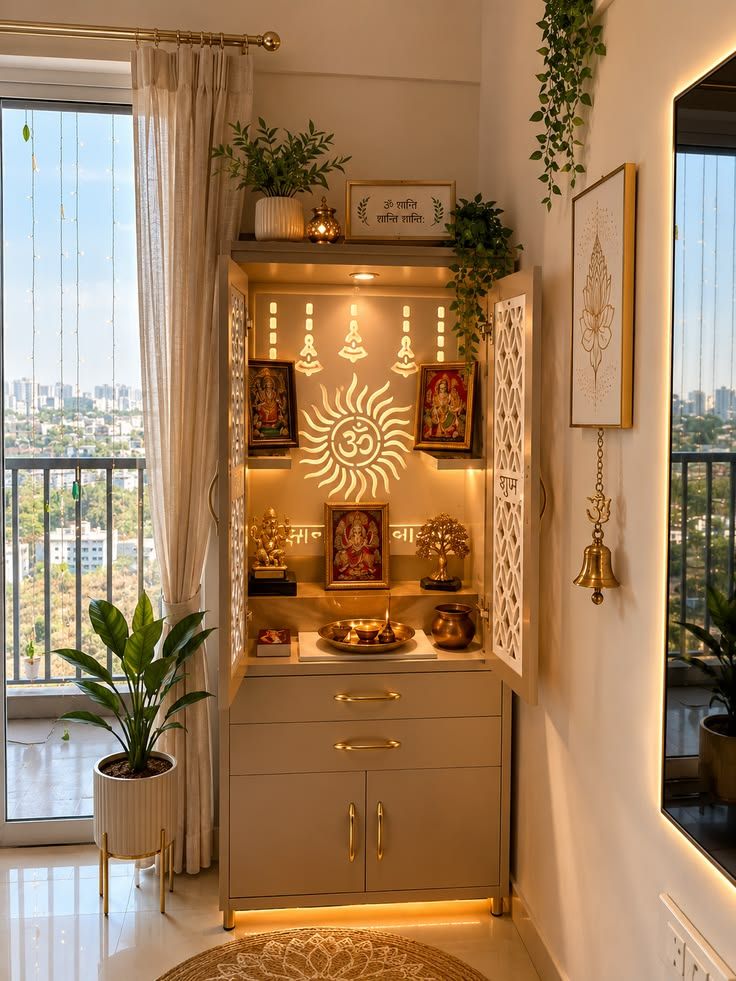
Directions and Locations to Avoid
While Vastu Shastra recommends certain directions for a pooja room, it also advises avoiding specific locations that are traditionally believed to disrupt the peaceful atmosphere of the prayer space. These recommendations are commonly followed when planning a home temple.
| Location | Traditional Vastu Recommendation |
|---|---|
| Under the Staircase | Avoid if possible |
| Attached to Bathroom Walls | Avoid |
| Inside Bathrooms | Avoid |
| Directly Opposite Toilet | Avoid |
| South-West Corner | Generally not preferred |
| Near Heavy Storage Areas | Avoid clutter around the pooja room |
Common Vastu Mistakes in Pooja Room Placement
Avoid these below common mistakes when planning your home temple.
- Choosing a Cluttered Location: A pooja room should remain neat and organized. Excessive storage or unused items can make the space feel less peaceful.
- Placing the Temple Near Bathrooms: Many Vastu traditions recommend maintaining a clear separation between the pooja room and bathrooms.
- Keeping Broken Idols or Damaged Frames: Damaged religious items are generally replaced respectfully to maintain a clean and devotional environment.
- Poor Lighting and Ventilation: A dark or poorly ventilated prayer room may feel less welcoming. Natural light and fresh air enhance the overall ambience.
- Overcrowding the Space: Placing too many idols, lamps, or decorative items can make the room difficult to maintain and reduce visual harmony.
- Ignoring Daily Accessibility: The prayer area should be easy to access so that daily worship becomes convenient for the family.
- Using the Pooja Room for Storage: Avoid using the prayer room to store unrelated household items, luggage, or cleaning supplies.
Practical Tips for Creating a Peaceful Pooja Space
Even in a compact space, a few simple design choices can create a calm and inviting atmosphere. Some of the practical Vastu tips for home temple planning are given below.
- Keep the pooja room clean, organized and clutter-free.
- Use light, soothing colours such as white, cream, or soft yellow.
- Allow natural light wherever possible.
- Provide adequate ventilation.
- Choose wooden or stone finishes for a timeless appearance.
- Keep electrical wiring concealed for a neat look.
- Use soft warm lighting during evening prayers.
- Store prayer books and accessories in dedicated cabinets or drawers.
- Avoid placing heavy furniture directly in front of the temple.
- Maintain a peaceful atmosphere by minimizing distractions.
Frequently Followed Vastu Recommendations vs Modern Home Design
Many homeowners try to balance traditional Vastu principles with practical design considerations. The table below highlights how these approaches can work together.
| Traditional Vastu Recommendation | Modern Home Design Approach |
|---|---|
| Northeast corner is preferred | Use the northeast if available but prioritize a quiet and well-maintained space when layout constraints exist |
| Face east or north while praying | Arrange the prayer area so daily worship remains comfortable and practical |
| Dedicated pooja room | Wall-mounted or built-in mandirs work well in apartments |
| Natural lighting is preferred | Combine daylight with warm LED lighting for a serene ambience |
| Wooden doors for the temple | Decorative partitions or sliding doors can also create a dedicated prayer area |
| Spacious prayer room | Compact designs can be equally functional when planned thoughtfully |
Ultimately, mandir placement as per vastu should complement your home's layout while creating a peaceful and comfortable environment for daily worship. Understanding pooja room vastu principles alongside practical interior planning allows homeowners to design spaces that are both functional and spiritually meaningful.
Final Thoughts
A thoughtfully designed pooja room provides a dedicated space for prayer, meditation, and quiet reflection. While Vastu Shastra offers traditional guidelines regarding direction, placement, and design, every home has unique space constraints and planning requirements. Ensure adequate lighting and ventilation, and create an environment that encourages regular worship. By balancing traditional beliefs with modern design needs, you can build a pooja room that feels harmonious, functional, and welcoming for your family.