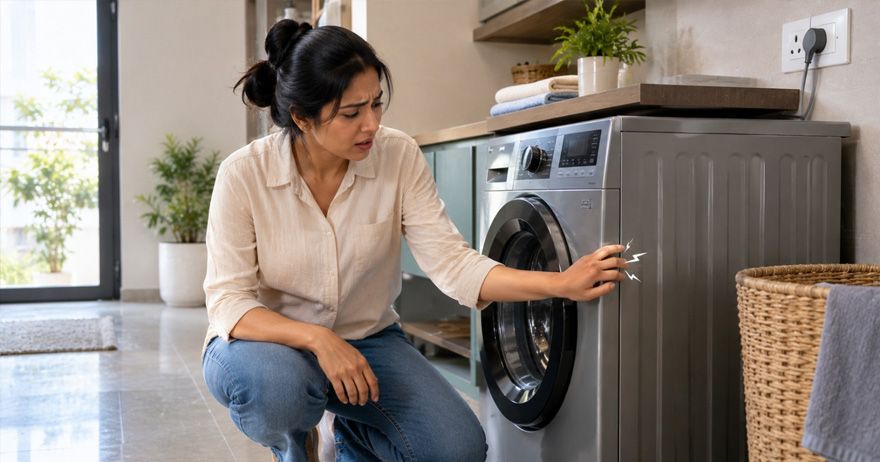
If you experience a mild electric shock from an appliance such as a refrigerator, washing machine, water heater, or other metal-bodied device, do not ignore it. A tingling sensation when touching an appliance can indicate electrical leakage, poor earthing, damaged insulation, faulty wiring, or a problem with the appliance itself.
Damp conditions can increase the risk, particularly in kitchens, bathrooms, balconies, utility areas, and laundry spaces. Water and electricity require particular caution, especially when an appliance has a metal body or is connected to a faulty electrical circuit.
Although a shock may seem minor, repeated tingling can be an early warning of a potentially dangerous electrical fault. Understanding why appliances give mild shocks can help you recognise the problem and take appropriate action.
Why Do Appliances Sometimes Give Mild Electric Shocks?
A mild shock usually feels like a brief tingling sensation when you touch the metal surface of an appliance. This can happen when a small amount of current reaches an accessible conductive part that should not normally carry current.
Several issues can contribute to an appliance giving an electric shock, including:
- Poor or faulty earthing
- Electrical leakage inside the appliance
- Damaged insulation
- Faulty plugs or sockets
- Damaged power cables
- Incorrect wiring
- Moisture around electrical equipment
- Faulty internal components
The sensation can vary depending on the electrical fault, the condition of the wiring, the surrounding environment, and the path electricity takes through the body.
A mild shock should therefore be treated as a warning rather than something that is considered normal.
Common Causes of Electrical Leakage
Electrical leakage in appliances occurs when current escapes from its intended path and reaches another conductive part of the equipment.
Damaged insulation is one possible cause. Insulation around internal wires can deteriorate because of age, heat, mechanical damage, moisture, or component failure.
A damaged power cable can create another hazard. Never ignore cracks, cuts, exposed wires, melted insulation, or loose connections.
The problem may also originate from the home's electrical installation rather than the appliance itself. A faulty socket, damaged wiring, or incorrect connection can cause problems even when the appliance is functioning properly.
Watch for other warning signs such as:
- Burning smells
- Sparks
- Scorch marks
- Hot or discoloured sockets
- Repeated circuit breaker trips
- Buzzing sounds
- Flickering lights
- Damaged plugs or cables
If any of these signs occur, stop using the affected equipment and arrange a professional inspection.
How Poor Earthing Can Cause Appliance Shocks
Earthing is a crucial part of electrical safety. It provides a protective path for fault current and helps reduce the risk of exposed metal parts becoming dangerously energised.
Many household appliances have metal bodies. If an internal fault causes electricity to reach the metal casing, a correctly installed earthing system can help direct the fault current through the intended protective path.
Appliance earthing problems can occur when the earthing connection is missing, damaged, incorrectly installed, or otherwise ineffective.
A three-pin plug alone does not guarantee effective earthing. The socket, wiring, protective conductor, and overall electrical installation must also be correctly installed and maintained.
Do not test earthing by touching the appliance yourself. Proper testing requires appropriate electrical test equipment and should be carried out by a qualified professional.
Damaged Cables, Plugs and Appliance Insulation
Power cables and plugs can deteriorate over time. Repeated bending, crushing, exposure to heat, moisture, or physical damage can affect their insulation and connections.
If you notice a cracked cable, frayed insulation, melted plastic, damaged plug, or burn mark, stop using the appliance.
Other warning signs include:
- Loose plugs
- Damaged plug pins
- Exposed conductors
- Discoloured sockets
- Unusual heat around a plug
- A cable that has become brittle or cracked
Do not cover damaged mains wiring with ordinary adhesive tape as a permanent solution. Do not open an appliance or attempt to repair internal wiring unless you are appropriately qualified to perform electrical work.
A damaged cable or plug should be professionally replaced or repaired using suitable components.
Why Damp Areas Increase Electric Shock Risk
Moisture can make electrical faults more hazardous. This is especially true where water and electrical equipment are close together.
Common high-risk areas include:
- Kitchens
- Bathrooms
- Utility rooms
- Laundry areas
- Balconies
- Outdoor spaces
Never touch electrical equipment with wet hands. Avoid using appliances while standing on a wet surface, and keep plugs, sockets, extension boards, and electrical connections away from water.
If an appliance becomes wet because of flooding, a plumbing leak, or another incident, do not switch it on to check whether it still works. Have it assessed appropriately before use.
Good electrical safety at home requires both safe electrical equipment and a suitable environment around that equipment.
Appliances That Commonly Cause Tingling Sensations
Some appliances are more likely to produce complaints about tingling because they have metal bodies, motors, heating elements, or other electrical components.
Refrigerator
An electric shock from a refrigerator may be associated with electrical leakage, an earthing fault, damaged insulation, an internal component problem, or faulty household wiring.
Because refrigerators are commonly installed in kitchens, nearby moisture can also increase the potential risk.
If your refrigerator repeatedly gives a tingling sensation, stop touching its metal body and arrange a professional inspection.
Washing Machine
An electric shock from a washing machine should be taken seriously because washing machines operate in areas where water is present.
Do not continue using a washing machine that repeatedly gives shocks until the cause has been professionally investigated.
Water Heater
Water heaters require particular caution because they combine electrical components with water. A shock associated with a water heater or its surrounding metal fittings should be treated as a serious warning.
Do not attempt to investigate the internal electrical components yourself.
Other Metal-Bodied Appliances
Ovens, dishwashers, air conditioners, microwaves, computers, and other electrical equipment can also develop faults that produce a tingling sensation.
The key point is that the severity of the sensation does not reliably indicate the seriousness of the underlying fault.
How to Identify a Potential Electrical Fault Safely
Never deliberately touch an appliance repeatedly to determine whether it is giving a shock. Doing so can unnecessarily expose you to electrical danger.
Instead, note what happens and provide this information to a qualified electrician.
Useful details include:
- Which appliance is affected
- Whether the shock occurs repeatedly
- Whether other appliances are affected
- Whether the area is damp
- Whether a circuit breaker trips
- Whether there are sparks or burning smells
- Whether the problem started after electrical work
- Whether the appliance was recently repaired or moved
If several appliances produce similar tingling sensations, the issue may be related to the home's electrical installation rather than one appliance.
A professional can use suitable testing equipment to investigate earthing, insulation, protective devices, wiring, and leakage.
What to Do If an Appliance Gives You a Shock
Stop using an appliance that gives you a shock.
If it can be done safely, switch off the relevant circuit using the electrical panel or isolator without touching the faulty appliance or exposed conductive parts.
Do not continue testing the appliance yourself.
Follow these basic steps:
- Stop using the appliance.
- Keep children and other household members away from it.
- Do not touch it with wet hands.
- Do not open the appliance.
- Do not attempt makeshift electrical repairs.
- Contact a qualified electrician or suitable appliance technician.
Seek emergency medical assistance after a significant shock, particularly if there are burns, breathing difficulties, confusion, loss of consciousness, severe pain, or other concerning symptoms.
If someone is still in contact with a live electrical source, do not touch them directly. The electricity should be disconnected safely first, and emergency help should be contacted.
Electrical Safety Measures for Indian Homes
A few basic precautions can reduce the risk of appliance-related electrical accidents.
Use properly installed electrical wiring, sockets, plugs, and protective devices. Make sure earthing is correctly installed and maintained.
Suitable residual-current protection, such as an RCCB or RCD, can provide an additional layer of protection against certain leakage conditions. However, such devices do not replace proper earthing, sound wiring, or safe appliance use.
For safer electrical installations:
- Use qualified electricians for electrical work.
- Avoid overloading sockets.
- Replace damaged plugs and cables.
- Keep electrical connections away from water.
- Do not use appliances with exposed wires.
- Arrange inspection of older electrical installations.
- Use suitable protective devices.
- Follow appliance installation instructions.
- Keep electrical panels accessible.
- Address repeated circuit breaker trips promptly.
Electrical installations in Indian homes should comply with applicable local requirements and relevant Indian electrical standards.
When to Call a Qualified Electrician
A qualified electrician should investigate any unexplained or repeated mild electric shock from appliances.
Professional assistance is especially important when:
- Multiple appliances cause tingling.
- A shock occurs repeatedly.
- Circuit breakers trip unexpectedly.
- A socket becomes hot.
- You notice sparks or burning smells.
- Wires or plugs are visibly damaged.
- The home has old electrical wiring.
- Electrical problems occur after renovation.
- The appliance is located in a damp area.
Do not assume that replacing one appliance will solve the problem. If the underlying issue is faulty wiring or earthing, another appliance may develop the same problem.
Final Thoughts on Appliance Electric Shocks
A mild tingling sensation from an appliance should never be dismissed. Why appliances give mild shocks can have several possible explanations, including electrical leakage, poor earthing, damaged insulation, faulty wiring, moisture, or a defective component.
Good electrical safety at home depends on properly installed wiring, effective earthing, suitable protective devices, dry surroundings, and prompt attention to damaged equipment.
A small shock can be an early warning of a more serious electrical problem. Taking it seriously can help prevent further damage and reduce the risk of a severe electrical accident.