Installing an EV charger at home involves more than just plugging in your car. Before getting started, check whether your home's electrical connection can support the charger, whether the existing wiring is suitable, and where the charging point should be installed for easy access.
Sorting out these details beforehand can help you avoid problems during installation. Installing a home EV charger in an independent house is generally simpler than in an apartment, where you may need approval from the housing society or building management.
Before commencing any work, make sure to assess the parking lot, electricity meter, electrical load for the EV charger, and the path through which cables will reach the site of installation. These factors will determine both the location of the charger and the price for the work performed.
In this blog, we’ll cover everything you need to know about home EV charger installation, including wiring requirements, installation costs, electrical safety, and society approval.
Why Install an EV Charger at Home?
Installing an EV charger at home makes charging your vehicle easier, especially if you use it for frequent travel. Instead of waiting at public charging stations, you can plug in your car when you return home and let it charge overnight or while you're busy with other tasks. This also allows you to take advantage of lower rates if the electricity company has less costly electricity rates in off-peak hours. Even though public charging stations can be used while traveling long distances, a home charger reduces reliance on the stations when driving locally.
What Should You Check Before Installing an EV Charger?
Here’s the list of things you must check before installing an EV charger at home:
- Check your parking space
- Electrical connection
- Power requirement of the charger
- Your home's wiring and electrical load should handle the charger safely
- Choose a location where the charging cable can easily reach your vehicle
- Protection from rain and other weather conditions
- Earthing, circuit protection, and other safety requirements
Choosing the Right EV Charger for Your Vehicle
If you want to choose the right EV charger for your vehicle, then you must know the charging requirements of your car. Also, your charger should be compatible with your vehicle and suitable for your home’s electrical capacity. Choosing the right option can make everyday charging simpler without putting unnecessary load on your electrical system.
Check the type of connector it uses
- The maximum charging power it can handle
- How often you drive your car
- How quickly you want the battery to charge
- Where you plan to install the charger
Home EV Charger Wiring and Electrical Load Requirements
Before installing an EV charger at home, check the following electrical load requirements:
- Make sure your home connection can handle the load of the charger.
- Choose the cable size according to the charger load.
- Avoid sharing the charger with other heavy appliances.
- Use the required MCB/RCD and other protective devices.
- Ensure proper earthing for safe charging.
- Get professional installation.
Earthing, MCB, RCCB, and Other Safety Considerations
Safety is an important part of installing an EV charger at home. Since the charger handles a higher electrical load than a regular household socket, the electrical setup should have the right protection in place.
- Proper earthing: A reliable earthing connection helps provide a safe path for fault current and reduces the risk of electric shock.
- MCB: An MCB (Miniature Circuit Breaker) helps protect the circuit from excessive current caused by an overload or short circuit.
- RCCB: An RCCB (Residual Current Circuit Breaker) detects leakage of current and can disconnect the supply to help protect against electric shock.
- Suitable cables: Use cables of the correct size and rating for the charger's power requirement. Undersized or poor-quality wiring can overheat.
- Weather protection: For outdoor chargers, use equipment and enclosures suitable for the installation conditions and protect electrical connections from rain and water exposure.
- Professional installation: Get the charger installed and tested by a qualified electrician to ensure the wiring, earthing, and protective devices are properly connected.
Where Should You Install an EV Charging Point for Home?
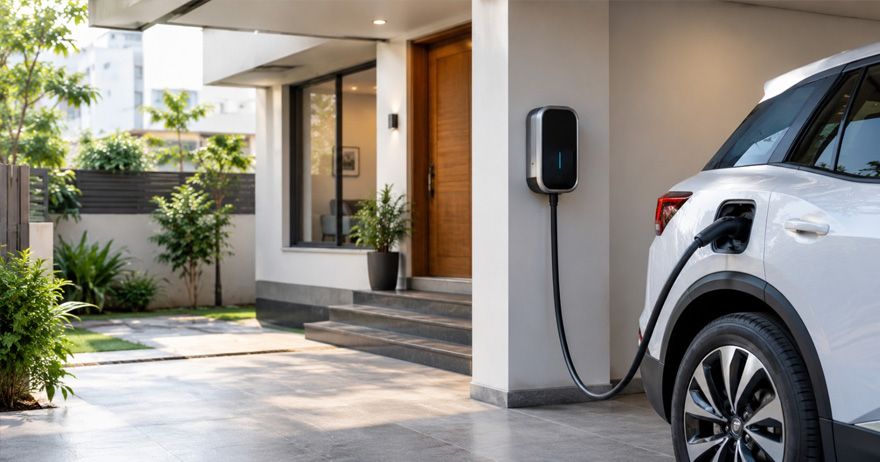
The best place to install a home EV charging setup is close to your regular parking space, so you can connect the vehicle easily without stretching the cable across the driveway. The spot should be easily accessible and protected from direct rain, water, and accidental damage.
You also need to make sure that the wall or surface is strong enough to support the charger. If possible, keeping the charger reasonably close to the electrical panel can make the wiring installation simpler. Before finalising the location, check the site with a qualified electrician to make sure the wiring route and electrical connections are safe.
EV Charger Installation Cost: What Influences the Price?
A simple setup can be cheaper, but a powerful charger or more challenging installation may lead to additional expenses. If the parking site is not close to the electrical box or requires some civil works, the installation will get more expensive too. The costs of installing a home EV charger can depend on numerous factors such as:
The charger type
- Power rating
- Cable length
- Electrical panel upgrades
- Wiring work
- Earthing
- Safety devices and mounting requirements.
Installing an EV Charger in an Apartment or Gated Society
EV charger installation for apartments or gated societies may require a few additional checks compared with an independent house. Before installation:
- Check with the RWA and society management about any permission.
- Check whether the charger can be connected to your existing electricity meter.
- Check whether the building's electrical system can handle the additional load.
- Check the wiring route, earthing, MCB, RCCB, and other safety requirements.
- Check how the electricity used for charging will be measured and billed, and who will be responsible for maintenance.
How to Get Society Approval for an EV Charger?
If you live in a gated society, then it’s important to get approval from your society. Because every society has its own set of rules and regulations. And here’s how you can get society approval for an EV charger:
- Check the rules of your society regarding EV charger installation.
- Submit a written request regarding your parking space, vehicle, charger type, and proposed installation location.
- Share the electrical plan, including power requirements, wiring route, and connection to your electricity meter, with the relevant authorities.
- Provide charger details, including the model, power rating, and required safety features.
- Confirm how much electricity will be consumed by the charger and how it will be measured and billed.
Common EV Charger Installation Mistakes to Avoid
EV charger installation appears to be simple. However, small errors in connection and placement can make the charger's use unsafe and impractical. A few common mistakes to watch out for include:
- Avoid connecting a high-powered charger to a regular socket that is not designed to handle the required load.
- Check your home's available electrical capacity before installation to avoid overloading the system.
- Make sure the charger has proper earthing before it is put into use.
- MCB, RCCB, and other required protection should be installed as part of the electrical setup.
- Avoid placing the charger where the cable becomes a tripping hazard or where the unit is exposed to unnecessary water or physical damage.
How to Maintain and Safely Use a Home EV Charger
Regular care and safe charging habits can help keep your home EV charger in good working condition. A few simple checks can also help prevent avoidable electrical problems.
- Check the cable regularly: Look for cuts, cracks, exposed wires, or signs of overheating before using the charger.
- Keep the charging area dry: Protect the charger, plug, and electrical connections from standing water and unnecessary moisture.
- Keep the connector clean: Wipe away dust and dirt from the charging connector and keep it properly covered when not in use.
- Do not use damaged equipment: Stop using the charger if you notice burning smells, unusual heat, sparks, or visible damage.
- Get periodic checks: Have the electrical connections, earthing, and safety devices inspected by a qualified electrician if you notice any issues or as recommended by the manufacturer.
Final Thoughts
Installing an EV charger at home may seem like a big task at first, but knowing what to check can make the process much easier. Before you begin, make sure your electrical setup is suitable, understand the installation costs, and get the required permissions if you live in an apartment. A little preparation can save you from extra expenses and help you charge your EV safely at home.