



A rainwater harvesting system is one of the most effective ways to conserve water, reduce dependency on municipal supplies, and lower water bills. By collecting and storing rainwater from rooftops, homeowners can use it for gardening, cleaning, flushing toilets, groundwater recharge, and other non-potable purposes.
With increasing water scarcity and unpredictable rainfall across India, rainwater harvesting has become an essential feature of sustainable homes. In this guide, you'll learn how rainwater harvesting works, the different methods available, installation requirements, costs, maintenance tips, and the benefits of implementing a system at home.
What Is Rainwater Harvesting?
Home rainwater harvesting is the process of collecting, filtering, and storing rainwater for future use instead of allowing it to flow into drains. The collected water can be used for gardening, washing vehicles, cleaning outdoor areas, flushing toilets, and groundwater recharge. It can also be used for drinking in certain situations, depending on local regulations and filtration standards with proper treatment,
At present, rainwater harvesting for homes has become increasingly popular because it reduces dependence on municipal water supplies while promoting sustainable water management. A well-planned system also helps reduce flooding and soil erosion by controlling stormwater runoff.
How a Rainwater Harvesting System Works
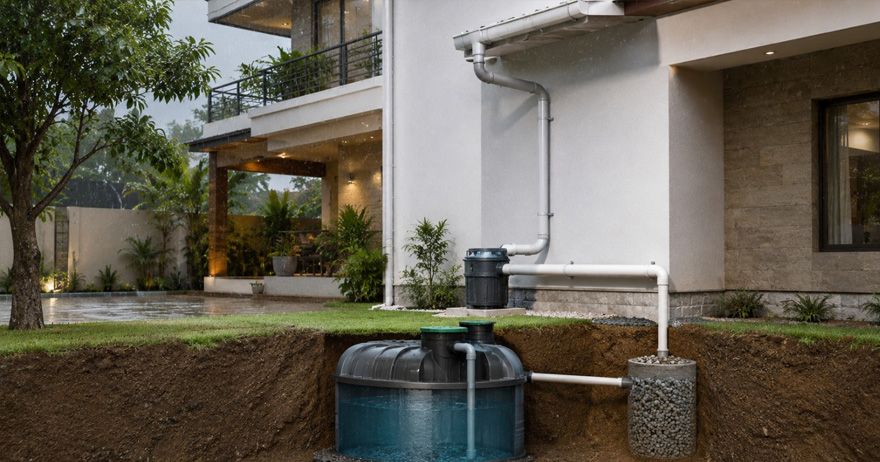
A rainwater harvesting system captures rainwater from rooftops and channels it into a storage or recharge system. The process begins when rain falls on the roof. Gutters and downpipes direct the water through filters that remove leaves, dust, and other debris. Clean water is then stored in tanks or diverted to recharge pits that replenish groundwater.
One of the most widely used approaches is rooftop rainwater harvesting, where the roof acts as the primary catchment area. Depending on your requirements, the stored water can either be used immediately or reserved for future household needs through a properly designed rainwater collection system.
Benefits of Rainwater Harvesting for Homes
- Installing a rainwater harvesting system offers both environmental and financial benefits.
- One of the biggest advantages is reduced dependence on municipal water supplies, particularly during periods of water scarcity.
- It also helps lower water bills by supplying water for non-potable applications such as gardening, vehicle washing, and cleaning.
- Another major benefit is improved groundwater recharge, which supports local water availability and reduces pressure on natural resources.
- Implementing water conservation at home also contributes to sustainable living and helping communities manage increasing water demand more effectively.
Different Types of Rainwater Harvesting Systems
There are several rainwater harvesting methods available, and the right choice depends on your property's size, rainfall patterns, and water requirements. The most common systems include rooftop collection, surface runoff harvesting, groundwater recharge pits, recharge wells, and underground storage tanks. Rooftop systems are ideal for residential properties because they are relatively easy to install and require minimal space.
Ground recharge systems are particularly beneficial in areas where groundwater levels are declining. In many regions, rainwater harvesting in India combines rooftop collection with recharge pits to maximise both water storage and groundwater replenishment. Each method offers unique advantages, and it is important to select the system that best suits your home's location and water usage.
Step-by-Step Installation Process
Installing a rainwater harvesting system requires careful planning to ensure efficient water collection and long-term performance. The basic installation process includes the following below.
- Assess the Roof Area: Measure the available roof surface to estimate the amount of rainwater that can be collected.
- Install Gutters and Downpipes: These channels direct rainwater safely from the roof to the filtration system.
- Add Filtration Units: Install filters to remove leaves, dust, and debris before the water enters storage or recharge structures.
- Install a Rainwater Storage Tank: Choose a storage tank with sufficient capacity based on your household's water requirements and local rainfall.
- Connect Distribution or Recharge Systems: Depending on your needs, connect the stored water to irrigation systems or direct it into groundwater recharge structures.
Components of a Rainwater Harvesting System
A good rainwater harvesting system consists of several components that work together to collect, filter, store, and distribute rainwater efficiently. Each component plays an important role in ensuring clean water collection and long-term performance.
| Component | Purpose | Why It Matters |
|---|---|---|
| Catchment Area (Roof) | Collects rainwater | Determines how much water can be harvested |
| Gutters and Downpipes | Direct water from the roof | Prevent water loss during collection |
| First Flush Diverter | Removes the initial dirty rainwater | Improves water quality |
| Filtration Unit | Removes leaves dust and debris | Protects storage tanks from contamination |
| Storage Tank | Stores harvested rainwater | Ensures water is available during dry periods |
| Overflow System | Diverts excess water | Prevents flooding and overflow |
| Recharge Pit/Well | Recharges groundwater | Supports sustainable water management |
Maintenance Tips for Long-Term Performance
Regular maintenance ensures your rainwater harvesting system continues to perform efficiently throughout the year.
- Inspect the roof periodically and remove leaves, dirt, and other debris that may contaminate collected water.
- Clean gutters, downpipes, and filters before and after the rainy season to prevent blockages and maintain proper water flow.
- The rainwater storage tank should be inspected regularly for sediment buildup, leaks, and signs of contamination. Cleaning the tank once or twice a year helps maintain water quality.
- If your system includes groundwater recharge pits, ensure they remain free from silt and debris so rainwater can flow properly into the ground.
- Routine inspections help identify small issues before they become expensive repairs.
Common Mistakes to Avoid When Installing Rainwater Harvesting
Avoiding these below common mistakes can improve the efficiency and lifespan of your rainwater harvesting system.
- Skipping Proper Filtration: Installing a good filter is essential to prevent dirt, leaves, and debris from entering the storage system.
- Choosing an Undersized Storage Tank: A tank that's too small may overflow quickly during heavy rainfall, reducing the amount of water you can collect.
- Ignoring Roof Maintenance: Dirty rooftops can contaminate harvested rainwater and reduce the effectiveness of the system.
- Poor Drainage Planning: Improper pipe slopes or blocked gutters can lead to water loss and overflow.
- Neglecting Regular Maintenance: Cleaning filters, tanks, and gutters periodically keeps the system operating efficiently and extends its lifespan.
Government Guidelines and Incentives in India
Governments across several Indian states encourage rainwater harvesting to address water scarcity and improve groundwater recharge. Many urban development authorities recommend or require rainwater harvesting systems for new residential and commercial buildings, particularly in water-stressed regions.
Some municipalities offer incentives such as rebates on property tax, faster building approvals, or reduced water charges for properties that install approved systems. Before installation, homeowners should check local building regulations and municipal guidelines to understand the applicable requirements in their area. Following approved standards ensures better system performance and compliance with local regulations.
Final Thoughts
A rainwater harvesting guide can help homeowners understand how to conserve water at the same time reduce dependence on municipal supplies. By selecting the right system, maintaining it regularly, and following local guidelines, homeowners can create a sustainable solution for future water needs. As water scarcity continues to become a growing concern, following this is a practical step toward building a more resilient and environmentally responsible home.