Choosing the best AC temperature setting for Indian homes can noticeably affect both comfort and electricity consumption. During India’s hot and humid summers, it may be tempting to set the air conditioner to a very low temperature.
However, a lower thermostat setting doesn't necessarily cool a room faster and can increase energy use. The ideal setting depends on outdoor temperature, humidity, room size, insulation, occupancy, and personal comfort. A balanced temperature can keep your home comfortable while helping control your electricity bill.
In this blog, we will discuss AC settings for different situations, including daytime use, sleeping, humid weather, and energy-conscious cooling.
What Is the Ideal AC Temperature for Indian Homes?
Most homeowners have this question regarding the ideal AC temperature. But the answer is that simple. The right temperature depends on several factors such as outdoor weather, indoor humidity, personal comfort, and electricity consumption. A setting that works well for you during a hot afternoon may not work well enough at night. So a balanced AC temperature is ideal for all homes, and it can vary from home to home.
Why Setting the AC Too Low Can Increase Electricity Consumption?
Sometimes, homeowners think setting the AC to a very low temperature will cool the room faster. But this can only increase your electricity consumption. The AC keeps working until the room reaches the set temperature. So when the temperature outside is much higher than the temperature set on the AC, the system has to work harder to keep the room cool. This can use more electricity, especially during peak summer when outdoor temperatures stay high for long hours.
Best AC Temperature for Summer in India
During summer in India, setting your AC between 24°C and 26°C is a good starting point for most homes. This range is ideal because it can help keep your room cool while managing electricity consumption.
However, on extremely hot days, you may feel the need to lower the temperature slightly, while a higher setting may be enough during the evening or at night. But instead of doing that, you can also use ceiling fans along with your AC to help circulate cool air throughout the room.
And to maintain that temperature your can keep doors and windows closed while the AC is running to prevent cool air from escaping. All these small steps can help maintain a pleasant indoor temperature without putting extra load on your AC. This also helps you find a suitable balance between cooling and electricity use during the summer months.
Recommended AC Temperature for Daytime Use
During the day, your room may heat up quickly due to direct sunlight, especially if your windows face east or west. In such cases, your AC may need to run longer to maintain the recommended temperature between 24°C and 26°C. So, you can keep your curtains or blinds closed during peak afternoon hours to reduce the heat entering the room. If you're working from home or you spend several hours indoors, then choose a temperature that feels suitable for extended use rather than frequently changing the thermostat.
Best AC Temperature for Sleeping
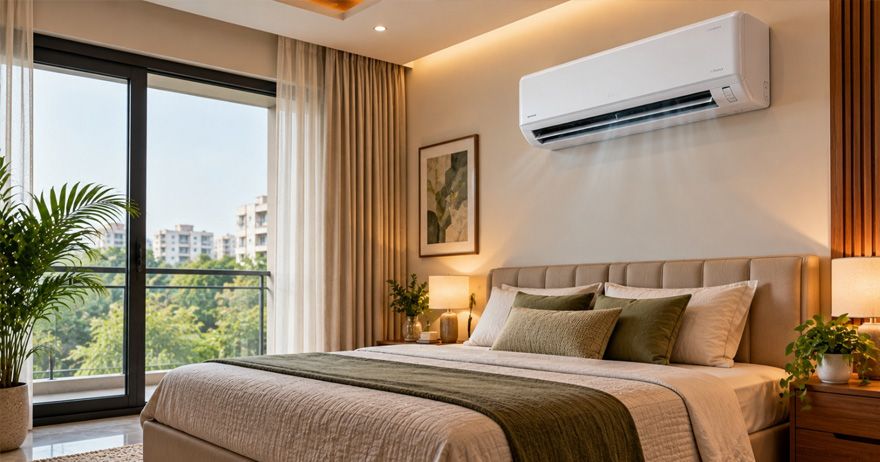
There’s no fixed AC temperature for sleeping, because it can vary from person to person. But as per various studies, setting your AC to 24°C on very hot nights can help you keep your bedroom cool. If the weather is milder, you can increase your AC temperature to 25°C–26°C, and this can also reduce electricity use. Also, if your AC has a sleep mode, you can use it to adjust the temperature gradually during the night. This can prevent the room from becoming too chilly while you sleep.
Ideal AC Setting for Humid Indian Weather
In humid weather, your home can feel sticky, even if the outside temperature is not very high. In such conditions, your air conditioner has to manage both heat and moisture in the air. So, if your room feels damp, check for dry mode in your AC, which is designed to remove moisture from the air. And this setting is quite useful during humid monsoon days when strong cooling may not be necessary.
But if the weather outside is both hot and humid, then use cool mode and adjust the temperature accordingly. In such weather, you might also need to run the AC for longer to reduce humidity. So, keep all your windows closed while it is running.
Does Setting the AC at 24°C Save Electricity?
In general, it is advised to set your AC between 24-26°C, as it’s the ideal temperature. But when you set your AC at 24°C, the compressor does not have to work as hard as it would at a lower temperature, such as 18°C or 20°C. This setting can help save electricity because the higher the temperature setting, the lower the cooling demand, which can reduce power consumption without compromising comfort.
How Outdoor Temperature Affects AC Performance?
The outdoor temperature directly affects AC performance. If the outside weather is extremely hot, then your AC has to work harder to maintain the set temperature, which can increase electricity consumption. And colder season, it generally requires less effort to keep the room comfortable. Whereas, during high humidity, the performance of your AC can also be affected, as the AC needs to remove moisture from the air along with heat.
AC Temperature Settings for Different Room Types
Different rooms need different AC temperature settings, and the ideal AC temperature can vary depending on how the room is used, how many people occupy it, and how much heat it receives.
- For bedrooms, the ideal AC temperature in India could be around 24°C–26°C.
- For living rooms,s it can vary between 22°C–28°C as it’s usually more crowded.
- Kitchens may need slightly more cooling because cooking generates heat, so a temperature between 22°C-25°C, could be suitable.
- For home offices, 24°C–25°C can help maintain a comfortable working environment.
Other Ways to Reduce AC Electricity Consumption
There are several other ways by which you can save electricity while maintaining a comfortable temperature in your house:
- Keep all the doors and windows closed while the AC is running.
- Use curtains and blinds to block direct sunlight, so the temperature is balanced even without an AC.
- Clean your AC filters regularly to maintain proper airflow.
- Use ceiling fans to circulate cool air around the room.
- Set the temperature to a comfortable level instead of choosing the lowest setting.
- Schedule regular AC servicing to keep the unit working efficiently.
Common AC Temperature Setting Mistakes to Avoid
- Most homeowners make these common AC temperature setting mistakes, and you must avoid them:
- Most homeowners think setting the AC temperature to 16°C or 18°C will make the room cool faster. However, it may only make the AC run longer and use more electricity.
- Changing the temperature too often can make it harder to maintain a consistent level of comfort.
- On very hot days, the AC may need more time and energy to cool the room, so don't rely solely on the AC.
- Using a low fan speed may reduce air circulation in some situations, making the room feel less comfortable.
- Leaving doors and windows open can allow warm air to enter the room, increasing the AC's workload.
- Neglecting regular filter cleaning can restrict airflow and affect cooling performance.
Final Thoughts on Choosing the Right AC Temperature
Choosing the right AC temperature can help you stay comfortable while keeping electricity consumption under control. For most Indian homes, setting the AC at 24°C–26°C is a practical starting point and you can easily adjust it according to the weather, room conditions, and personal comfort. Along with choosing a suitable temperature, regular filter cleaning, proper ventilation, and blocking direct sunlight can help your AC cool the room efficiently without unnecessary power consumption.