



Keeping a home comfortable during hot weather does not always require air conditioning or other electricity-powered cooling systems. Passive cooling uses building design, natural airflow, shading, materials, and the surrounding environment to reduce heat entering a home and encourage cooler indoor conditions.
Simple strategies such as cross-ventilation, shaded windows, reflective roofs, courtyards, vegetation, and appropriate insulation can make a noticeable difference when planned together.
From choosing the right window orientation to creating shaded outdoor areas, passive cooling techniques can improve indoor comfort while potentially reducing dependence on mechanical cooling. Whether you are designing a new house or improving an existing one, these passive cooling for homes ideas can help create a more comfortable and energy-efficient home cooling strategy.
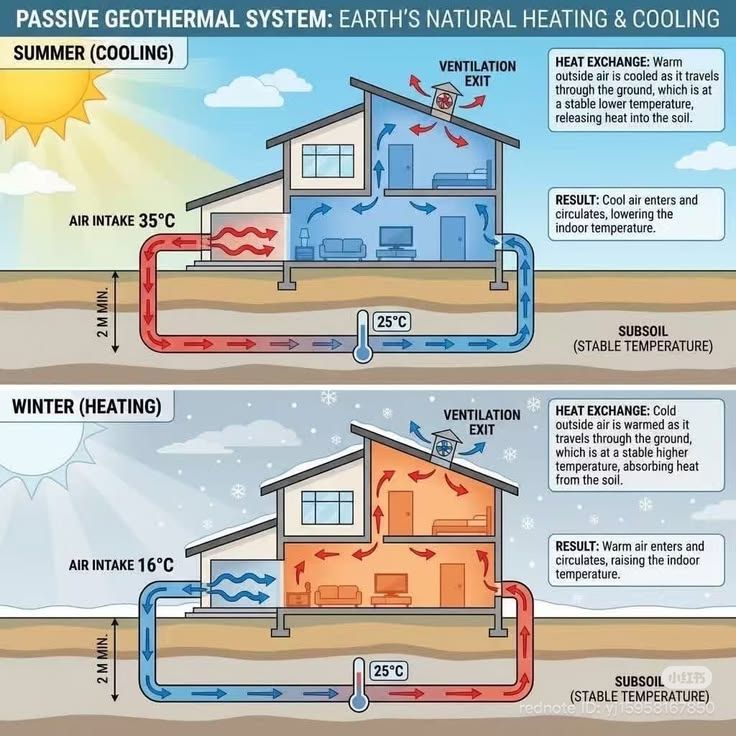
What Is Passive Cooling and How Does It Work?
Passive cooling refers to methods of keeping a building naturally cooler without relying primarily on mechanical cooling systems such as air conditioners.
Instead of producing cool air, passive design focuses on preventing excessive heat from entering the house and allowing accumulated heat to escape.
The goal is to work with the local climate rather than against it. A well-planned passive house design can reduce indoor heat gain and improve comfort throughout the day.
Why Passive Cooling Is Important for Indian Homes
Many parts of India experience long and intense summers. Homes with poorly positioned windows, dark roofs, inadequate ventilation, and excessive exposed surfaces can become significantly hotter during the day.
This makes natural cooling for house design particularly useful.
Passive cooling can help:
- Reduce heat entering the home
- Improve natural airflow
- Make indoor spaces more comfortable
- Reduce dependence on air conditioning
- Lower potential cooling energy consumption
- Create healthier connections with outdoor spaces
For new construction, these principles can be incorporated from the planning stage. Existing homes can also benefit from improvements such as external shading, reflective roof treatments, better ventilation, and landscaping.
12 Passive Cooling Techniques for a More Comfortable Home
Maximise Cross-Ventilation and Natural Airflow
One of the simplest passive cooling techniques is cross-ventilation.
When windows or openings are positioned on opposite or adjacent sides of a room, air can move through the space more effectively. Fresh air enters from one opening while warmer indoor air exits through another.
For better natural ventilation for home, consider:
- Placing openings on different sides of rooms
- Keeping internal pathways relatively unobstructed
- Using larger openings where the climate permits
- Providing ventilators or high-level openings
- Designing rooms to take advantage of prevailing breezes
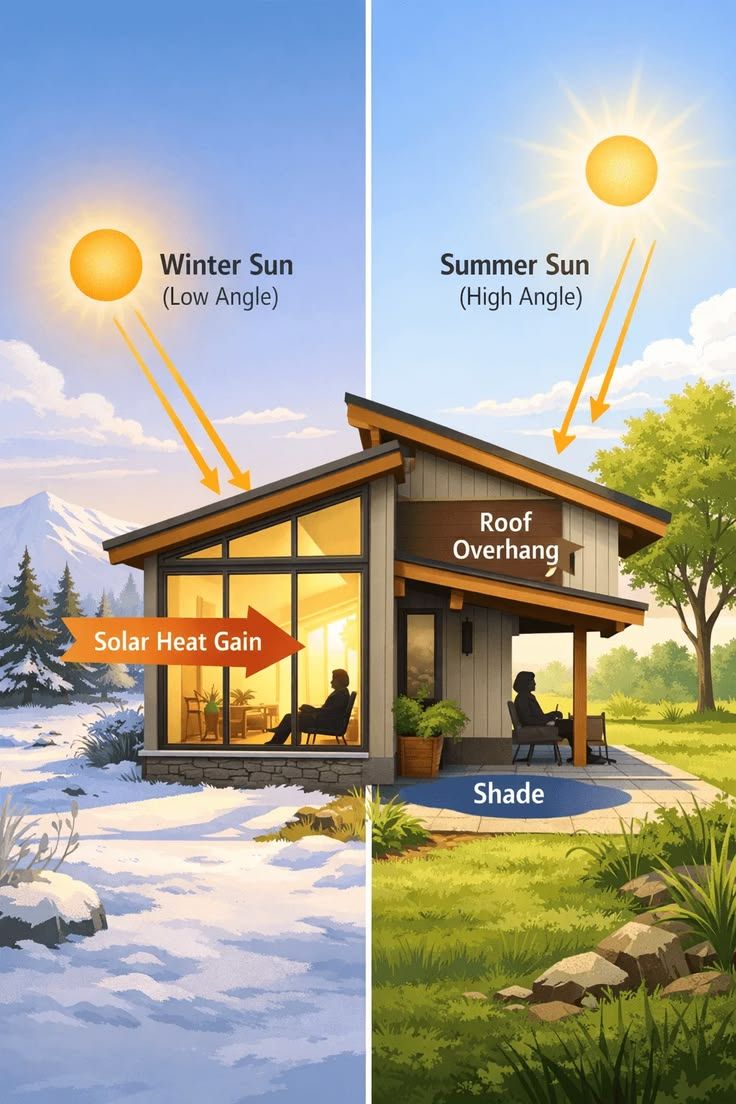
Use External Shading to Block Direct Sunlight
Direct sunlight through windows can quickly increase indoor temperatures.
External shading is one of the most effective heat reduction techniques for homes because it blocks solar radiation before it reaches the glass.
Consider:
- Deep roof overhangs
- Window awnings
- Horizontal sunshades
- Vertical fins
- Pergolas
- Exterior screens
- Shaded balconies
Trees and other landscape features can also provide valuable shade.
Choose the Right Window Orientation and Placement
Window orientation has a major influence on heat gain.
When planning a new home, consider how the sun moves around the property throughout the day. Windows that receive strong direct sunlight may need additional shading.
At the same time, windows should be positioned to encourage airflow.
A good home design for hot climate conditions balances two requirements:
Use Light-Coloured and Reflective Roof Surfaces
The roof receives significant solar exposure and can become one of the hottest parts of a house.
Light-coloured or reflective roof surfaces can reflect more solar radiation and reduce the amount of heat absorbed by the roof.
For passive cooling for homes, homeowners can consider:
- Light-coloured roof finishes
- Reflective roof coatings
- Cool roofing materials
- Roof tiles with suitable thermal properties
- Shaded roof areas
The roof design should be considered together with insulation and ventilation for better results.
Add Insulation to Reduce Heat Transfer
Insulation helps slow the movement of heat through the building envelope.
During hot weather, good insulation can reduce the amount of heat transferred from a hot roof or exterior wall into indoor spaces.
Common areas where insulation can be considered include:
- Roofs
- Ceilings
- Exterior walls
- Attics or roof spaces
Insulation is particularly useful when combined with other heat reduction techniques for homes, such as shading and reflective surfaces.
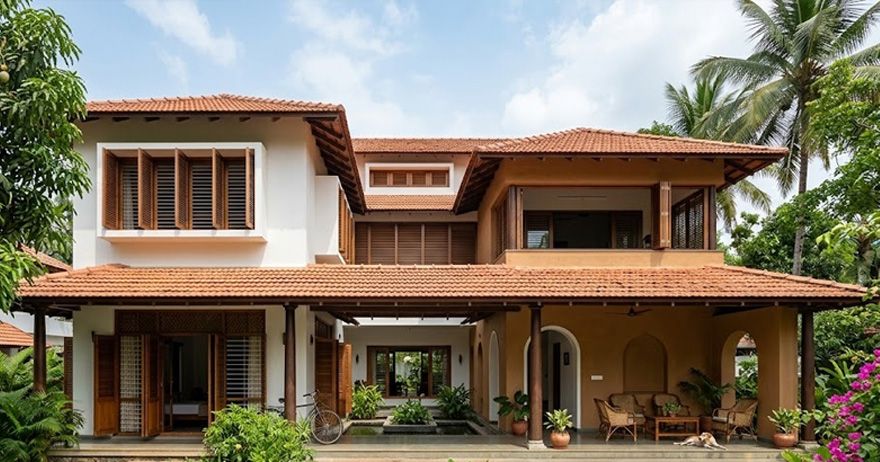
Create Courtyards and Shaded Outdoor Spaces
Courtyards have long been used in warm-climate architecture to create more comfortable transitional spaces.
A well-designed courtyard can provide shade, vegetation, airflow, and an outdoor area protected from harsh sunlight.
A courtyard can also improve the relationship between indoor and outdoor spaces.
For modern homes, smaller versions can be created through:
- Internal courtyards
- Open-to-sky spaces
- Shaded patios
- Covered terraces
- Verandahs
Use Plants, Trees, and Greenery for Natural Cooling
Landscape design can play an important role in natural cooling for house environments.
Trees can provide shade over walls, windows, terraces, and outdoor areas. Plants can also help create a more comfortable microclimate around the property.
Consider planting trees strategically near:
- West-facing walls
- Windows
- Driveways
- Terraces
- Outdoor seating areas
Climbing plants, green screens, shrubs, and shaded gardens can also reduce the amount of direct solar exposure around the home.
Choose Heat-Resistant Building Materials and Finishes
The materials used in a house influence how much heat it absorbs, stores, and transfers.
For passive house design, consider materials and finishes that are appropriate for the local climate.
Useful considerations include:
- Reflective exterior finishes
- Appropriate insulation
- Clay or terracotta elements
- Suitable masonry
- Natural stone where appropriate
- Light-coloured exterior surfaces
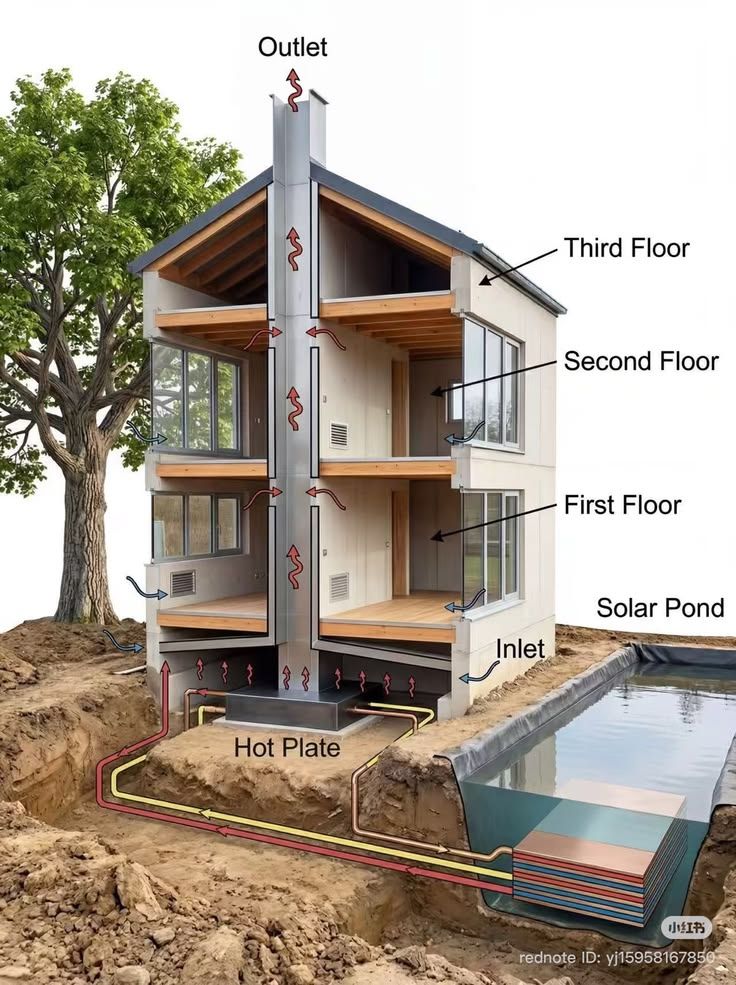
Use High Ceilings and Ventilators to Release Hot Air
Hot air naturally rises. High ceilings can therefore provide more volume for warm air to accumulate above the occupied zone.
High-level ventilators, clerestory windows, or other openings can help warm air escape.
This can be particularly useful when combined with lower-level openings that allow cooler outdoor air to enter.
A well-planned ventilation strategy can create a stack-effect airflow pattern, although its effectiveness depends on outdoor temperature, wind conditions, opening sizes, and building design.
Improve Thermal Mass and Night-Time Ventilation
Thermal mass refers to materials that can absorb and store heat and release it gradually.
Materials such as concrete, masonry, and stone can provide useful thermal mass when they are incorporated appropriately into a climate-responsive design.
In some climates, night-time ventilation can also help remove heat accumulated during the day.
When outdoor temperatures fall in the evening, opening suitable windows and ventilators can
Create Shaded Terraces, Balconies, and Verandahs
Outdoor transitional spaces can act as an additional layer between the harsh outdoor climate and the indoor environment.
A shaded balcony or verandah can reduce direct sunlight reaching windows and walls while also providing a comfortable outdoor space.
For passive cooling for homes, consider:
- Covered balconies
- Deep verandahs
- Pergolas
- Shaded terraces
- Outdoor screens
- Green walls
These features can be particularly useful on façades that receive strong afternoon sunlight.
Design the Home Around the Local Climate
The most effective passive cooling techniques work together rather than being treated as isolated features.
A climate-responsive home considers:
- Sun path
- Prevailing wind direction
- Local temperature patterns
- Humidity
- Building orientation
- Window placement
- Roof design
- Landscaping
- Materials
- Shading requirements
The best passive house design is therefore one that responds to the specific location rather than following a one-size-fits-all formula.
Common Passive Cooling Mistakes to Avoid
Even good cooling strategies can become ineffective if they are poorly planned.
Blocking All Windows
Keeping windows permanently closed can prevent natural ventilation. However, windows should also be closed when outdoor conditions are hotter or more polluted than indoors.
Using Only Interior Curtains
Interior curtains can reduce glare but may not prevent solar heat as effectively as external shading.
Ignoring the Roof
A poorly designed roof can transfer substantial heat into the home. Roofing, insulation, colour, and ventilation should be considered together.
Planting Trees Without Planning
Trees can provide excellent shade, but planting them too close to walls, foundations, drains, or utility lines can create maintenance problems.
Using Dark Exterior Surfaces Everywhere
Dark surfaces can absorb more solar radiation. Their use should therefore be considered carefully, particularly on highly exposed roofs and façades.
Focusing Only on Windows
More windows do not automatically mean better ventilation. Their size, orientation, position, shading, and relationship with other openings are equally important.
Final Thoughts
Cooling a house without AC is not about relying on one particular trick. It is about combining several climate-responsive strategies to reduce heat gain and encourage natural airflow.
Cross-ventilation, external shading, reflective roofs, insulation, courtyards, greenery, suitable materials, high-level ventilation, and thermal mass can all contribute to a more comfortable home.
If you are building or renovating, incorporating passive cooling principles at the design stage can be particularly valuable. A thoughtful approach to orientation, windows, roof design, materials, and landscaping can make the home more comfortable while reducing dependence on mechanical cooling.