


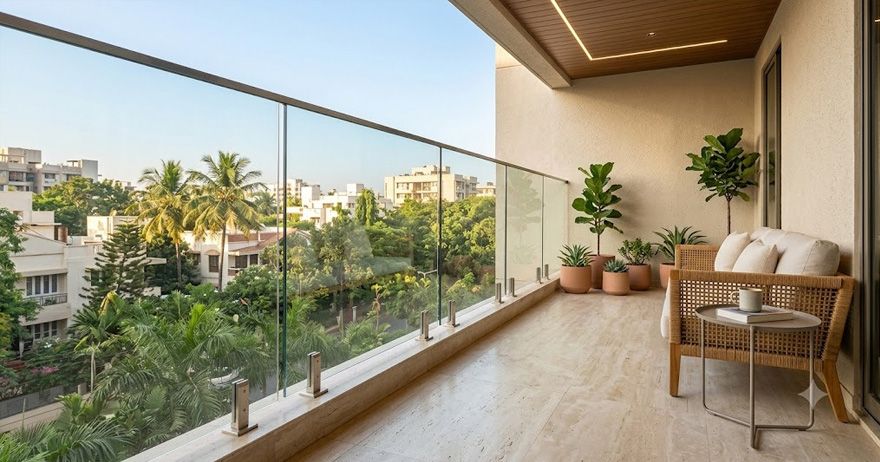
Modern balcony glass railings are a popular choice for homeowners looking to combine safety with sleek, contemporary design. Their transparent appearance creates an open, airy feel while allowing uninterrupted views and maximum natural light. Whether you prefer frameless glass, stainless steel-supported panels, or tinted glass railings, these systems enhance the aesthetics of apartments, villas, and duplex homes alike. Made with toughened or laminated safety glass, modern balcony railings are durable, weather-resistant, and easy to maintain. This blog brings to you 20 modern balcony glass railing designs and shares expert tips to help you choose the perfect style for your home.
Why Choose Glass Railings for Your Balcony?
A balcony railing needs to provide safety without making the space feel enclosed. Glass is particularly effective because it creates a physical barrier while maintaining visual openness.
Unlike bulky metal or masonry railings, glass allows natural light to pass through and preserves views from the balcony. This makes it especially useful for apartments, high-rise homes, and contemporary villas.
Here are some advantages of choosing balcony glass railing designs:
- Creates a spacious and open appearance.
- Allows uninterrupted outdoor views.
- Maximises natural light.
- Complements modern architecture.
- Works with different materials and finishes.
- Can be combined with metal or wooden elements.
- Requires relatively simple routine cleaning.
The right glass railing designs can make even a compact balcony appear larger while complementing the overall architecture of your home.
Frameless Glass Railing Designs
A frameless system is one of the most popular options for homeowners looking for a minimalist appearance. Instead of prominent vertical posts, the glass panels are supported using suitable base channels, clamps, or other engineered fixing systems.
- Clear frameless railing: Use transparent panels with minimal visible hardware for a clean and uninterrupted view.
- Floor-mounted frameless glass: Install glass panels into a concealed or low-profile base system to create a seamless appearance.
- Frameless glass with a top rail: Add a slim metal or wooden handrail when the design and safety requirements call for one.
- Corner frameless railing: Continue the glass around balcony corners to create a panoramic visual effect.
These frameless glass railings work particularly well with modern façades, minimalist architecture, and neutral exterior colour palettes.
Stainless Steel and Glass Railing Combinations
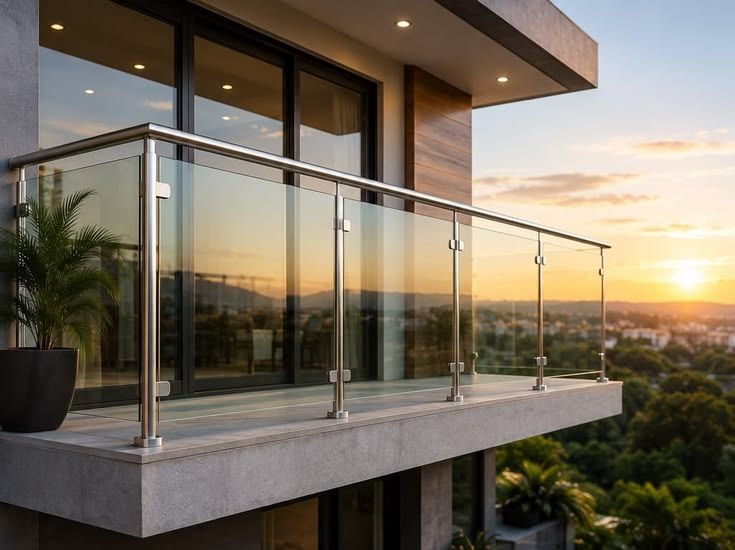
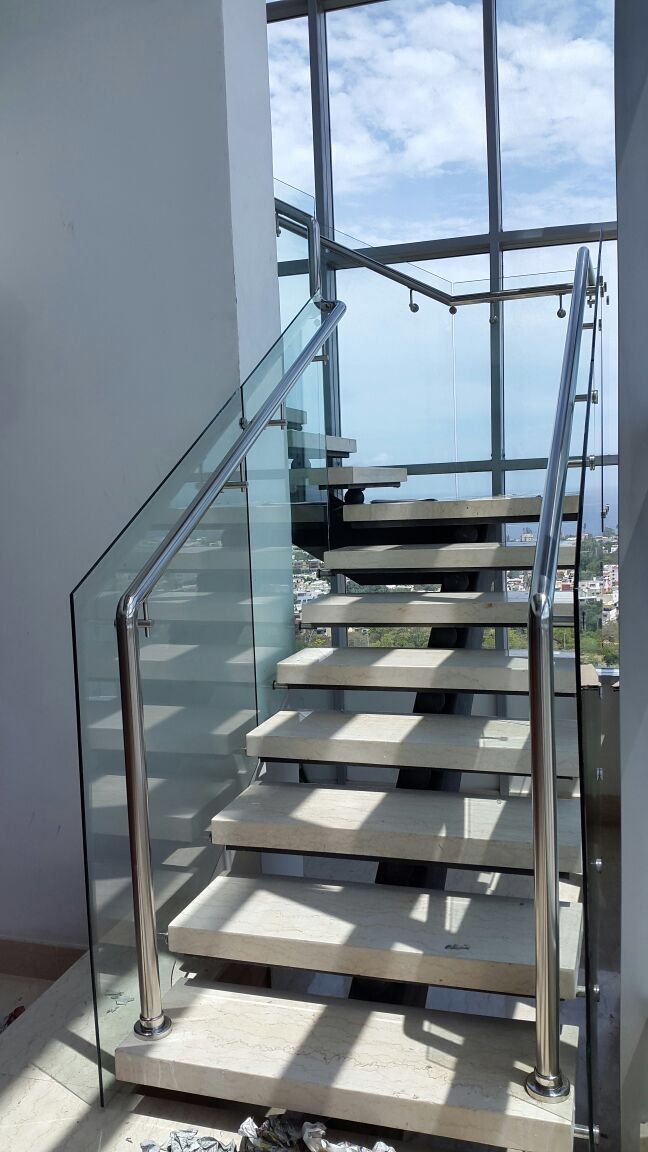
Glass and stainless steel make a practical combination for contemporary homes. Stainless steel provides structural support while adding a subtle metallic detail to an otherwise transparent railing.
- Glass with stainless steel posts: Use vertical stainless steel posts between glass panels for a clearly defined railing system.
- Horizontal stainless steel handrail: Pair clear glass with a slim horizontal handrail for additional visual definition.
- Stainless steel clamps and glass: Keep the glass dominant while using small metal clamps to secure the panels.
- Brushed steel and clear glass: A brushed finish can provide a softer appearance than highly polished metal.
These contemporary railing designs are suitable for balconies where homeowners want a modern appearance without eliminating visible structural elements.
Tinted and Frosted Glass Balcony Railings
Clear glass is not the only option available. Tinted and frosted finishes can introduce privacy, shade, and a distinctive visual character.
Tinted glass can reduce glare and create a slightly more dramatic appearance, while frosted glass limits visibility without completely blocking natural light.
- Grey-tinted glass: Pair grey-tinted panels with a modern grey or white façade.
- Bronze-tinted glass: Use a warmer tint to complement beige, cream, or earthy exterior finishes.
- Frosted lower panels: Introduce privacy while keeping the upper portion visually open.
- Patterned or textured glass: Use decorative glass where additional visual privacy is desired.
When selecting a tinted or frosted glass balustrade design, consider how the finish will look in both bright sunlight and evening lighting.
Glass Railings for Small Balconies and Apartments
Glass can be especially useful for small balconies because its transparent surface does not create a strong visual boundary.
Instead of dividing the balcony from the surrounding view, it allows the entire space to feel visually connected.
- Full-height clear glass railing: Use transparent panels to make a narrow balcony feel more open.
- Frameless corner balcony: Use minimal framing to preserve views from compact corner balconies.
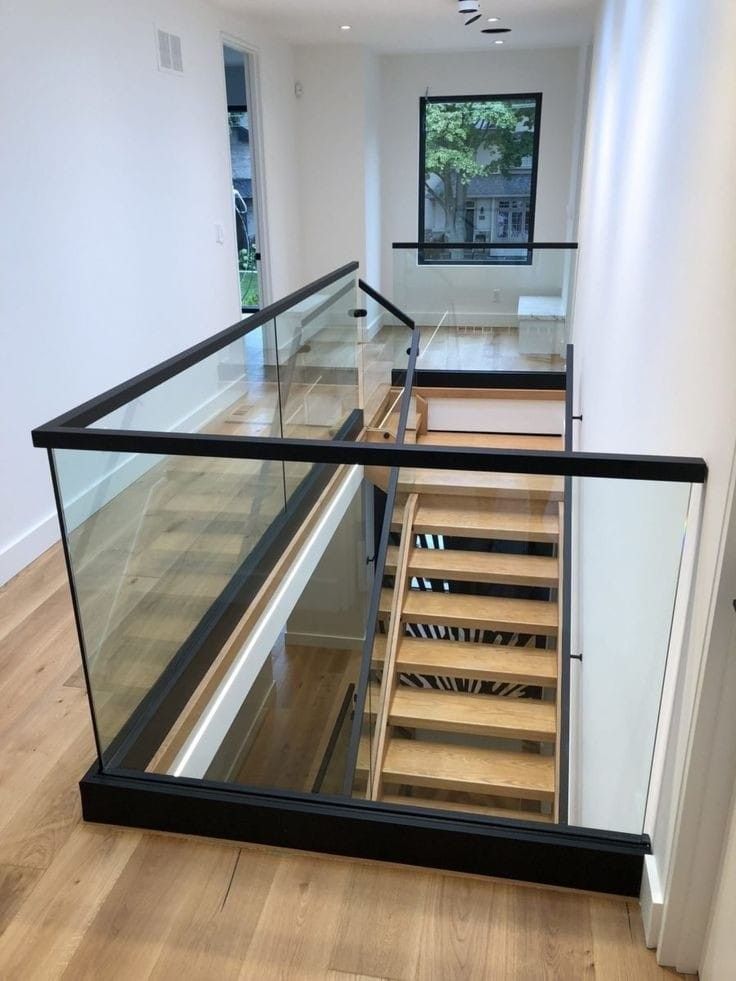
- Glass with a slim black frame: Introduce a subtle architectural detail without making the balcony feel heavy.
- Clear glass with light-coloured flooring: Combine transparent railings with light tiles to maximise the feeling of space.
For apartments, always consider the building's existing façade, society rules, local requirements, and approved railing specifications before installation.
Choosing Between Toughened and Laminated Glass
Glass selection is one of the most important considerations when planning balcony safety railings.
Toughened glass is heat-treated to improve its strength compared with ordinary annealed glass. When it breaks, it generally crumbles into smaller granular pieces rather than large sharp shards.
Laminated glass consists of two or more glass layers bonded together with an interlayer. If the glass breaks, the interlayer can help hold the fragments together.
Depending on the design, location, loading requirements, and applicable standards, either type or a specified combination may be appropriate.
Before installation, ask your architect, structural consultant, or qualified railing contractor to specify the appropriate glass type, thickness, fixing system, and safety requirements for your balcony. Do not choose glass solely based on appearance or price.
Safety Standards and Maintenance Tips
Balcony railings are safety-critical elements, so appearance should never be the only consideration. The complete system, including glass, supports, anchors, connections, height, and installation, needs to be appropriate for the specific building and location.
When planning toughened glass railings or laminated systems, consider:
- Use safety glass appropriate for the intended application.
- Confirm the required glass thickness with a qualified professional.
- Ensure fixings and anchors are designed for the actual structure.
- Check railing height and spacing requirements applicable to your location.
- Ensure the installation does not compromise waterproofing.
- Have the completed railing inspected if required by your project or local regulations.
- Clean glass regularly with a suitable non-abrasive cleaner.
- Inspect metal fittings periodically for corrosion or loosening.
- Do not drill, cut, or modify installed safety glass without professional guidance.
For high-rise homes, coastal locations, or areas exposed to strong winds, professional structural assessment is particularly important.
Common Mistakes to Avoid When Installing Glass Railings
A glass railing can look elegant, but poor design or installation can compromise both safety and appearance.
Avoid these common mistakes:
- Choosing glass based only on cost: The cheapest option may not be suitable for a safety-critical application.
- Using ordinary glass: Standard decorative glass should not automatically be treated as suitable for balcony protection.
- Ignoring fixing systems: Strong glass requires appropriately designed supports and anchors.
- Using insufficiently strong hardware: Clamps, posts, channels, and fasteners must be suitable for the system.
- Installing without checking the structure: The balcony slab or supporting element must be capable of handling the railing loads.
- Ignoring water drainage: Poor detailing can allow water to collect around base channels and connections.
- Choosing the wrong finish: Highly reflective surfaces may show fingerprints, dust, and water marks more prominently.
- Overlooking maintenance access: Make sure the outer surfaces can be cleaned safely.
- Mixing incompatible metals: Different metals can create corrosion issues under certain environmental conditions.
- Ignoring local regulations: Always check applicable building and safety requirements before installation.
A well-designed glass railing for a home should provide both visual appeal and reliable protection.
How to Choose the Right Balcony Glass Railing
The best railing design depends on more than the appearance of the glass. Consider the architecture, balcony size, exposure, privacy requirements, maintenance preferences, and budget.
Start by deciding whether you want a completely transparent railing or one that provides greater privacy.
Clear glass is ideal when preserving views is the priority. Frosted or tinted glass can be more appropriate when privacy or glare reduction is important.
Next, consider the frame and support system. Frameless designs provide a minimalist appearance, while stainless steel posts and handrails can create a more defined architectural look.
Also consider the following:
- Balcony size: Minimal framing can help smaller balconies feel more spacious.
- Home architecture: Match the railing with the façade and window frames.
- Privacy: Consider tinted, frosted, or textured glass where required.
- Weather exposure: Choose materials and finishes suitable for local conditions.
- Maintenance: Think about how frequently the glass and hardware will need cleaning.
- Safety: Prioritise certified materials and professional installation.
- Budget: Compare the complete installed system rather than only the glass price.
- Future maintenance: Ensure replacement parts and hardware can be accessed when required.
For modern balcony design, the most successful railing is one that looks integrated with the architecture rather than appearing like an afterthought.
Final Thoughts
Modern balcony glass railings offer an attractive way to combine safety, openness, and contemporary style. From completely frameless systems and stainless steel combinations to tinted and frosted panels, there are numerous options for apartments, villas, duplexes, and modern homes.
For small balconies, transparent glass can help preserve the sense of space. Larger balconies can accommodate more elaborate combinations of glass, metal, lighting, and architectural details.
However, balcony railings are safety-critical installations. The quality of the glass is only one part of the equation. The fixing system, supporting structure, railing height, connections, environmental conditions, and installation quality are equally important.
Choose the design based on your home's architecture and practical requirements, but always prioritise safety and compliance over appearance or cost. With the right materials and professional installation, a balcony glass railing can become an elegant architectural feature that enhances your home for years.