




In this blog, we will explore the best kitchen window options along with some practical tips for ventilation and maintenance.
What Makes a Window Ideal for Kitchens?
Windows are important for every part of the house, not just the kitchen. But a kitchen window plays a bigger role because the kitchen produces smoke, heat, steam, and cooking odors every day. And a well-placed kitchen window helps improve ventilation by allowing fresh air to circulate and pushing unwanted smells and smoke outside.
Also, kitchen windows maximize natural light, making your space feel brighter, cleaner, and more comfortable. The right kitchen window blends smoothly with the kitchen layout and interior design, improving both functionality and appearance.
Best Types of Kitchen Windows in India
The most practical kitchen windows for Indian homes are the ones that prioritize ventilation without compromising on overall aesthetics:
Sliding Windows
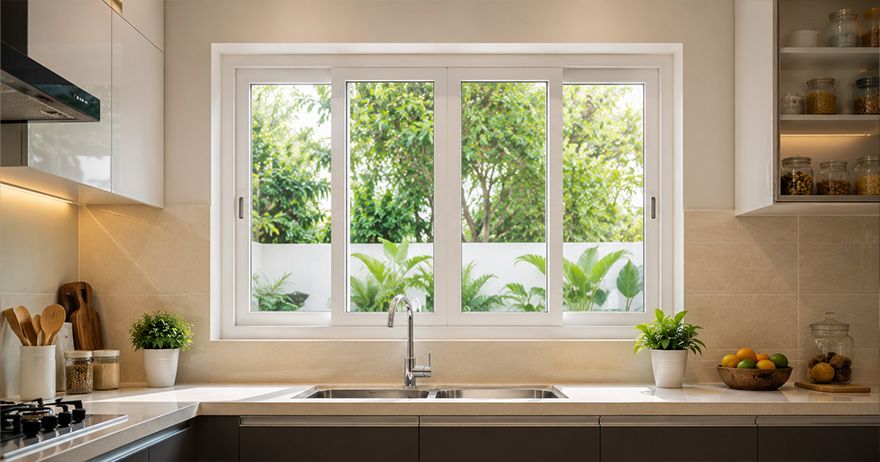
Sliding windows are best for compact kitchens or kitchens with limited space. So, the sliding windows are usually placed right above your sink or cooking area for maximum ventilation. And the best part of sliding windows is the don’t interfere with overall interior space or counter objects, making them highly space-efficient.
Casement Windows
Casement windows are best for kitchens that require maximum airflow to quickly clear out cooking fumes. So how these windows work is that they are attached to the frame by hinges and open outward like a door, and they open fully. And the only downside is that they require some exterior space.
Awning Windows
Awning windows are very popular in Western countries, but many Indian homeowners are making them a part of their kitchens. These windows are hinged at the top, but they open outward from the bottom, forming an "awning" shape. These windows are best for rainy coastal or monsoon-heavy regions in India.
Fixed & Casement Combination Windows
Fixed and casement combination windows are perfect for modern kitchens or for spaces that have a scenic view. If you install fixed windows, then it can be an issue, but when you pair it with combination windows, it becomes a perfect combination. As the fixed glass allows ample natural light to flood your workspace without letting dust in, and casement windows help in ventilation.
uPVC vs Aluminium Kitchen Windows
Here’s a detailed difference between uPVC vs aluminium windows:
| Features | uPVC Windows | Aluminum Windows |
|---|---|---|
| Frames | Thick frames | Sleek frames |
| Maintenance | Very low maintainence | Low maintainence |
| Noise Reduction | Good | Moderate |
| Cost | Very affordable | Not that affordable |
Sliding vs Casement Windows for Kitchens
Check out the difference between sliding and casement windows:
| Features | Sliding Windows | Casement Windows |
|---|---|---|
| Ventilation | Good | Best |
| Best For | Small spaces | Moderately bigger spaces |
| Natural Light | Best for natural lights | Good for natural lights |
| Maintainence | Tracks are hard to clean | Easy to clean |
Importance of Ventilation in Kitchen Design
- Kitchen windows remove smoke and cooking Odors
- It improves the air quality of your house
- Kitchen windows help in controlling heat and humidity inside the kitchen
- Kitchen windows prevent mold and Moisture Damage
- Kitchen windows help in preventing grease and oil particles
- Enhances Comfort While Cooking
Easy-to-Clean Window Options for Kitchens
Kitchen windows are constantly exposed to grease, smoke, moisture, and dust, making regular cleaning essential. Hence, it’s important to choose the right window style and material:
- uPVC casement windows
- Sliding windows
- Casement windows
- Combination windows
- Fixed windows
Common Problems with Kitchen Windows
Some of the common problems with kitchen windows are:
- Smoke and Odor Retention
- Water Leakage
- Fading or Discoloration
- Grease and Oil Buildup
- Rust or Corrosion
Tips for Maintaining Kitchen Windows
Here are some tips for maintaining Indian kitchen windows:
- Clean your kitchen windows regularly to prevent grease, dust, and stubborn stains.
- Use mild cleansers.
- Use lubricants for your window handles, locks, and hinges for proper functioning.
- If you see a mould in your window, remove it quickly.
- From time to time, check for leakages and damage.