


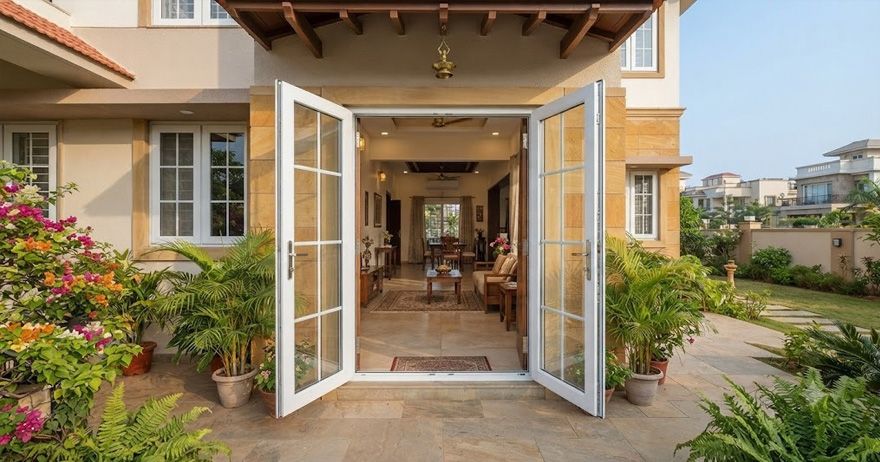
What Are Casement Doors? How Casement Doors Work
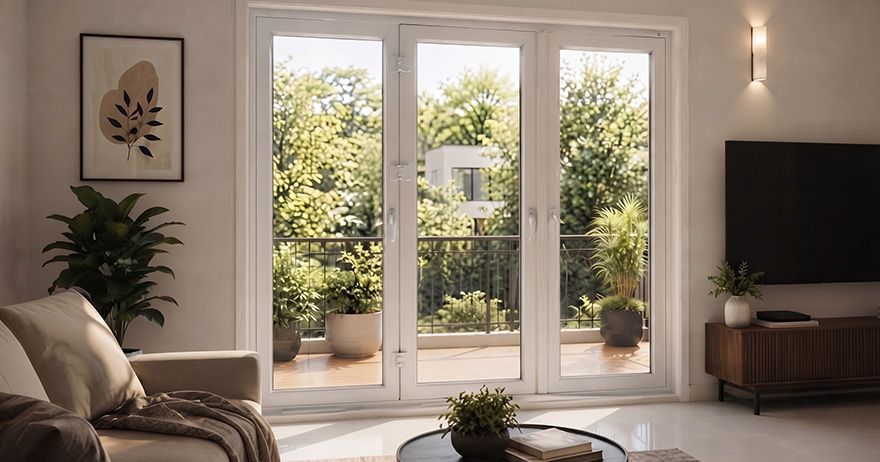
Also known as hinge doors or swing doors, casement doors fall under the operable window category that swings inwards, outwards or both when opened or closed. Whether it’s closed by a push or a pull, it has a multi-point locking system that ensures the door is tightly shut, compressing the sealing around the pane(s).
Benefits of Casement Doors
Full Ventilation, When You Want It
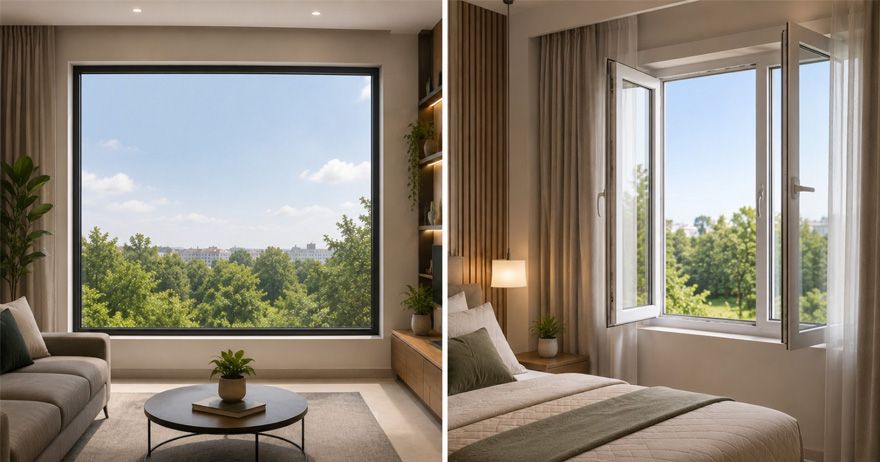
Because the door panel opens outward rather than sliding along a track, the entire opening can be used for ventilation. This allows more fresh air into the room and gives you greater control over airflow compared with partially opening a sliding door.
Stronger Security, Built Into the System
Casement doors can offer a more secure closure with multi-point locking, robust hardware and a tightly sealed frame. Combined with suitable safety glass, they provide everyday security and added protection for larger openings.
Protection From Water, Noise and Heat
The seals compress when the door closes, creating a tighter barrier against rainwater, outside noise, and air leakage. With the right uPVC profile and glass combination, this can also improve thermal insulation, helping the indoors stay more comfortable through changing outdoor temperatures.
Wider, Unobstructed Views
With a slim uPVC frame and a large glass area, casement doors can maximise the visible opening without the overlapping panels or central obstruction typically found in some sliding configurations. This makes them particularly effective for connecting interiors with balconies, gardens, patios or other outdoor spaces.
Casement Doors vs Sliding Doors: Key Differences for Main Entry Doors
| Feature | Casement Door | Sliding Door |
|---|---|---|
| Number of Panes | Usually 1 or 2 opening leaves depending on entrance width and configuration | Usually 2 or more panels arranged along one or more tracks |
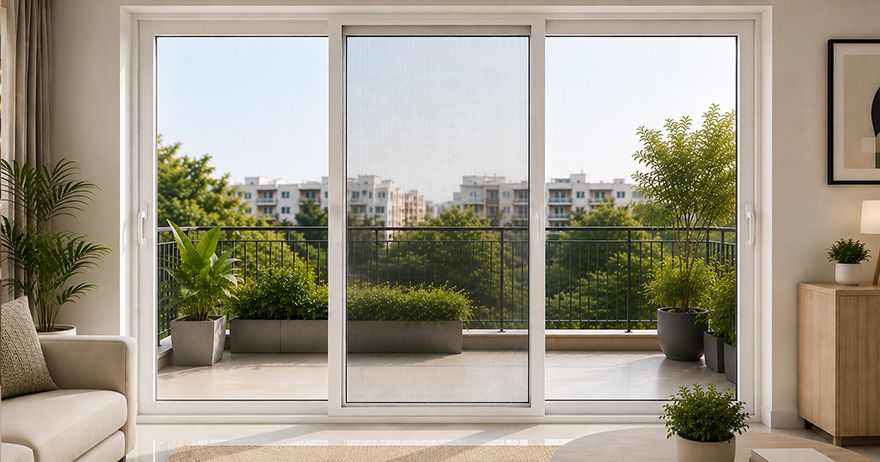
| How the Panes Move | Hinged on the side and swings open up to 90° or more depending on hardware and design | Moves horizontally along a track with one panel sliding past or behind another |
| Usable Opening | Provides a large clear opening because the leaf moves completely out of the doorway | Opening is limited by the panel setup; in a 2-panel slider one panel stays in place while the other slides across it |
| Airflow | Higher potential airflow because more of the doorway can open at once. The open sash can also direct incoming air | More controlled airflow because only the sliding panel opening allows air through |
| Thermal & Noise Insulation | Sash closes against frame seals creating a compression closure that can reduce air heat and sound transfer | Panels use wool pile weatherstrips and interlocks rather than full perimeter compression seals |
| Water Resistance | Closing action presses the sash against frame seals helping create a continuous barrier against rainwater | Water management uses seals wool pile interlocks and drainage holes to discharge water from the track |
| Sealing Type | Primarily a compression seal with the gasket compressed between sash and frame when closed | Uses sliding weather seals wool pile and interlocking seals to maintain contact while panels move |
| Safety & Security | Hinged leaf can use multi-point locking with locking points distributed along the closing edge | Security comes from multi-point locking track and anti-lift provisions; component quality matters at a main entrance |
| Light & Visibility | Provides a broad uninterrupted glazed area with slimmer frames and fewer meeting points | Provides large glazed areas but meeting stiles and overlapping panels can create more visual divisions |
| Space Requirement | Requires swing clearance for the door leaf; consider this when planning the entrance and foyer | Requires no swing clearance making it useful where circulation space is restricted |
| Cost per sq. ft. (made with uPVC) | ₹700 – ₹1100 | ₹500 – ₹900 |
Which Door Is Better for Main Entrances?
The casement door is the most common and preferred choice for main entrance doors globally. A sliding door, especially fully wooden or combined with opaque glass, is a cultural symbol and more preferred for traditional-style houses in nations like China, Japan, and Korea. While casement and sliding doors are equally functional and aesthetic, preferences vary widely. When comparing a casement door vs a sliding door, both dual-pane, a casement door can accommodate more people at the entryway because of its wider opening. In contrast, a typical sliding door can open only half from the side unless the homeowner opts for a sliding door that opens from the centre. To match the capacity of a double casement door, a typical side-opening sliding door must be almost twice as wide and therefore requires more wall space.
Next, the welcoming appeal. Most homes have casement doors that open swing inwards; therefore, it feels psychologically like a directive gesture to enter the home more positively. Sliding doors, on the other hand, feel too mechanical and lack a welcoming feel; they feel like a gesture to move aside and have a backdoor mentality. They are mostly used for secondary entries and exits, such as balconies and patios, so that they can be an awkward choice.
However, in countries like China, Japan, and Korea, sliding doors do not swing outward, meaning they never force a guest to step backwards onto the porch. This allows the host and guest to maintain a respectful, close physical proximity during greetings. The soft, distinct sound of a wooden frame sliding open acts as a gentle auditory cue that someone is entering, which replaces the harsh metallic click or heavy thud of Western doors.
Finally, the safety aspect. Traditionally, casement and sliding doors used a single-point locking system that locked the door at one point. Back then, either could be broken. However, casement doors were harder to break than sliding doors because they used heavy hinges, a stronger compression fit, and heavy bolts that created a more robust locking mechanism. On the other hand, sliding doors rested on surface tracks and could sometimes be lifted upward out of their lower tracks with simple leverage or a crowbar. Traditional sliding latches often used basic hook or thumb-turn mechanisms, making them easy to bypass under pressure. The loose tolerances in the horizontal design also made the meeting points more vulnerable to forced separation.
But today’s uPVC casement doors and uPVC sliding doors by IndiFrame offer multi-point locking systems that lock the entire door at different points, sealing the frame and gaskets tightly. Moreover, to compensate for the gap needed for sliding tracks to glide well, a wool pile is added to help prevent water, noise, and dust leaks.
Security, Energy Efficiency, and Maintenance Comparison
| What matters | uPVC Casement Doors | uPVC Sliding Doors |
|---|---|---|
| Security | Multi-point locking and a tight closing seal offer strong security | Secure when fitted with quality locks though the sliding mechanism has more moving components |
| Energy Efficiency | Excellent sealing when closed helping minimise air leakage and heat transfer | Good energy performance but the sliding track and larger glass area can affect insulation unless wool pile helps minimise leakage |
| Maintenance | Low maintenance; hinges handles and locking points need occasional checks | Low maintenance; tracks should be kept clean and rollers and hardware checked periodically |
Avoid These Common Mistakes When Choosing an Entry Door
Choosing the Door Before Considering the Entire Opening
An entry door needs to work with the wall opening, frame depth, threshold, swing direction and surrounding finishes. Choosing the door first and figuring out these details later can lead to awkward clearances, installation compromises or a door that doesn’t suit the entrance.
Judging Security by the Lock Alone
A secure entry door is more than a good lock. The strength of the frame, locking points, hinges, hardware, reinforcement and even the type of glass used can affect the security of the complete assembly. Focusing on one component while overlooking the rest can create a false sense of security.
Choosing Materials and Finishes Without Considering Exposure
An entrance exposed to direct sunlight, heavy rain or high humidity has different requirements from one protected by a deep porch. Select materials, finishes, seals, and hardware based on the actual conditions the door will face—not simply how it looks in a showroom.
Treating Insulation and Weather Sealing as Secondary Features
The entry door is one of the larger openings in your home’s envelope, so its performance affects more than just the entrance. Poor sealing or unsuitable glass can allow unwanted heat, outside air, dust and noise into the home. Look at the door’s seals, threshold, glass and overall construction together rather than evaluating insulation as a single specification.
Going Too Big to Make a Statement
Oversized entry doors can create a dramatic entrance, but size also affects weight, hardware requirements, clear opening, swing space and ease of operation. Before choosing a large-format door, make sure the opening, frame and hardware are designed to handle it comfortably over years of daily use.
Adding Glass Without Thinking About Privacy and Safety
Glass can bring natural light into an entrance and make the door feel more open, but where and how you use it matters. Consider the home’s visibility from outside, the glass placement, and whether the chosen glass suits a frequently used entrance.
Designing the Door in Isolation From the Rest of the Entrance
The door has to coexist with steps, flooring, furniture, shoe storage, lighting, curtains and circulation space. A door that looks perfect in elevation can become inconvenient once the entrance is furnished and actually used. Think about how it opens, what it opens into and how people move around it.
Comparing Only the Upfront Price
The cheapest door isn’t necessarily the most economical one. Compare what you’re actually getting—frame and door construction, hardware, glass, reinforcement, seals, finish, installation and expected maintenance. A lower initial price can mean more upkeep or performance compromises later.
Overlooking Installation Until the End
Even a well-specified entry door can underperform when installed into an inadequately prepared opening. Alignment, fixing, sealing, threshold detailing and finishing around the frame all influence how the door operates and performs. Installation should be considered part of the door selection, not a final afterthought.
Choosing for the First Impression Instead of Long-Term Use
An entry door is something you’ll open, close, lock, clean and maintain thousands of times. The right choice should balance aesthetics with security, weather performance, insulation, durability, maintenance and ease of operation—so it continues to feel like the right door long after the initial “wow” factor wears off.
Are Casement Doors the Right Choice for Your Home?
The final verdict: Go for a Casement Door as your main entry door, given its ability to let more people and space in, even in wall sizes with a minimum 3’6 ft width. A sliding door is a good choice when you have a wider wall opening and want to reflect cultural significance from China, Japan, or Korea.
Final Thoughts
The main entry door is the first architectural element visitors often notice; it creates the first impression of the home and can reflect the homeowner’s personal style and the overall character of the architecture. It also marks the transition between the outside world and the private space within, making the entrance feel distinct and intentional. Beyond appearance, the main door is a crucial layer of security, helping control access and provide peace of mind, while also contributing to privacy by limiting visibility into the home.
It protects the interiors from rain, dust, wind, heat, and outdoor noise, helping maintain a more comfortable indoor environment. Because it’s used daily, smooth operation, durable construction, reliable hardware, and easy maintenance are equally important. Ultimately, the right main entry door should not only look good but also offer long-term performance, protection, comfort, and value.