



Aluminium windows and doors have dominated the market for years. Later, uPVC entered, not as a design upgrade but as a performance-driven alternative, gradually replacing it, wood and steel in many households.
If you are now deciding between uPVC vs aluminium windows and doors for your home, you are in the right place. This blog compares how both materials work, where each works better, and how to choose what suits your home in the long run.
uPVC vs Aluminium Windows And Doors: Understanding The Materials
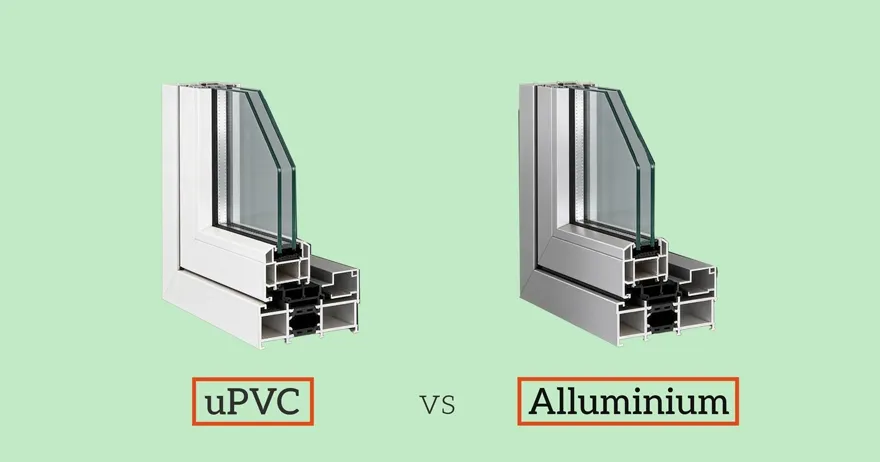
uPVC, also known as unplasticised polyvinyl chloride, is a rigid plastic material widely used for manufacturing windows and doors.
Pros
- uPVC frames do not rust, rot, or absorb moisture.
- They are hollow inside, which helps with insulation against heat and noise
- They need very little upkeep.
- They are affordable.
Cons
- uPVC is not as strong as aluminium for very large windows or doors.
- uPVC has limited colour and finish options compared to aluminium
- It is not as fire-resistant as aluminium
- It is less suited for very tall or floor-to-ceiling windows due to frame rigidity.
Aluminium Windows & Doors — Pros & Cons
Pros
- Aluminium frames give a sharp, modern look because of the larger glass panels.
- They do not rust or rot and have a long lifespan.
- Over the years, aluminium systems have improved, especially with better coatings and fittings.
- They are commonly used for high-rise buildings and homes where wide openings are preferred.
Cons
- Aluminium has a higher initial cost compared to uPVC.
- It conducts heat easily, so interiors may get warmer without thermal breaks.
- Aluminium can get scratched easily if not handled carefully.
- There are chances for it to corrode in salty or coastal environments, unlike uPVC.
- It offers less sound insulation than uPVC.
- It is heavier than uPVC, which makes transport and installation challenging and costly.
Both uPVC and aluminium windows and doors work well when they are of high-grade quality and installed properly.
uPVC Vs Aluminium Windows
Windows affect indoor temperature, outside noise, and daily comfort more than most people realise.
| Feature | uPVC Windows | Aluminium Windows |
|---|---|---|
| Heat insulation | Very good insulation; keeps rooms cooler | Lower insulation; heat transfers faster |
| Sound insulation | Reduces outside noise effectively | Less effective unless paired with special noise-reduction systems |
| Frame thickness | Thicker frames for better sealing | Slim frames with more glass area |
| Maintenance | Almost maintenance-free; Zero to minimal care required | Needs occasional cleaning and care |
| Climate suitability | Performs well in heat; dust; and rain | Better suited for moderate climates |
| Long-term appearance | Does not corrode or fade easily | May lose finish over time if the coating wears |
Aluminium Vs uPVC Doors
Doors are handled differently from windows. They are opened more often, carry more weight, and are closely linked to safety and ease of use.
| Feature | Aluminium Doors | uPVC Doors |
|---|---|---|
| Main door strength | Feels stronger and more rigid | Strong enough for internal and balcony doors |
| Sliding door operation | Smooth for large sliding openings | Smooth; but better for medium openings |
| Security fittings | Supports heavy-duty hardware easily | Supports standard security fittings well |
| Weight and handling | Heavier; but stable | Lighter and easier to operate |
| Indoor or outdoor use | Ideal for large balconies and patios | Ideal for internal and semi-outdoor areas |
UPVC vs Aluminium Windows & Doors: Cost Comparison in India (2026)
UPVC windows are generally cheaper than aluminium in India, costing ₹400–₹1,200 per sq ft compared to aluminium's ₹400–₹1,600 per sq ft. The cost difference is most significant in premium configurations — thermal break aluminium windows can cost 30–40% more than equivalent UPVC systems. For most Indian homes, UPVC offers better value for money due to lower upfront cost, superior thermal insulation, and near-zero maintenance requirements.
UPVC vs Aluminium Windows: Cost Per Sq Ft in India
| Window Type | UPVC Cost (₹/sq ft) | Aluminium Cost (₹/sq ft) | Cost Difference |
|---|---|---|---|
| Basic sliding window | ₹400 – ₹600 | ₹400 – ₹700 | Aluminium ~10–15% costlier |
| Casement window | ₹550 – ₹800 | ₹600 – ₹900 | Aluminium ~10–15% costlier |
| Tilt & turn window | ₹700 – ₹1000 | ₹800 – ₹1100 | Aluminium ~10% costlier |
| Sliding door | ₹500 – ₹900 | ₹550 – ₹1000 | Aluminium ~10–15% costlier |
| French door | ₹700 – ₹1100 | ₹800 – ₹1300 | Aluminium ~15–20% costlier |
| Bi-fold door | ₹900 – ₹1200 | ₹1000 – ₹1400 | Aluminium ~15–20% costlier |
| Premium / thermal break | ₹1000 – ₹1200 | ₹1200 – ₹1600 | Aluminium ~30–40% costlier |
Note: Prices vary based on glass type (single/double glazed), hardware quality, profile brand, and installation complexity. The above are supply + installation estimates for standard residential projects in India (2026).
What's Included in the Cost?
When comparing UPVC and aluminium window prices, make sure you are comparing the full cost — not just the frame. The total cost of a window installation includes:
- Frame material — the UPVC or aluminium profile itself
- Glass — single glazing, double glazing, or toughened glass (double glazing adds ₹150–₹250/sq ft)
- Hardware — handles, hinges, locking mechanisms, friction stays
- Installation — labour charges typically ₹50–₹150/sq ft or ₹300–₹500 per window
- Finishing — silicone sealant, POP finishing, transportation
Always ask for an all-inclusive quote to make a fair comparison.
UPVC vs Aluminium Cost for a Full Home: 2BHK & 3BHK Estimates
For a 2BHK apartment (approx. 8 windows + 2 doors, ~180 sq ft total):
| Configuration | UPVC Total Cost | Aluminium Total Cost | You Save with UPVC | |
|---|---|---|---|---|
| Basic (sliding | single glaze) | ₹72000 – ₹108000 | ₹72000 – ₹126000 | ₹0 – ₹18000 |
| Mid-range (casement + double glaze) | ₹108000 – ₹162000 | ₹126000 – ₹180000 | ₹18000 – ₹36000 | |
| Premium (thermal break | toughened glass) | ₹180000 – ₹216000 | ₹216000 – ₹288000 | ₹36000 – ₹72000 |
For a 3BHK apartment (approx. 12 windows + 3 doors, ~270 sq ft total):
| Configuration | UPVC Total Cost | Aluminium Total Cost | You Save with UPVC | |
|---|---|---|---|---|
| Basic (sliding | single glaze) | ₹108000 – ₹162000 | ₹108000 – ₹189000 | ₹0 – ₹27000 |
| Mid-range (casement + double glaze) | ₹162000 – ₹243000 | ₹189000 – ₹270000 | ₹27000 – ₹54000 | |
| Premium (thermal break | toughened glass) | ₹270000 – ₹324000 | ₹324000 – ₹432000 | ₹54000 – ₹108000 |
The savings with UPVC are most significant at the premium end. If you are planning a full-home renovation, choosing UPVC over aluminium at premium configurations can save ₹50,000–₹1,00,000+ on a 3BHK.
UPVC vs Aluminium Windows Price by City in India
Prices vary across India based on local labour costs, transportation, and dealer margins.
| City | UPVC (₹/sq ft) | Aluminium (₹/sq ft) |
|---|---|---|
| Hyderabad | ₹450 – ₹1100 | ₹500 – ₹1500 |
| Mumbai | ₹500 – ₹1200 | ₹550 – ₹1600 |
| Pune | ₹480 – ₹1100 | ₹520 – ₹1500 |
| Bangalore | ₹460 – ₹1100 | ₹510 – ₹1500 |
| Chennai | ₹450 – ₹1000 | ₹500 – ₹1400 |
| Nagpur | ₹420 – ₹950 | ₹470 – ₹1300 |
| Vijayawada | ₹420 – ₹950 | ₹460 – ₹1300 |
Long-Term Cost: Which Is Cheaper Over 10 Years?
The upfront cost is only part of the equation. UPVC has a significant advantage in lifetime cost of ownership.
| Cost Factor | UPVC | Aluminium | |
|---|---|---|---|
| Upfront cost | Lower (₹400–₹1200/sq ft) | Higher (₹400–₹1600/sq ft) | |
| Repainting / refinishing | Not required | Every 5–7 years (₹3000–₹8000 per window) | |
| Seal / gasket | replacement | Every 8–12 years | Every 5–8 years |
| Hardware replacement | Rare | Occasional (hinges | handles) |
| Energy savings (cooling) | High — reduces heat transfer | Lower — aluminium conducts heat | |
| Estimated 10-year maintenance cost | ₹5000 – ₹1 | 000 (full home) | ₹25000 – ₹60000 (full home) |
Verdict: Even if aluminium costs the same upfront (at the entry level), UPVC is significantly cheaper over 10 years due to lower maintenance and better energy efficiency. For homes in hot climates like Hyderabad, Vijayawada, or Chennai, the energy savings from UPVC's thermal insulation can reduce cooling costs by 10–20% annually.
UPVC vs Aluminium: Which Is Better Value for Money?
Choose UPVC if:
- Your budget is ₹450–₹900/sq ft
- You want lower maintenance over time
- Your home is in a hot, humid, or high-noise area
- You are doing a full 2BHK or 3BHK renovation and want to maximise savings
- you prioritise thermal insulation and energy efficiency
Choose Aluminium if:
- You have large openings (above 6 ft wide) that need strong frames
- You want floor-to-ceiling glass panels or a sleek modern facade
- Your project is commercial or high-rise where frame strength matters
- You want a specific custom finish or RAL colour that UPVC cannot offer
Best of both worlds: Many homeowners use UPVC for all bedroom and living room windows (for insulation and cost savings) and aluminium for large balcony sliding doors or main entrance doors (for strength and aesthetics). IndiFrame offers both, so you can mix based on your needs.
Why Choose IndiFrame
IndiFrame manufactures and installs both UPVC and aluminium windows across Hyderabad, Mumbai, Pune, Bangalore, and more. With ISO 9001:2003 certification, 10-year warranty, and free site consultation, we help you get the right system at the right price. Book a free site visit
Final Takeaway
UPVC is the better value choice for most Indian homes — lower cost, better insulation, zero maintenance. Aluminium wins for large openings and premium aesthetics. If you're unsure which is right for your home, get a free estimate from IndiFrame and our team will recommend the best option based on your budget and requirements.
Check out uPVC windows price in Hyderabad!