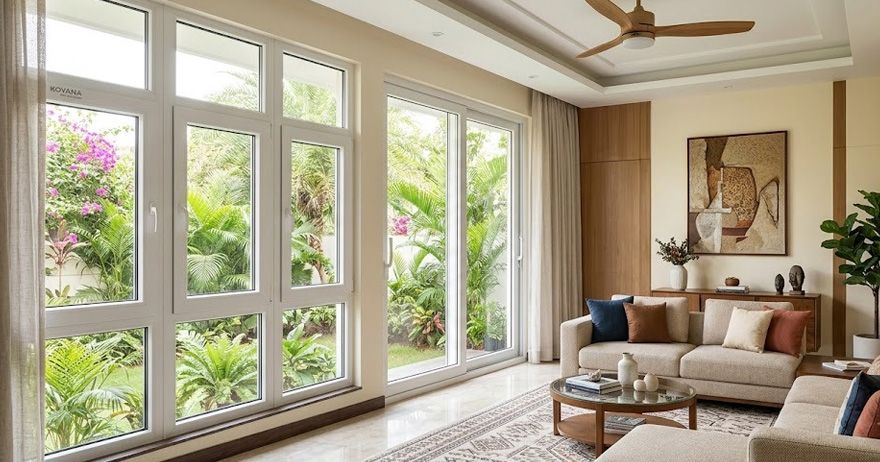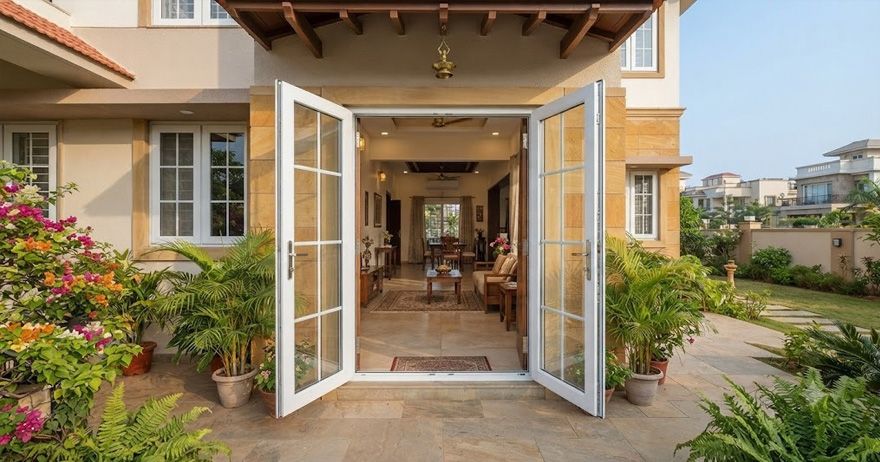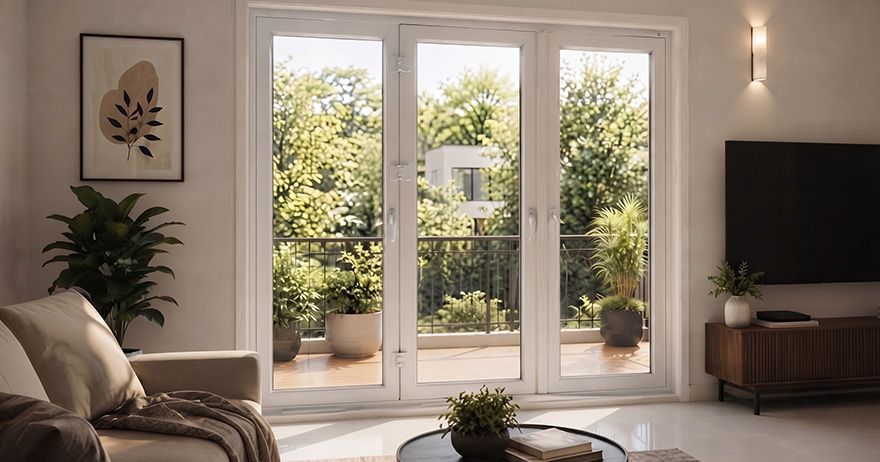




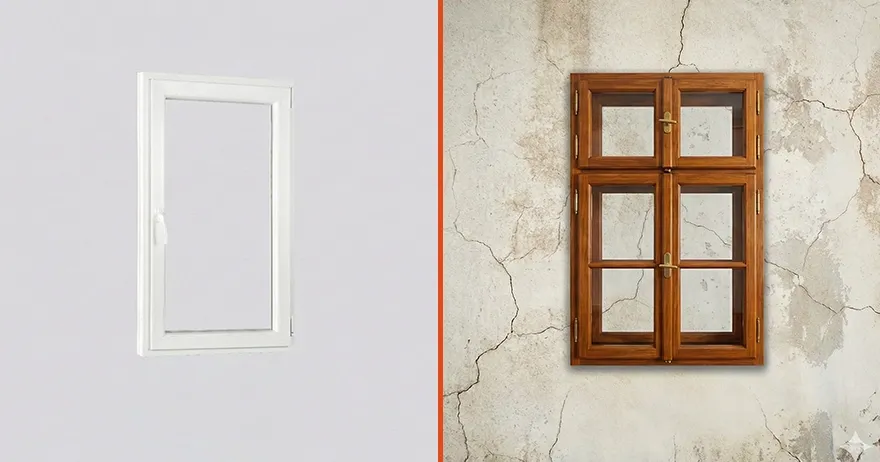
Choosing between uPVC vs wooden windows and doors is a common decision for Indian homeowners. Both materials offer distinct benefits of their own. Making the choice dependent on factors like aesthetics, maintenance, and budget.
Wooden windows and doors bring warmth and a traditional aesthetic. Whereas uPVC gives a clean and modern appearance to Indian homes. But, this doesn’t mean you need to compromise with one option throughout your house. You can create a balance of both by using them in different parts of your house.
In this blog, we break down the difference between uPVC vs wooden windows and doors to help you make an informed decision.
Which is Better: uPVC or Wooden Windows?
uPVC and wooden windows differ significantly in composition, appearance, and overall upkeep.
At a glance:
- uPVC windows are engineered for uniform performance and finish.
- Wooden windows are manufactured from natural materials like timber.
- The visual performance of both depends on home style and interior finish.
Material Composition of uPVC & Wooden Doors and Windows
- Wooden Windows and Doors: They come in many types, but they are mainly made from natural timber. Many homeowners prefer wood for its solid feel and long-lasting nature. However, since wood is a natural material, it is more sensitive to moisture and temperature changes, which can affect its condition over time if not properly maintained.
- uPVC Windows and Doors: uPVC, being a manufactured material, is highly resistant to moisture and temperature changes. It does not absorb water or warp, making it suitable for areas such as kitchens and bathrooms where humidity levels are usually higher.
Aesthetic Differences between Wooden vs uPVC Windows & Doors
- Wooden Windows and Doors: Wooden windows and doors have a natural grain and texture that add warmth and character to Indian homes. They can also be painted or polished to match interior themes, but maintaining this appearance usually requires regular care.
- uPVC Windows and Doors: uPVC windows and doors have a neat, uniform finish, and they suit modern and minimal home designs. They are available in various colours and wood-like finishes, allowing homeowners to choose a look that fits their space without the need for frequent repainting or polishing.
Durability & Weather Resistance: Wooden vs uPVC Doors & Windows
Indian climate varies from state to state, from heavy monsoons, humidity to extreme summer heat and snow. And our windows and doors are constantly exposed to these conditions, durability becomes an important factor for Indian homeowners.
Wood is affected by moisture, and during heavy monsoons, it swells up. And in coastal areas, due to high humidity, wood gets damaged if it is not maintained properly. Also, the extreme heat causes the wood to expand or shrink.
But uPVC handles weather changes in a much better way. It does not absorb water, stays stable in high temperatures, and is less affected by dust and pollution. So, if you live in a coastal area, a high-rise apartment, or a place where rainfall is constant, you should choose a material that performs well in your local weather.
Pros and Cons of uPVC vs Traditional Wooden Doors
| Material | Advantages | Disadvantages |
|---|---|---|
| uPVC | It is Low maintenance ; It is highly moisture-resistant ; More affordable than wood | Lacks the natural feel ; Limited repair options ; Less natural texture than wood. |
| Wood | Natural and classic look ; Adds warmth and character ; Can be painted or polished | It has a higher upfront cost ; Needs regular maintenance ; It can be affected by moisture; heat and termites. |
Cost Difference Between uPVC and Wooden Windows in India
When comparing uPVC vs wooden windows and doors, it is important to look beyond the initial price and think about long-term expenses. Looking at long-term value helps homeowners make a more informed decision.
- Wooden Windows and Doors: Wooden windows usually come with a higher initial cost. Over time, regular maintenance such as polishing, painting, and minor repairs can increase overall expenses, making them a costlier option in the long run.
- uPVC Windows and Doors: uPVC windows are generally more affordable at the time of purchase. Also, they require very little maintenance, and long-term costs remain lower, making them a practical option for many homeowner
IndiFrame Upvc Windows & Doors
IndiFrame designs uPVC windows and doors, keeping Indian living conditions in mind. For homeowners exploring uPVC windows Hyderabad, the focus is on everyday comfort, ease of use, and materials suited to local climate conditions. The idea is to help people choose window and door solutions that fit their homes, lifestyle, and long-term needs.
Choosing uPVC vs wooden windows and doors is an important decision. The best windows and doors for Indian homes depend on factors such as local climate, maintenance needs, budget, and personal style.
Wood suits homeowners who value a traditional look and are comfortable with ongoing care. uPVC suits those who want low maintenance and consistent performance across seasons.
The right choice depends on your climate, lifestyle, and long-term needs. When windows and doors work well, the home feels easier to live in.