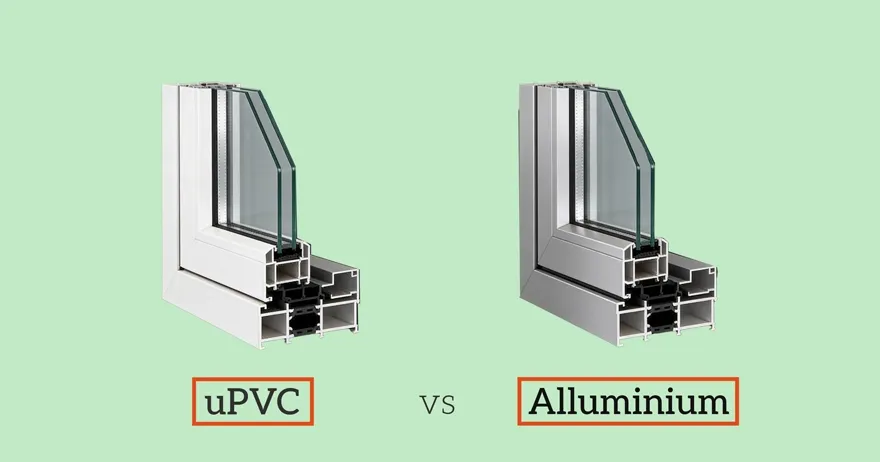
Quick Comparison Table: uPVC vs Aluminium vs Wood
| Feature | uPVC windows | Aluminium windows | Wooden windows |
|---|---|---|---|
| Price per sq ft | ₹450–₹1 200 (double-glazed up to about ₹1 500) | ₹450–₹1 600 standard; system aluminium costs more | ₹800–₹3 000+ depending on the wood |
| Lifespan | 20–30 years | 30+ years | 15–25 years with regular care |
| Maintenance | Very low: wipe clean; oil hinges yearly | Low: clean tracks; check seals | High: polish or paint every 2–3 years |
| Heat through the frame | Low | High unless it has a thermal break | Low |
| Noise reduction | Very good with tight seals | Moderate; good with thick or laminated glass | Good when new; drops as gaps open |
| Monsoon and humidity | Excellent: doesn't swell or rot | Good | Poor: swells; warps and rots |
| Coastal (salty air) | Excellent: never rusts or corrodes | Good if well coated; poor coatings corrode | Poor |
| Termites | Immune | Immune | Vulnerable unless treated |
| Security | Multi-point locks; steel reinforcement | Strong frame | Depends on hardware |
| Large openings | Good with reinforcement | Best: slimmest frames | Limited |
| Finishes | White; grey; black; wood-look laminates | Powder-coat colours | Natural grain; polish; paint |
| Best for | Apartments; villas; high-rises; coastal and monsoon cities | Very large glass walls; commercial facades | Heritage and luxury homes |
Cost Comparison in India
Cost is usually the first thing homeowners compare. Look at both the purchase price and what you'll spend over the years.
uPVC windows are the most affordable of the three for most homes. IndiFrame uPVC windows start from ₹450 per sq ft†. The final price depends on the window type, glass, hardware and finish. Sliding windows sit at the lower end, while tilt & turn and double-glazed windows cost more.
Aluminium windows start at a similar price for basic sections†. Premium system aluminium, with thicker profiles, thermal breaks and slim frames, costs considerably more.
Wooden windows are usually the most expensive. Seasoned teak or sal frames, carpentry and polishing all add up, and the price rises sharply for custom designs.
For a detailed price comparison, read our guide to the cost difference between uPVC and aluminium windows.
Durability and Lifespan
India's heat, monsoon, dust and humidity are hard on windows, so lifespan depends on the material, installation and care.
- uPVC windows last 20–30 years with correct installation. Quality profiles don't rust, rot, warp or attract termites, and UV-stabilised uPVC resists yellowing in strong sun. IndiFrame uPVC profiles carry a 15-year warranty.
- Aluminium windows can last 30 years or more. Aluminium is strong and doesn't rust. In coastal air, though, a poor-quality coating can corrode, so the finish matters.
- Wooden windows last 15–25 years, but only with regular polishing, termite treatment and repairs. Without care, wood swells, cracks and rots much sooner.
See how long uPVC windows last in India for a year-by-year guide.
Maintenance Requirements
- uPVC: wipe the frames with mild soapy water, keep sliding tracks clear of dust, and oil hinges and locks once a year. No painting, polishing or coating is ever needed.
- Aluminium: clean the frames and tracks, and check the rubber seals every year or two. Powder-coated finishes resist scratches and fading.
- Wood: the most work. Expect to repaint or revarnish every 2–3 years, check for termites, treat against rot, and fix swelling and gaps after every monsoon.
Heat and Sound Insulation
Heat. uPVC is a poor conductor of heat, and its multi-chamber profiles trap air, so less outdoor heat passes through the frame. Wood also insulates well. Aluminium conducts heat over a thousand times more readily than uPVC, so standard aluminium frames get hot in summer unless they have a thermal break. In practice, the glass matters as much as the frame. A 20 mm double-glazed unit or heat-reflective glass makes the biggest difference on sunny west-facing walls.
Noise. If you live near a busy road, metro line or construction site, sealing is what stops sound. uPVC casement and tilt & turn windows close tightly onto rubber gaskets, and paired with laminated or double-glazed glass they cut traffic noise sharply. Aluminium windows perform well only with thick glass and good seals. Wooden windows block noise when new, but lose that as gaps open with age. For a deeper look, read how to soundproof your windows.
Weather Resistance for the Indian Climate
- Monsoon and humidity: uPVC doesn't absorb water, so it never swells, warps or rots. Aluminium also handles rain well. Wood absorbs moisture, so wooden windows swell and stick every monsoon and shrink again in summer, which opens gaps.
- Coastal cities: In Mumbai, Chennai, Vizag and other coastal cities, salty air attacks metal finishes. uPVC can't rust or corrode, which makes it the safest choice by the sea. Aluminium works if it has a high-quality coating; cheap coatings pit and corrode. Wood weathers fastest in salty, humid air.
- Termites: uPVC and aluminium are immune. Wood needs regular anti-termite treatment.
Security and Strength
All three can be secure if the hardware is right. Quality uPVC windows use galvanised steel reinforcement inside the profile, multi-point locks and toughened or laminated glass. That keeps even large windows rigid in high-rise winds. Aluminium is naturally strong and rigid. Wooden window security depends heavily on the quality of the frame and locks, and weakens as wood ages. Read more in are uPVC windows safe against theft?
Design, Colours and Large Openings
- Aluminium has the slimmest frames, so it suits floor-to-ceiling glass walls and very wide openings where maximum glass matters most.
- uPVC frames are slightly wider, but modern profiles handle large sliding doors and slide & fold doors with reinforcement. They come in white, grey, black and wood-look laminates such as golden oak and walnut, so you can get a wooden look without the upkeep.
- Wood gives an authentic grain and traditional character, ideal for heritage-style homes.
Fire Safety
uPVC is difficult to ignite and is self-extinguishing: it tends to stop burning once the flame is removed. Aluminium doesn't burn, but it softens and melts at high temperatures. Wood is combustible. No window is fireproof, so safe exits and building design matter most.
Eco-Friendliness
- uPVC cuts AC energy use through better insulation, lasts decades with no painting, and can be recycled. Choose lead-free profiles.
- Aluminium is highly recyclable, but producing new aluminium uses a lot of energy.
- Wood is natural and renewable, as long as it comes from responsibly managed sources. Its frequent repainting and chemical treatments add to its footprint.
The 20-Year Cost of Ownership
The cheapest window to buy isn't always the cheapest to own. Over 20 years, add up the purchase price, upkeep, repairs and energy:
| Cost over 20 years | uPVC | Aluminium | Wood |
|---|---|---|---|
| Purchase | Low to moderate | Low to high (system aluminium is premium) | High |
| Painting or polishing | None | None | Every 2–3 years |
| Termite and rot treatment | None | None | Regular |
| Repairs | Occasional hardware adjustment | Seals and rollers | Swelling; cracks; joints |
| AC energy | Lower (insulating frame) | Higher unless thermally broken | Lower |
| Replacement within 20 years | Unlikely | Unlikely | Possible |
For most homes, uPVC has the lowest total cost over 20 years. Wood costs the most to keep looking good.
Which Window Is Best for Your Home?
There's no single winner. Match the material to your home:
| Your situation | Best choice | Why |
|---|---|---|
| City apartment | uPVC | Insulation; noise reduction and low upkeep at the best price |
| High-rise flat | uPVC with reinforced profiles and toughened glass | Rigid in wind; tight seals; easy to clean from inside with tilt & turn |
| Coastal city (Mumbai; Chennai; Vizag) | uPVC | Can't rust or corrode in salty air |
| Heavy monsoon area | uPVC | Doesn't swell; warp or rot |
| Home near traffic or a metro line | uPVC casement or tilt & turn with laminated or double glazing | Tightest seal against noise |
| Floor-to-ceiling glass walls | Aluminium; or uPVC slide & fold for wide doors | Aluminium has the slimmest frames |
| Heritage or traditional villa | Wood; or uPVC in wood-look laminate | Authentic grain; or the look without the upkeep |
Not sure which suits each room? Use our window type finder.
Best Options for Builders and Architects
Builders weigh cost, speed, durability and post-handover complaints.
- uPVC is the most common choice for residential projects. It's affordable at scale, quick to install, and its low maintenance means fewer complaints after handover. A RERA-compliant 5-year system warranty also helps.
- Aluminium suits commercial facades and premium projects with very large glazing.
- Wood is chosen for premium projects where natural material is the selling point.
See why builders prefer certain window systems.
Why Homeowners Choose IndiFrame uPVC Windows
If uPVC is right for your home, the quality of the system and installation decides how well it performs. IndiFrame offers:
- BIS-certified uPVC and 30+ quality checks on every window.
- A 15-year warranty on uPVC profiles and a 5-year RERA-compliant warranty on the complete window system (7 years on Solid Grey and Solid Black profiles).
- Every window type for Indian homes: sliding, casement, tilt & turn, fixed, bay and arch windows, plus sliding, French and slide & fold doors.
- Glass from 5 mm to 20 mm double-glazed units, in clear, toughened or laminated options.
- One team from survey to handover, with progress tracked on our OpsGate platform.
Planning new windows? Book a free consultation. Our team visits your site within 48 hours, measures every opening and gives you an itemised quote, with no obligation.