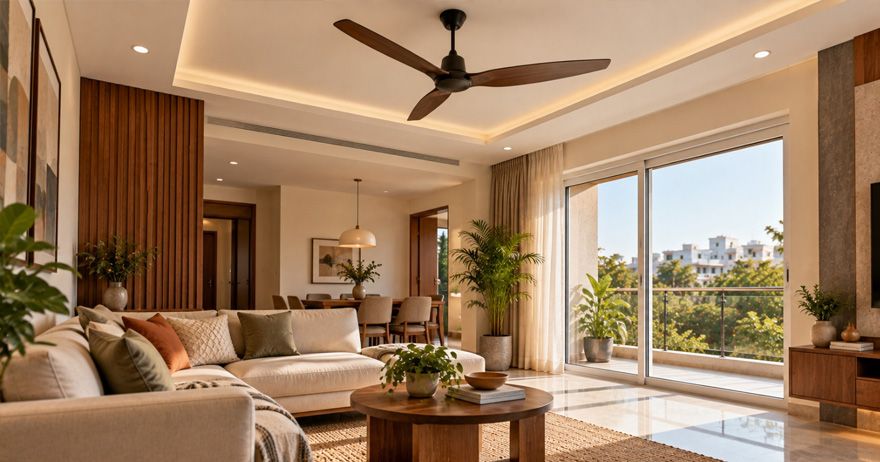
A ceiling fan is both a practical appliance and an important visual element in modern interiors. Its position can influence air circulation, comfort, lighting, furniture arrangement, and the overall balance of a room. Thoughtful ceiling fan placement and design ensures that the fan works efficiently without competing with other design features such as pendant lights, chandeliers, false ceilings, or recessed lighting.
The ideal position depends on the room's size, ceiling height, furniture layout, fan dimensions, and electrical points. In bedrooms and living rooms, the fan is generally positioned to serve the primary occupied area rather than simply the geometric centre of the ceiling. Careful planning can improve both functionality and aesthetics.
Why Does Ceiling Fan Placement Matter?
A fan positioned according to the furniture layout can distribute air more effectively to the people using the room. It can also prevent conflicts with wardrobes, tall furniture, lighting fixtures, and decorative ceiling elements. Good ceiling fan placement ideas begin with the room's actual furniture and circulation pattern rather than treating the ceiling as an isolated surface.
How to Choose the Right Ceiling Fan Size
Fan size affects both airflow and visual proportion. The ceiling fan size guide should be treated as a starting point rather than a universal rule because room height, fan motor performance, blade design, and manufacturer specifications also affect performance.
Small Rooms
Compact bedrooms, studies, and smaller rooms may work well with smaller fan sizes, provided the airflow requirements are met.
Medium-Sized Rooms
Bedrooms and living spaces of moderate size can generally accommodate a medium-sized fan that provides sufficient coverage without overwhelming the ceiling.
Large Rooms
Large living rooms or open-plan areas may need a larger fan or multiple fans, depending on the layout and airflow requirements.
Ideal Ceiling Fan Placement in Living Rooms
The ceiling fan placement in living room should be based on where people spend most of their time. You should align the fan with the seating area, consider the TV wall, open-plan living areas, keep the fan clear of tall furniture and maintain visual balance. For contemporary interiors, the ceiling fan placement and design should work with the overall layout rather than being added after the rest of the ceiling has been designed.
Ceiling Fan Placement in Bedrooms
The ceiling fan placement in bedroom is often aligned with the bed rather than the exact geometric centre of the room. You should position the fan above the main sleeping area, consider the bed orientation, check wardrobe clearance, avoid unnecessary clutter and consider children and older adults.
Kitchen, Dining Room, and Other Spaces
The right best ceiling fan position depends on the purpose of the room and the area that needs airflow.
Dining Area
In a dining room, position the fan to serve the main seating area without interfering visually or physically with a pendant light above the dining table.
Kitchen
If a fan is used in a kitchen, consider heat, grease, cleaning requirements, and the position of cabinets and appliances. The fan should not interfere with chimney or exhaust arrangements.
Study or Home Office
A compact fan can help improve comfort while leaving sufficient space for task lighting.
Passage Areas
Fans are not always necessary in narrow passages. Installing one simply because there is an available electrical point may create more visual clutter than benefit.
Balcony or Semi-Outdoor Areas
Fans intended for semi-outdoor spaces should be suitable for the environmental conditions and installed according to the manufacturer's specifications.
Ceiling Fan Height and Clearance Requirements
The ceiling fan height from floor should comply with applicable safety requirements and the manufacturer's installation instructions. Exact requirements can vary depending on the fan, mounting system, ceiling configuration, and local regulations. You can measure from the finished floor, use the correct mounting rod, maintain blade clearance, check the ceiling structure and don’t compromise on safety for appearance.
Ceiling Fan Placement with False Ceilings
False ceilings can make a room look more polished, but they require additional planning when a ceiling fan is involved. The ceiling fan placement with false ceiling should be planned before the false ceiling framework is installed. It allows the fan's support, electrical point, and surrounding design elements to be coordinated properly. You need to provide structural support, leave adequate clearance, plan the fan before the ceiling design, avoid visual crowding and consider maintenance.
How to Coordinate Ceiling Fans with Lights and Other Fixtures
The ceiling fan and light placement should prevent fixtures from interfering with the fan's operation or creating unnecessary visual clutter. You can go for fan with recessed lights, fan with pendant light, fan with a chandelier, use symmetry where appropriate and consider the light’s shadow effect. A coordinated ceiling plan makes the fan feel like part of the interior rather than an appliance added after the design is complete.
Modern Ceiling Fan Designs for Contemporary Interiors
Today's fans are available in many shapes, finishes, blade styles, and control options. The right choice should complement the room rather than simply follow a trend. When choosing a modern ceiling fan design, look at both the fan's performance and how its shape, finish, and size relate to the room. Opt for minimalist fans, wood-finish fans, sleek metallic finishes, compact decorative fans, smart ceiling fans and integrated light fans.
Common Ceiling Fan Placement Mistakes to Avoid
- Installing the fan only at the geometric centre: The physical centre of the room may not correspond with the main seating or sleeping area.
- Choosing the wrong fan size: A fan that is too small may not provide sufficient airflow, while an oversized fan can overwhelm a compact room.
- Ignoring blade clearance: Walls, beams, wardrobes, lights, and decorative ceiling elements need adequate clearance from the rotating blades.
- Fixing the fan only to the false ceiling: A decorative false ceiling should not be assumed to provide structural support unless specifically designed for that purpose.
- Placing a fan too close to a chandelier: Large fixtures can create visual clutter and may interfere with the fan depending on their positions and dimensions.
- Ignoring ceiling height: The fan should be installed at a safe and suitable height according to manufacturer requirements and applicable safety standards.
- Forgetting furniture placement: A fan positioned before the room layout is finalised may end up serving an unused part of the room.
- Overcrowding the ceiling: Too many lights, coves, panels, fans, and decorative features can make the ceiling look visually heavy.
- Ignoring electrical planning: Electrical points should be coordinated with the final ceiling and furniture layout before installation.
- Choosing appearance over airflow: Fan’s performance, room coverage, and installation requirements should be considered alongside its appearance.
Final Thoughts
Good ceiling fan placement and design combines airflow, safety, furniture planning, lighting, and visual balance. Start by identifying where people spend most of their time in the room. Then choose a fan size suitable for the space and plan its height and clearance according to the manufacturer's requirements. Most importantly, do not compromise installation safety for appearance. With thoughtful planning, the ceiling fan can become an integrated part of the room rather than an afterthought.