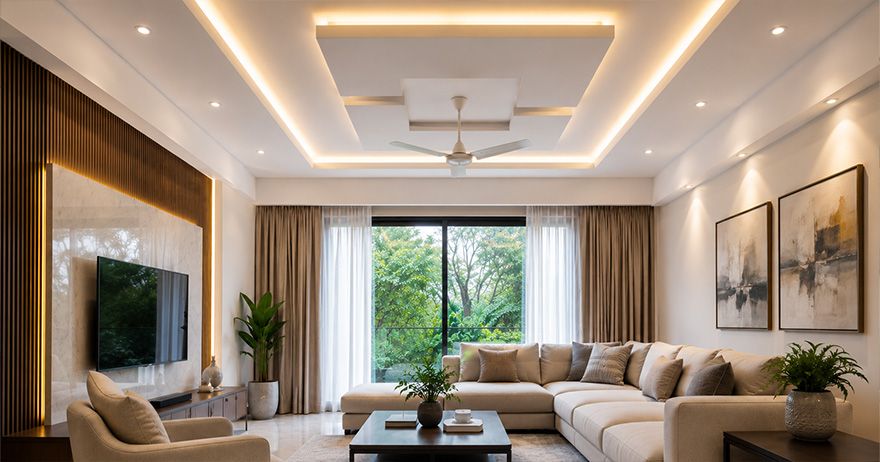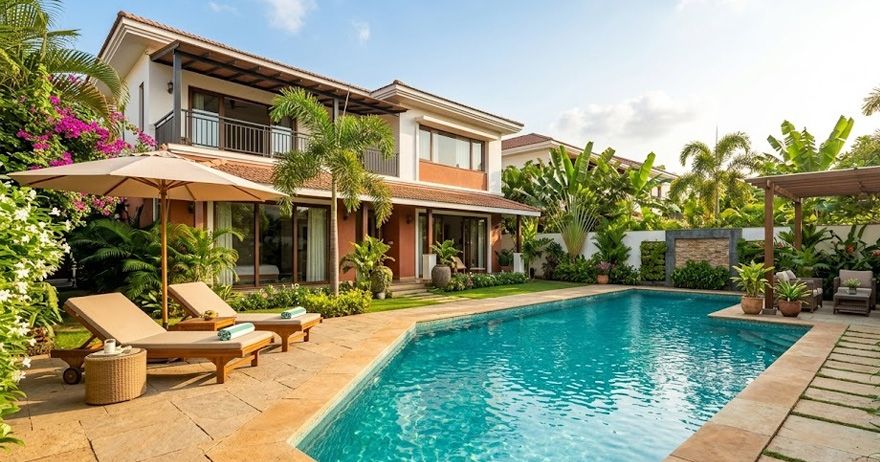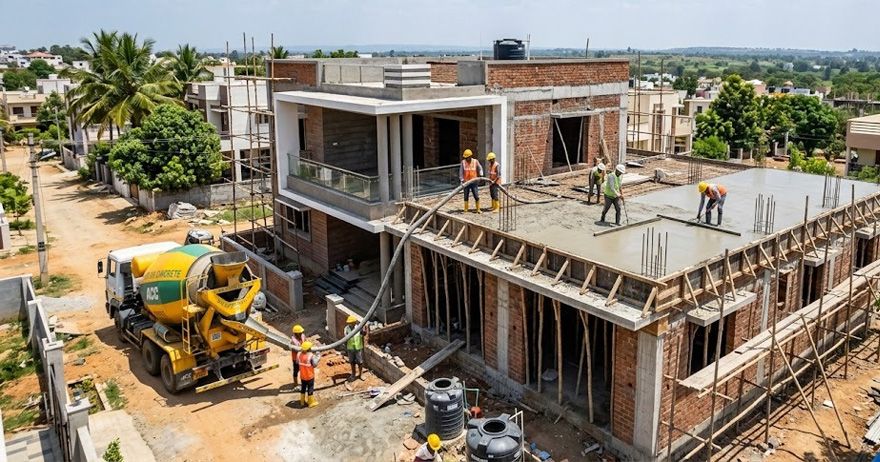




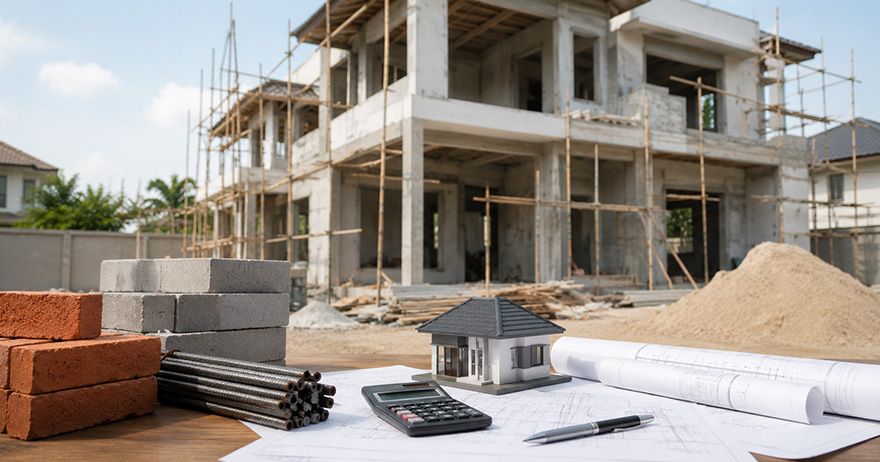
Major expenses include foundation work, cement, steel, bricks, roofing, windows, doors, electrical work, plumbing, and interior finishes. Proper planning helps homeowners estimate costs accurately and avoid budget overruns during construction.
What Is The Average Cost Of Building A House In India 2026?
In 2026, the average cost of building a house in India ranges from INR 16 lakh to INR 1+ crore. The cost depends on your city, your house sq ft, your material choices, and the complexity of your design.
How Much Does It Cost To Build A House?
| Upgrade | Addresses | Cost Range | Impact Level |
|---|---|---|---|
| Upgrade window and door seals | Air infiltration dust and humidity | Low | Immediate |
| Apply reflective roof coating | Solar absorption through roof slab | Low to moderate | High |
| Install false ceiling with insulation void | Conducted heat from roof slab | Moderate | High for top floor |
| Add external shading above west-facing windows | Direct afternoon solar heat gain | Low to moderate | High |
| Replace single-pane glass with solar control or Low-E | Solar heat gain through glass | Moderate to high | Very High |
| Add internal wall insulation to external walls | Conducted heat through walls | Moderate to high | High |
| Upgrade to full sealed window systems | All heat pathways through window openings | High | Very High |
House Construction Cost Per Sq Ft In India 2026
The average cost of building a house in India ranges from INR 1,500 to INR 3,500 per sq ft. A standard home with no-frills materials starts around INR 1,200 per sq ft. A luxury home with imported tiles, designer fittings, and a modular kitchen can cross INR 4,500 per sq ft.
| Build Quality | Cost Per Sq Ft In 2026 | What It Includes |
|---|---|---|
| Basic | INR 1200 to INR 1800 per sq ft | Standard cement basic bricks simple flooring and paint |
| Standard | INR 1800 to INR 2800 per sq ft | Vitrified tiles branded sanitaryware and decent fittings |
| Premium | INR 2800 to INR 4500+ per sq ft | Imported tiles false ceiling modular kitchen and designer fittings |
Location also plays a crucial role.
| City | Cost Per Sq Ft In 2026 |
|---|---|
| Mumbai | INR 2500 to INR 3500 per sq ft |
| Delhi NCR | INR 2200 to INR 3200 per sq ft |
| Bengaluru | INR 2000 to INR 2800 per sq ft |
| Hyderabad | INR 1800 to INR 2500 per sq ft |
| Tier-2 cities | INR 1000 to INR 2200 per sq ft |
Factors Affecting House Construction Costs
Here are the factors that affect the cost of building a house in India
Location
Building a house in a metro city costs more because labour wages, material delivery and government compliance fees are all higher.
Design complexity
A simple rectangular layout uses minimal material and minimal labour. The moment you opt for curved walls, multiple balconies, or an irregular floor plan, your costs go up because more material gets wasted and more skilled labour hours are needed.
Number of floors
When it comes to the ground floor, the excavation, foundation, and plinth filling costs add up. But the first floor doesn’t require any of those, and so costs 15 to 20% less per sq ft.
Soil condition
If the soil is soft, loose or waterlogged, it needs a stronger and deeper foundation, which costs extra. Doing a soil test before you start can save you from budget surprises later.
Contract type
A labour-only contract, where you buy materials yourself and pay just for the workforce, is usually cheaper but needs active supervision. A turnkey contract, where the contractor handles everything, costs more upfront but reduces your coordination burden. Also, you need not worry about mid-project price swings.
Material Costs: Cement, Steel, Bricks & More
Materials make up 50 to 60% of your total construction budget.
| Material | Price (2026) |
|---|---|
| Cement (50 kg bag) | INR 340 to INR 430 per bag |
| TMT Steel (Fe-500 grade) | INR 50000 to INR 60000 per ton |
| Red bricks | INR 6 to INR 10 per piece |
| Sand and aggregates | Prices vary locally by transport distance |
| RCC slab (material + labour) | INR 180 to INR 220 per sq ft |
For a 1,000 sq ft house, you will need 350 to 500 bags of cement and around 18,000 to 20,000 bricks. The numbers depend on your structural design and number of floors.
Cement and steel prices vary almost every month. These differences are because of the fuel costs, infrastructure demand, and raw material availability. Check rates with two or three local dealers just before you start buying rather than relying on quotes from a few months ago.
Labour Charges And Contractor Charges
Labour accounts for 30 to 50% of your total build cost. Skilled workers such as masons, carpenters, electricians, plumbers, and painters all charge daily wages, and those wages vary by city. In metro cities, daily wages for skilled workers range from INR 800 to INR 1,400 per day. In smaller towns, the same work costs noticeably less.
While getting a quote from the contractor, always ask for construction cost including materials and labour.
2BHK House Construction Cost Breakdown
A 2BHK house has a built-up area of 800 to 1,200 sq ft, depending on room sizes and whether it includes a balcony or utility area. For a smaller 2BHK with standard construction, expect a cost between INR 16 lakhs and INR 20 lakhs.
Take a look at this cost breakdown for a 1,200 sq ft 2BHK at INR 2,200 per sq ft with standard finish.
| Component | Cost In 2026 |
|---|---|
| Structure and masonry | INR 1680000 |
| Flooring paint and fixtures | INR 720000 |
| Electrical and plumbing | INR 240000 |
| Subtotal | INR 2640000 |
| Contingency (10%) | INR 264000 |
| Estimated total | INR 29 lakhs |
3BHK House Construction Cost Breakdown
A 3BHK has a built-up area of 1,400 to 1,800 sq ft. The construction cost ranges from INR 25 to 70 lakhs, depending on size, finish level, and whether you are building on one floor or two.
| Configuration | Cost In 2026 |
|---|---|
| 1000 sq ft (mid-range) | INR 25 lakhs to INR 30 lakhs |
| 1500 sq ft (mid-range) | INR 40 lakhs to INR 50 lakhs |
| 1800 sq ft (premium) | INR 55 lakhs to INR 70 lakhs |
If you are building a G+1 structure, the first floor costs 15 to 20% less per sq ft than the ground floor, since it skips the foundation work. A two-storey 3BHK can actually be more cost-efficient than a single-storey one with the same total area.
Hidden Costs Homeowners Often Forget
The per sqft rate your contractor gives doesn’t cover everything. Here are some hidden costs homeowners often forget.
- Building plan approval fees from your local municipality authority.
- Compound wall, gate, and boundary fencing costs.
- Borewell, overhead tank, and septic tank costs.
- Electricity and water connection charges.
- 18% GST on works contract.
- Soil testing fees.
- Construction loan interest and bank processing fees.
- Architect or structural engineer fees.
Cost Of Windows, Doors & Finish Materials
Doors, windows, and finishing materials usually account for 8 to 15% of the total construction budget. Costs can vary significantly depending on the material quality and finish.
| Item | Price Range |
|---|---|
| Flush door (solid core BWR grade) | INR 3500 to INR 9000 per door |
| Laminate finish door | INR 6000 to INR 15000 per door |
| Solid wood or teak door | INR 25000 to INR 60000+ per door |
| uPVC windows | INR 300 to INR 1300 per sq ft |
| Aluminium windows | INR 600 to INR 2000 per sq ft |
| Vitrified tiles (standard) | INR 90 to INR 170 per sq ft installed |
| Marble flooring | INR 160 to INR 500 per sq ft installed |
| Interior paint (with labour) | INR 15 to INR 55 per sq ft |
Keep an additional 7 to 10% budget for flooring to cover tile wastage, cutting, and skirting costs.
How To Reduce House Construction Costs
Here are some ways to reduce modern house construction cost India.
- Finalising your design completely before starting is the most effective way to save money. Mid-construction changes cost more than getting it right the first time and can add 5 to 10% to your budget through wasted material and rework.
- Sticking to a simple, rectangular layout reduces material waste and labour hours.
- Buying materials like cement and steel directly from suppliers or in bulk, rather than through middlemen, can reduce costs by 5 to 8%.
- Using locally available materials instead of transported ones can cut 10 to 15% from material costs.
- Building during winter months can slightly reduce labour costs because productivity is higher and weather delays are fewer.
- Using AAC blocks instead of traditional red bricks can cut structural costs in some regions while improving insulation.
House Construction Budget Planning Tips
Here are some house construction budget planning tips.
House Construction Budget Calculator
- Start with a stage-wise cost estimate for foundation, structure, roofing, and finishing. This helps you track where money is going and plan your cash flow through the build.
- If you are using a construction loan, ask your bank for stage-based disbursement. This way, funds will be released once each stage of construction is completed. This keeps your loan draw aligned with actual progress and reduces unnecessary interest on money sitting idle.
- Always keep a contingency fund of 10 to 15% of your total budget. Things never go as planned, and some surprises will always await.
- Get your property documents, approved building plan, and contractor agreements ready before approaching the lender, since delays in paperwork are one of the most common reasons construction timelines and budgets both go off track.