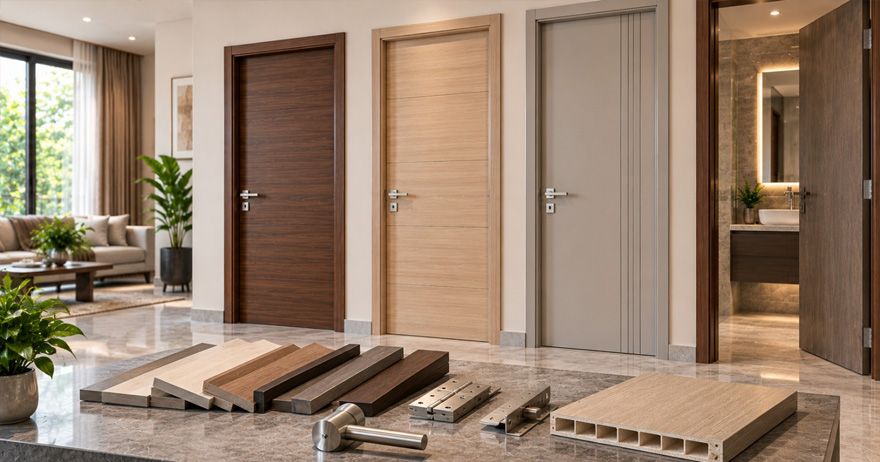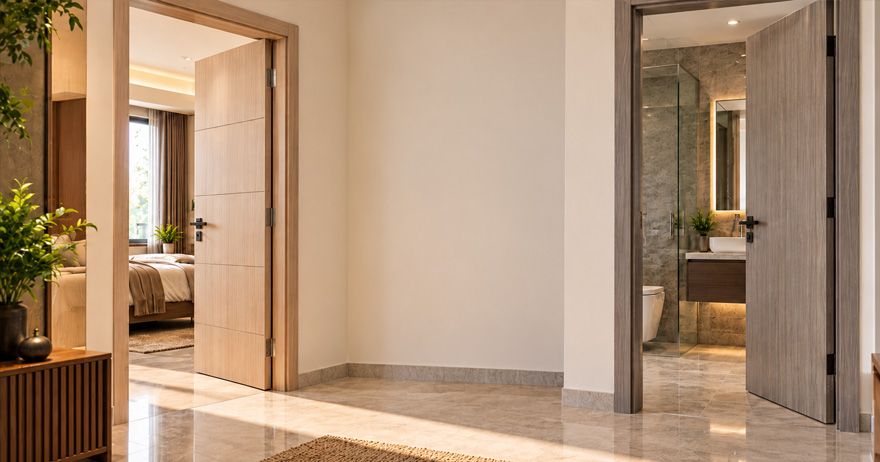
Doors are an important part of interior design, influencing the overall appearance of a home. The right door can complement your flooring, furniture, wall finishes and lighting while maintaining a clean, coordinated look. This is why modern flush door design ideas are becoming a popular choice for contemporary Indian homes.
Flush doors feature smooth, flat surfaces that offer plenty of scope for colour, texture and finish. From warm wood-look laminates and minimalist designs to subtle grooves, metallic inlays and contemporary hardware, homeowners can choose from several styles to suit their interiors.
Whether you are selecting a door for a bedroom, living room, study or passage, the ideal design should balance appearance, durability and ease of maintenance. Here are some practical flush door design ideas to help you create a stylish and cohesive home.
What Makes a Flush Door Look Modern?
Modern flush doors focus on simplicity, clean lines and understated detailing. Instead of elaborate carvings, contemporary designs use subtle textures, carefully selected finishes and streamlined hardware to create visual interest.
The following features help create a modern appearance:
- Smooth surfaces: Flat door faces create a neat and uncluttered look.
- Minimal detailing: Simple grooves or narrow inlays add character without overwhelming the design.
- Contemporary finishes: Matte laminates, wood-look textures and painted surfaces suit modern interiors.
- Coordinated colours: Door shades complement the walls, flooring and furniture.
- Sleek hardware: Modern handles and hinges complete the overall appearance.
A flush door does not have to look plain. A distinctive wood grain, contrasting frame or carefully selected handle can make a simple design stand out.
For Indian homes, also consider humidity, sunlight, cleaning requirements and the frequency of use before finalising the material and finish.
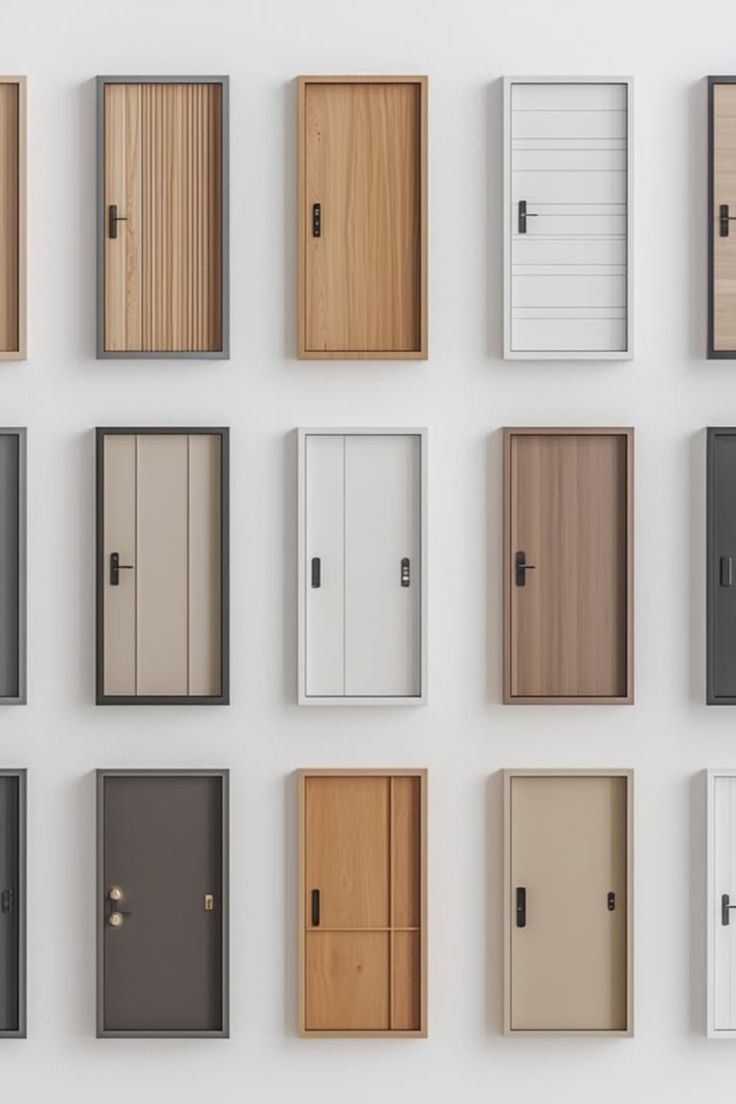
Minimalist Flush Door Designs
Minimalist doors are suitable for apartments, compact bedrooms and contemporary living spaces. Their simple appearance helps maintain visual continuity throughout the home.
Plain Matte Flush Door
A plain door in white, beige, off-white or light grey creates a timeless, understated appearance. It works particularly well with neutral walls, simple furniture and uncluttered interiors.
Full-Height Minimalist Door
A taller door can create an elegant vertical effect and complement contemporary interiors. Confirm the ceiling height, structural requirements and available door dimensions before selecting this design.
Wall-Matching Flush Door
Matching the door colour to the wall creates a seamless visual effect. This approach works well in hallways, compact rooms and interiors where you want the door to blend into the background.
A plain flush door with one or two narrow lines offers a subtle decorative touch. This design suits homeowners who want something more distinctive than a completely plain surface without introducing elaborate patterns.
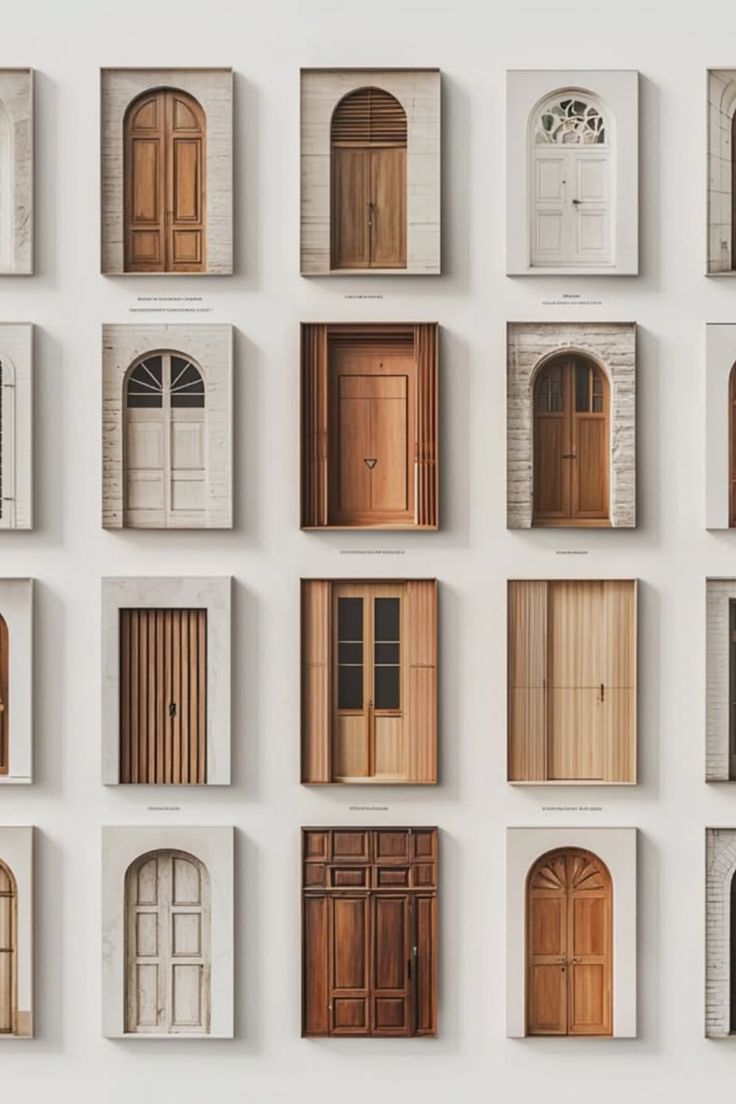
Wood-Finish and Laminate Ideas
Wood-look finishes add warmth and work well with many interior styles. Laminate flush doors are available in a wide range of textures and patterns, making it easier to coordinate doors with furniture, wardrobes and flooring.
Light Oak Finish
Light oak-look doors create a bright, natural appearance. They pair well with white walls, pale flooring, neutral curtains and contemporary furniture, making them a suitable choice for smaller rooms.
Walnut Wood Finish
A walnut finish introduces richness and depth. It works particularly well with beige walls, warm lighting and wooden furniture, creating a sophisticated appearance without requiring decorative carvings.
Vertical Wood-Grain Door
Vertical grain patterns create a sense of height and direction. They complement tall wardrobes, simple wall panels and contemporary furniture with clean lines.
Grey Wood-Finish Door
Grey wood-look finishes suit modern interiors with restrained colour palettes. They can complement concrete-look flooring, white walls, black hardware and neutral furniture.
Before selecting a wood-finish door, review a physical sample under your home's lighting. The same laminate may appear warmer or darker under artificial light than in daylight.
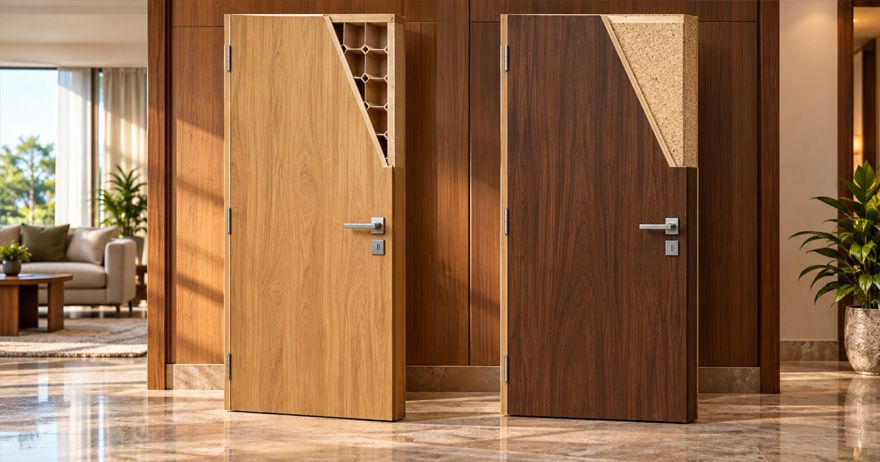
Also check the door core, edge treatment and manufacturer's specifications. A laminate finish alone does not make a door suitable for prolonged moisture exposure.
Grooves, Inlays and Subtle Detailing
Flush doors can incorporate decorative elements while retaining their clean appearance. Grooves and inlays introduce texture through lines, spacing and contrast rather than heavy ornamentation.
Vertical Groove Design
Narrow vertical grooves add structure to the door face. This design complements modern wardrobes, wall panels and tall furniture. Consistent spacing helps maintain a balanced appearance.
Horizontal Groove Design
Horizontal lines create a wider visual emphasis. They work well with interiors that feature horizontal furniture profiles, long shelves or linear decorative elements.
Metallic Inlay Door
A slim brass, bronze or other metallic inlay adds a refined accent to a plain door. Matching the inlay with selected handles or lighting details can create a coordinated appearance.
Geometric Line Pattern
A restrained geometric pattern gives a flush door a contemporary identity. Simple lines and balanced proportions work better than overly complicated patterns, especially in smaller rooms.
Keep maintenance in mind when selecting decorative details. Deep grooves may collect dust, while metallic inlays require careful fitting and finishing.
Colour Ideas for Modern Interiors
The right door colour can complement the interior or create a deliberate contrast. Consider the wall shade, flooring, furniture, natural light and overall style before choosing among different modern door colours.
| Door colour | Interior style | Suitable combinations |
|---|---|---|
| White | Minimalist and contemporary | White walls; pale flooring and simple furniture |
| Beige | Warm and understated | Cream walls; wood furniture and neutral textiles |
| Light oak | Natural and relaxed | White walls; warm flooring and soft furnishings |
| Walnut brown | Rich and sophisticated | Beige walls; wooden accents and neutral flooring |
| Grey | Modern and restrained | Concrete-look finishes; white walls and black hardware |
| Charcoal | Bold and contemporary | Light walls; simple furniture and metal accents |
| Sage green | Soft and nature-inspired | Warm neutrals; natural wood and understated textiles |
| Muted blue | Calm and distinctive | White; beige and light wood finishes |
For compact rooms, lighter shades can help create an open visual effect. Darker doors can provide contrast in larger spaces or against light walls.
You do not need to match every finish exactly. Instead, choose colours that share complementary undertones and work together as part of the overall interior scheme.
Bedroom and Living Room Applications
Different rooms have different design and functional requirements. A door that suits a bedroom may not be the best choice for a bathroom or utility area.
Bedroom Door Designs
Bedrooms benefit from doors that complement the furniture while supporting privacy and comfort.
Consider these options:
- Light wood-finish doors for a calm, natural appearance.
- Matte beige or off-white doors for minimalist bedrooms.
- Walnut finishes for rooms with warm wooden furniture.
- Subtle vertical grooves for understated detailing.
- Solid-core doors where improved sound reduction is important, subject to product specifications.
Sound reduction depends on the door construction, installation quality, fit and sealing. A decorative finish alone does not provide acoustic insulation.
Living Room and Common-Area Doors
Doors opening onto a living room or hallway contribute to the appearance of the shared space.
Suitable options include wall-matching doors, coordinated wood finishes, grey or charcoal doors, and subtle inlay designs.
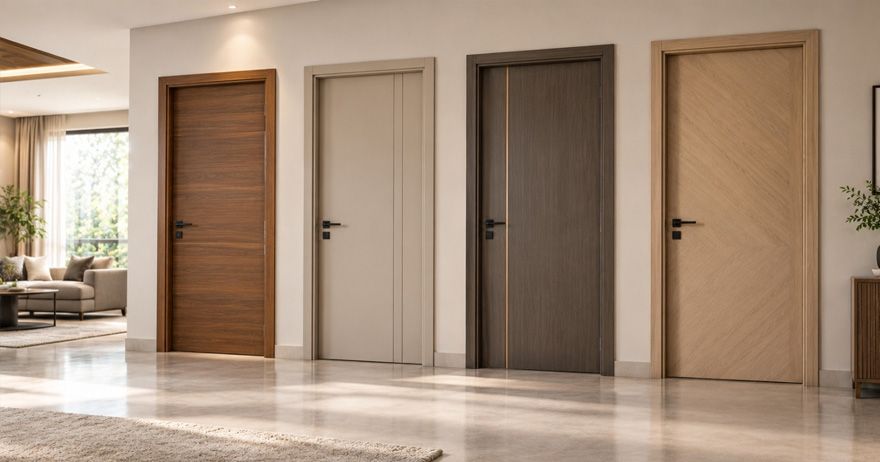
If several doors are visible from the living room, keeping their finishes and hardware coordinated can make the interior feel more organised.
For kitchens, bathrooms and utility areas, prioritise material suitability, moisture protection and ease of cleaning alongside appearance.
Matching Doors With Flooring and Furniture
A modern door should complement the larger interior scheme rather than compete with it. Consider the door, flooring, wardrobes, furniture, wall colour and skirting together before choosing a finish.
Coordinate Wood Tones
The door and furniture do not need identical wood patterns, but their undertones should complement each other. A warm oak-look door can work well with warm wooden furniture, while a grey-brown finish may suit a more restrained contemporary palette.
Balance Contrast and Continuity
If your flooring has a strong grain or pattern, a simpler door can create better balance. Similarly, a door with prominent grooves or inlays may work best with understated walls and furniture.
Consider the Frame and Skirting
The frame can match the door for a uniform appearance or contrast with it for a more defined look. Skirting can also connect the door finish with the flooring and walls.
Check the Lighting
A finish that appears neutral in daylight may look warmer or darker under artificial lighting. Review samples at different times of day before ordering several doors.
Hardware for a Contemporary Finish
Hardware can transform the appearance of a simple flush door. The right handle, hinges and lock can complete the design while supporting comfortable everyday use.
Consider these options:
- Slim lever handles: Suitable for clean, contemporary interiors.
- Matte black handles: Create contrast against light or wood-look doors.
- Brushed metal handles: Offer a restrained finish that works with many colour palettes.
- Brass-finish handles: Complement warm wood tones and selected metallic accents.
- Recessed pulls: Suitable for compatible sliding doors and specialised door systems.
Choose hardware according to the door's thickness, weight, locking requirements and intended use. Check compatibility before purchasing handles, hinges and locks separately.
For a coordinated interior, repeat the same hardware finish across nearby doors where practical. However, functional requirements may justify different hardware in bathrooms, bedrooms and utility spaces.
Common Design Mistakes
Even an attractive door can look out of place if its design is not planned alongside the rest of the interior. Avoid these common mistakes when selecting modern flush door designs.
Choosing a finish without checking samples
Catalogue images may not accurately represent the finish under your home's lighting. Check a physical sample against the actual wall colour and flooring.
Using too many different door styles
Different designs in every room can make an interior feel disconnected. Establish a consistent style and introduce variation only where it serves a purpose.
Overusing grooves and inlays
Decorative details can become distracting when combined with patterned flooring, elaborate furniture and textured walls. Keep the overall composition balanced.
Ignoring the frame
A well-designed door can look unfinished if the frame colour or profile clashes with it. Include the frame in your design decision.
Selecting hardware only for appearance
A stylish handle may be uncomfortable or unsuitable for frequent use. Prioritise grip, durability, compatibility and ease of operation.
Choosing an unsuitable material
A decorative finish does not guarantee moisture resistance. Check the door core, edge protection and recommended applications, especially for bathrooms and utility spaces.
Forgetting maintenance requirements
Textured finishes and deep grooves may need additional cleaning. Choose a design that suits the time and effort you can realistically devote to maintenance.
Ignoring installation quality
Incorrect alignment, uneven gaps and poorly fitted hardware can affect both appearance and operation. Confirm the opening dimensions and use a qualified installer.
Final Design Tips
The best flush door design combines a clean appearance with practical performance. Before making your final selection, review these points:
- Choose a design that complements your home's interior style.
- Select laminate, veneer, paint or another finish according to your budget and maintenance needs.
- Coordinate door colours with flooring, walls and furniture.
- Use grooves and inlays sparingly for a refined appearance.
- Select handles and locks that suit the door material, thickness and intended use.
- Include the frame in your design and colour decisions.
- Confirm dimensions, opening direction and hardware requirements before ordering.
- Choose materials suited to the room's moisture exposure and frequency of use.
- Review physical samples under the actual lighting.
- Ensure proper installation and edge finishing.
Modern flush door design ideas offer plenty of scope for personalisation without making an interior look crowded. Whether you prefer a plain matte surface, a warm wood-look finish, fine grooves or a subtle metallic accent, the most successful design is one that suits your space and remains practical for everyday living.