



The type of glass used in your windows plays a major role in determining indoor temperature, comfort, and energy efficiency. Different glass options vary in their ability to block heat, reduce solar gain, retain indoor cooling, and filter UV radiation. Advanced solutions such as Low-E glass, solar control glass, and double-glazed units can significantly reduce heat transfer compared to standard clear glass. Choosing the right glass helps maintain a more comfortable indoor environment while lowering cooling costs and improving overall energy performance.
How Does Window Glass Affect Room Temperature?
Many homeowners focus on window size, frame material, or the outer appearance but often overlook the glass itself. However, the right window glass for heat reduction can make a noticeable difference in indoor coziness, especially in India's hot and sunny climate.
Glass acts as a barrier between indoor and outdoor environments. It affects room temperature through three mechanisms which are how much solar heat it allows in, how well it resists heat conduction between inside and outside, and how much UV radiation it transmits. That is why understanding how glass affects room temperature is essential before selecting windows for a new home or renovation.
Why Glass Selection Matters in Hot Climates?
In India, where temperatures regularly exceed 35°C and sometimes cross 45°C in cities like Delhi, Ahmedabad, and Hyderabad, choosing the wrong glass can significantly increase indoor heat and often feels uncomfortable during afternoons.
Choosing the best window glass for heat reduction helps to:
- Maintain cooler indoor temperatures
- Improve comfort throughout the day
- Reduce AC usage
- Lower electricity bills
- Protect furniture from UV damage
If you look at glass selection for thermal comfort, the choice of glass can be as equally important as the window frame.
Understanding Heat Transfer Through Glass
Before comparing glass types, it is crucial to understand how heat actually moves through a window. So you will obtain an answer for why some rooms feel hotter than others.
Solar Heat Gain
Solar heat gain refers to the heat that enters a room through sunlight. It is measured using a Solar Heat Gain Coefficient (SHGC). A lower SHGC means less solar heat enters the room.
Windows facing west and south often receive the highest SHGC, causing rooms to heat up quickly during the day. When you select the right window glass for heat reduction, you can get rid of heat gain.
Thermal Conductivity
Glass naturally transfers heat from hotter areas to cooler areas. Standard clear glass allows more heat transfer compared to advanced coated or insulated glass systems.
The thermal performance of a window is measured using its U-value. A lower U-value means less heat conduction and better indoor temperature stability.
UV Radiation
Ultraviolet rays not only contribute to heat build-up but can also fade furniture, curtains, flooring, and artwork over time.
Modern performance glass can block 90 to 99 percent of harmful UV rays at the same time allow natural light into the room.
Types of Window Glass and Their Impact on Temperature
Different glass types offer varying levels of heat control and energy efficiency and a few are given below.
Clear Glass
Clear glass is the most commonly used glass that transmits around 85 to 90 percent of visible light and is affordable. It is perfect for areas with lower direct sunlight exposure.
Benefits:
- Maximum natural light
- Cost-effective
- Widely available
Tinted Glass
Tinted glass consists of pigments that reduce glare and absorb some incoming solar radiation. Many homeowners prefer tinted glass when looking for how to keep rooms cool with glass and without increasing the budget.
Benefits:
- Reduces glare
- Improves privacy
- Moderately lowers heat gain
Reflective Glass
Reflective glass comes with a metallic coating on the surface that reflects incoming sunlight. It is mostly used in commercial buildings due to its mirror-like external appearance.
Benefits:
- Reduces heat gain
- Improves privacy during daytime
- Creates a trendy look
Low-E Glass
Low-Emissivity (Low-E) glass contains a thin metallic oxide coating designed to reflect heat. When comparing low-E glass vs regular glass, Low-E glass wins the race in thermal performance.
Benefits:
- Reduces heat transfer
- Improves indoor comfort
- Maintains natural daylight
- Enhances energy efficiency
Solar Control Glass
Solar control glass for homes is specifically designed to minimize solar heat gain without sacrificing natural light. It is often recommended as heat resistant glass for Indian homes exposed to intense sunlight.
Benefits:
- Blocks a large portion of solar heat
- Improves thermal comfort
- Suitable for large glass windows
Double-Glazed Glass
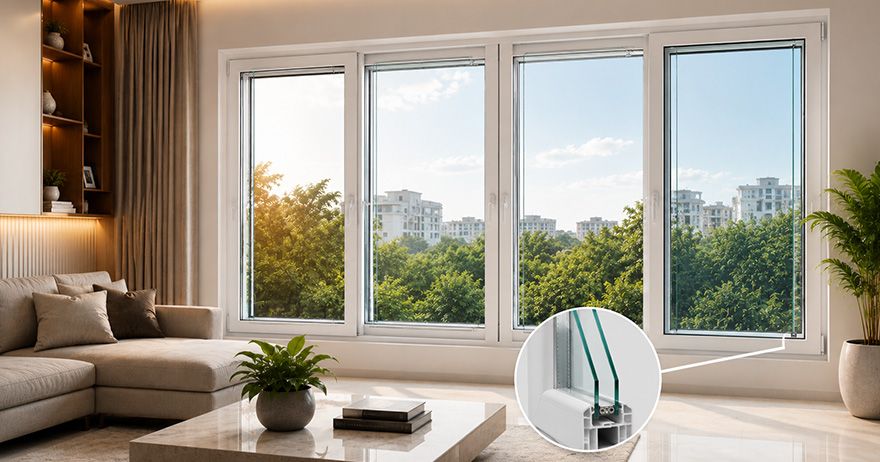
Double glazing consists of two glass panes separated 12 to 16mm wide by an insulating air or gas-filled space. Modern homeowners choose double glazed windows for heat insulation because they provide both temperature and noise control.
Benefits:
- Excellent thermal insulation
- Better noise reduction
- Improved energy performance
Which Glass Keeps Rooms Cooler?
The best glass for reducing indoor heat depends on factors such as window orientation, climate, and budget.
| Glass Type | Solar Heat Gain | Thermal Insulation | Visible Light | UV Blocking |
|---|---|---|---|---|
| Clear Glass | High | Low | Very High | Minimal |
| Tinted Glass | Moderate | Low | Moderate | Partial |
| Reflective Glass | Low | Low to Moderate | Low | Good |
| Low-E Glass | Low to Moderate | High | High | Very Good |
| Solar Control Glass | Very Low | Moderate to High | High | Excellent |
| Double Glazed Setup | Low | Very High | Depends on glass | Good to Excellent |
Low-E Glass vs Solar Control Glass
A side-by-side comparison between low e glass vs regular glass is given below to help you make a final decision.
| Feature | Low-E Glass | Solar Control Glass |
|---|---|---|
| Heat Reduction | Excellent | Excellent |
| Natural Light | High | High |
| UV Protection | High | High |
| Energy Efficiency | Excellent | Good |
| Best For | Year-round performance | High solar exposure |
| Cost | Moderate to High | Moderate to High |
How Glass Selection Affects Energy Bills?
When heat continuously enters through windows, the indoor cooling process becomes more difficult. The higher initial investment in performance glass can save your money lifelong.
When you pick the right window glass for heat reduction, you can:
- Reduce air-conditioning load
- Improve indoor temperature consistency
- Lower monthly electricity bills
- Increase overall home efficiency
Best Glass Options for Indian Homes
The energy efficient glass for hot climates recommendation guide based on region, room type and exposure are given below.
| Area | Glass Type |
|---|---|
| West-facing living room | Solar control glass |
| Bedroom | Double glazed with Low-E |
| East-facing living room | Low-E glass |
| North-facing rooms | Clear or lightly tinted |
| Coastal homes | Laminated with solar control |
| Noisy urban homes | Acoustic double glazed |
| Extreme Hot Regions | Solar control glass with Low-E |
Common Mistakes When Choosing Window Glass
Many homeowners make decisions based only on appearance or price. Some of the mistakes to avoid are listed below.
Choosing clear glass for west-facing windows
- Ignoring local climate conditions
- Selecting glass without considering room orientation
- Focusing only on frame quality and aesthetics
- Overlooking energy efficiency ratings
- Choosing the cheapest option without long-term evaluation
How to Combine Glass and Frame Performance?
The effective window glass for heat reduction solutions always involves both the glass and the frame working together. Even the best glass cannot perform effectively if paired with poor-quality frames.
For optimal results:
- Combine performance glass with quality uPVC or thermally broken frames
- Ensure proper sealing and installation
- Select the right opening style for ventilation
- Match glass performance with room requirements