


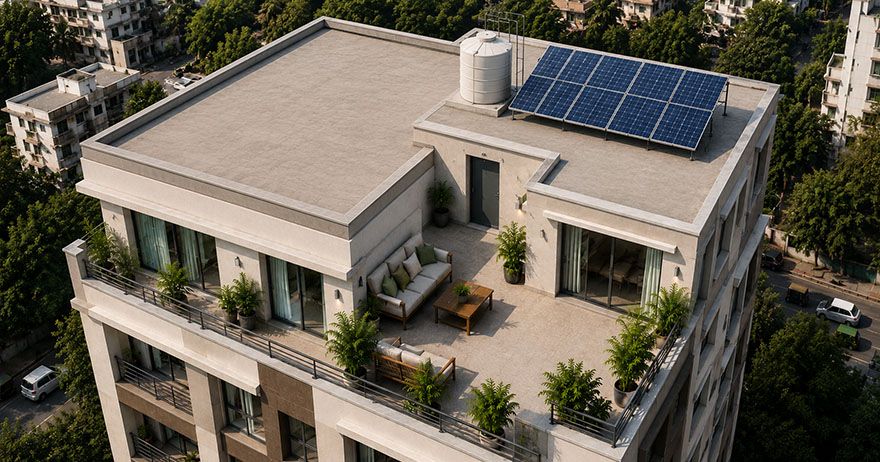
Combining insulation with ventilation and solar-control glazing can help lower indoor temperatures, improve comfort, and reduce air-conditioning costs. For homes in hot Indian cities, controlling roof and window heat gain is essential for maintaining a cooler indoor environment.
Why Top-Floor Apartments Get Hotter Than Other Homes?
A top-floor apartment gets hotter than other homes because every floor beneath it has another apartment above it. This acts as a natural heat buffer.
Since your apartment does not have it, and your ceiling sits directly below the roof slab, it can heat up to 60 to 70 degrees Celsius in peak summers. The heat radiates downward even after sunset, which is why your rooms feel hot in the late evenings even though the temperature is lower outside.
How Heat Enters Through Roofs, Walls And Windows?
Heat enters a top-floor apartment from three main points.
- The roof is the biggest contributor, accounting for up to 60% of total heat gain.
- Windows come second, since glass lets solar radiation pass directly into your rooms.
- West and south-facing walls are the third source, as they absorb afternoon sun for several hours before releasing it indoors.
How To Reduce Heat In Top Floor Apartment?
Here’s how to keep top floor apartment cool in summer. The following are the 10 best solutions.
1. Install Roof Heat Insulation
Roof installation is the most effective fix for reducing heat in a top-floor apartment. Materials like EPS boards, XPS boards, or PIR foam sheets are laid above or below the roof slab to block heat transfer. With proper roof heat insulation for Indian homes, indoor temperatures can drop by 10 to 20 degrees Celsius, and AC electricity costs can fall by 30 to 40% annually.
It is one of the best insulation for top floor apartments.
2. Use Reflective Roof Coatings
If you are wondering how to reduce ceiling heat in apartment, this is the one. Reflective roof coatings are an alternative to insulation boards. These are water-based paints with a high Solar Reflective Index (SRI) that reflect sunlight instead of absorbing it. This cool roof coating can bring the temperature down by up to 30 degrees Celsius, reducing indoor temperatures by 5 to 10 degrees Celsius.
3. Upgrade To Heat-resistant Windows For Homes
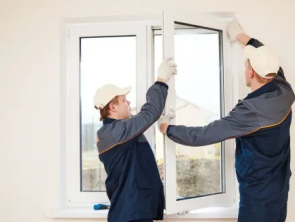
Double-glazed windows create an insulating air gap between two panes of glass that slows down heat transfer. This is crucial for windows on the south and west sides, which face the most direct sun. So, upgrading from standard single-pane glass to double-glazed glass for your windows is one of the smartest choices to keep a top-floor apartment cool.
4. Choose Low-E Or Solar Control Glass
Solar control glass has a metallic oxide coating that blocks 60 to 80% of solar heat while still letting in natural light. Low-E glass is designed for cold climates where some heat retention is useful. But in hot summers, it can still trap heat inside the building. So, solar control glass is the best windows for reducing heat in Indian climates.
5. Improve Window Sealing And Insulation
Even the good windows start underperforming because of the poorly sealed frames. Gaps around window frames allow hot outside air to seep in continuously. So, check your window frames for visible gaps and seal them with weatherstripping or silicone sealant. For sliding windows, make sure the rubber gaskets are intact, and the track sits flush.
6. Add Thermal Insulation To Walls
If you have noticed, west and south-facing walls tend to stay warm even after the harsh afternoon sun. They slowly release stored heat into your rooms. If you are looking for ways on how to stop heat from entering through walls, add insulation boards or wall panels with an air gap between them and the wall surface. This helps reduce heat transfer.
You can also install a false ceiling using gypsum boards or insulated panels to create a buffer between your room and the hot roof slab above to lower the amount of radiated heat you feel directly.
7. Increase Natural Ventilation
Moving air feels cooler than still air even at the same temperature. Cross ventilation works by opening windows on opposite sides of a room so air flows through rather than sitting still. It is one of the best ways to cool a top floor apartment naturally. Exhaust fans in kitchens and bathrooms help push stale air out faster, which reduces the overall heat load on your living areas.
8. Use Heat-Reflective Curtains And Blinds
Thermal curtains and cellular blinds trap a layer of still air between the glass and your room. This slows down the heat entry. So, keep them drawn between 11 AM and 4 PM, which is when the solar heat gain through windows is at its highest. Make sure the curtains hang close to the frame so the air buffer they create is not disrupted.
9. Reduce Indoor Heat Sources
Every appliance running inside your apartment adds heat. Switching from incandescent bulbs to LEDs reduces heat from lighting by around 80%. Cooking on an induction cooktop instead of a gas stove for shorter meals can keep your kitchen noticeably cooler. Running heavy appliances like washing machines in the early morning or at night prevents heat buildup during the hottest part of the day.
10. Create A Long-Term Heat Management Plan
Start with the roof since that is where the majority of heat enters. Then address windows, ventilation, and internal heat sources. If you are in a rental house and cannot make structural changes, focus on window films, reflective curtains, and gap sealing. If you own your house, opt strictly for roof insulation or cool roof coating first.
We hope these top 10 thermal insulation solutions for apartments are useful.
Best Window Solutions For Hot Indian Climates
- For hot Indian climates, solar control glass is the most recommended window upgrade because it blocks heat without making your rooms dark.
- Double-glazing adds a further layer of thermal resistance.
- If full window replacement is not in your budget right now, window films are the best option, as they can block up to 70% of solar heat on existing glass.
- For frames, uPVC insulates better than aluminium, which conducts heat readily.
- Always begin with the west and south-facing windows since those face the most heat exposure.
How Much Can Insulation Reduce Indoor Temperature?
Reflective roof coatings alone can reduce indoor temperatures by 5 to 10 degrees Celsius. Full roof insulation can bring indoor temperatures down by 10 to 20 degrees Celsius. Solar control glass reduces heat entry through windows by 60 to 80%.
When you combine roof insulation, solar control windows, and cross-ventilation together, you can reduce electricity bills and save almost 30 to 40% annually.
Common Heat Insulation Mistakes To Avoid
If you are just exploring how to reduce heat in top floor apartment, it is not sufficient. Make sure to avoid these mistakes to see real results.
- Installing an AC before insulation is the most common mistake. Insulation reduces how much heat enters your home. If you install AC after insulation, it runs less and helps reduce electricity bills.
- Addressing only one heat source, like changing curtains while ignoring the roof, gives limited results because the roof alone contributes 60% of heat gain.
- Choosing Low-E glass instead of solar control glass in hot Indian weather is another frequent error, as Low-E glass can retain heat rather than block it.
- Leaving gaps around the window frames undoes the benefit of any glass upgrade you install, so sealing is always part of the solution.
We hope our guide on how to reduce heat in top floor apartment helps you make your space cooler and more comfortable.