



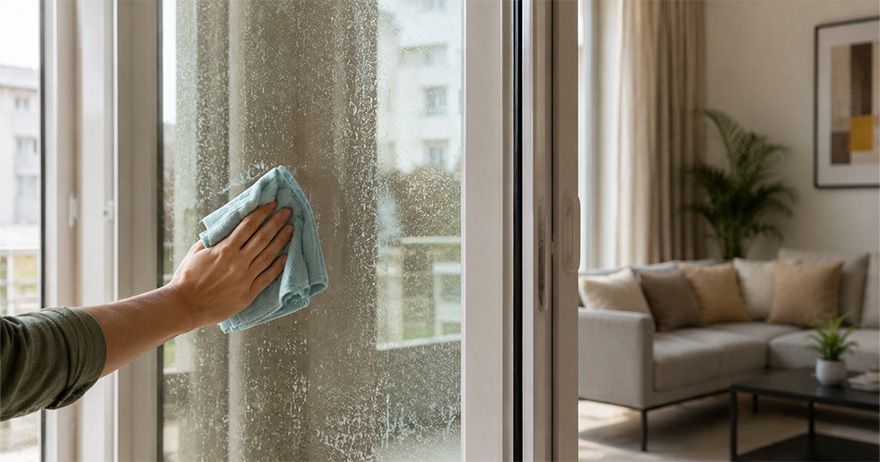
If you are wondering how to remove hard water stains from glass windows or how to restore cloudy glass windows, the easiest DIY methods include using vinegar solutions, lemon juice, baking soda, or specialised glass cleaners designed to dissolve mineral deposits.
Regular cleaning and proper maintenance help keep exterior glass surfaces clear, attractive, and free from stubborn water spots.
What Causes Hard Water Stains On Glass?
Water in most of the metro cities in India carries dissolved minerals like calcium and magnesium. When this water lands on glass and then dries, the water evaporates, but the minerals stay behind and bond to the surface. This is what a hard water stain is.
Municipal supply, borewell water, and overhead tank water all tend to have high Total Dissolved Solids (TDS), which means more mineral content and more visible staining. Every time water evaporates on the same glass surface, a fresh layer of minerals builds on top of the previous one, making the stain thicker over time.
Why Hard Water Stains Become Difficult To Remove?
A fresh stain sits on top of the glass and is easy to dissolve. The problem starts when you leave it. Over time, calcium and magnesium begin to chemically bond with the silica in the glass itself, in a process called mineral etching. Once that happens, the minerals are no longer just on the surface. They have become part of the glass at a molecular level.
Warmer climates and direct sunlight speed up evaporation, which is why homes in Indian cities deal with this more than people in cooler regions. Each new water cycle adds a new mineral layer, and the longer you leave it, the stronger the bond grows.
Can Hard Water Permanently Damage Glass?
Yes, hard water can permanently damage glass. If mineral deposits stay on glass long enough to etch the surface, the damage cannot be reversed with regular cleaning.
If the glass stays hazy even after cleaning, if the cloudiness does not change when you wet the surface, or if you run your hand on the glass and feel slightly rough under your fingertips, it means that it is permanently damaged.
At the surface-stain stage, you can restore the glass fully on your own. Once etching has set in, you will need professional polishing with compounds like cerium oxide. In severe cases, the glass panes need to be replaced.
How To Remove Hard Water Stains From Glass: 7 Easy DIY Methods
Here is a DIY guide for how to remove hard water stains from glass.
1. White Vinegar Solution
Mix equal parts of water and white vinegar for hard water stains on glass. Fill it into a spray bottle, and apply it to the stained surface. Let it sit for 15 to 30 minutes. Then, gently scrub with a soft sponge, rinse and dry immediately. For stubborn stains, use diluted vinegar and extend the soaking to 45 minutes. Make sure not to use vinegar on marble or granite.
2. Lemon Juice Treatment
Mix 3 tablespoons of fresh lemon juice with 1 cup of water and apply it to the glass. Leave it for 10 to 15 minutes. Then, gently scrub the surface, rinse it and let it dry. Lemon juice works well on bathroom mirrors and fittings. This is one of the best DIY hard water stain removal methods.
3. Baking Soda
Mix baking soda with water to form a thick paste. Apply it to the stain and leave it for 15 minutes before scrubbing with a soft cloth. This works best as a second step after a vinegar soak.
4. Commercial Hard Water Stain Removers
Products like Blueoxy, Oxalic, Tazo, Magic Eraser, etc., use stronger acids designed specifically to remove mineral deposits from glass. These work better than home remedies on thick buildup or stains sitting for months. Make sure to wear rubber gloves, ensure ventilation, follow label instructions, and rinse the glass thoroughly after use.
5. Glass Polishing Methods
For stains that have etched the surface, glass polishing compounds containing cerium oxide are the right choice. Apply the compound with a soft polishing pad and scrub it in a circular motion using consistent pressure. It is the best hard water stain remover for glass.
6. Microfibre Cleaning Techniques
Microfibre cloths trap mineral particles rather than spreading them. Use a damp microfibre cloth with a cleaning solution of your choice and use straight strokes from top to bottom to clean the glass. Then, dry the glass completely with a dry microfibre cloth.
7. Preventive Squeegee Method
After any water contact on the glass, run a rubber squeegee across the surface from top to bottom before the water has a chance to dry. Wipe the blade after each pass to avoid dragging minerals back.
This is how to remove hard water stains from glass at home.
How To Clean Water Spots From Exterior Windows Safely
Here are some tips on cleaning exterior glass surfaces.
- Never clean the windows in direct sunlight. Heat causes the cleaning solution to dry before it can work, leaving residue. Always clean during early morning or an overcast day.
- Make sure you wet the glass with plain water to remove loose dust and grit before applying any cleaning solution. This way you won’t get any grinding particles into the surface when you scrub.
- Apply your vinegar solution or commercial cleaner and leave it on the glass for 10 to 15 minutes. This gives the acid the time to dissolve mineral bonds.
- Always use a soft, non-abrasive sponge to scrub. Rinse from top to bottom with clean water, and finish with a squeegee to pull all moisture off the glass before it dries.
- For second-floor or higher windows, attach a squeegee or cleaning head to a telescoping pole rather than climbing on a ladder or unstable surface.
How To Prevent Hard Water Stains From Returning
Now that you know how to remove hard water stains from glass, let’s see how to prevent hard water stains on windows
- Apply a hydrophobic glass sealant after every deep clean.
Applying a hydrophobic glass coating causes water to bend up and roll off the glass instead of spreading and evaporating on it. This stops minerals from forming in the first place. Make sure to reapply the coating every 6 to 12 months.
- Use a squeegee after every water contact.
Use a squeegee on shower doors, bathroom mirrors, and cleaned windows after every water contact. This removes water before it can dry and leaves minerals behind.
- Redirect sprinklers away from glass.
Adjust the head of the garden or balcony sprinklers every single time, because the water may spray directly onto the windows. This is one of the overlooked causes of repeat staining for hard water stains on balcony glass.
- Clean the glass every 4 to 6 weeks.
If you clean the glass regularly, it keeps mineral layers thin and easy to remove. This way, they cannot build up to a point where they start etching the surface.
- Install a water softener for long-term relief.
If hard water is staining your glass, tiles, taps and appliances consistently, using a water softener reduces the mineral content. It is the most effective root-level fix.
Common Mistakes To Avoid When Cleaning Glass
- Using steel wool, dry scouring pads, or rough sponges will permanently scratch the glass. Always use a soft microfiber cloth or non-abrasive sponge.
- Do not clean in direct sunlight. Always clean during early morning or an overcast day.
- Do not scrub immediately after applying the solution. Give the acid time to dissolve the mineral bonds first.
- Rinsing with hard tap water after cleaning deposits fresh minerals right away. So, use filtered or distilled water for your final rinse.
- Dry the glass fully, because any water left behind will leave new stains.
When Should You Consider Professional Glass Restoration
Not every problem is solvable at home. Here are some situations where you should consider getting professional help for glass restoration.
- When the glass stays hazy even after multiple DIY attempts.
- When the cloudiness in the glass looks the same, irrespective of whether the glass is wet or dry.
- When the glass feels rough when you touch it.
- When the windows are too high or too difficult to clean safely.