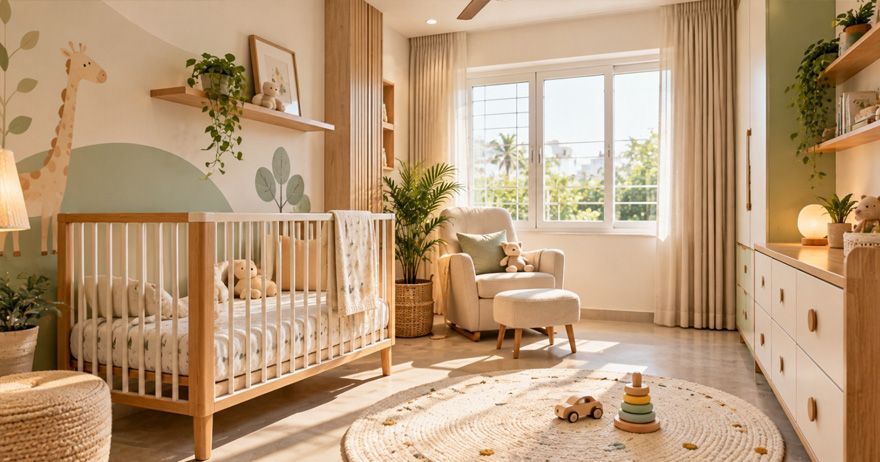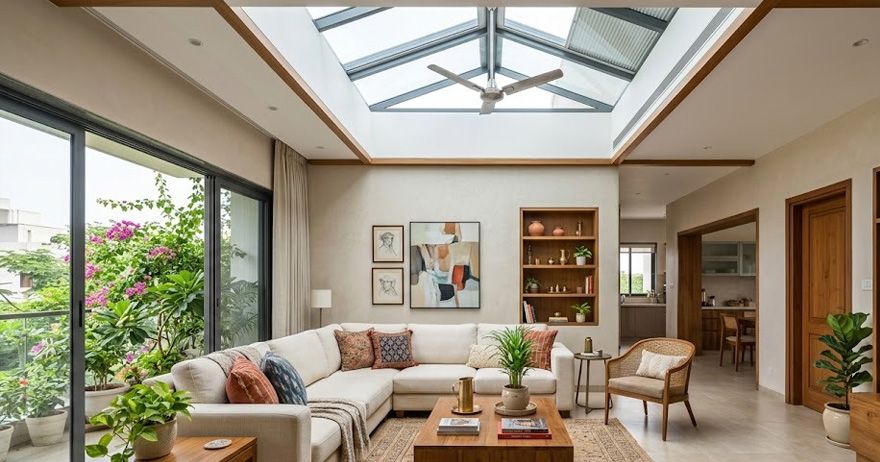




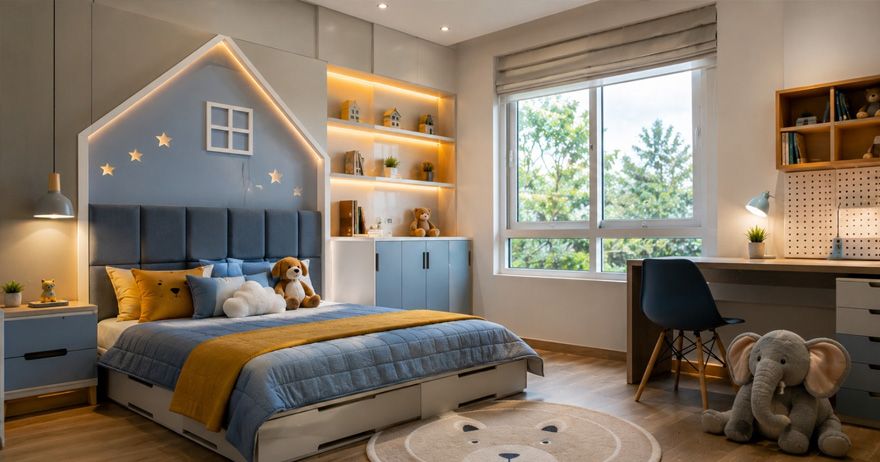
Creating the perfect kid's bedroom is about more than choosing colorful furniture and playful decor. As children grow, their needs, interests, and routines change, making it important to design a bedroom that can adapt over time. From flexible furniture and smart storage solutions to durable materials and functional layouts, a well-planned kid's bedroom offers comfort, safety, and room for creativity. Whether you're designing a nursery, a room for school-age children, or a space for teenagers, these ideas will help you create a stylish bedroom that grows with your child for years to come. A thoughtful kids bedroom design plan helps you avoid expensive renovations in the future.
Why Flexible Bedroom Design Matters for Growing Kids?
Children change quickly, and so do their daily routines. A toddler's bedroom usually revolves around play, naps, and safety. A primary school room with cartoon-themed furniture starts to feel wrong to a ten-year-old. A space that works for a twelve-year-old may not serve a fifteen-year-old's study demands. Each transition requires a full room replacement, so it is much more practical to create a flexible space from the beginning.
Kid's bedroom design ideas that prioritise flexibility such as furniture that adjusts, storage that scales, colours and finishes that are genuinely neutral rather than age-specific can reduce expense and redesigning needs.
Choose Furniture That Adapts Over Time
Furniture is one of the biggest investments in a Bedroom design for growing kids as it is important to choose pieces that have remained useful for many years.
Adjustable Furniture
Many toddler beds can later be extended into single beds, eliminating the need for complete replacement. Height-adjustable study desks and ergonomic chairs can also grow alongside your child as it offers comfortable workspaces through school and college.
Storage Space
Storage furniture with removable shelves or adjustable compartments is another practical space-saving kids bedroom option because it adapts to changing storage needs over time. Good-quality Kids bedroom furniture should balance durability with flexibility.
Tip: Rather than purchasing themed furniture that children may quickly outgrow, choose simple designs that can easily be updated with accessories as their preferences change.
Smart Storage Solutions for a Clutter-Free Room
Children's belongings multiply like the toys eventually become books, sports equipment, school supplies, and gadgets.
Under-Bed Storage
Storage beds provide extra space underneath the mattress without occupying additional floor area. Multi-purpose benches with hidden storage are also useful for organising toys, blankets, or seasonal clothing.
Vertical Wall Storage
Wall-mounted shelves make use of vertical space for keeping frequently used items within easy reach.
Built-In Wardrobes
In a compact bedroom, built-in wardrobes provide hanging, shelving, drawer, and shoe storage in a single integrated unit that does not impose on the room's usable floor space.
Tip: These Kids room storage ideas make it easier for children to develop good organisational habits and keep the room neat and functional.
Create Separate Zones for Sleep, Study, and Play
The Bedroom ideas for kids should be selected understanding that it serves many purposes throughout the day like sleep, play and study.
Sleep Zone
The sleeping area should feel calm and relaxed, away from distractions and morning light.
Play Zone
A separate play area encourages creativity and keeps toys from spreading across the entire room. Kids learn to be organised and follow healthy routines.
Study Zone
A comfortable study corner with good lighting and seating helps improve concentration during homework or online classes.
Tip: Even in compact homes, clear zoning is possible through thoughtful furniture placement rather than physical partitions.
Pick Durable and Child-Friendly Materials
Kids room interior design must be carefully planned as it is exposed to more wear and tear than most other rooms in the house.
| Surface | Recommended Material | Why It Works | Avoid |
|---|---|---|---|
| Flooring | Vitrified tiles or engineered wood | Durable and easy to clean | Carpet (hides dust and is hard to clean) |
| Wall paint | Washable premium emulsion | Resists scuffs and crayon marks without damage | Standard emulsion (stains permanently) |
| Window treatment | Blackout roller blinds | Easy to operate | Delicate curtains (tangle risk for young children) |
| Study surface | Laminate or HPL desktop | Resists pen marks abrasion and light impact from books and devices | Glass desktop (fingerprint visibility and cold surface) |
Tip: When selecting fabrics, choose materials that are comfortable, durable, and easy to wash.
Choose Colors and Décor That Stand the Test of Time
Good Kids bedroom decor should feel cheerful without overwhelming the room.
Colour
Go for soft whites, light greys, beige, muted greens, and pastel blues that remain timeless while allowing colourful bedding, artwork, cushions, and rugs to introduce personality.
Decor
Instead of decorating an entire room around one favourite cartoon character or theme, create a neutral background that can easily be updated with accessories.
Tip: Rather than repainting every wall, you can simply update smaller decorative elements.
Maximize Natural Light and Ventilation
Children's bedroom ideas should focus on the two other important factors which are natural light and airflow.
Natural Light
A bright room looks more spacious, creates an energetic atmosphere, and provides a comfortable environment for studying, reading, and playing. Try to position the bed and study desk where they can benefit from daylight without causing glare.
Ventilation
Fresh air improves indoor air quality, makes your kids healthier and supports your child's overall well-being. Windows that allow cross-ventilation can reduce stuffiness, especially during warmer months.
Tip: Modern uPVC windows are a practical option as they offer excellent insulation, reduce outside noise, and are easy to maintain.
Safety Features Every Kids' Bedroom Should Include
Modern kids bedroom is designed in a way to keep children safety on mind
- Rounded furniture corners: Choose furniture with rounded corners to reduce the risk of injuries during play.
- Secure wall-fixed shelving and furniture: Heavy wardrobes, bookshelves, and storage units should always be securely fixed to the wall to prevent tipping.
- Power Point Placement: Electrical outlets should be child-safe, and loose wires should be kept out of reach.
- Window guards: If the room has large windows, ensure they include safety locks or restrictors, especially in apartments or high-rise buildings.
- Non-slip flooring: Flooring should also provide good grips to minimise slips. Soft rugs can make the room more comfortable, but they should have anti-slip backing to prevent movement.
Common Mistakes to Avoid When Designing a Kids' Bedroom
Many parents decorate a child's bedroom based on current interests without thinking about how quickly those interests may change.
- Don’t choose highly themed furniture. Build adaptability from the start like picking a neutral base, flexible furniture, and scalable storage.
- Never underestimating storage needs. Insufficient storage quickly leads to a mess and makes the room difficult to organise
- Poor lighting makes kids uncomfortable. Layered lighting creates a more functional and welcoming space.
- Don’t buy oversized furniture that leaves very little open floor area. Children need enough free space to move around, play, and carry out daily activities comfortably.
- Avoid selecting low-quality materials simply because they cost less. Opt for durable furniture, quality fittings, and easy-to-maintain finishes.
Final Thoughts
The best Kid's bedroom design ideas should share a common quality like they solve the problem of today while anticipating the needs of tomorrow. Instead of creating a room that only suits one stage of childhood, focus on flexibility, comfort, safety, and practicality.
Most importantly, create a room that reflects your child's personality while giving them enough space to learn, relax, play, and grow. A thoughtfully designed bedroom isn't just an attractive space rather an investment that supports your child's development.