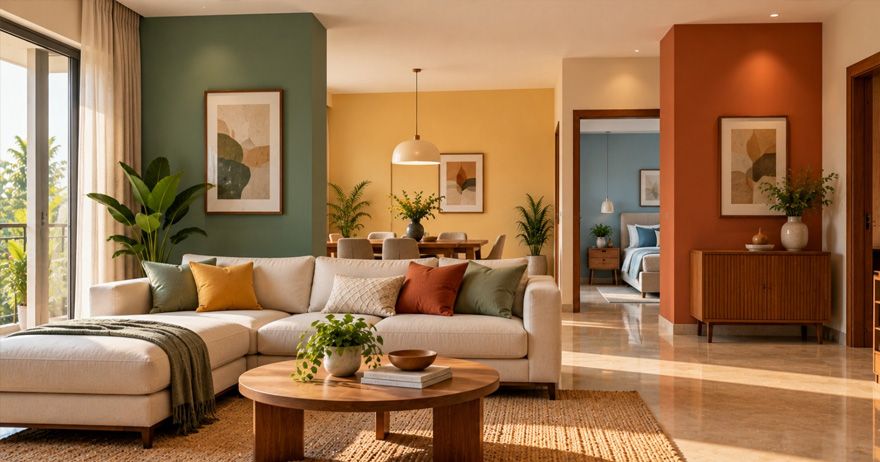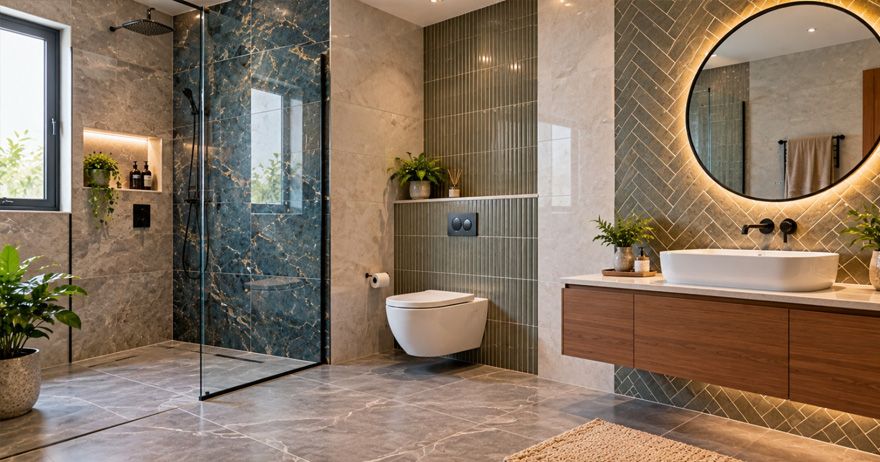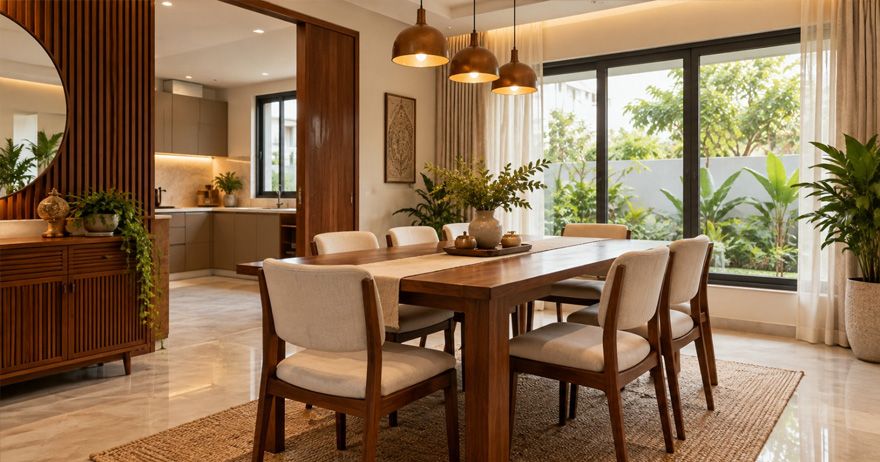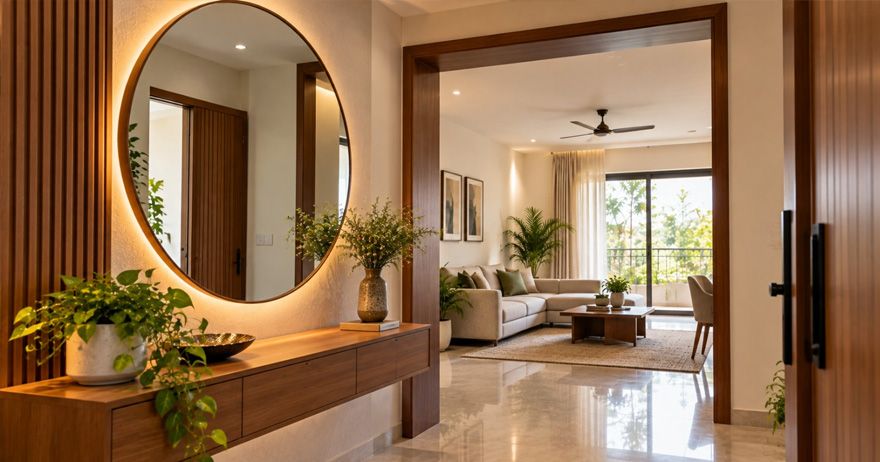
Mirrors are more than functional accessories, they can influence how spacious, bright, and visually balanced a room feels. The right mirror design and placement ideas can help reflect natural light, create the impression of greater depth, highlight architectural features, and add a decorative focal point. From large statement mirrors and full-length designs to geometric shapes, framed mirrors, and minimalist wall-mounted options, there are styles to suit traditional and contemporary Indian homes.
Placement is equally important, as a mirror can work differently depending on the room, available light, furniture arrangement, and viewing requirements. With thoughtful positioning, mirrors can enhance living rooms, bedrooms, dining areas, entryways, and even compact spaces without making the interiors feel cluttered.
Why Are Mirrors Important in Interior Design?
A mirror can also help connect different elements within a room. For example, a large framed mirror above a console can create a finished entryway, while a carefully positioned mirror in a living room can visually expand the space. The size, shape, frame, reflected view, and position all influence the final effect.
How to Choose the Right Mirror Design for Your Home
Start by deciding what you want the mirror to achieve. Is it primarily for checking your appearance, making a room feel brighter, creating a decorative focal point, or visually increasing depth? Your answer will help determine the appropriate size and style. When selecting mirror design ideas for home, also consider the existing interior style.
| Factor | What to consider |
|---|---|
| Room | Living room; bedroom; entryway; dining area; etc. |
| Purpose | Functional; decorative; or both |
| Size | Match the mirror to the wall and surrounding furniture |
| Shape | Round; rectangular; arched; oval; or geometric |
| Frame | Wood; metal; moulded; minimalist; or ornate |
| Lighting | Position it where it can reflect useful light |
| Reflection | Avoid reflecting clutter or unattractive views |
| Safety | Use suitable hardware and secure installation |
10 Mirror Design and Placement Ideas for Indian Homes
The 10 practical mirror placement ideas are given below.
- Large statement mirror above a console: Create an elegant focal point in an entryway or living room.
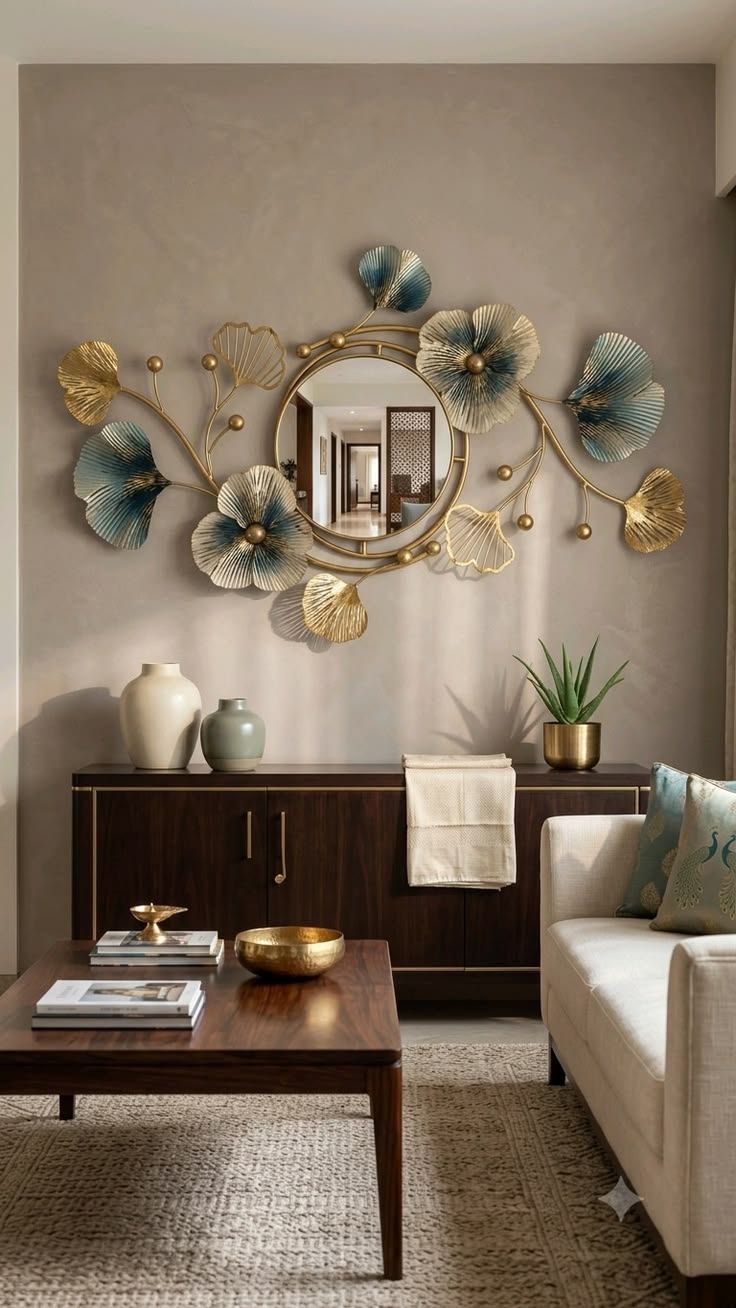
- Round mirror above a sideboard: A circular shape can soften the straight lines of furniture.
- Full-wall mirror panel: Useful for visually increasing depth in selected areas.
- Arched mirror for a softer look: Works well with contemporary, transitional, and traditional interiors.
- Decorative mirror gallery: Arrange several smaller mirrors as a wall composition.
- Floor-standing mirror: A practical option for bedrooms, dressing spaces, or larger corners.
- Mirror-backed display niche: Add depth to a built-in shelf or decorative niche.
- Mirrored wardrobe shutters: Combine storage and functionality, particularly in bedrooms.
- Geometric accent mirror: Hexagonal, asymmetrical, or unusual shapes can add personality.
- Mirror near a natural light source: Positioning a mirror opposite or adjacent to a window can help distribute daylight.
Statement Mirrors for Living Rooms and Feature Walls
A large mirror can become the centrepiece of a living room. A rectangular mirror above a console works well in many layouts. Mirror design ideas for home can also include mirrors with distinctive frames. Go for large round mirror above a console, oversized rectangular mirror on a feature wall, arched mirror beside an accent chair, decorative mirror arrangement behind a sofa, mirror combined with wall sconces and mirror above a sideboard or cabinet When choosing a wall mirror design, look at what the mirror will reflect.
Full-Length Mirrors for Bedrooms and Dressing Areas
A full-length mirror is useful when you want to see an outfit from head to toe. It can be wall-mounted, attached to a wardrobe, or positioned as a leaning mirror where appropriate.
A tall mirror can also emphasise the height of a room. In a compact bedroom, a slim design may provide the functionality you need without taking up too much floor space. When planning bedroom mirror placement ideas, make sure the mirror does not interfere with doors, drawers, walkways, or other furniture.
Mirror Ideas for Small Rooms and Compact Homes
Mirror placement ideas for compact homes should focus on reflecting useful light and visually open areas rather than adding reflections everywhere. Use one larger mirror instead of many small ones, place a mirror opposite a bright window where practical, use mirrored wardrobe doors, add a mirror above a narrow console, choose slim frames to reduce visual weight and avoid reflecting cluttered storage areas. With thoughtful mirror placement for small spaces, even a compact room can feel more open without requiring major structural changes.
Decorative Mirrors for Entryways and Dining Areas
Entryways are ideal locations for decorative mirrors because they combine practical use with visual impact. In dining areas, a decorative mirror can be used on a feature wall to add depth and reflect lighting. Decorative mirror ideas can include round framed mirrors, arched designs, antique-inspired frames, brass-look frames, geometric mirrors, multiple small mirrors and sculptural or asymmetrical designs.
How to Use Mirrors to Reflect Natural Light
Mirrors can make a room feel brighter when they are positioned to reflect available daylight. A mirror positioned opposite a window can bounce light into the room. Use a large mirror on a darker wall, position mirrors near, rather than directly facing, strong light sources when glare is an issue, use mirrored surfaces selectively in darker corners and avoid reflecting cluttered shelves or busy storage areas.
Modern mirror designs for home can combine reflective surfaces with slim frames, soft curves, metallic details, or minimalist forms.
Vastu Considerations for Mirror Placement
Mirror placement is sometimes planned according to Vastu principles in Indian homes. A commonly discussed principle is to place mirrors in locations where they reflect positive, open, or pleasant views rather than clutter.
For vastu mirror placement for home, it is also practical to consider everyday factors such as glare, privacy, room function, furniture movement, and what the mirror reflects. Avoid placing a mirror where its reflection creates visual clutter, check what is directly reflected before final installation, consider privacy in bedrooms and bathrooms, avoid locations where the mirror creates distracting glare and secure large mirrors properly, particularly in homes with children or pets.
Common Mirror Placement Mistakes to Avoid
- Placing a mirror without checking its reflection: A mirror can visually duplicate clutter, wires, storage, or an unattractive view. Check the reflected area before installation.
- Using too many mirrors: Multiple reflective surfaces can make an interior feel visually busy. Choose a few purposeful locations instead.
- Ignoring scale: A very small mirror on a large feature wall may look disconnected, while an oversized mirror can dominate a compact space.
- Mounting mirrors too high: Functional mirrors should be positioned according to the people who will use them. Decorative mirrors should also relate proportionally to nearby furniture.
- Creating glare: Avoid positioning mirrors where sunlight or strong artificial light hits them directly and causes uncomfortable reflections.
- Ignoring furniture proportions: A mirror above a console, sideboard, or dressing table should generally relate to the furniture's width and visual weight.
- Forgetting wall strength and hardware: Large and heavy mirrors require suitable mounting hardware and proper installation.
- Reflecting clutter: Before fixing a mirror, stand in the intended position and look at exactly what it will reflect.
- Choosing style without considering the interior: An ornate frame may not complement an otherwise minimalist room. Match the mirror with the home's existing design language.
Final Thoughts
The most effective mirror design and placement ideas combine appearance with purpose. A mirror can brighten a darker area, add depth to a compact room, create a focal point, or provide a practical full-length reflection. Ultimately, the right mirror should complement the room's furniture, colours, lighting, proportions, and purpose. Consider the reflection as carefully as the mirror itself.