



A thoughtfully designed pooja space can bring a sense of peace and spirituality to your home while complementing its overall interiors. The right pooja mandir unit design depends on factors such as available space, home layout, storage needs, and preferred style. Wall-mounted units are ideal for compact homes, while freestanding mandirs offer flexibility and can become a beautiful focal point.
Built-in pooja units, on the other hand, can be customized to blend seamlessly with the interiors and provide additional storage. From traditional wooden designs and carved panels to contemporary units with glass, jaali, and subtle lighting, there are plenty of options to create a functional and elegant prayer space.
How to Choose the Right Pooja Mandir Unit for Your Home
Before selecting a mandir, consider how much space is available and how you plan to use the area. A beautiful design should also be practical enough to accommodate idols, lamps, prayer items, and regular cleaning. A small pooja mandir design does not have to compromise on appearance. Even a compact unit can include shelves, drawers, lighting, and decorative panels when planned efficiently.
Pooja unit for home can follow either a traditional or modern style. The best pooja mandir design ideas combine spiritual significance with a style that complements the rest of your home. A well-planned pooja space design for Indian homes should balance spirituality, practicality, and visual harmony.
Wall-Mounted Pooja Mandir Designs for Small Spaces
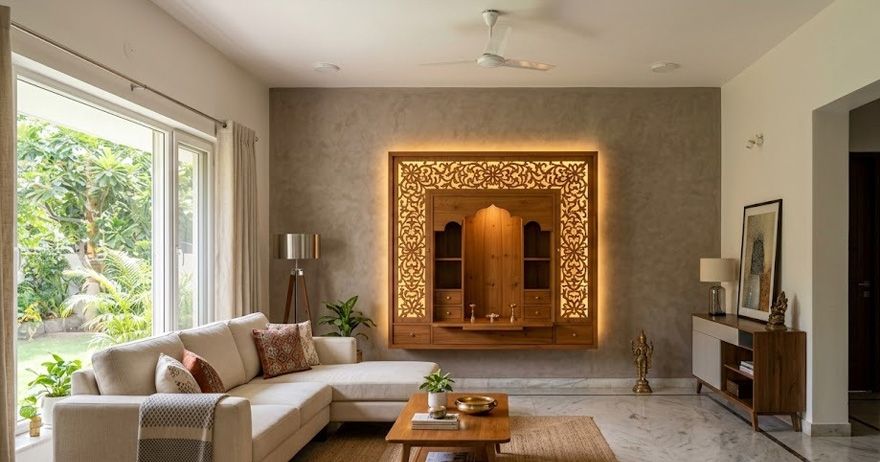
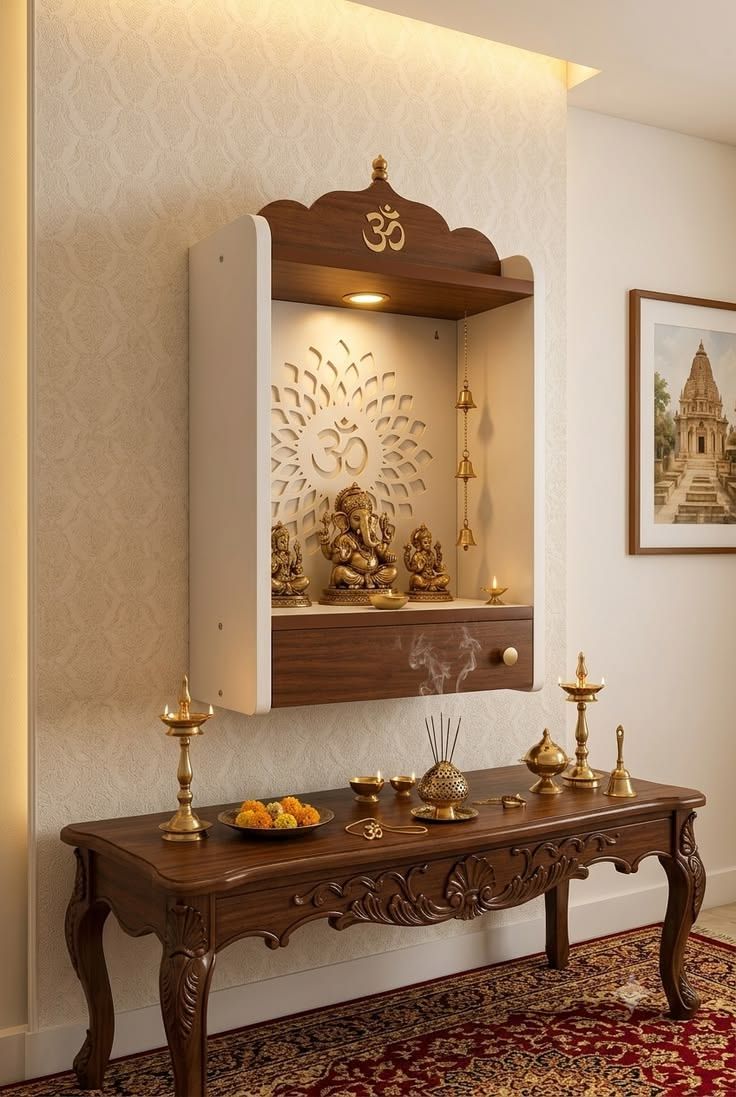
A wall-mounted pooja mandir is one of the most practical choices for apartments and compact homes. Since it does not occupy floor space, it can help create a dedicated prayer area without making the room feel crowded. You can choose a simple shelf-style unit or a more detailed design with doors, drawers, lighting, and decorative panels.
Img
Freestanding Pooja Mandir Designs for Flexible Placement
A freestanding pooja unit is placed directly on the floor and can work as a beautiful standalone furniture piece. Unlike built-in designs, it offers greater flexibility because it can be moved or repositioned when necessary. It is easy to replace or upgrade, creates a traditional appearance and is available in different sizes. A freestanding design can become a focal point in the living or dining area.
Built-In Pooja Mandir Designs for a Seamless Look
A built-in pooja mandir design is customised as part of the home's interior. It may be created within a niche, cabinet, wall recess, or dedicated room. Built-in designs are great for homeowners who want a permanent and highly personalised solution. It blends perfectly with interiors and offers better storage. A customised pooja mandir cabinet design can be particularly useful for homeowners who want both a dedicated prayer space and organised storage.
Traditional Wooden Pooja Mandir Designs
Wood remains one of the most popular materials for pooja units because of its warm, and timeless appearance. A wooden pooja mandir design can range from simple and minimal to highly detailed and traditional. It also works well with contemporary interiors depending on the design and finish. Wood can also be combined with other materials such as brass accents, glass panels, stone backdrops, or soft lighting to create a more personalised design.
Modern Pooja Units with Jaali, Glass, and Decorative Panels
A modern pooja room design does not have to look overly elaborate to feel peaceful and spiritually meaningful. Contemporary homes often use clean lines, subtle colours, simple materials, and carefully planned lighting to create an elegant prayer space.
Jaali Panels
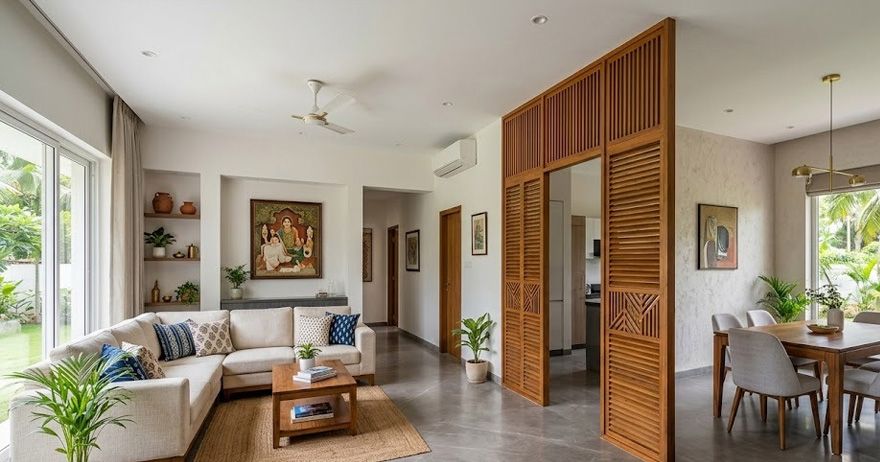
Jaali designs are one of the most versatile options for modern pooja spaces. They can be used as back panels, side screens, decorative partitions, cabinet doors and ceiling features
Glass Panels
Glass can create a visually light and elegant prayer area. Frosted, textured, or patterned glass can provide more privacy. Glass works particularly well when combined with wood or metal frames.
Decorative Panels
The wall behind the mandir can become a focal point with materials such as wooden panels, natural stone, marble-look surfaces, decorative tiles, textured finishes and CNC-cut panels. Highly detailed panels may work beautifully in larger areas.
Pooja Mandir Storage and Lighting Ideas
For a beautiful pooja unit, proper storage helps keep the area clean, while suitable lighting can enhance the overall atmosphere.
Storage Ideas
You can opt for lower drawers, closed cabinets, small side shelves and hidden storage. The main prayer area should remain visually open and comfortable.
Lighting Ideas
Choose warm backlighting, spotlights, pendant lights and cabinet lighting. Small integrated lights inside the pooja unit can improve visibility and enhance the design.
Best Materials for a Durable and Beautiful Pooja Unit
The best material depends on your budget, home interior, maintenance preferences, and the type of pooja mandir unit design you choose.
| Material | Appearance | Maintenance | Best For |
|---|---|---|---|
| Solid wood | Traditional and warm | Moderate | Classic mandirs |
| Plywood with laminate | Versatile | Easy | Modern homes |
| MDF | Smooth and decorative | Moderate | Detailed panels |
| Glass | Light and contemporary | Regular cleaning | Modern designs |
| Stone or marble | Elegant and premium | Easy to moderate | Built-in spaces |
| Metal | Contemporary | Easy | Decorative accents |
Vastu Considerations for Pooja Mandir Placement
Many homeowners consider Vastu principles when planning a pooja space. These preferences can vary based on individual beliefs, traditions, and the specific layout of the home. A practical approach is to consider Vastu preferences alongside the available space, ventilation, safety, and overall home design. Always choose a calm and clean area, avoid clutter, consider home layout, plan ventilation and consult a qualified expert if required. A good pooja mandir unit design should respect your personal beliefs while remaining practical and safe for everyday use.
Common Mistakes to Avoid When Designing a Pooja Mandir
A pooja unit can look beautiful in photographs but still be inconvenient if practical details are overlooked. Avoid these below common mistakes during planning.
- Choosing the Wrong Size: An oversized mandir can overwhelm a compact room, while a very small unit may not provide enough space for regular use.
- Ignoring Storage Needs: Plan drawers, cabinets, or shelves according to your requirements.
- Poor Lighting: Insufficient lighting can make the pooja space feel dull, while overly bright lights may create an uncomfortable atmosphere.
- Selecting Difficult-to-Maintain Materials: Highly detailed surfaces can collect dust and may require frequent cleaning. Consider maintenance requirements before choosing intricate carvings or complex designs.
- Blocking Ventilation: If lamps or incense are regularly used, the space should have appropriate ventilation.
- Overdecorating a Small Space: Too many decorative elements, colours, or accessories can make a compact pooja area feel crowded.
- Ignoring the Overall Interior: Even a traditional mandir can be integrated beautifully into a modern home through thoughtful material and finish selection.
Final Thoughts
The right pooja mandir unit design depends on the available space, your storage requirements, preferred style, and how the area will be used every day. Wall-mounted units are practical for compact homes, freestanding designs offer flexibility, and built-in units provide a customised and seamless appearance. When selecting a pooja mandir unit design, focus on creating a space that feels comfortable, organised, easy to maintain, and meaningful to you. By balancing design with practicality, you can create a beautiful prayer space that complements your home for years to come.