


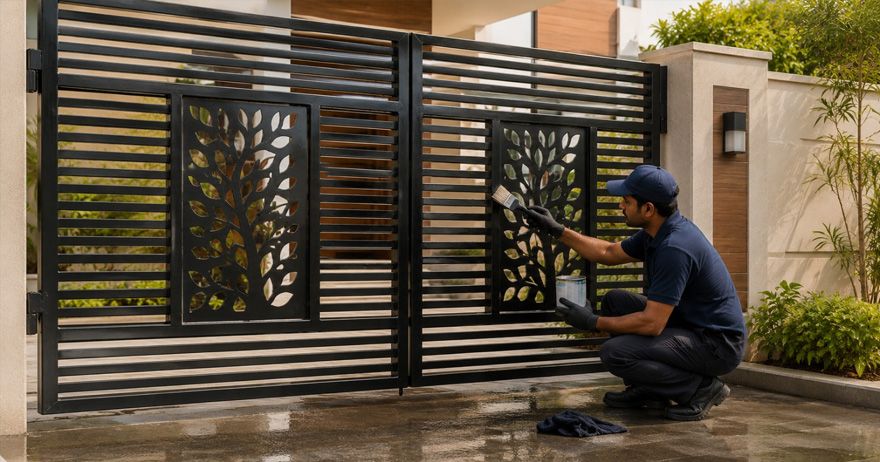
Knowing how to prevent rust on metal gates is essential for maintaining their strength, appearance, and lifespan. Constant exposure to rain, humidity, sunlight, and pollution can cause gates, grills, and railings to corrode over time, leading to structural damage and costly repairs.
Fortunately, regular maintenance, protective coatings, and choosing the right materials can significantly reduce the risk of rust. Whether you have mild steel, wrought iron, or aluminium fixtures, this guide covers practical tips to keep your metal gates, grills, and railings looking new and performing well for years.
What Causes Rust on Metal Gates, Grills, and Railings?
The major reason why the rust forms is when iron or steel is exposed to oxygen and moisture for a long period, it undergoes a chemical reaction that oxides iron. It gradually weakens the surface of the metal.
Outdoor accessories face more exposure than indoor metalwork. As they are prone to rainwater, humidity, coastal air, pollution, and regular temperature changes and that speed up corrosion. In coastal areas, salt in the air can make the problem more severe.
Effective rust prevention for metal gates therefore begins with two things which are keeping moisture away from exposed metal and maintaining a continuous protective barrier over the surface.
Signs That Rust Is Starting to Develop
The earlier you notice rust, the easier it is to manage.
Colour change
Small orange or reddish-brown spots are usually the first visible warning. This stage is called flash rusting.
Blistering
You may also notice paint bubbling, peeling, cracking, or lifting away from the surface. These changes can indicate that corrosion has started underneath the coating.
Stiffening
Seizing of movement in welded joints, hinges, latches, bolts, decorative details, and the bottom edges of gates and railings. These areas are often harder to clean and may hold moisture for longer.
Pitting
Advanced corrosion can cause the metal surface to become rough, flaky, or pitted. Hinges may become stiff, and sections of a railing or grill may begin to feel weak.
Best Ways to Prevent Rust on Outdoor Metal Fixtures
The best way to prevent rust on metal gates is to stop water and air from direct contact with bare iron or steel.
- Start by keeping outdoor metal surfaces clean. Dust, mud, leaves, bird droppings, and other deposits can hold moisture against the metal.
- Wash the surface when necessary using mild soap and water and then dry it properly.
- Inspect painted surfaces for scratches and chips. Small damaged areas should be touched up before corrosion spreads underneath the surrounding paint.
- If you want to prevent rust on grills, check narrow corners and decorative sections where rainwater may remain trapped.
- Window grills should also be inspected around fixing points where the metal meets the wall.
- Rust protection for railings requires extra attention to horizontal surfaces, joints, base plates, and areas regularly exposed to rain.
Good outdoor metal maintenance is about consistency. A small amount of preventive work throughout the year is easier and less expensive.
Protective Coatings That Help Prevent Corrosion
Protective coatings create a barrier between the metal and the surrounding environment. Anti-rust coating for metal, galvanized metal gates and powder-coated metal gates are a few worthy options to try.
| Coating Type | Rust Protection | Durability | Appearance | Best For |
|---|---|---|---|---|
| Hot-dip galvanising with paint | Excellent | 15 to 25 years | Standard | High-exposure coastal and humid locations |
| Powder coating | Very good | 10 to 20 years | Excellent with wide colour range | Urban residential and premium appearance |
| Epoxy primer with enamel topcoat | Good | 5 to 10 years | Good with smooth finish | Standard residential and cost-effective |
| Alkyd oil-based paint (standard) | Moderate | 3 to 5 years | Standard | Low-exposure inland locations and budget projects |
| Zinc-rich primer with topcoat | Good to very good | 7 to 12 years | Standard | Repair of galvanised surfaces and industrial exposure |
| Aluminium paint | Good (reflective barrier) | 5 to 8 years | Metallic silver | High-temperature or UV-exposed fixtures |
How to Maintain Metal Gates Throughout the Year
Good metal gate maintenance for Indian seasonal conditions requires regular checkups.
Pre-Monsoon Maintenance
Before the monsoon, inspect the gate for scratches, peeling paint, loose hardware, and early rust spots. Repairing these areas before prolonged rain can prevent moisture from reaching exposed metal.
Monsoon
During wet weather, check whether water is collecting around the bottom of the gate or inside hollow sections. Poor drainage can keep metal wet for long periods and accelerate corrosion.
Post-Monsoon Maintenance
After the monsoon, clean away dirt and inspect the surface again. Hinges, locks, rollers, and moving parts should also be checked because corrosion can affect operation as well as appearance.
A useful routine is simple. You just need to clean, inspect, repair small damage, and renew protective finishes when they begin to deteriorate.
Common Mistakes That Lead to Rust Damage
- Not preparing the surface before repainting: One of the biggest mistakes is painting directly over active rust without preparing the surface. The gate may look better temporarily, but corrosion can continue underneath the new layer.
- Ignoring small scratches: Even a tiny area of exposed steel can become a starting point for rust, especially during the monsoon.
- Water accumulation: If rainwater regularly collects at the bottom of a gate, around railing bases, or inside joints, repeated repainting may not solve the underlying problem.
- Using unsuitable coatings: Failing to follow the required surface preparation can also reduce protection. Different metals and environments may require different primers and finishes.
- Preventive maintenance: Don’t wait until corrosion becomes visually severe before taking action. Take measures before it becomes deeply pitted or structurally weak.
When to Repair or Replace Rusted Metal Fixtures
Surface rust can often be repaired if the metal underneath remains structurally sound. So you have to think about how to remove rust from metal using an appropriate chemical method or professional help.
Replacement should be considered when the metal is irreversibly structurally damaged. Go for replacement when the gate frame or railing post structure has significant section loss at multiple points, when the cost of proper remediation exceeds 50 to 60 percent of replacement cost, or when this creates a safety risk and can’t act normal even after treatments.
Why Aluminium Is a Rust-Resistant Alternative
Aluminium does not rust in the same way as iron or steel because its surface naturally forms a thin oxide layer that helps protect the material. Aluminium is a practical option for outdoor gates, railings, screens, and other applications exposed to rain and humidity. It can be particularly useful in areas where frequent repainting and rust treatment are a concern.
However, rust resistance does not mean that aluminium can never deteriorate. It can still experience other forms of corrosion. Powder coating can improve appearance and provide an additional layer of surface protection. Aluminium can offer a useful balance of durability, design flexibility, and easier upkeep.
Choosing the Right Finish for Long-Term Protection
The right finish depends on where the metal is installed and how much exposure it receives.
- For iron and mild steel, a properly prepared primer-and-paint system can provide effective protection when maintained regularly.
- Galvanised steel may be suitable where additional corrosion resistance is required.
- If your priority is to prevent rust on metal gates over the long term, go for powder coating.
- Homeowners looking for rust-proof metal gates can opt for aluminium as it is naturally resistant to rust.
- For high pollution exposed areas, it is best to use powder coating over zinc phosphate primer.
- Metal gates in coastal areas require Hot-dip galvanise with powder coat in aluminium metal.
Final Thoughts
Learning how to prevent rust on metal gates in advance can help you avoid unnecessary repairs at the same time extending the life of gates, grills, and railings. Material selection also creates a heavy impact. Rust is much easier to control at the beginning than after it has spread. Regular inspection and timely maintenance can keep outdoor metal fixtures safer, stronger, and better looking for years.