



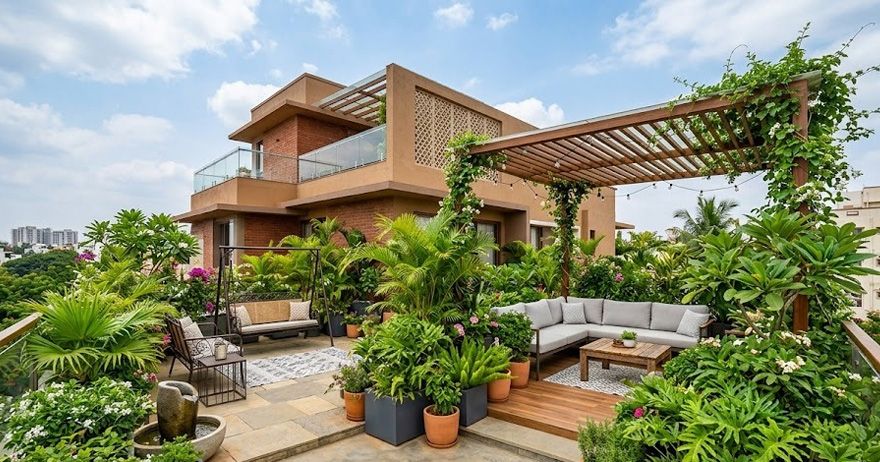
A terrace garden can transform an unused rooftop into a refreshing green space for relaxing, entertaining, or growing plants at home. However, successful terrace garden design requires more than choosing attractive plants and containers. Waterproofing, structural load limits, drainage, sunlight, wind exposure, and irrigation should be considered before setting up the garden. Planters, soil, water, and hardscape elements can add significant weight to a terrace, making it important to understand the roof's safe load capacity.
Proper waterproofing and drainage can also help prevent seepage and long-term damage. With careful planning, suitable plants, and practical gardening solutions, even a compact terrace can become a beautiful and functional outdoor retreat.
What Is a Terrace Garden and Why Is Planning Important?
A terrace garden can include potted plants, raised beds, herbs, vegetables, flowering plants, seating areas, vertical gardens, or even a small lawn. The right Terrace garden ideas depend on the roof structure, available space, climate, and how much maintenance you are prepared to handle.
Before buying planters or bringing soil onto the terrace, inspect the roof and understand its limitations. A little planning at the beginning can prevent expensive repairs later.
Check Structural Load Limits Before Creating a Terrace Garden
One of the most important considerations for rooftop garden design is the weight added to the roof. Soil is heavy, and its weight increases significantly when it becomes wet. Large planters, water tanks, paving, stone features, furniture, and people also contribute to the total load.
The safe terrace garden load capacity depends on the building's structural design, construction materials, age, span, existing loads, and condition. Remember the weight of the wet soil and also the concentrated loads. Do not rely on a generic internet number to decide how much soil or how many planters your particular roof can carry.
Terrace Waterproofing: Protecting Your Roof from Water Damage
Waterproofing should be addressed before creating the garden. Terrace garden waterproofing helps protect the roof slab and underlying rooms from moisture-related problems. However, waterproofing is not a substitute for proper drainage or correct garden construction. You should use a suitable waterproofing system, protect the waterproofing layer, and avoid unplanned drilling. A damaged waterproofing layer can turn a beautiful garden into a source of recurring maintenance problems.
Plan Proper Drainage and Water Flow
Good drainage is essential for both the plants and the building. Water should move away from planting areas without collecting against walls, doors, or other vulnerable points. You have to keep drainage outlets clear, avoid waterlogging, use trays carefully and inspect after heavy rain. A proper terrace garden drainage system should direct excess water safely toward existing outlets. Do not allow irrigation water to remain around planter bases or flow toward the edges of the building.
How to Choose the Right Planters and Containers
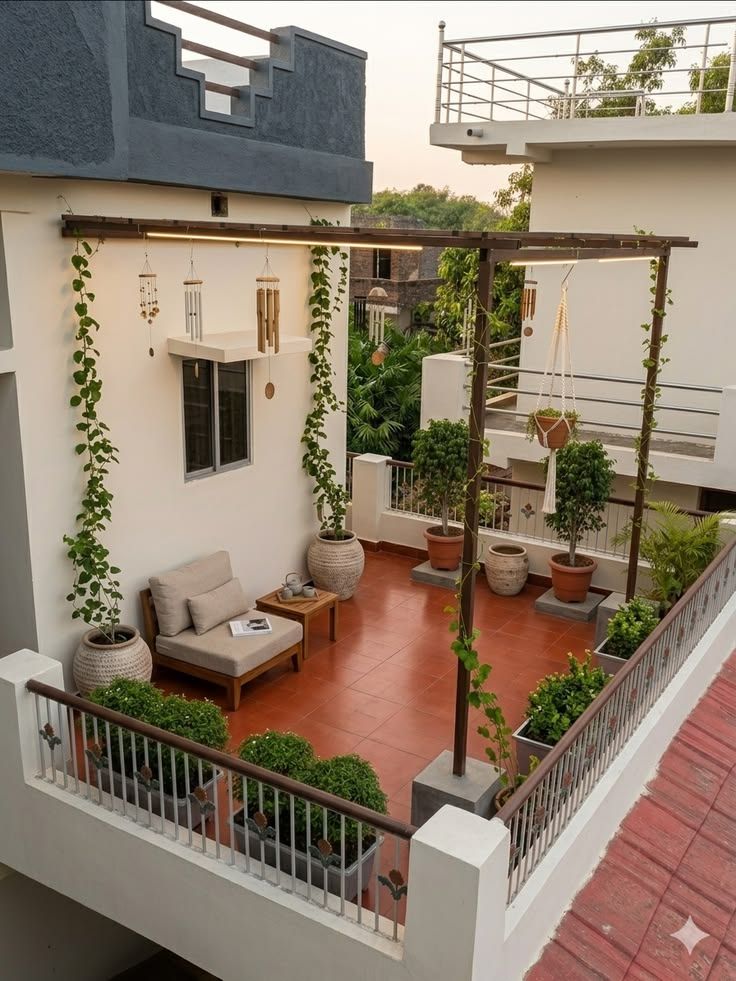
Planters influence the weight, maintenance, appearance, and flexibility of the garden.
- Lightweight Materials: Fibreglass, plastic, resin, and certain lightweight composite planters can reduce unnecessary weight compared with thick concrete or stone containers.
- Choose the Right Size: Choose a container according to the mature size and root requirements of the plant.
- Check Drainage Holes: A beautiful container without proper drainage can quickly become a problem for plant health.
- Use Raised Supports Carefully: Planter stands can improve airflow underneath containers and protect the terrace surface.
- Avoid Excessively Heavy Decorative Features: Stone pots, concrete benches, masonry planters, and large decorative structures can add substantial weight.
Best Plants for an Indian Terrace Garden
The best plants for terrace garden setups are not necessarily the largest or most decorative varieties. Hardy plants that suit the local climate are often easier to maintain. Go for flowering plants depending on your local climate such as bougainvillea, hibiscus, jasmine, marigold, ixora and periwinkle. A sunny terrace can be useful for growing herbs such as mint, curry leaves, coriander, tulsi and lemongrass. With suitable containers, you can grow crops such as tomato, chilli, brinjal and spinach. You can also opt for succulents, drought-tolerant plants and fruit plants.
Terrace Garden Layout Ideas for Small and Large Spaces
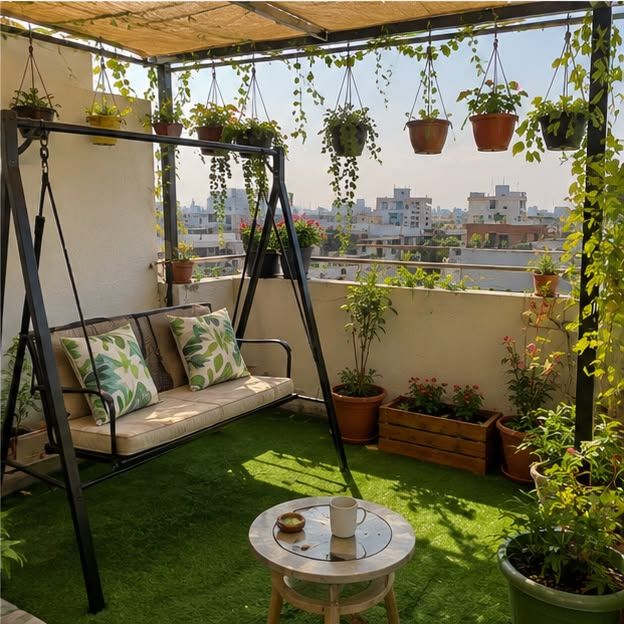
A thoughtful terrace garden layout can make the space easier to maintain and more enjoyable to use. For a large terrace, divide the roof into functional zones. If you are looking for terrace garden design for small spaces, it is possible with simple ideas. You should create a green border, create a central seating area, use vertical gardening, create a kitchen garden and keep maintenance paths.
For terrace gardening ideas for Indian homes, it is particularly useful to consider intense summer sun, monsoon rainfall, seasonal winds, and the amount of time available for regular maintenance.
Create Shade and Protection from Sun and Wind
Terraces are exposed to stronger environmental conditions than many ground-level gardens. Direct sunlight can dry containers quickly, while strong winds can damage tall plants and topple lightweight pots. You can add shade strategically, group plants carefully, secure lightweight and protect young plants.
Irrigation, Maintenance, and Organic Gardening Solutions
A garden becomes easier to manage when watering and maintenance are planned from the beginning. A simple hand-watering system may work for a small collection of pots. Larger gardens may benefit from drip irrigation or automated watering. You can use drip irrigation, group plants by water needs, use mulch, choose organic inputs carefully and follow a maintenance routine. A low-maintenance terrace garden should focus on hardy plants, efficient irrigation, durable containers, and simple layouts rather than requiring daily attention.
Common Terrace Garden Design Mistakes to Avoid
Avoid these below mistakes when planning terrace gardening.
- Ignoring structural capacity: Do not add large amounts of soil, planters, or hardscape without confirming the roof's safe capacity.
- Skipping waterproofing inspection: Existing seepage should be addressed before installing the garden.
- Blocking drainage outlets: Leaves, roots, soil, and containers should never obstruct rainwater drainage.
- Using too many heavy planters: Concrete and stone containers can add significant weight. Lightweight alternatives may be more suitable.
- Creating permanent garden beds without planning: Masonry beds are difficult to remove and can place concentrated loads on the roof.
- Choosing plants only for appearance: Consider sunlight, wind, water requirements, root growth, and local climate.
- Overwatering plants: Excess irrigation can harm plants and create unnecessary water accumulation on the terrace.
- Ignoring wind exposure: Tall plants and lightweight containers can become unstable during strong winds.
- Filling every inch of the terrace: Leave access paths for cleaning, maintenance, drainage inspection, and repairs.
- Drilling into the roof without checking waterproofing: Unplanned drilling can damage waterproofing layers and create leakage risks.
Final Thoughts
A successful terrace garden design starts with the building rather than the plants. Before bringing anything onto the roof, check its structural condition, understand the safe loading requirements, inspect waterproofing, and plan drainage. These steps are more important than choosing decorative features. Once the technical aspects are addressed, select lightweight and suitable planters, choose plants according to the local climate, and organise them into practical zones.