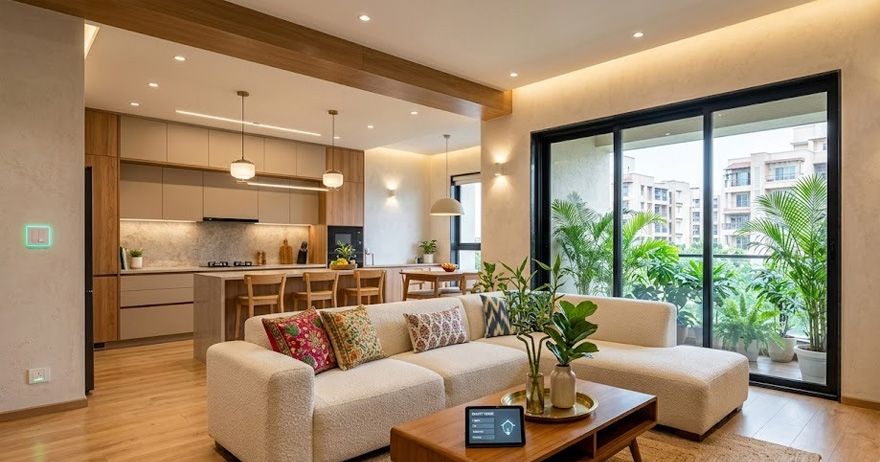




Choosing the best solar control glass India depends on factors like climate, building design, privacy needs, and energy efficiency goals. In this blog, we compared tinted and reflective glass to help you make the right choice.
What Is Tinted Glass?
Tinted glass is regular glass made with small amounts of metal oxides like iron, cobalt or chromium, mixed into the molten glass during manufacturing. These additives give the glass its colour- bronze, grey, blue or green, and change how it interacts with sunlight. Because the colour runs through the entire thickness of the glass, it won’t peel or fade like surface films.
Tinted glass absorbs a portion of the sun’s energy before it enters the inside space. The absorbed heat sits in the glass and gradually dissipates, partly outward and partly inward. It does not block solar energy completely, but rather slows it down.
What Is Reflective Glass?
Reflective glass is standard float glass with a thin metallic or metal oxide coating, usually aluminium, titanium, or chromium, applied to one surface. This coating gives the glass its mirror-like appearance.
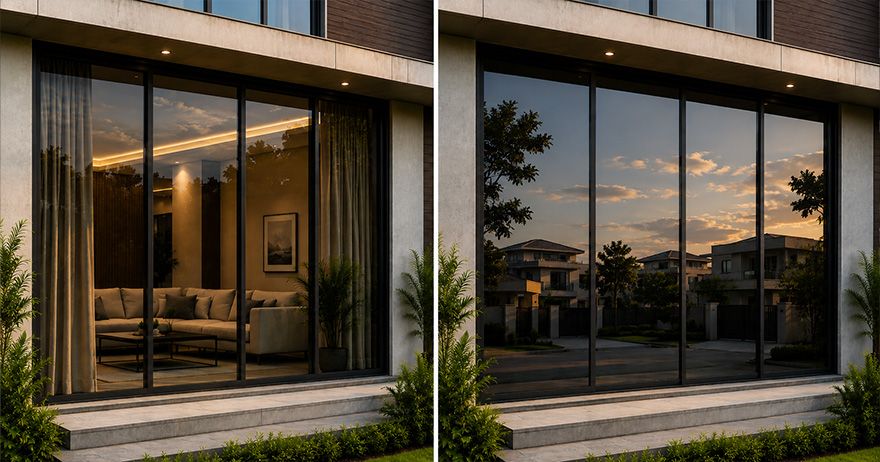
Instead of absorbing solar energy, reflective glass bounces a large portion of it straight back before it can enter the building. Due to the privacy glass for windows, people outside can see only their reflection during the day. This adds privacy and is a popular choice for office and commercial buildings.
Key Differences: Reflective Glass Vs Tinted Glass
Here is the window glass comparison of reflective and tinted glasses.
| Feature | Reflective Glass | Tinted Glass |
|---|---|---|
| How it works | Reflects solar energy | Absorbs solar energy |
| Appearance | Mirror-like finish | Consistent colour (grey; bronze; blue & green) |
| Daytime privacy | High | Moderate |
| Nighttime privacy | None (reverses at night) | Consistent |
| Heat reduction | Strong (40 to 70% solar heat reduction) | Moderate (25 to 50% solar heat reduction) |
| Glare control | Better | Good |
| Cost | Higher cost | Low cost |
| Best for | Offices; hot sunny regions | Homes; mild climates |
Which Glass Reduces Heat Better: Tinted Vs Reflective Glass
If you are exploring heat resistant glass for homes, reflective glass reduces heat better than tinted glass.
Tinted glass can reduce solar heat gain by around 20 to 50%, depending on its colour and thickness. But because it absorbs heat rather than deflecting it, the glass itself heats up. Some of that stored heat radiates inward, too.
On the other hand, reflective glass can block 40 to 70% of solar heat by pushing it back before it even enters the building. You will be able to notice an obvious difference in indoor temperature. This is one of the biggest reflective glass benefits.
Privacy & Glare Control Comparison: Tinted Vs Reflective Glass
Privacy
- Reflective glass gives you strong daytime privacy because of the mirror effect that prevents people outside from seeing what’s inside. But this reverses at night. When your interior lights are on, and it is dark outside, people can see inside just as clearly as through regular glass.
- Tinted glass offers moderate privacy at all hours.
Glare
If you are looking for glare reduction glasses, both tinted and reflective glasses reduce glare.
- But reflective glass reduces glare more aggressively because it stops more light from entering in the first place.
- Tinted glass softens incoming light without making the space feel dark. If you want natural light with less harshness for your home or workspace, tinted glass works the best. This is one of the best tinted glass advantages.
Energy Efficiency Benefits Comparison: Tinted Vs Reflective Glass
If you are looking for energy efficient window glasses, both tinted and reflective reduce the amount of heat entering the building, saving on your electricity bills and energy consumption. They also block a significant portion of ultraviolet (UV) rays, which slows down fading in furniture, flooring, and fabrics inside your space.
- Reflective glass prevents heat from entering the building. Buildings with large facades, like offices, showrooms, curtain wall constructions, etc., see the most measurable energy savings from reflective glass.
- Tinted glass works better, particularly in temperate climates where glare and moderate heat are the issues.
For maximum energy efficiency, make sure to pair both tined and reflective glasses with double-glazed or insulated glass units (IGUs).
Cost Comparison: Tinted Vs Reflective Glass
Tinted glass is the most affordable option.
Tinted glass costs between INR 38 and INR 70 per sq ft for standard variants. The cost can vary and go even higher, depending on the brand, the product’s thickness and colour.
Reflective glass costs more because of the metallic coating applied to the surface. It ranges between INR 60 and INR 85 per sq ft for regular float glass with a reflective finish, and goes up to INR 100 per sq ft or more for toughened reflective glass.
If you are not replacing the glass entirely and are looking for affordable options, you can also choose reflective or tinted window films. These films can be applied to your existing glass and cost much less than full glass replacement.
Best Applications For Homes & Offices: Tinted Vs Reflective Glass
For homes, tinted glass works the best. It reduces glare, cuts moderate heat, filters UV rays and provides consistent privacy.
For offices and commercial buildings, reflective glass is the best. The daytime privacy offers a great advantage for ground-floor offices facing busy streets. Plan upfront for nighttime privacy, as it needs to be managed separately with blinds or curtains.
Which Glass Is Right For You: Tinted Or Reflective?
If you want a cost-effective solution for your home that reduces glare, filters UV rays, and gives you consistent all-day privacy, choose tinted glass. It’s the best glass for heat reduction, too!
If you want strong heat rejection, daytime complete privacy, and a modern look, reflective glass is perfect. If you are in a hot, sunny location or looking for window glass options for offices or buildings with a lot of glazed area, this is the one.