


These days, most modern homes use toughened glass, but many homeowners still ask, " What is toughened glass, and is it safe for everyday use?
Unlike regular glass, toughened glass is specially treated to be stronger and more resistant to any kind of impact. This makes it a popular choice for windows, doors, and areas with high-risk in homes. So, if you’re considering toughened glass windows, it’s important to understand how it works, whether it's really strong, and where it should be used to get the best protection and durability.
What Is Toughened Glass?
Toughened glass, or tempered glass, is a type of safety glass that is processed through controlled thermal and chemical treatments to increase its strength. It is generally stronger and safer than regular glass.
How Is Toughened Glass Made?
Toughened glass is made through a special heating and cooling process. First, the glass is cut into the required size and shape, because once the glass is toughened, it cannot be changed. Then, the glass is heated in a furnace at very high temperatures, usually between 600°C and 700°C, to make the glass soft but without melting it.
After heating in the furnace, the glass is quickly cooled using strong air pressure. This step is very important because of fast cooling, the outer surface of the glass becomes very tight and strong, while the inside remains slightly stretched.
This balance makes the glass much stronger than normal glass, and toughened glass can handle higher impact, pressure, and temperature changes. And if it breaks, it shatters into small, less harmful pieces instead of sharp shards, making it safer to use.
Is Toughened Glass Safe for Homes?
Yes, toughened glass is one of the best glass options for home windows safety. Because it is roughly 4-5 times stronger than normal glass, it can withstand a far greater amount of pressure and impact. This means that it's unlikely to be cracked by average hits, strong wind, or minor accidents.
The goal of toughened glass is that it should resist normal breakage. If you are wondering, can toughened glass be broken easily? Then the answer is no. And even if it does break (which normally requires very high impact or the edge being damaged), it behaves very differently than normal glass.
What happens when toughened glass breaks?
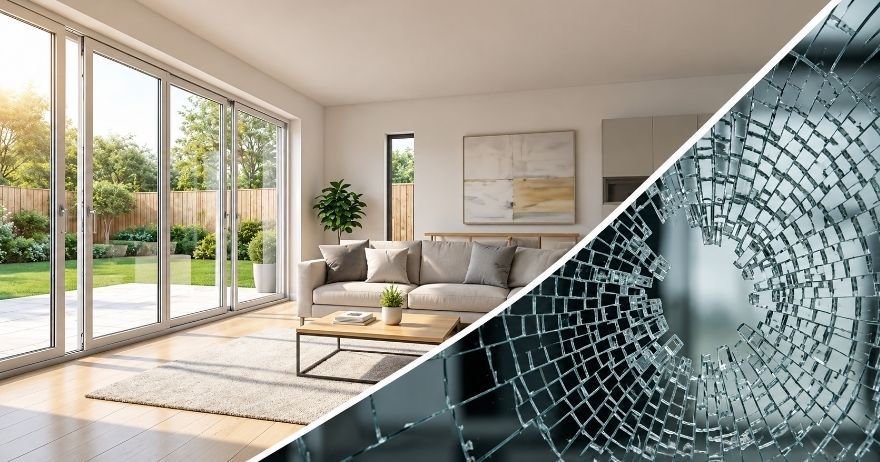
When toughened glass breaks, it does not fracture into sharp fragments like regular glass does. Instead, it shatters into numerous small spherical granules that are not sharp enough to cause serious cuts or damage. As a result, it is frequently utilized in homes because it is considerably safer, especially if there are young children or the elderly living there.
Benefits of Toughened Glass for Windows and Doors
Using toughened glass for windows in India is becoming increasingly popular. Here are some of the benefits of using toughened glass windows and doors:
Enhanced Safety: Toughened glass is much safer than regular glass. When it breaks, it shatters into small, blunt granules, instead of sharp, dangerous pieces. This reduces the risk of cuts and injuries, making it an ideal choice for residential spaces.
High Strength & Durability: Toughened glass can withstand strong winds, accidental impacts, and temperature fluctuations very easily.
Heat Resistance: Toughened glass is perfect for extreme heat conditions. This makes it a great choice for Indian climates, where heat and weather conditions can be extreme.
Scratch Resistance: It is more resistant to minor scratches compared to regular, normal glass.
Better Security: It is very hard to break toughened glass. And it adds an extra layer of protection against intruders.
Difference Between Toughened Glass vs Normal Glass
There are alot of differences between toughened glass and normal glass. Check the mentioned comparison table to make the right choice for your home.
| Features | Normal Glass | Toughened Glass |
|---|---|---|
| Durability | It breaks easily and not that durable | Very durable and doesn’t break easily. |
| Safety | Not safe as it breaks into sharp blunt pieces. | Safe because it breaks into small pebble like pieces. |
| Cost | Not that expensive | Mid-range but long-lasting |
| Applications | Basic windows; low-risk areas | Basic windows; low-risk areas Homes; offices; doors; balconies; high-safety areas |
Where Should You Use Toughened Glass at Home?
Toughened glass is a smart investment as it offers a perfect blend of strength and safety for Indian homes. Whether you're upgrading your windows or designing a new home, choosing toughened glass will ensure long-term durability, and if your priority is home safety and performance, toughened glass clearly stands out as one of the best materials available today.
And If you're wondering where to use toughened glass in the house? Here is where you can:
- Windows
- Doors
- Shower areas
- Balcony Railings
- Staircase Railings
- Kitchen Backsplashes