Choosing a television is not simply about buying the largest screen that fits your budget. The ideal screen size depends largely on the distance between the TV and your main seating position, along with factors such as screen resolution, room dimensions, viewing habits, and furniture layout. This TV size guide can help you understand how viewing distance influences the right screen size for your space.
A screen that is too large for a short viewing distance may feel overwhelming, while a smaller TV viewed from too far away can make details harder to appreciate. Planning the TV position and seating together can create a more comfortable and enjoyable viewing experience.
Why Does TV Size Matter for Viewing Comfort?
TV size affects more than the visual impact of your living room. It also changes how comfortably you can watch movies, sports, television shows, and games for extended periods.
A suitable screen should provide an immersive picture without requiring you to constantly move your eyes or head to follow what's happening. At the same time, a screen that is too small for a long viewing distance may make subtitles, facial details, and smaller objects difficult to see.
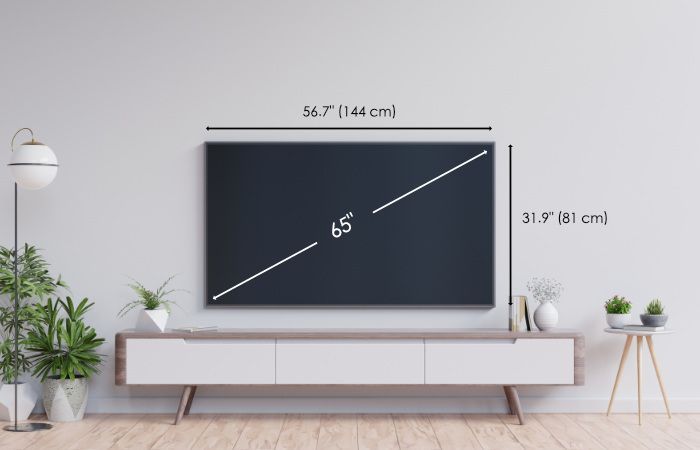
Understanding TV Screen Sizes and Viewing Distance
When discussing television size, the measurement refers to the diagonal distance from one corner of the screen to the opposite corner. The physical width and height will be smaller than the diagonal measurement. The relationship between TV size by viewing distance is equally important. Consider the TV screen size guide for installation.
| TV size | Approximate screen width* | Typical use |
|---|---|---|
| 32-inch | 28 in | Bedroom or compact room |
| 43-inch | 38 in | Small living room or bedroom |
| 50-inch | 44 in | Small to medium living room |
| 55-inch | 48 in | Medium living room |
| 65-inch | 57 in | Large living room |
| 75-inch | 65 in | Large viewing area |
| 85-inch | 74 in | Large room or dedicated media space |
TV Viewing Distance Chart: Choosing the Right Screen Size
A TV viewing distance chart is useful when comparing different screen sizes before purchasing. The appropriate distance depends on screen resolution, content, personal preference, and how immersive you want the viewing experience to be.
| TV size | Approximate viewing distance range |
|---|---|
| 32-inch | 4–6 ft |
| 43-inch | 5–7 ft |
| 50-inch | 6–8 ft |
| 55-inch | 6.5–9 ft |
| 65-inch | 8–11 ft |
| 75-inch | 9.5–12.5 ft |
| 85-inch | 10.5–14 ft |
Best TV Sizes for Small Living Rooms
Choosing the right TV size for small room layouts requires careful attention to both seating distance and available wall space. A compact living room does not automatically require a very small television. For many compact spaces, 43 to 50-inch televisions can be practical starting points. A 55-inch model may also work if the viewing distance and wall dimensions allow it.
Choosing a TV Size for Medium and Large Rooms
Medium and large rooms give you greater flexibility when selecting a screen. However, a larger room does not mean that the biggest available TV is automatically the right choice. For a medium living room, 50, 55, or 65-inch screens can provide different levels of immersion depending on the seating arrangement.
In a large living room, 65, 75, or even larger screens may be considered when the primary seating position is sufficiently far from the display. A best TV size for living room decisions should involve the main seating distance rather than simply the total floor area.
How TV Resolution Affects Ideal Viewing Distance
Resolution determines how much detail a television can display. Common modern options include Full HD, 4K, and 8K, although availability varies by screen size and market.
Higher-resolution screens contain more pixels. It allows viewers to sit closer to the screen without necessarily noticing individual pixels. A large 4K television can often be placed closer than an older lower-resolution display of the same physical size, depending on content and viewing conditions.
How to Measure the Distance Between Your Sofa and TV
Before shopping, measure the actual TV screen distance from your primary viewing position to the screen. First, sit in your normal viewing position, measure from your eye position to the planned screen position, record the distance in feet or inches, compare it with recommended ranges for different screen sizes, consider the TV's resolution and your preferred viewing experience and check the physical dimensions before purchasing. This approach helps you solve how to choose TV size much easier.
TV Placement and Wall-Mounting Considerations
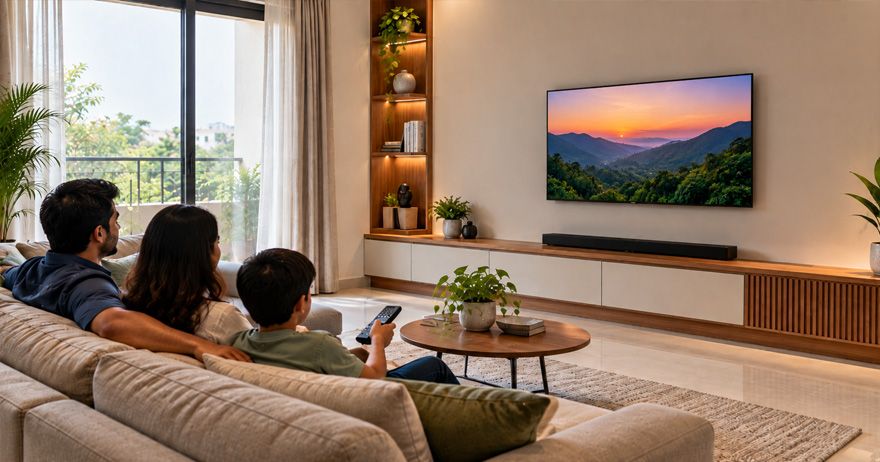
Choosing the right screen is only one part of creating a comfortable viewing setup. TV placement and viewing distance should be planned together so that the screen sits at a comfortable height and remains easy to view from the main seating position.
Before mounting, consider the height of your sofa, the TV unit, viewing position, and whether the television will be watched while sitting or reclining.
Choosing the Right TV Size for Bedrooms
Bedrooms generally have shorter viewing distances than living rooms, so a smaller television is often sufficient. However, the best choice depends on where the bed is positioned and how far the viewer's eyes are from the screen.
A 32 to 43-inch TV can be suitable for many bedrooms, while a larger bedroom with greater viewing distance may accommodate a 50-inch or larger screen. The ideal TV size for room should therefore be based on the actual viewing position rather than the room's total dimensions.
Common TV Size and Viewing Distance Mistakes to Avoid
- Choosing the largest TV available: Bigger is not automatically better. The screen should be appropriate for your actual seating distance and viewing preferences.
- Measuring the room instead of the viewing position: Total room size does not tell you how far your eyes will be from the screen. Measure from the main seating position.
- Ignoring the TV's physical dimensions: A television's advertised diagonal size does not indicate its complete width and height. Check the manufacturer's dimensions before purchasing.
- Mounting the TV too high: A screen positioned excessively high can make comfortable viewing difficult. Plan the height around your normal seated eye level.
- Ignoring resolution: Screen size and resolution work together. A large high-resolution display may support closer viewing than an older low-resolution television.
- Forgetting furniture depth: The actual viewing distance can change depending on sofa depth, TV cabinet depth, and wall-mount position.
- Placing the TV opposite strong light sources: Windows and bright lamps can create reflections and reduce perceived picture quality.
- Planning the TV after buying the furniture: Sofa and television positions should ideally be considered together, particularly in compact rooms.
- Using only one distance recommendation: Viewing-distance recommendations are useful starting points, not rigid rules. Personal preference and content type also matter.
Final Thoughts
A practical TV size guide starts with one simple measurement: the distance between your main viewing position and the screen. Consider the available wall space, television resolution, room layout, content preferences, and viewing habits. The best TV size for home is therefore not determined by room size alone. A television that fits the wall perfectly may still feel uncomfortable if the sofa is positioned too close. Before purchasing, measure the viewing distance and then the physical space available for the television.