



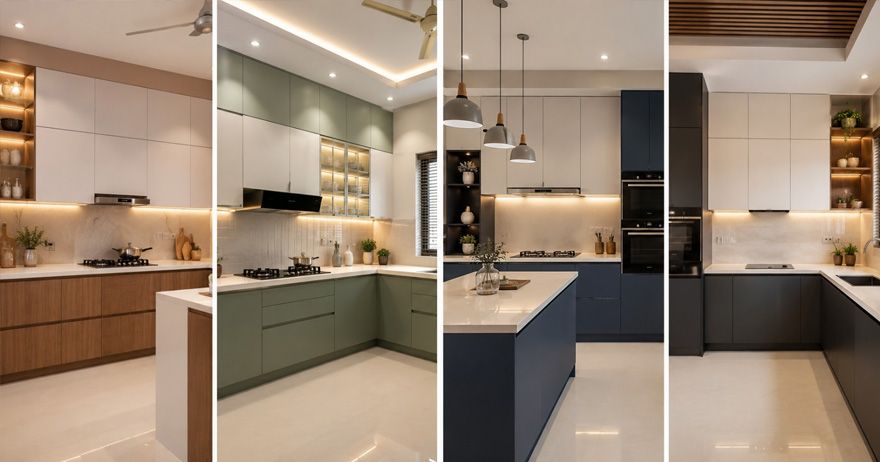
A two-tone kitchen colour combination is one of the easiest ways to create a stylish, balanced, and visually appealing kitchen. By combining two complementary colours for cabinets, walls, or islands, you can add depth, contrast, and personality without overwhelming the space. Whether you prefer timeless white and wood, elegant grey and navy, or bold black and beige, two-tone kitchens suit both compact apartments and spacious modern homes. This blog explores 20 inspiring two-tone kitchen colour combinations along with design tips to help you create a functional and beautiful kitchen.
Why Are Two-Tone Kitchens So Popular?
A kitchen does not have to rely on a single colour to look cohesive. Combining two carefully selected shades can create visual contrast while making different areas of the kitchen stand out.
A two-tone kitchen design can be created in several ways. You can use one colour for the upper cabinets and another for the lower cabinets, introduce a contrasting kitchen island, or combine coloured cabinetry with natural wood finishes.
This approach works particularly well in modern homes because it allows homeowners to experiment with colour without overwhelming the entire kitchen.
Here are some reasons to consider a two-tone kitchen:
- Creates depth and visual interest.
- Helps separate upper and lower cabinetry.
- Makes a kitchen island stand out.
- Allows you to combine bold and neutral shades.
- Works well in both large and compact kitchens.
- Offers more flexibility when choosing décor and finishes.
The right kitchen colour combinations can make even a simple modular kitchen look thoughtfully designed.
Classic White and Wood Kitchen Combinations
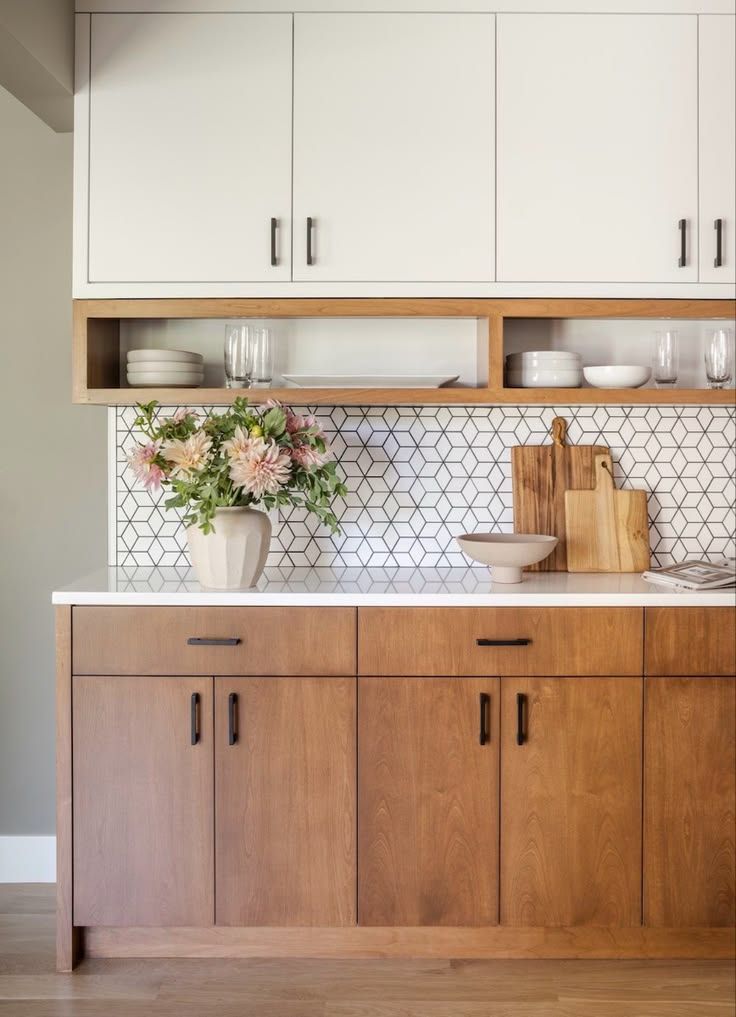
White and wood remain among the most versatile modular kitchen colour ideas. White keeps the kitchen bright and spacious, while natural wood introduces warmth and texture.
This combination works beautifully with wooden flooring, neutral walls, stone countertops, and simple hardware.
- White upper cabinets + natural wood lower cabinets: This arrangement keeps the upper half of the kitchen visually light while adding warmth below.
- White cabinets + wooden island: Use white cabinetry throughout and introduce a natural wood island as the focal point.
- Matte white + walnut: Pair soft white cabinets with darker walnut finishes for a sophisticated contrast.
- Cream + light oak: Choose warm cream cabinetry with light oak for a relaxed, Scandinavian-inspired kitchen.
These combinations are particularly suitable for homeowners who want timeless modern kitchen colours without relying on strong shades.
Grey and White for a Contemporary Look
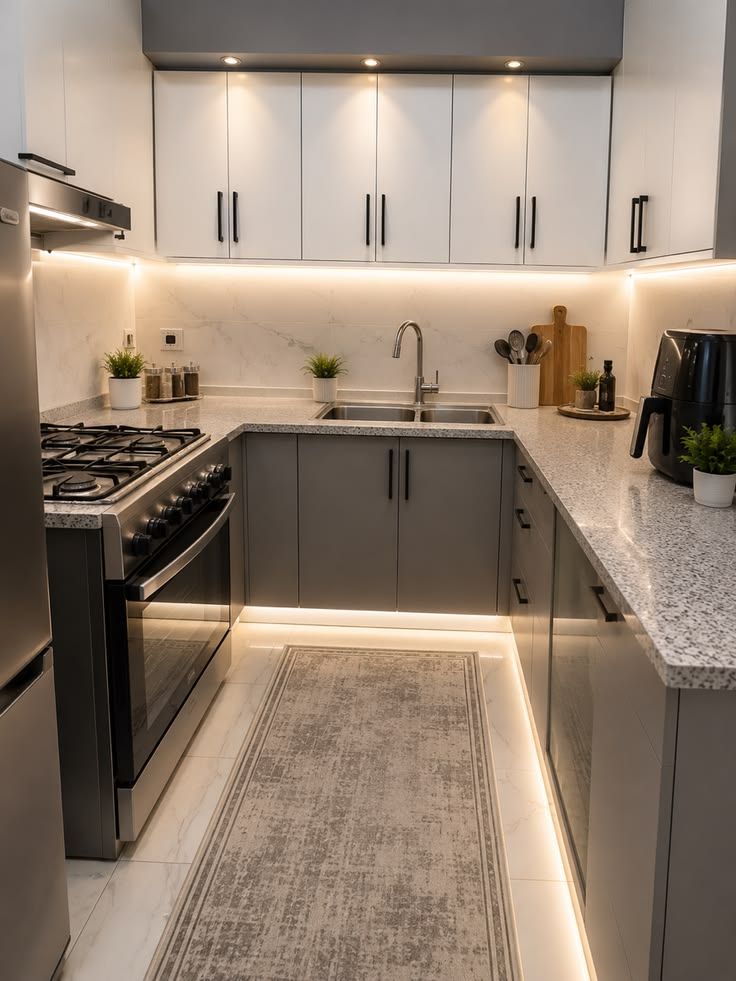
Grey and white are an excellent choice for homeowners who prefer sophisticated contemporary kitchen ideas. Grey adds depth while white prevents the room from appearing too dark.
Light grey works particularly well in compact kitchens, while charcoal grey can create a dramatic effect in larger spaces.
- Light grey lower cabinets + white upper cabinets: A simple combination that creates a clean, spacious look.
- Charcoal grey island + white cabinetry: Use a dark island to create a strong focal point.
- Grey cabinets + white marble-look backsplash: Combine neutral cabinetry with a subtle patterned backsplash for an elegant finish.
- Warm grey + off-white: Choose warmer undertones if you want the kitchen to feel softer and more inviting.
Navy Blue and White for Timeless Elegance
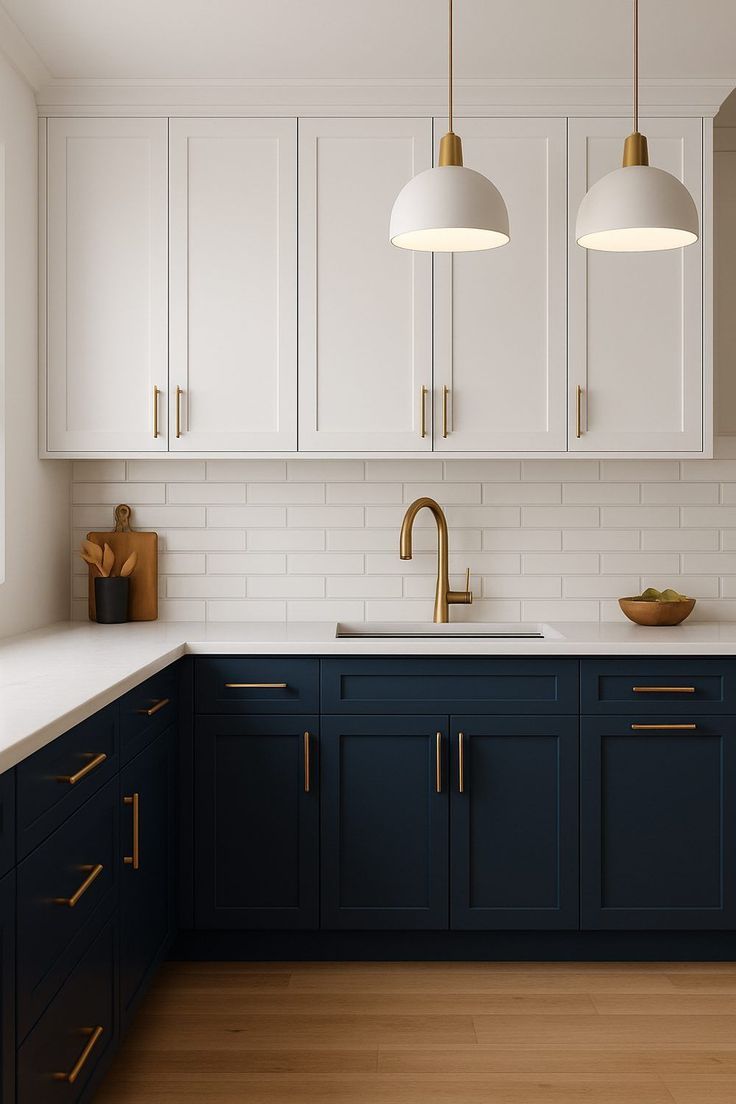
Navy blue is a versatile colour that can add richness without looking overly bright. When paired with white, it creates a classic contrast suitable for both traditional and contemporary kitchens.
Navy can be used on lower cabinets, an island, or a single cabinetry section.
- Navy lower cabinets + white uppers: Keep the upper portion light while giving the lower cabinets a bold personality.
- White cabinets + navy island: A navy island can become the centrepiece of an otherwise neutral kitchen.
- Navy cabinets + white backsplash: Use a simple white backsplash to balance darker cabinetry.
- Navy + light wood: Add natural wood shelves or accents to soften the contrast and introduce warmth.
This is one of the more timeless kitchen colour trends and can work especially well with brass or brushed-metal hardware.
Black and Beige for a Premium Finish
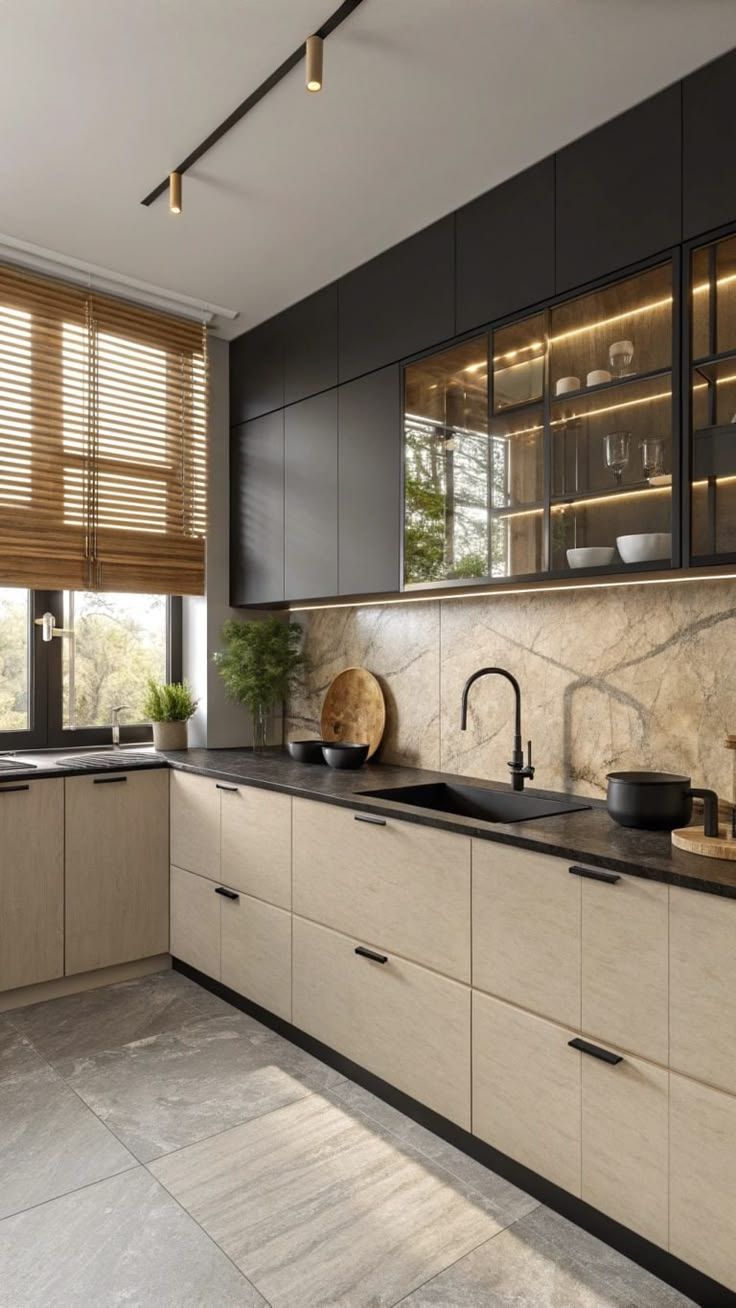
Black and beige can create a sophisticated and luxurious-looking kitchen without relying on excessive decoration. Beige softens the intensity of black, while black provides contrast and definition.
For a balanced modern kitchen design, consider using black on lower cabinets or a kitchen island and beige on the upper cabinets or surrounding walls.
- Matte black + warm beige: Combine matte black cabinetry with warm beige walls or upper cabinets.
- Black island + beige cabinetry: Make the island a bold focal point while keeping the rest of the kitchen light.
- Black lower cabinets + beige uppers: This combination creates a grounded appearance while maintaining visual brightness.
- Black + cream: Replace beige with cream for a softer and more timeless appearance.
Wooden flooring, warm lighting, and metallic hardware can further enhance this combination.
Green and Wood for a Nature-Inspired Kitchen
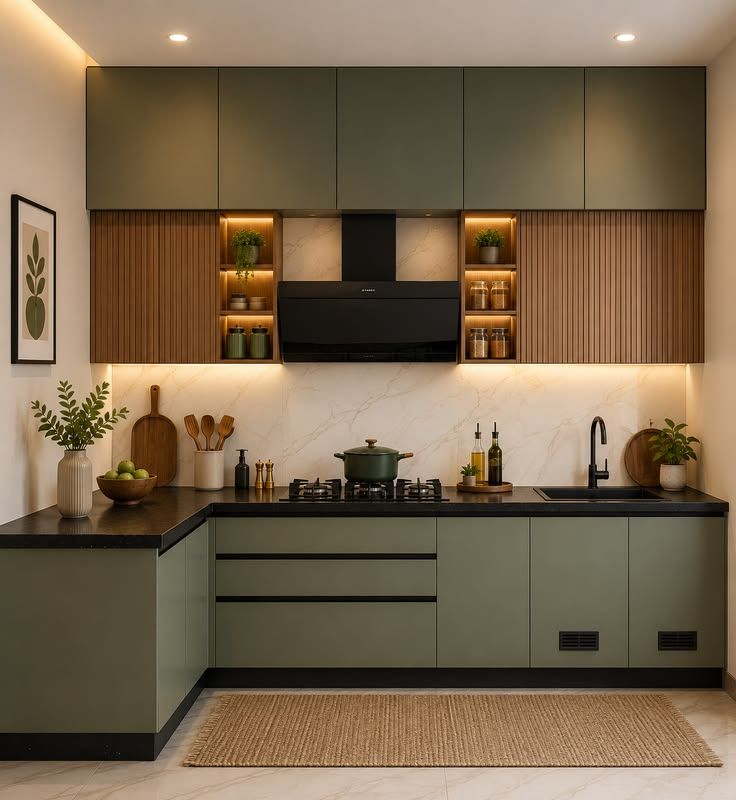
Green and wood are excellent choices for homeowners who want to bring an organic character into their kitchen. From muted sage to deeper forest green, different shades can create completely different atmospheres.
Natural wood helps balance green cabinetry and introduces warmth into the space.
- Sage green + light wood: A soft combination that works particularly well in contemporary and Scandinavian-style kitchens.
- Forest green + walnut: Use darker green cabinetry with walnut accents for a rich and sophisticated appearance.
- Olive green + natural oak: Pair muted olive cabinets with oak for a relaxed, earthy kitchen.
- Green island + neutral cabinetry: Keep the main cabinetry neutral and use green on the island for a subtle statement.
These combinations can work beautifully with indoor plants, natural stone, woven accessories, and warm lighting.
How to Choose the Right Two-Tone Colour Combination
Choosing colours is not simply about picking two shades that look attractive individually. They also need to work together with your kitchen's size, lighting, flooring, countertop, backsplash, and overall interior.
Consider these factors before finalising your two-tone kitchen colour combinations:
1. Consider natural light: Darker colours work better when the kitchen receives plenty of natural light.
2. Look at the kitchen size: Light shades can help compact kitchens feel more open, while darker tones can add depth to larger spaces.
3. Check undertones: Warm whites pair better with warm woods and beige, while cool greys generally work well with cooler whites and blues.
4. Consider the countertop: The countertop should connect the two cabinet colours rather than introduce unnecessary visual competition.
5. Think about the rest of your home: An open-plan kitchen should complement the living and dining areas.
6. Choose your focal point: Decide whether the island, lower cabinets, upper cabinets, or backsplash will attract the most attention.
A well-planned two-tone kitchen design should feel coordinated rather than divided into unrelated colour sections.
Common Kitchen Colour Mistakes to Avoid
Even attractive colours can look unbalanced when they are used incorrectly. Avoid these common mistakes when selecting kitchen cabinet colours:
- Using two equally dominant colours: One shade should usually act as the primary colour while the other provides contrast.
- Ignoring lighting: A colour that looks good in a showroom may appear very different under your home's lighting.
- Choosing too many finishes: Combining multiple colours with several wood tones and countertop patterns can create visual clutter.
- Ignoring undertones: Two neutrals can clash if one has warm undertones and the other has cool undertones.
- Using dark colours everywhere: Excessive dark cabinetry can make a compact kitchen feel smaller.
- Forgetting the backsplash: The backsplash should complement both cabinet colours.
- Following trends blindly: Choose colours that suit your home's architecture and your personal taste.
- Skipping samples: Always test cabinet and countertop samples in the actual kitchen before finalising colours.
The goal is to create contrast without making the kitchen feel visually busy.
Tips for Balancing Colours, Lighting, and Finishes
Colour is only one part of a successful kitchen interior. Lighting and material finishes can significantly change how the colours appear.
Use a combination of ambient, task, and accent lighting to make the kitchen functional and visually appealing. Under-cabinet lighting can also highlight backsplashes and countertops.
Here are some practical tips:
- Use lighter colours on upper cabinets to create an open appearance.
- Use darker shades on lower cabinets to visually ground the kitchen.
- Choose matte finishes for a soft, contemporary appearance.
- Use glossy finishes when you want to reflect more light.
- Introduce wood to soften strong colours.
- Keep hardware finishes consistent throughout the kitchen.
- Choose countertops that connect both cabinet colours.
- Use the backsplash as a bridge between contrasting shades.
- Repeat one accent colour in small décor elements for visual continuity.
For kitchen interior design, balance is more important than simply choosing fashionable colours. A good combination should look attractive in both natural and artificial light.
Final Thoughts
The right two-tone kitchen colour combination can completely transform the appearance of your kitchen. Whether you prefer the warmth of white and wood, the sophistication of grey and white, the richness of navy and white, or the earthy appeal of green and wood, there are countless ways to create a stylish combination.
The key is to consider the size of your kitchen, amount of natural light, existing flooring, countertop, backsplash, and overall home décor before choosing your colours.
For smaller kitchens, lighter combinations can help maintain an airy appearance. Larger kitchens offer more freedom to experiment with darker cabinet colours and bold islands. If you prefer a timeless look, neutral combinations such as white and wood or grey and white are reliable choices.
Ultimately, the best two-colour kitchen cabinets are not necessarily the trendiest ones. They are the colours that complement your space, reflect your style, and remain practical for everyday use.