



Windows and doors affect daily comfort more than almost anything else in a home. A poorly chosen window can trap heat, block airflow, or collect dust. A wrong door design can waste space and feel inconvenient in everyday use.
Yet, we don’t pay much attention when choosing it. Understanding the actual types of uPVC windows and doors makes the decision simpler and more accurate. Each option is meant for a specific purpose and suits certain rooms better than others.
In this blog, we will look at the best uPVC windows and door designs for Indian homes, know where each fits the most, and learn how to choose the one for your home.
Different Types of uPVC Windows And Doors
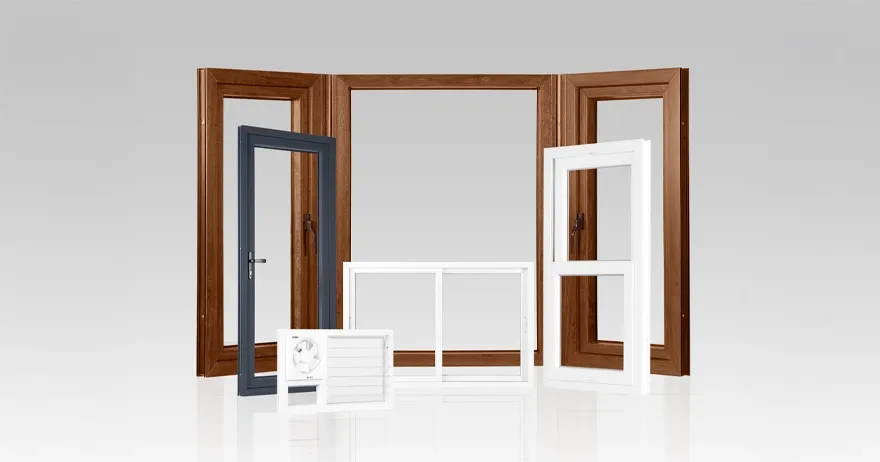
Different rooms need different things. Some need airflow, some need light, and some need safety more than anything else. In this blog, we have listed the most commonly used uPVC windows and doors that are suitable for Indian homes. The list includes,
- Casement windows/doors
- Sliding windows/doors
- Tilt-and-turn windows
- Fixed windows
- Bay windows
- French doors
- Lift-and-slide doors
uPVC Window Types For Indian Homes
Below are the best uPVC windows for homes that are most commonly used.
1. Casement uPVC Windows
Casement windows open on side hinges, either inward or outward. They open fully, which allows fresh air to circulate properly inside the room. This is one of the most reliable window choices for Indian weather conditions.
- It provides excellent ventilation, especially in warm weather
- It is easy to clean due to its wide opening
- It works well in living rooms and bedrooms
- It provides good sealing against dust and rain
2. Sliding uPVC Windows
Sliding windows move horizontally on tracks. Since they do not swing open, they fit perfectly where space is limited. Ventilation is lower compared to casement windows because only one panel opens at a time.
- It saves space in compact rooms
- It comes with simple and smooth operation
- It lowers visual clutter
- It is commonly used in apartments
3. Tilt And Turn uPVC Windows
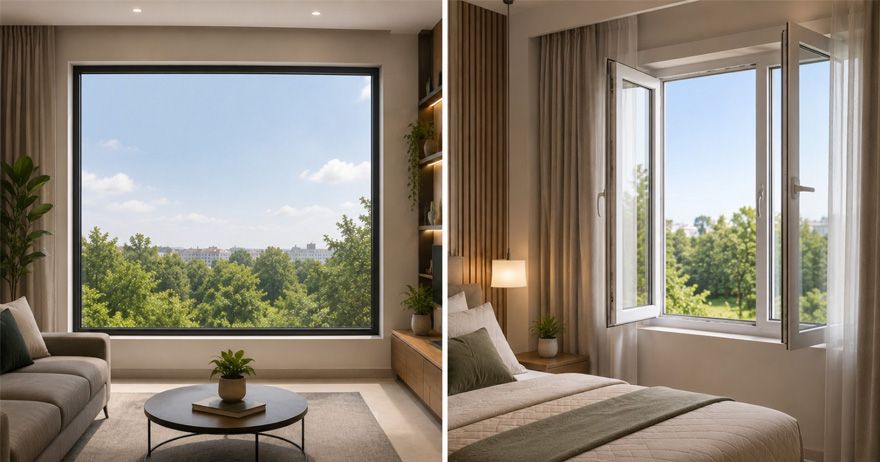
Tilt and turn windows offer two opening positions. They can tilt slightly from the top for airflow or open fully like a door. They are suitable for urban apartments where safety and flexibility matter.
- It allows controlled ventilation
- It is easy to clean from inside, even in high-rise flats
- It is a safer option for homes with children
- It has a clean, modern appearance
4. Fixed uPVC Windows
Fixed windows do not open. Their purpose is to bring in natural light and enhance the view. They are often paired with opening windows in living rooms or near staircases.
- It allows maximum daylight
- It is strong and secure
- It provides no ventilation
- It is easy to maintain
5. Bay uPVC Windows
Bay windows project outward from the wall, creating extra space inside the room. They add comfort and character rather than solving functional problems.
- It adds usable seating or storage space
- It improves the outside view
- It enhances daylight
- It is best suited for independent houses and villas
Other uPVC Window Options You May Come Across
Apart from the commonly used uPVC window types, a few other designs exist but are rarely used across an entire home, and are mostly used only in premium villas and commercial spaces.
- Top-hung windows
- Bottom-hung windows
- Louvered windows
- Bi-fold windows
These options are situational rather than essential.
uPVC Door Designs For Indian Homes
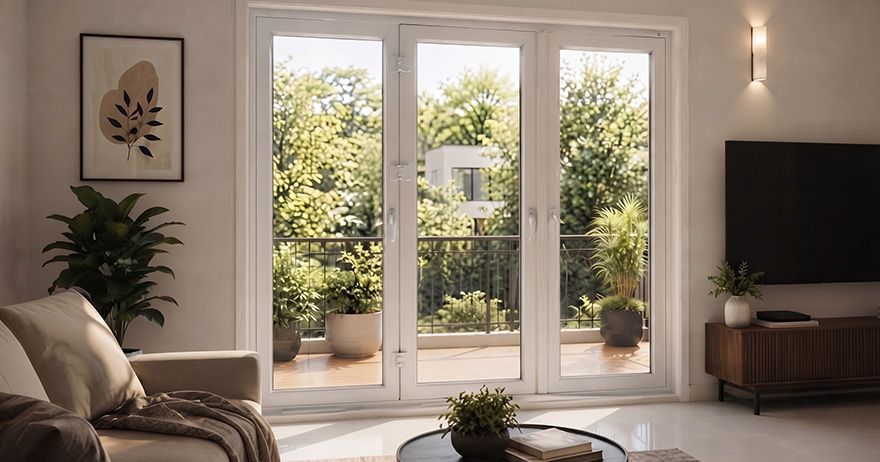
1. Sliding uPVC Doors
Sliding doors move on tracks and are commonly used for balconies and patios. They need regular track cleaning to stay smooth.
- It saves space
- Its large glass panels bring in more natural light
- It provides easy and safe access to balconies and patios
- It is suitable for apartments
2. Casement uPVC Doors
Casement doors open on hinges, similar to traditional doors. They suit the rooms where there is enough space for full opening of the doors.
- It offers strong sealing against dust and rain
- It provides better insulation than sliding doors
- It is a simple and familiar design to trust with
- It is suitable for utility areas and back entrances
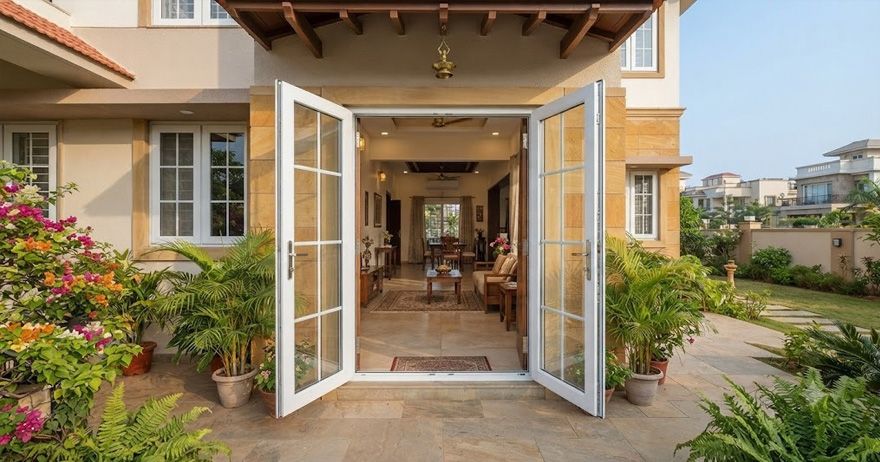
3. French uPVC Doors
French doors consist of two doors that open from the centre, usually with glass panels.
- It creates a wide opening
- It improves the indoor-outdoor connection
- It brings in a good amount of natural light
- It is ideal for gardens and patios
4. Lift And Slide uPVC Doors
Lift and slide doors lift slightly before sliding, making it easier to move large panels. They are suitable for villas and large living rooms.
- It has smooth operation even with heavy panels
- It is suitable for large openings
- It provides strong sealing when closed
- It gives a premium look for modern homes
Other uPVC Door Options That Are Less Common
Here are some of the other options that work in specific settings.
- Bi-fold doors
- Pivot doors
- Slide-and-fold doors
Room-Wise Recommendation Guide
| Room | Recommended uPVC Windows | Recommended uPVC Doors |
|---|---|---|
| Living room | Casement windows; Fixed windows; Bay windows | Sliding doors; French doors |
| Bedroom | Casement windows; Tilt and turn windows | Casement doors |
| Kitchen | Sliding windows; Casement windows | Casement doors |
| Bathroom | Tilt and turn windows; Fixed windows | Casement doors |
| Balcony | Sliding windows | Sliding doors; Lift and slide doors |
| Utility area | Sliding windows | Casement doors |
How To Choose The Best Types Of uPVC Windows And Doors For Your Home?
Start by understanding how each room is used and choose your option wisely.
- Bedrooms need airflow and privacy
- Living rooms need light and openness
- Kitchens and bathrooms need controlled ventilation
- Balconies need easy movement
If safety is the concern, tilt-and-turn windows and well-sealed doors are perfect as they prevent accidents while providing enough ventilation.
Why Choose IndiFrame For uPVC Windows And Doors?
Choosing the right type of uPVC window or door makes a big difference to how comfortable a home feels. IndiFrame offers options that suit Indian layouts and weather, focusing on smooth use, good fit, and long-term reliability.
Final Takeaway
Understanding the different types of uPVC windows and doors helps homeowners make informed decisions without any confusion. When you choose the right windows and doors, your home becomes more comfortable, brighter, and easier to live in.
Check out the top 10 uPVC windows in Hyderabad!