



Choosing the right types of paints for walls is essential for achieving a beautiful, durable, and easy-to-maintain finish. From emulsion and enamel to distemper and textured paints, each type is designed for specific surfaces, rooms, and environmental conditions. The finish you choose, whether matte, satin, eggshell, or glossy also affects the look, durability, and maintenance of your walls.
Whether you're painting a new home or renovating an existing one, understanding the different wall paints and finishes will help you select the best option for every room and budget.
Why Choosing the Right Wall Paint Matters
Wall paint protects your home's surfaces from moisture, sunlight, dust, and minor damage. It improves its overall appearance. The right paint creates a smooth finish, resists daily wear, and makes cleaning easier.
There are several wall paint types available, each designed for different purposes. Choosing the correct paint also reduces long-term maintenance costs. When exploring the types of paints for walls, it is important to consider where the paint will be used, the amount of traffic the room receives, and how often the walls need cleaning.
Different Types of Paints for Interior and Exterior Walls
Not every wall paint is designed for the same purpose. Understanding the different paint options helps you select the most suitable product for your home's needs.
Emulsion Paint
Emulsion paint is one of the most widely used paints for residential interiors. It is water-based, dries quickly, produces very little odour, and offers excellent durability.
Modern emulsion paints are available in various finishes, including matte, satin, silk, and semi-gloss. They are also resistant to cracking, peeling, and fading. They are best suited for living rooms, bedrooms, dining rooms, hallways.
Distemper Paint
Distemper is an economical paint commonly used in budget-friendly projects. Although it provides a neat appearance, it is less durable than emulsion paint and can be more difficult to clean. It may require more frequent repainting.
When comparing Distemper vs emulsion, emulsion offers better durability, stain resistance, washability, and colour retention. Distemper is perfect for rental properties, low-traffic rooms, and temporary renovations.
Enamel Paint
Enamel paint creates a hard, glossy surface that resists stains, moisture, and frequent cleaning.
It is commonly used on wood and metal surfaces rather than large wall areas. It performs well on doors, windows, grills, railings, cabinets, and trims.
As it offers durable finish it is good for surfaces exposed to regular handling. It is great in wooden doors, window frames, metal railings and kitchen cabinets.
Textured Paint
Textured paints add visual interest to walls through decorative patterns and raised finishes. These paints are often used to create accent walls in living rooms, dining areas, hotel lobbies, and commercial spaces.
Their finishes can also hide small imperfections on uneven walls. They look stunning in feature walls, TV units, living rooms and reception areas.
Cement Paint
Cement paint is specifically formulated for masonry and concrete surfaces exposed to outdoor weather conditions. It provides good resistance against sunlight, rain, and moisture while allowing walls to breathe.
This paint is used on building exteriors like boundary walls, exterior concrete surfaces, compound walls and building facades.
Primer
Primer creates a uniform surface that improves paint adhesion, reduces paint absorption, and increases the lifespan of the final coat. Applying primer before painting often results in better colour consistency.
Understanding Wall Paint Finishes: Matte, Satin, Gloss & More
Choosing the right finish is equally important as selecting the best paint for walls. Understanding different wall paint finishes helps you balance aesthetics, maintenance, and durability.
Matte Finish
Matte paint has little to no shine and creates a soft appearance. It hides minor wall imperfections exceptionally well, and popular for bedrooms, ceilings, and formal living spaces. Matte finishes require more careful cleaning because they are less resistant to repeated scrubbing.
Satin Finish
Satin finishes provide a subtle sheen without becoming overly reflective. They offer a good balance between appearance and durability, and are suitable for family rooms, children's bedrooms, dining rooms, and hallways. Many homeowners comparing Matte vs satin paint choose satin because it is easier to clean.
Eggshell Finish
Eggshell paint sits between matte and satin finishes. It offers a slight sheen that enhances durability and maintains understated appearance. It works well in living rooms, dining rooms, and bedrooms.
Semi-Gloss Finish
Semi-gloss reflects more light and offers better resistance to moisture and stains. As it is easy to wipe clean, it is perfect in kitchens, bathrooms, laundry rooms, and children's play areas. It is commonly used on doors, trims, and window frames.
Gloss Finish
Gloss paint creates a highly reflective surface with excellent durability. It remains a popular choice for furniture, cabinets, decorative mouldings, and wooden trims because of its polished appearance.
Best Paint for Living Rooms, Bedrooms, Kitchens, and Bathrooms
The appropriate interior wall paint for different rooms are given below.
| Room | Recommended Paint Type | Finish | Why |
|---|---|---|---|
| Living room | Premium interior emulsion | Eggshell or satin | Good washability for high-traffic space |
| Bedroom | Premium interior emulsion | Matte or eggshell | Creates calmness |
| Kitchen | Washable emulsion or semi-gloss enamel | Semi-gloss or satin | Must withstand steam grease and frequent wiping |
| Bathroom | Moisture-resistant emulsion or semi-gloss enamel | Semi-gloss or satin | High humidity requires a moisture-resistant formulation |
| Children's room | Washable or scrubbable emulsion | Satin | Must withstand crayons markers and everyday damage |
| Hallway or passage | Premium emulsion with washable formulation | Satin or eggshell | High-traffic area with frequent wall contact |
| Ceiling | Ceiling-specific emulsion or flat emulsion | Flat or matte | Hides imperfections |
Interior vs Exterior Wall Paint: What's the Difference?
Interior and exterior paints are designed to perform under very different conditions. Understanding these differences makes it much easier to select the right types of paints for walls.
- Exterior wall paint is manufactured to withstand harsh sunlight, rain, temperature changes, pollution, and moisture. It contains additives that improve weather resistance, reduce fading, and help prevent fungal growth.
- Interior paints focus more on appearance, stain resistance, washability, and indoor air quality. They are designed to provide smooth finishes while being safe for enclosed living spaces.
Factors to Consider Before Choosing Wall Paint
The right wall paint should suit your home's environment and daily usage. Some of the factors to consider are given below.
- Start by identifying the room type, use and the existing wall condition.
- Check how the natural and artificial light make the same colour appear throughout the day.
- Fix a clear budget as it avoids spending heavily on a premium topcoat but using inadequate primer.
- Look for Low-VOC and zero-VOC formulations.
A reliable Wall paint guide can help you compare finishes, durability, washability, and recommended applications before making a purchase.
Common Mistakes to Avoid When Selecting Wall Paint
Choosing the wrong paint is one of the most common reasons homeowners end up repainting sooner than expected.
- Colour: Selecting paint based only on colour without considering the finish.
- Skipping primer: Although it may seem like an unnecessary expense, primer helps paint adhere properly, improves colour consistency, and increases durability.
- Low-quality paints: If you want to reduce initial costs then you need to spend more on repairs and repainting later.
- Ignoring lighting: Paint colours often appear different under daylight, warm lighting, and cool LED lighting.
- Using interior paint on exterior surfaces: Interior paint on exterior walls leads to peeling, chalking, and fading in the first monsoon.
Tips to Make Your Wall Paint Last Longer
Following these below given simple house painting tips helps preserve both the colour and finish.
- Clean walls thoroughly, repair cracks, smooth uneven surfaces, and apply primer. Good preparation allows the paint to bond better and creates a more even finish.
- Even the highest-quality paint requires proper care to maintain its appearance.
- After painting, avoid cleaning freshly painted walls until the manufacturer recommends it.
- Regular dusting also helps prevent dirt from building up on painted surfaces.
- Washable paints can usually be cleaned gently using a soft cloth or sponge and mild soap.
- Good ventilation is equally important, particularly in kitchens and bathrooms.
Latest Wall Paint Trends for Modern Homes
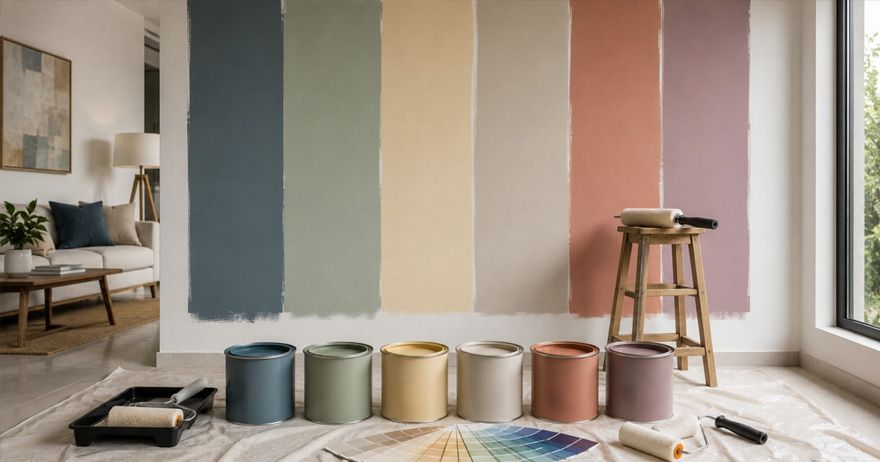
Modern homes are moving towards colours and finishes that feel classic. Warm neutrals such as beige, greige, soft white, taupe, and earthy browns continue to remain popular. Nature-inspired shades including sage green, olive, muted blue, and terracotta are also becoming trendy. Large-format feature walls with textured finishes, limewash effects, and subtle concrete-inspired surfaces are gaining popularity in contemporary homes.
Final Thoughts
The types of paints for walls that produce the best results are those that have been selected with full awareness. The Indian paint market offers excellent options across all performance tiers from all major brands but the challenge is understanding the distinctions that make one product appropriate and another inadequate for a specific application.