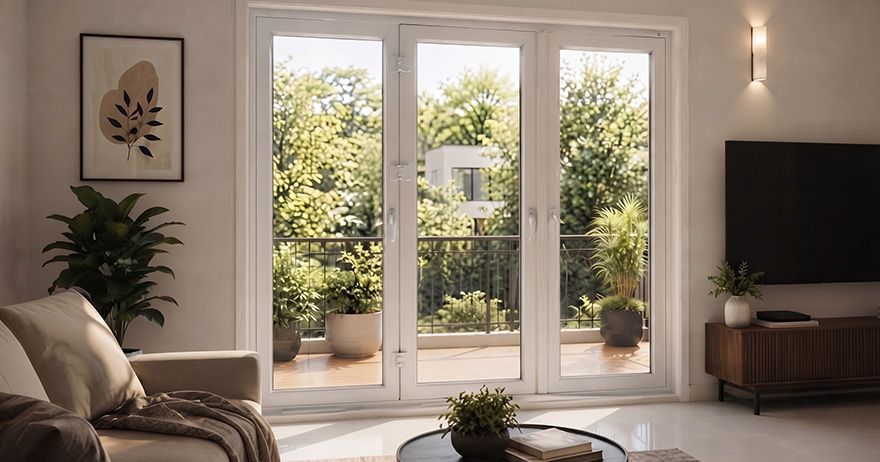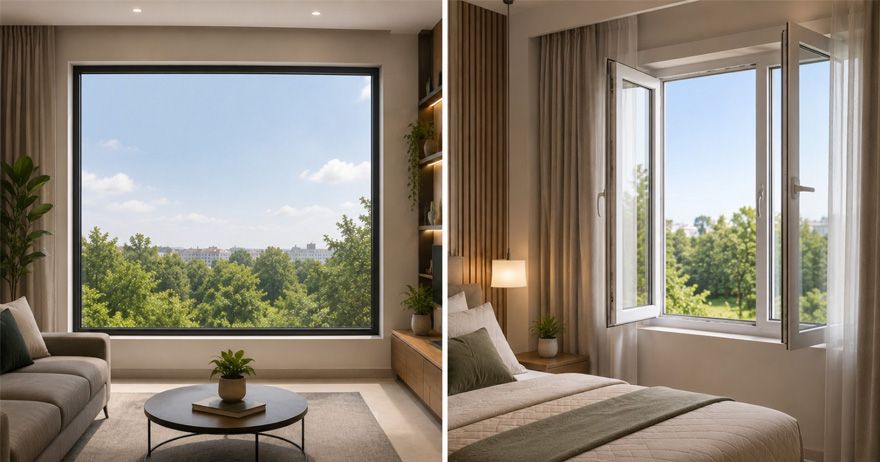




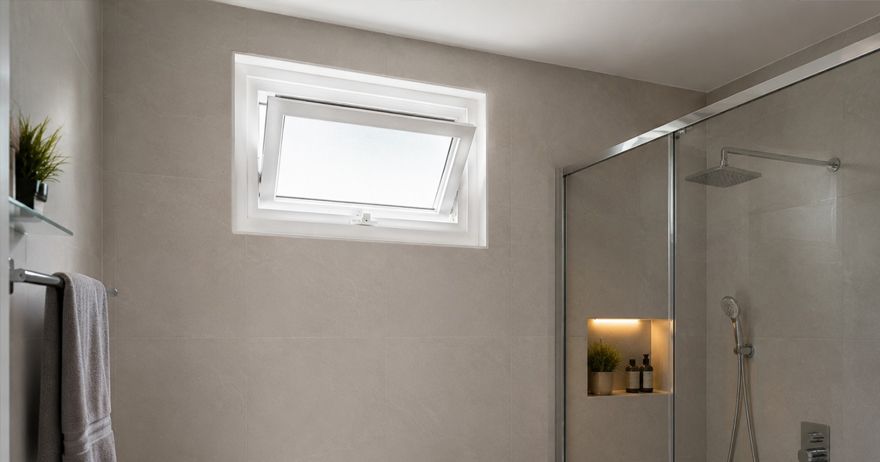
What Is a uPVC Ventilator Window?
A uPVC ventilator window is a specialised window mechanism designed to provide continuous fresh-air circulation by expelling stale air and allowing fresh air to enter the room. Made with unplasticised polyvinyl chloride (uPVC) frames, these uPVC window designs are available in different opening styles and can be operated manually or remotely through a switch.
Best Placement for uPVC Ventilator Windows
Ventilator windows operate on the principle of the stack effect, or chimney effect, in which the natural movement of air into and out of a building is driven by temperature and density differences. This type of ventilation mechanism works for compact rooms that experience significant heat and humidity buildup, require greater privacy than others, or have layouts where regular window placement is not possible; therefore, it performs best when installed at a higher level than regular windows. Bathrooms, toilets, kitchens, storerooms, basements, and staircases often need ventilator windows and higher placement, as discussed below.
Why Ventilator Windows Are Important for Bathrooms and Kitchens
Bathrooms generate a large amount of airborne moisture from hot showers and baths. And given that bathrooms are among the most private areas of a house, one generally won't find regular or larger windows installed unless the house is of a luxury or ultra-luxury layout. But even then, it needs a continuous flow of fresh air; therefore, when installed at the top of the wall, it provides privacy and a fresh atmosphere. By quickly exhausting stale, moist air, a bathroom ventilator window reduces the likelihood of allergens and respiratory irritations that thrive in damp environments.
In the case of a kitchen, again, it all depends on the layout and the kitchen style used. So if your kitchen cabinets and appliances occupy at least half of the walls of the room, which is the case in 2-wall kitchens, L-shape kitchens, U-shape kitchens, or open/customised kitchen layouts, where there is indirect/limited access to its balcony or the outside, it's highly advisable to install ventilator windows.
Cooking produces high levels of heat, steam, grease, and smoke. Without a dedicated escape route, these byproducts linger, settling as a greasy film on ceilings, cabinets, and backsplashes. Besides, they expel toxic cooking emissions (gas stoves emit nitrogen dioxide and carbon monoxide), remove fine particulate matter (PM2.5), and manage humidity. The continuous airflow through kitchen ventilator windows prevents respiratory irritation, asthma triggers, and hazardous mould growth caused by trapped steam.
Benefits of uPVC Ventilator Windows for Bathrooms and Kitchens
- Promotes Natural Ventilation by allowing fresh air to circulate while helping warm, stale air escape.
- Reduces Humidity by minimising moisture buildup in bathrooms, kitchens, and utility areas, helping prevent dampness.
- Improves Indoor Air Quality by removing odours, smoke, and airborne pollutants.
- uPVC frames resist rain, corrosion, and UV exposure without warping or rusting.
- Low maintenance; therefore, it requires only occasional cleaning, with no need for painting or polishing.
- Energy-efficient by supporting passive cooling, reducing reliance on fans or air conditioning, and encouraging natural airflow.
- Enhanced Security with small openings and secure locking hardware that provide ventilation without significantly compromising safety.
- It is a Space-Efficient Design when installed at high levels, making it ideal for rooms with limited wall space.
- Can Seamlessly Integrate with Other Windows by combining with fixed, sliding, or casement windows to enhance ventilation without altering the overall façade design.
Types of uPVC Ventilator Windows
uPVC ventilator windows are available in a variety of designs, each suited to different ventilation requirements, installation conditions, and architectural preferences. While the market offers several configurations, below are the uPVC ventilator window types available in our range, designed to deliver effective airflow and available in both manual and remote-controlled options.
Top-Hung Ventilator Windows
Open outward from the bottom and are hinged at the top, making them one of the best ventilator windows for bathrooms, kitchens, staircases, and utility areas.
Note: IndiFrame does not provide top-hung ventilator windows for sizes smaller than 2 ft x 2 ft.
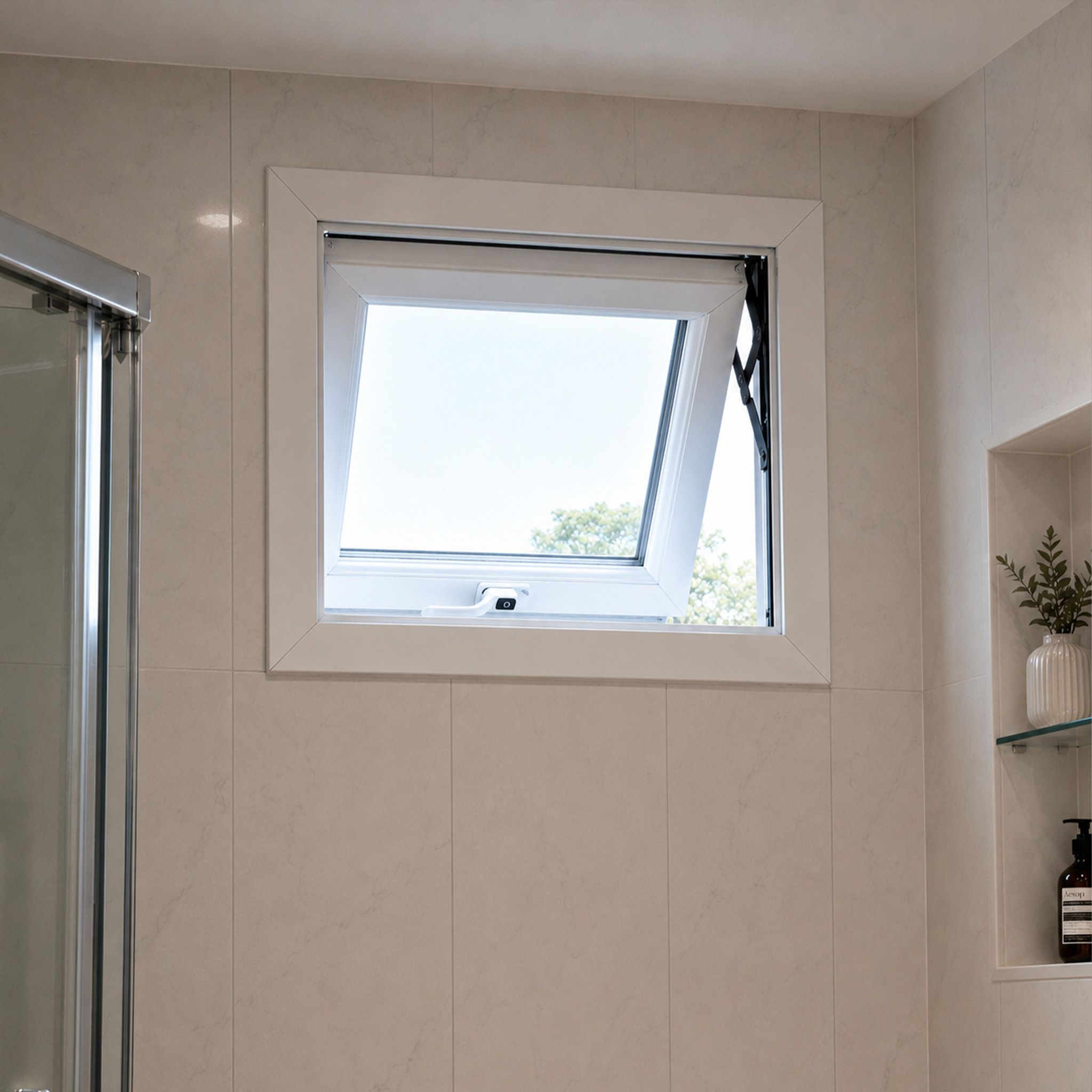
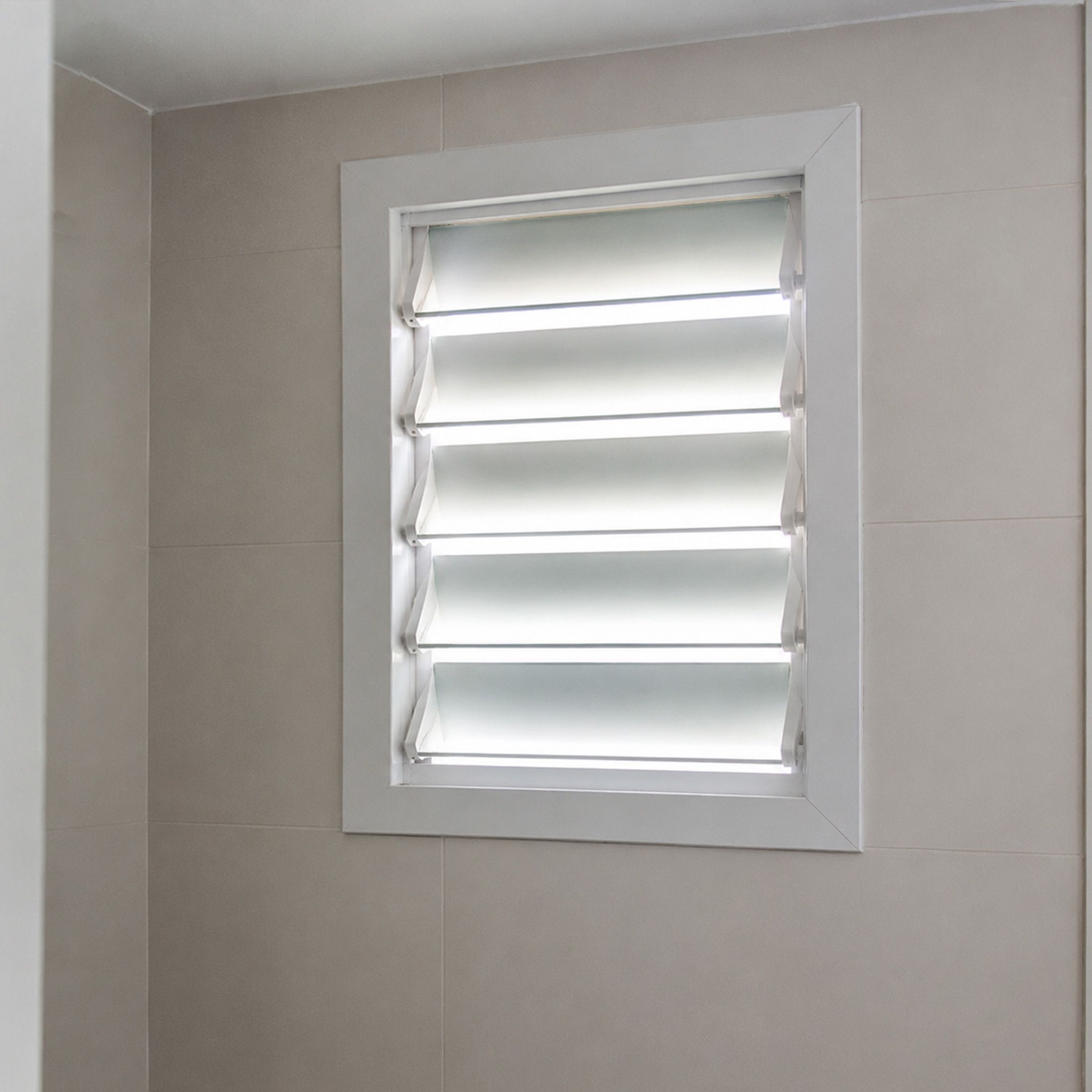
Louvre Ventilator Windows
Feature adjustable horizontal slats that regulate airflow, maintain privacy, and offer some protection against light rain.
Note: IndiFrame can also provide louvre ventilator windows in sizes such as 500 mm x 500 mm.
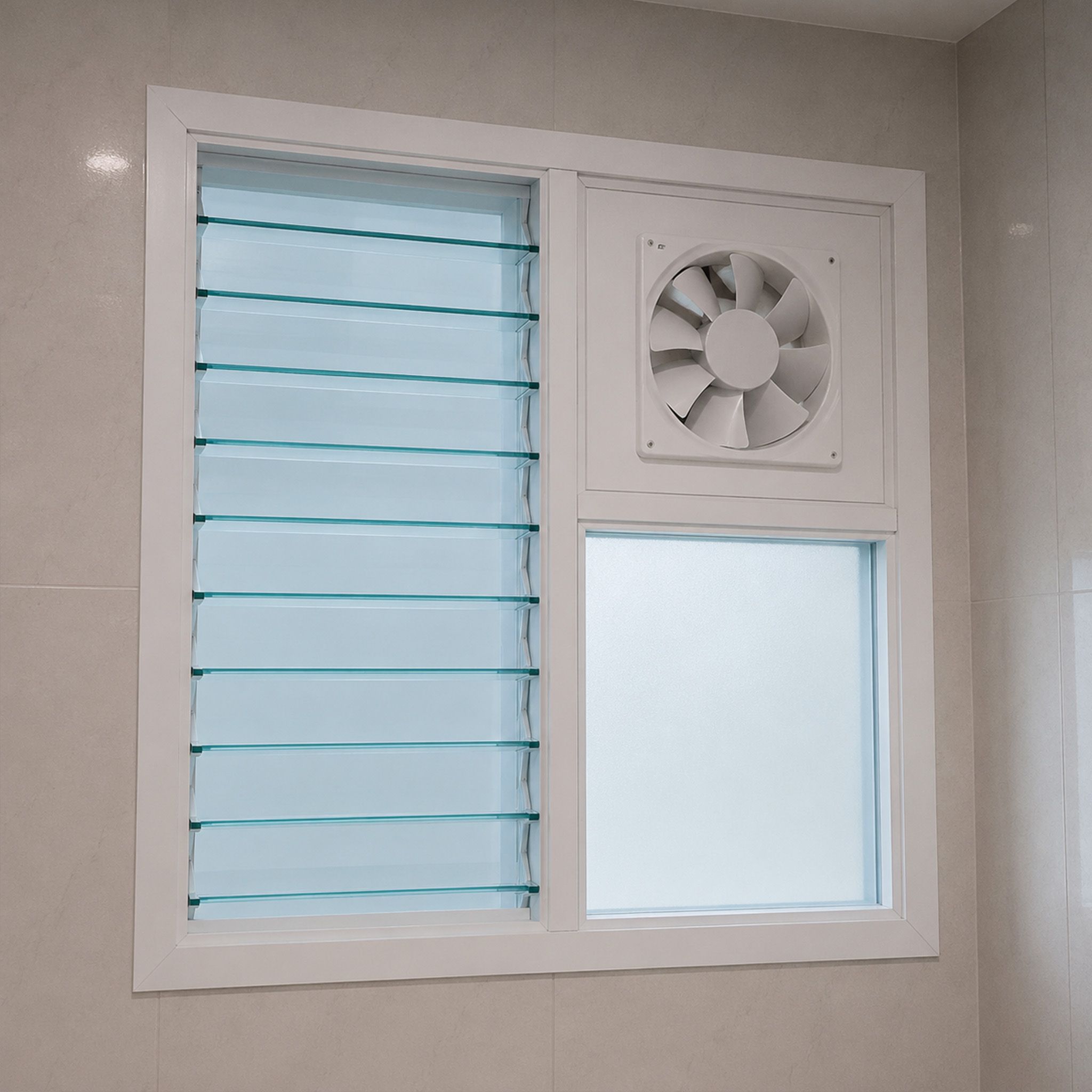
Louvre Ventilator with Integrated Exhaust Fan
Combines a fixed glazed or louvred panel with an exhaust fan for spaces requiring continuous mechanical ventilation, such as bathrooms and kitchens.
Note: IndiFrame can provide Louvre Ventilator with Integrated Exhaust Fan windows for any size as per your requirements.
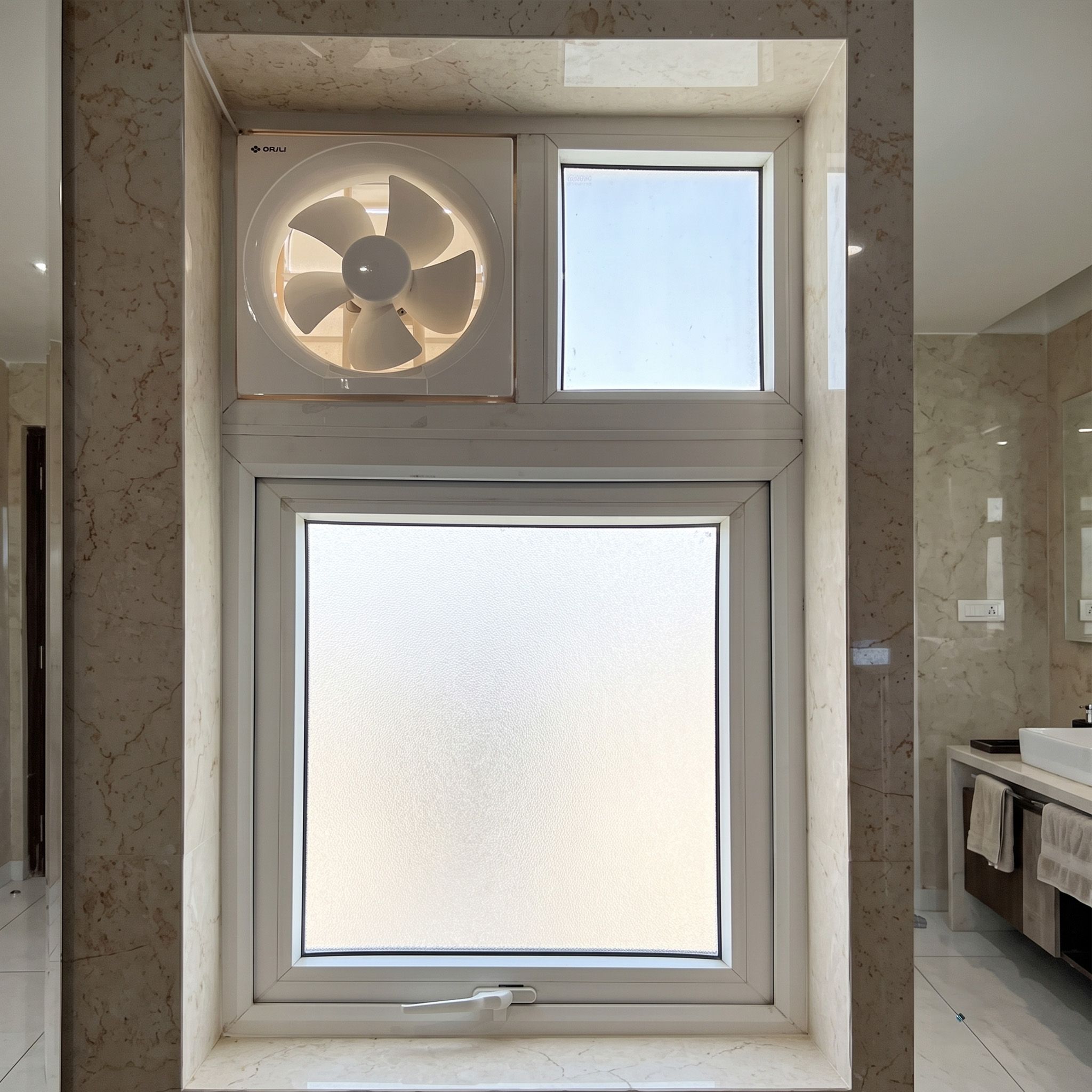
Top-Hung Ventilator Window with Integrated Exhaust Fan
Hinged at the top and open outward from the bottom, making them the most popular choice for bathrooms, kitchens, staircases, and utility rooms. They provide effective high-level ventilation while offering protection against light rain.
Note: IndiFrame can provide Top-Hung Ventilator Window with Integrated Exhaust Fan in 2 ft (Width) x 3 ft (Height) and 3 ft (Width) x 2 ft (Height) sizes.
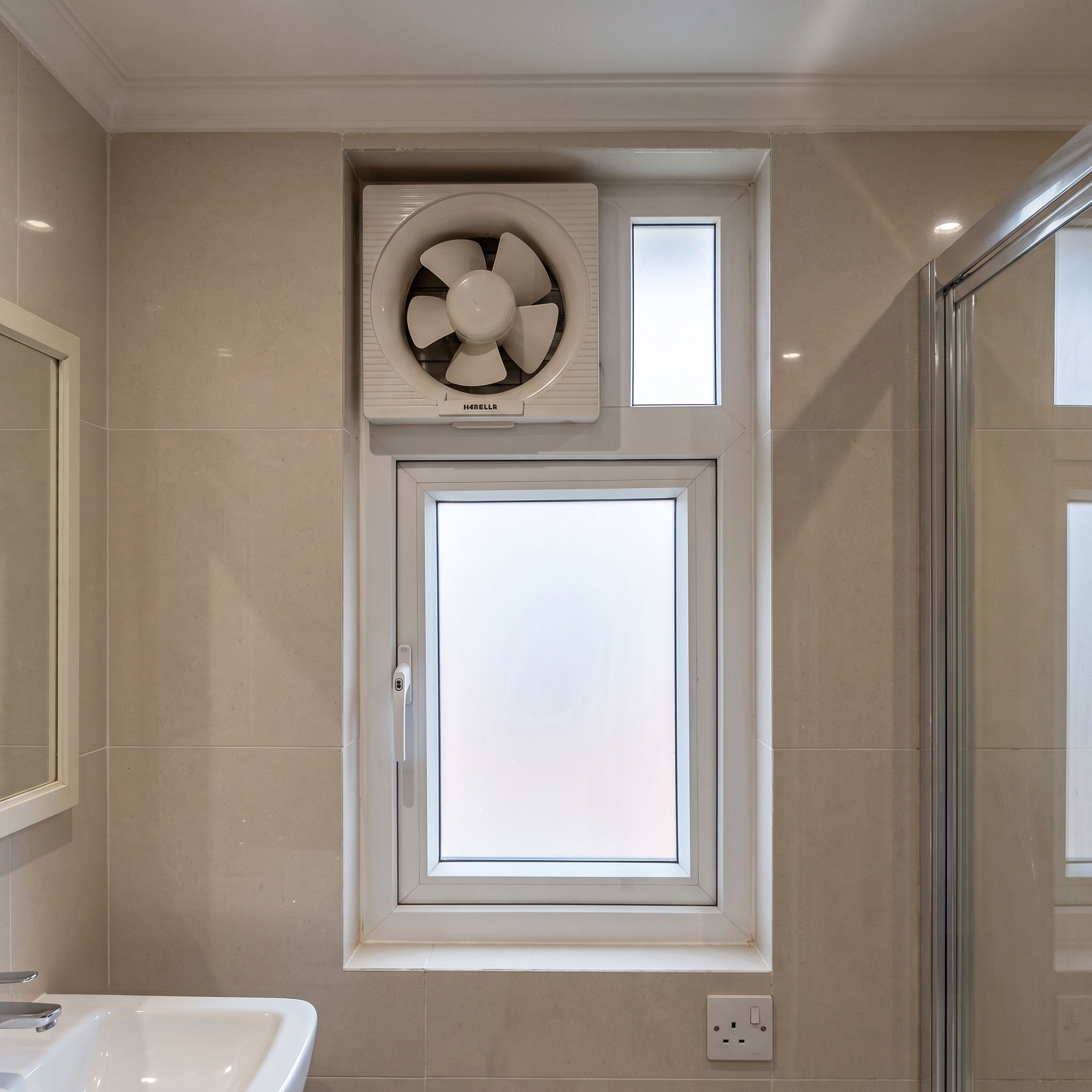
Side-Hung Ventilator with Integrated Exhaust Fan
Hinged on one side and fitted with a built-in exhaust fan, these ventilator windows provide both natural and mechanical ventilation. They are ideal for bathrooms and kitchens that require improved airflow and faster removal of moisture, smoke, heat, and odours.
Note: IndiFrame can provide Side-Hung Ventilator Window with Integrated Exhaust Fan windows for 2 ft (Width) x 3 ft (Height).
How to Choose the Right uPVC Ventilator Window for Your Home
Identify the Installation Location
Bathrooms, kitchens, staircases, utility rooms, and garages each have different ventilation and privacy requirements.
Select the Right Opening Style
Choose a top-hung, side-hung, or other suitable configuration based on the available space and ventilation needs.
Consider Ventilation Requirements
The size and placement of the ventilator should provide sufficient airflow for the room without over- or under-ventilating the space.
Choose the Appropriate Glass
Clear glass maximises daylight, while frosted or obscure glass offers greater privacy for bathrooms and utility areas.
Common Mistakes to Avoid When Installing Ventilator Windows
Here are some common mistakes homeowners and designers should avoid when installing ventilator windows:
Choosing the Wrong Size
An undersized ventilator may not provide enough airflow, while an oversized one can affect privacy or weather performance.
Ignoring Room Function
Bathrooms, kitchens, staircases, and utility rooms have different ventilation needs and should not all use the same ventilator configuration.
Overlooking Privacy Requirements
Using clear glass in bathrooms or other private areas can compromise privacy. Consider frosted or obscure glazing where needed.
Poor Placement for Airflow
Installing a ventilator where airflow is blocked or without a corresponding fresh-air inlet reduces its effectiveness.
Compromising on Hardware Quality
Inferior hinges, stays, or locks can lead to operational issues, reduced durability, and poor weather sealing over time.
Ignoring Professional Installation
Incorrect alignment, sealing, or fixing can result in air leaks, water ingress, and reduced overall performance.
Maintenance Tips for uPVC Ventilator Windows
Clean the Frames, Glass, and Mesh Regularly
Use a soft cloth with mild soap for the uPVC frames and a non-abrasive cleaner for the glass.
Keep the Hardware Clean and Lubricated
Remove dust from hinges, friction stays, and locking mechanisms, and lubricate them periodically to ensure smooth operation.
Inspect Seals and Hardware
Check weather seals, hinges, and locks for signs of wear or damage, replacing worn components promptly to maintain performance.
Operate the Window Carefully
Open and close the ventilator gently and periodically to keep the mechanism functioning smoothly while avoiding unnecessary strain on the hardware.
Schedule Routine Maintenance Checks
Have the window inspected occasionally, especially in coastal or high-use environments, to ensure it continues to perform efficiently and remains weather-resistant.
Final Thoughts
uPVC ventilator windows are often one of the most overlooked elements of home design, yet they have a direct impact on comfort, hygiene, and indoor air quality. Whether you need bathroom ventilator windows to remove moisture and maintain privacy or kitchen ventilator windows to exhaust heat, smoke, and cooking fumes, the right uPVC window for ventilation can make these everyday spaces healthier and more comfortable.
If you’re planning to install uPVC ventilator windows, it’s worth considering ventilation as part of the overall window design rather than as an afterthought. IndiFrame can help you choose the right ventilator window design, glass option, and placement for your bathroom, kitchen, staircase, or utility area. Speak to our team to find the most suitable uPVC ventilator window solution for your project.