


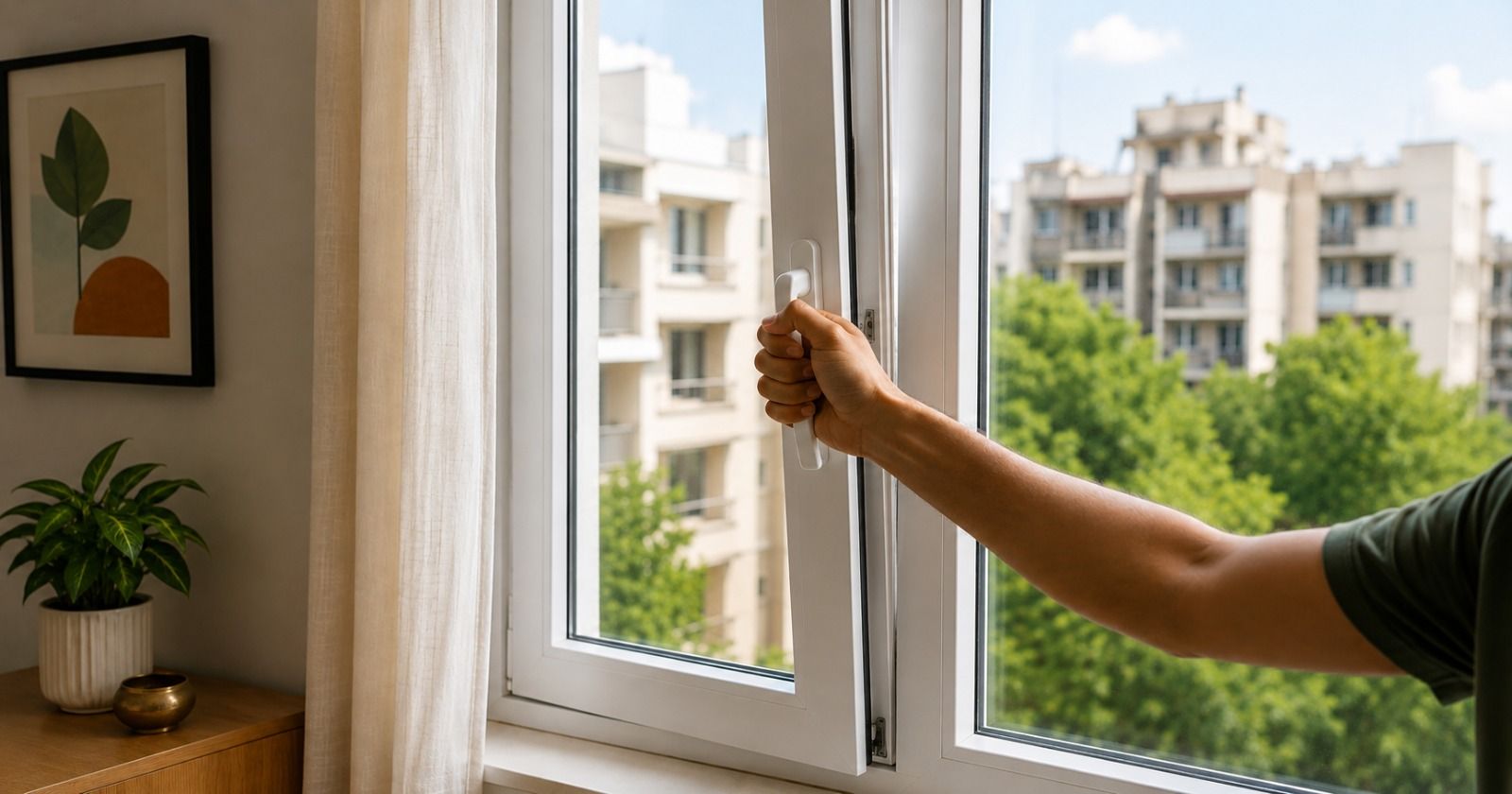
We all know the benefits of uPVC windows, but we hardly talk about the problems with them. And the most common problem with uPVC windows is that over time, they get stuck, are difficult to open, and sometimes don’t close properly.
And it’s quite common to develop such problems with uPVC windows over time due to dust accumulation in tracks, worn-out rollers, or improper installation. In most cases, you can easily fix these issues with simple cleaning, lubrication, or minor adjustments.
So, in this blog, we’ll be discussing all the exact causes of why you suffer from a uPVC window stuck problem, the right solution, and how to avoid costly repairs.
Why Do uPVC Windows Get Stuck?
uPVC windows are one of the most versatile and sturdy windows for almost every house. But it also has some limitations, like over time it gets stuck or jams. And there can be multiple reasons behind it, like dirt buildup, dried gaskets, broken gearbox, seized hinges, frame wrapping, and many others. But all these problems are fixable, and homeowners usually come across these problems after 10-15 years of installing the uPVC windows.
Common uPVC Window Problems Homeowners Face
There are multiple issues that homeowners face due to uPVC windows, such as:
1. Dirt & Dust Build-Up in Window Tracks
The accumulation of dust and dirt in the tracks is a common issue homeowners face with the uPVC window stuck problem. If you don’t clean your uPVC window tracks well, then it can cause stiffness and prevent smooth operation.
2. Hardware Issues (Hinges, Locks & Rollers)
Worn hinges, faulty locks, and damaged rollers are the most common hardware problems in uPVC windows. These issues develop gradually over time due to regular use, lack of lubrication, or general wear and tear. When left unaddressed, they can make the window difficult to open, close, or lock properly.
3. Frame Warping or Installation Problems
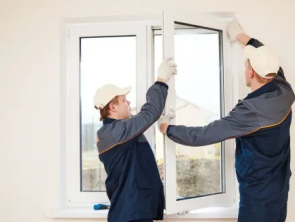
Poor installation or temperature changes over time can cause the uPVC frame to warp or misalign. When this happens, the window no longer sits squarely in the frame, making it difficult to close or seal correctly. This is one of the harder issues to fix at home and often requires a professional to realign or replace the frame.
4. Weather & Temperature Effects on uPVC Windows
uPVC frames expand and contract with changes in temperature over time. In extreme heat, the frame can swell and make the window stiff to open, while cold temperatures can cause it to contract and create gaps that let in drafts. Over years of repeated temperature cycles, this gradual movement can lead to warping, misalignment, and weakened seals, making the window harder to close and less energy efficient.
Simple Fixes for Stuck uPVC Windows
You can fix most stuck uPVC windows with simple maintenance. Clean the tracks regularly, apply silicone lubricant to the hinges and rollers, and check for any misalignment. If the sash has dropped, tightening the hinge screws with an Allen key usually does the job.
When to Repair vs Replace uPVC Windows
It’s important to know when to repair your uPVC window and when to replace it. If you are facing some minor issues like stiff hinges, a broken lock, or misted glass, then repairs will be a better option. But if your frame is warped, cracked, if the seals keep failing, or if the window is over 20–25 years old and no longer keeps the heat in, then there’s no point in repairing it; just replace it, as it will be a better option.
Tips to Prevent uPVC Window Issues
Here are some practical tips that you can follow if you want to prevent issues with your uPVC windows:
- Clean the tracks and frames of your uPVC windows regularly to prevent dirt buildup.
- Lubricate hinges, rollers, and locks of the uPVC windows with silicone spray atleast 2 times a year.
- Regularly check the seals and gaskets of your uPVC windows periodically for signs of wear and tear.
- Avoid slamming the window shut as it strains the hinges and gearbox over time.
- Replace your uPVC windows if they’re any older than 20-25 years.