


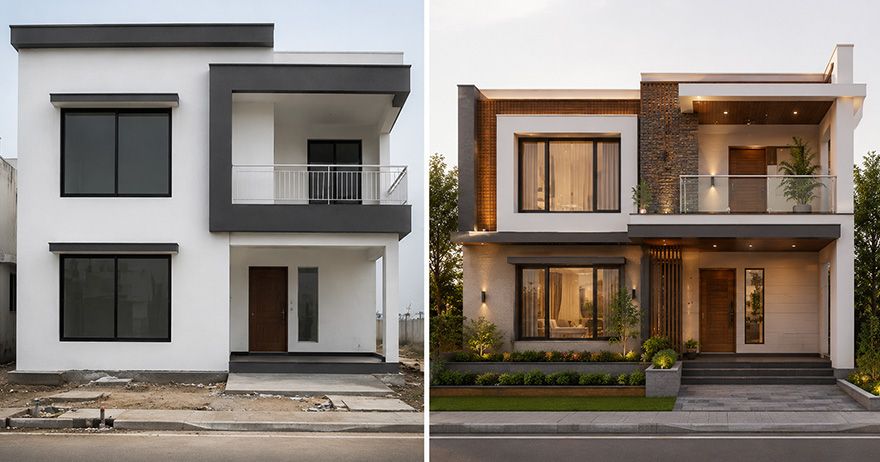
A house elevation is more than just the exterior appearance of a home. It influences curb appeal, natural lighting, ventilation, maintenance requirements, and property value. While many homeowners focus on aesthetics, overlooking practical design elements can lead to costly mistakes and a less functional home. Understanding the most common house elevation design mistakes can help you create an exterior that is visually appealing, climate-responsive, and timeless in style.
Why House Elevation Design Matters?
The elevation of your home is the first thing people notice. It creates the first impression and plays a major role in defining the character of the property. In India, where plot sizes, orientation and climate conditions vary significantly between cities and regions, it is essential to get the right house elevation design to balance aesthetics with practical realities.
A front elevation design for Indian homes that works in Pune may not match for a home in Hyderabad or Kolkata. However, when you learn how to design a house elevation, you will understand that it goes beyond appearance. It affects the following below.
- Natural light inside the home
- Ventilation and airflow
- Heat gain and energy efficiency
- Maintenance requirements
- Property value and resale appeal
The top 10 mistakes to avoid in house elevation design listed below are drawn from the most common gaps between what homeowners plan and what they actually end up with. Each one of these mistakes are obviously avoidable with the right decisions at the right stage of the design process.
Mistake #1: Ignoring Architectural Proportions
One of the biggest common house elevation mistakes is creating a facade with poor proportions.
Examples include:
- Oversized balconies
- Tiny windows on large walls
- Extremely tall entrance features
- Uneven design elements
When proportions are balanced, the house looks visually pleasing and well-planned. YOu need to ensure that windows, balconies, columns, and walls complement each other in size and scale.
Mistake #2: Poor Window Placement
Windows play a major role in how the house looks from outside and how it feels to live in.
- Poor placement can result in:
- Dark interiors
- Reduced ventilation
- Excessive heat gain
- Awkward exterior appearance
A carefully planned house elevation design should position windows to maximize natural light, privacy and comfort. Large windows often enhance modern exteriors, but they should always be placed according to room function and sun orientation.
Mistake #3: Choosing Trends Over Timeless Design
Many homeowners get influenced by short-term design trends. While trendy designs may look attractive today, they can appear outdated within a few years.
Instead of copying every social media trend, focus on:
- Clean architectural lines
- Balanced materials
- Neutral colour palettes
- Purposeful design features
The best exteriors combine current styles with long-term visual appeal rather than a collage of borrowed trends.
Mistake #4: Overusing Exterior Materials
When you combining too many materials, it creates a visual chaos.
On the same facade, some homeowners try to include:
- Stone cladding
- Wooden textures
- Metal panels
- Decorative tiles
- Multiple paint colours
Many successful modern exterior house design ideas rely on only two or three materials used thoughtfully. A simple material palette usually creates the elevation depth than excessive combinations.
Mistake #5: Neglecting Natural Light and Ventilation
The exterior should support comfortable interiors. If window openings are too small or poorly positioned, rooms may feel dark and stuffy.
Good elevation planning should offer:
- Cross ventilation
- Natural daylight
- Reduced dependence on artificial lighting
It is particularly important for Indian homes where temperatures can remain high for most of the year.
Mistake #6: Ignoring Climate and Sun Orientation
Climate is the most underweighted factor in house elevation design in India. A facade that works well in a cool climate may perform poorly in a hot region.
Things to Consider:
- Direction of sunlight
- Local rainfall patterns
- Wind movement
- Dust exposure
A house elevation design that ignores its climate context will require more maintenance and provide less comfort than one designed with these realities in mind.
Mistake #7: Designing an Oversized Facade
Bigger does not always mean better. Large decorative elements can make a home appear heavy and disproportionate.
Examples include:
- Excessively large columns
- Oversized entrance canopies
- Massive decorative panels
A thoughtfully designed facade often looks more premium than a larger but poorly proportioned one.
Mistake #8: Choosing High-Maintenance Finishes
Some materials look impressive initially but require frequent upkeep.
Examples include:
- Delicate exterior textures
- Poor-quality wood finishes
- Materials prone to staining
- Surfaces that fade quickly
It is one of the most overlooked home exterior design mistakes. Ask your architect or builder what the five-year maintenance expectation is for each finish on the elevation before committing to it.
Mistake #9: Overlooking Entrance Design
The entrance is often the focal point of the facade. A poorly designed entrance can affect the overall appearance of the home.
A strong entrance should include:
- Clear visual identity
- Proper lighting
- Weather protection
- Easy accessibility
Many of the best house front elevation designs balances shelter, scale, security, and visual invitation.
Mistake #10: Forgetting Future Maintenance Needs
Homeowners often focus on how the elevation will look on day one rather than five years later.
Consider:
- Cleaning requirements
- Paint durability
- Access for repairs
- Weather resistance
Common house elevation design mistakes in this category are almost invisible at handover time and painfully visible at three or four years. Planning ahead can save more money later.
Key Elements of a Well-Balanced House Elevation
A successful elevation combines several design principles.
Important elements include:
- Proper proportions
- Balanced material selection
- Effective window placement
- Natural ventilation
- Strong entrance design
- Climate-responsive planning
- Durable finishes
- Maintenance and long-term value
- Consistent architectural language
Modern House Elevation Trends for 2026
In 2026, current design trends focus on simplicity, functionality, and sustainability.
Popular modern house elevation design ideas include:
- Clean geometric forms
- Large windows
- Intergration of greenery
- Minimal ornamentation
- Neutral colour palettes
- Mixed natural materials
- Energy-efficient design features
Many homeowners are incorporating contemporary house elevation design concepts that combine aesthetics with long-term performance.
How Windows Impact House Elevation Design?
Windows are among the most important visual elements of any elevation. They influence
symmetry, natural light, ventilation, energy efficiency and exterior appearance. The table below shows how different window configurations affect elevation design outcomes.
| Window Configuration | Elevation Effect | Best Suited For | Consideration |
|---|---|---|---|
| Full-height glazing | Creates openness and visual weight of glass dominates | Living rooms and view-facing walls | Needs solar control glass |
| Horizontal band windows | Elongates the facade and creates a modern appearance | Double-storey elevations and bedrooms | Alignment across floors is critical |
| Vertical strip windows | Adds height and works well for stairwells | Tall narrow openings | Privacy consideration needed |
| Punched windows standard openings | Classic balanced look that suits traditional and modern styles | Bedrooms study rooms and rear facades | Proportion and alignment are essential |
| Corner glazing | Dissolves the corner and creates a dramatic effect | Contemporary homes with strong views | Structural and sealing complexity |
The elevation design tips for new homes increasingly treat windows as the primary architectural gesture. Getting the window specification right, in terms of both proportion and glass performance, is therefore inseparable from getting the elevation design right.