


Most homeowners start noticing the hardware of their doors and windows when they become difficult to move or stiff. And in most cases, the quality of the hardware is not the problem, but the lack of maintenance is.
That’s why regular lubrication of window and door hardware is important. It helps prevent sticking, squeaking, excessive wear, and operating difficulties. The components, such as rollers, locks, hinges, handles, and sliding tracks, require timely maintenance to ensure smooth performance and extend their lifespan.
Lack of maintenance, dust, moisture, and everyday use increase friction and reduce the efficiency of the hardware over time. And by using the right lubricant and following a simple maintenance routine, you can keep your windows and doors operating smoothly while avoiding costly repairs and premature hardware replacement. And that’s what we’ll be discussing in this blog.
Why Window and Door Hardware Maintenance Matters?
People don’t notice, but hardware is the real hero of our window and door systems. We may invest in premium glass, elegant frames, or sturdy materials, but if the rollers of the windows are jammed or the locks aren't working properly, the entire system will collapse.
The maintenance of hardware is often sidelined because the hardware deterioration rarely happens overnight. But it happens quietly. It starts with dust settling into the tracks, rollers losing lubrication, etc.
All these changes happen gradually, and many homeowners adapt to the inconvenience instead of addressing the root cause. But neglected hardware doesn't just affect convenience. It can impact the overall security and safety of our homes.
What Happens When Hardware Isn't Lubricated?
Just imagine riding a bicycle, and its chain that hasn't been oiled for years. What will happen? It will resist movement. The same goes for hardware that has not been lubricated for years. And over time, the friction wears down the metal itself.
The rollers, hinges, locks, and handles lose lubrication, and friction increases. And due to the constant accumulation of debris and dust, the hardware gets further damaged, resulting in:
- Windows are becoming difficult to open
- Rollers, locks, and frames get damaged
- Sliding doors stop gliding smoothly
- Locks become stiff or unreliable
- Hinges start squeaking
And if you delay hardware lubrication for years, you have to replace the entire frame.
Which Window and Door Components Need Lubrication?
Not every part of your window and door needs lubrication, but most do. And using the correct lubricator is also important, as it can deliver excellent results and extend the life of your hardware system. And window and door components that need lubrication are:
Window Rollers
Window rollers are used in sliding windows for a smooth sliding operation. These small wheels carry the entire weight of the sash and are constantly exposed to dust, dirt, and moisture. This results in rollers becoming dry or clogged, and windows becoming difficult to slide.
Sliding Door Rollers
Sliding doors are way heavier than sliding windows, and the rollers on sliding doors endure greater stress. And, if your sliding doors are suddenly feeling heavier, then it’s time for lubrication. In many cases, due to regular wear and tear, the dirt gets built up, and the rollers get dry, and that’s when you need to lubricate the rollers to reduce friction and to extend the lifespan of the sliding system.
Locks and Multi-Point Locking Systems
Almost all modern uPVC and aluminium windows have multi-point locking systems with multiple moving parts. And these systems rely fully on locking cams, gears, hooks, internal springs, and cylinders. And for such a system, we have to use the lubricants that repel dust rather than attract it.
Handles and Cranks
We all have that door and window that has become harder to turn, and we assume the handle is defective. But usually the reason is friction. Window cranks, casement handles, and door handles have internal moving components that benefit from occasional lubrication to maintain smooth operation.
Hinges and Friction Stays
Widows and doors that open outwards depend heavily on hinges and friction stays. And without regular lubrication, the hinges start squeaking, movement becomes tough, and the components start to corrode. But we can stop this by adding a few drops of lubricant to improve operation and reduce wear.
Window Tracks
Most homeowners believe that window tracks require heavy lubrication. But in reality, excessive oil lubrication attracts more dust and creates a sticky surface that worsens the performance of the tracks. That’s why you need to remove dirt and debris with the help of a vacuum or a cloth. Then you need to apply a light silicone-based lubricant, and that too if recommended by the manufacturer.
Best Lubricants for Window and Door Hardware
There are different types of lubricants that are used for different components of windows and door hardware. And here’s the list of a few, along with their usage:
- Silicone lubricators for the tracks of sliding windows and doors
- Dry lubricants for keyholes and other lock mechanisms
- Heavy-duty lubricants for heavy-duty door hinges
How to Lubricate Window Rollers Correctly?
Follow these simple steps to easily lubricate your window rollers:
- Start by cleaning your window rollers with the help of a vacuum or brush.
- Then take some not-so-harsh soapy water and a clean cloth.
- Then, dry the area with the help of a dry cloth or a dryer.
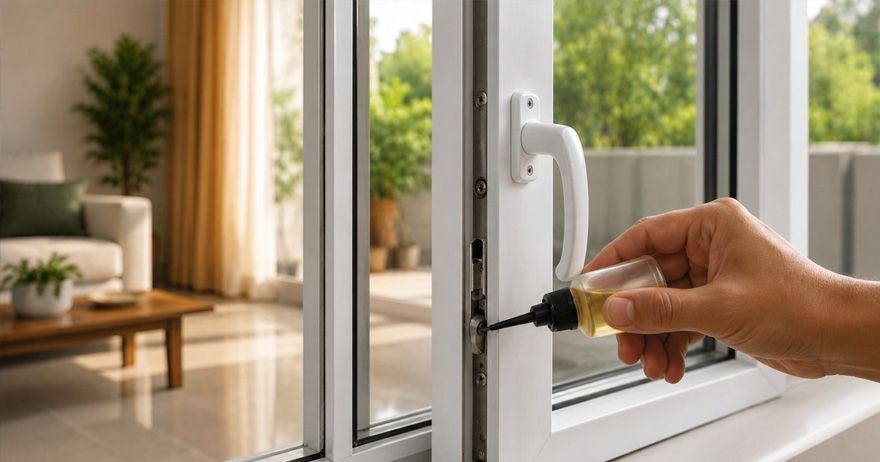
- Then apply the silicone lubricant evenly.
- Also, make sure you are not using the lubricant on glass, as it’s hard to clean the stains.
How to Maintain Door Locks and Handles?
If don’t know, how to lubricate door locks and handles, then you need to start by cleaning them with a damp cloth atleast twice a month. Then, tighten loose screws every six months, and lubricate the internal mechanisms of your door to keep them working for a long time. And make sure you are always using a dry silicone spray or graphite powder, as they are not sticky and don’t allow dust and debris to stick. Also, avoid oil-based greases at all costs as they attract dirt and jam locks.
Common Window Hardware Problems and Solutions
Check out the table below to understand the common hardware problems and their practical solutions:
| Problems | Solutions |
|---|---|
| Stiff Window Cranks | Apply lithium grease or dry silicone spray |
| Misaligned Sliding Doors | Spray a silicone-based lubricant along the tracks |
| Windows not opening | Check the coil balance and replace it if required |
| Loose Window Locks | Fix the screws or replace the entire lock if required |
How Often Should Windows be Lubricated?
It’s usually advised to lubricate windows and doors once or twice a year. But if your doors and windows get heavy daily use, then you need to do maintenance every 3 to 6 months. And it’s best to lubricate in the spring season to clean off winter grime and autumn to prevent friction before freezing temperatures arrive.
Signs Your Hardware Needs Replacement
Here are some signs that it’s time to replace your hardware:
- If there are visible rust and corrosion signs
- If your window systems have loose or faulty locks
- Unresponsive crank handles
- Difficulty in opening or closing doors and windows
- Windows that won't stay open
uPVC Window Maintenance Guide for Long-Term Performance
Follow these tips on how to maintain window hardware long-term performance of your uPVC windows:
- Clean your windows and glass regularly
- Lubricate all the moving parts of your windows 3-4 times a year
- Clean the seals with a damp cloth and apply a silicone-based conditioner regularly
- Clear the drainage holes
- Don’t slam your windows too hard