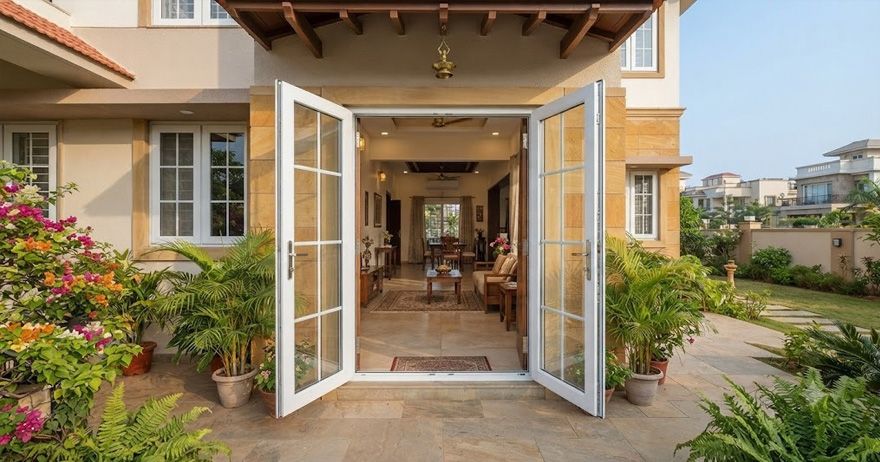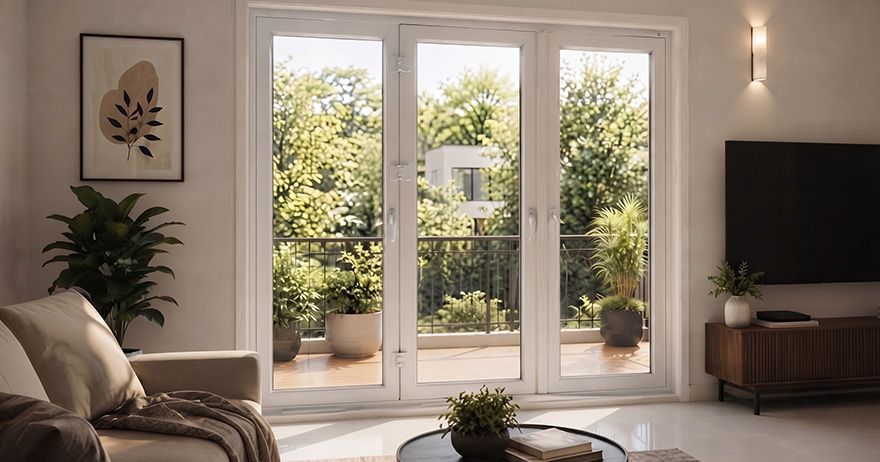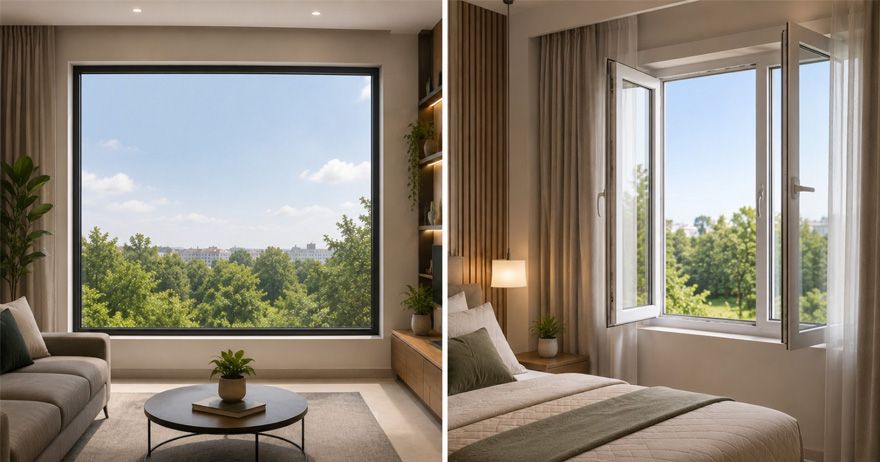




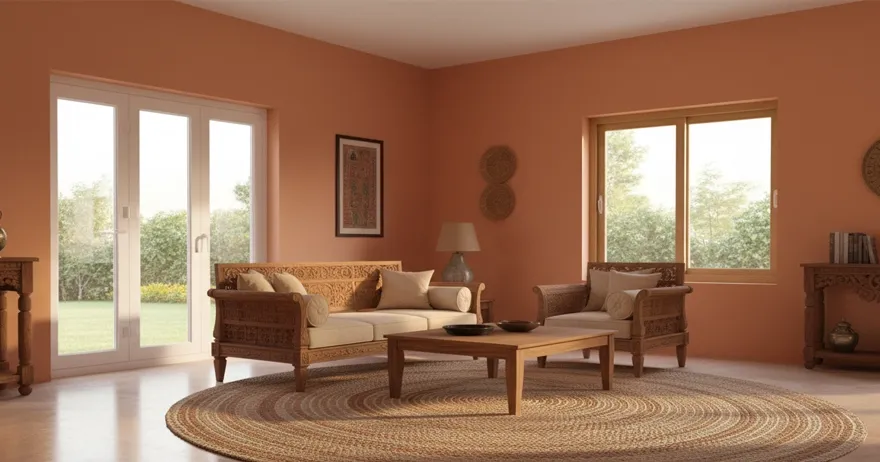
If your room feels so stuffy, outside noise is crystal clear, and the new frames already need fixing, the material choice of your windows and doors could be the culprit. It’s not the workmanship issues all the time.
Some materials are not suitable for Indian weather, even if they look solid at the start. And that’s why uPVC is a better choice. It is developed to handle heat, moisture, reduce maintenance and improve comfort over time.
In this blog, we will explore what uPVC windows and doors are, how they work, where they perform best, and how to decide if they are right for your home.
What Are uPVC Windows And Doors?
uPVC stands for unplasticised polyvinyl chloride. It is a rigid, engineered plastic material used to make window and door frames. Unlike regular PVC, uPVC contains no plasticisers, which makes it incredibly strong and weather-resistant.
The uPVC frames hold glass panels tightly using gaskets and internal chambers, and work as a sealed system. When installed correctly, this system controls air flow, heat movement, and sound entry.
uPVC windows and doors in India have gained popularity because they address common local problems- high temperatures, monsoon moisture, and outside noise. uPVC handles these without needing constant attention.
In simple terms,
- uPVC is a rigid, weather-stable material
- It is designed as sealed systems, not loose fittings
- Manufactured to handle Indian climate conditions consistently
What Are The Key Benefits Of uPVC Windows And Doors?
Energy Efficiency
uPVC windows act as thermal insulators, keeping your home cool in summer and warm in winter. The multi-chambered design prevents heat transfer, reducing your dependence on the AC.
- Cuts cooling costs by 25% to 30%, compared to aluminium windows
- Multi-chambered frames trap air, creating natural insulation
- Double-glazed glass reflects up to 80% of external heat
- Supports steady indoor comfort
Low Maintenance
Polishing wood or repainting metal becomes a repeating task. uPVC removes this concern almost entirely.
- No painting, varnishing, or rust treatment needed
- Colour stays intact for 20+ years without fading
- Requires just occasional cleaning with soap and water
Durability & Weather-Resistance
Indian weather is demanding. Strong sunlight, heavy rain, and humidity test every material. uPVC is engineered to handle this stress without warping, cracking, or corroding. This stability gives homeowners long-term peace of mind.
- Does not swell or shrink
- Moisture-proof with excellent water-tightness
- UV-resistant material prevents yellowing in intense sunlight
Security
Multi-point locking systems and reinforced frames make uPVC windows and doors highly secure.
- 5 to 7 lock points
- Steel-reinforced frames resist forced entry
- Toughened glass options are available for added protection
Sound Insulation
Poorly sealed windows allow outside noise to travel straight indoors. uPVC windows and doors reduce external noise pollution by creating a tighter seal between indoors and outdoors.
- Reduces outside noise by 30 to 40 decibels
- Double-glazed glass blocks traffic and street sounds
- Creates a peaceful indoor environment for better sleep and focus
Eco-friendly
uPVC is 100% recyclable and reduces your home’s carbon footprint through energy savings.
- Long lifespan reduces replacement waste
- Reduces carbon emissions by lowering AC usage
- No harmful chemicals or wood cutting involved
Fire Resistance
uPVC has natural resistance to fire spread. It does not fuel flames and self-extinguishes once the heat source is removed.
- Self-extinguishing properties are suitable for apartment living
- Does not emit toxic fumes or drip burning material during exposure to heat
- Meets international fire safety standards
Cost Effective
While the upfront cost is higher than some alternatives, uPVC offers excellent long-term value through savings on maintenance and energy bills.
- Zero to minimal maintenance costs over 20+ years
- Energy savings recover the initial investment in 5 to 7 years
- Increases property resale value
Where And How uPVC Windows And Doors Work The Best?
uPVC systems adapt well across different rooms because their performance stays consistent.
Living rooms: uPVC windows and doors help control heat and noise, making the space more comfortable throughout the day.
Bedrooms: uPVC frames help in sound insulation and temperature control that improves your rest quality.
Kitchens: uPVC frames benefit from moisture resistance.
Bathrooms: uPVC frames do not rust or rot, as they are completely waterproof and humidity-resistant.
Balconies and utility spaces: uPVC frames stay protected from rain and dust without the need for constant upkeep.
Things To Consider Before Installing uPVC Windows And Doors
- Look into your region’s specific weather. Coastal areas need extra corrosion resistance, while colder regions need better insulation.
- Choose ISI-marked products from reputable manufacturers like IndiFrame. Low-grade uPVC can yellow or deteriorate quickly in Indian conditions.
- Choose single-glazed for mild climates, double-glazed for extreme heat, and triple-glazed for maximum insulation and noise reduction.
- Hire a certified installer who understands waterproofing and structural requirements.
- Check available colours, finishes (wood grain, matte, glossy), and hardware options to match your home’s design.
- Look for a minimum 10-year warranty on frames and 5 years on hardware with reliable after-sales service.
uPVC Vs Other Materials
| Feature | Wood | Aluminium | Steel | uPVC |
|---|---|---|---|---|
| Weather resistance | Low | Medium | Low | High |
| Maintenance needs | High | Medium | High | Low |
| Heat insulation | Medium | Low | Low | High |
| Noise control | Medium | Low | Low | High |
| Corrosion or decay risk | High | Medium | High | Very low |
| Long-term stability | Variable | Moderate | Variable | Consistent |
Which Option Is Better For You?
Choose uPVC if you want low maintenance, energy efficiency, and long-term value. It is ideal for most Indian homes, especially in extreme climates.
Why Choose IndiFrame For uPVC Windows And Doors?
Your home reflects who you are, and the last thing you need is doors or windows that fail or frustrate. IndiFrame makes upgrades simple, steady, and dependable, so your space feels right every day, without the usual stress.
Final Takeaway
Windows and doors are usually chosen once and lived with for years. Yet they are often decided quickly, based on price, appearance, or what a contractor suggests.
When they fail to perform, we rule our choice. So, understanding how materials behave helps you avoid regret later.
uPVC windows and doors are most preferred because they remain stable during heat, rain and daily use. When chosen and installed correctly, they reduce maintenance and avoid common performance issues later.
Check out uPVC windows price in Hyderabad!