



Does your house gets dusty quickly even after cleaning and shutting all the windows, yet you still notice a layer of dust within hours? It can be frustrating and feel like your efforts are going to waste.
But guess what, this is not just your problem; most homeowners in India suffer from this issue. Even after closing all the doors, a layer of dust can still enter through tiny gaps, poor sealing, and air leakage around windows and doors.
Most homes in India are not fully airtight. And in cities and even semi-urban areas, factors like traffic, construction, and dry weather only make the situation worse. So, in this blog, we will try to understand how dust enters a closed house, which is the first step toward solving the issue.
How Does Dust Enter a Closed House?
Dust buildup in closed room is a common problem. Factors like microgaps, air pressure movement, ventilation points, and structural cracks are the biggest reasons.
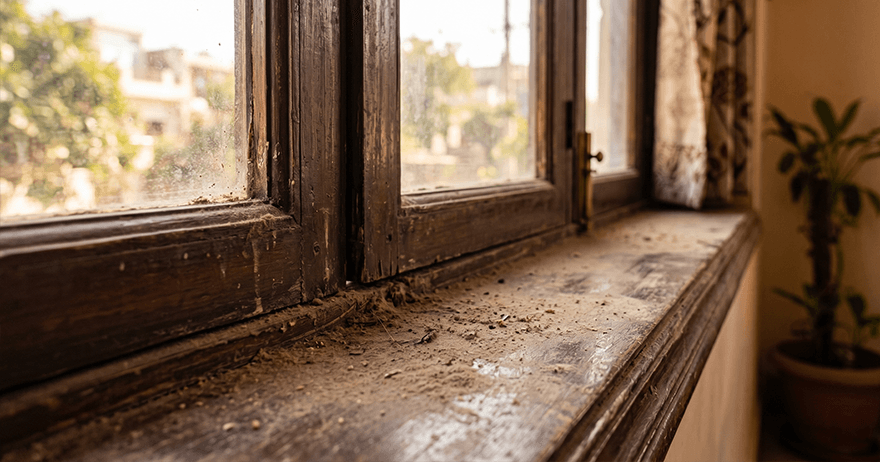
- Micro gaps in windows & frames: Even tightly shut windows have tiny openings through which dust enters your home.
- Air pressure movement: Air always moves from high pressure to low pressure, and it also carries dust with it. So if you’re wondering, if air brings dust inside the house, it absolutely does.
- Ventilation points: We all have ventilation points in our house, like exhaust fans, AC ducts, and vents that often pull in outside air.
- Structural cracks: Small gaps in walls, ceilings, or flooring can also contribute to letting in the dust.
What Causes Excess Dust Inside Your House?
Sometimes, the issue isn’t just outside dust entering your home; it’s also what’s being created inside.
- Fabric shedding: Curtains, upholstery, and carpets release fibers
- Human activity: Skin flakes and hair contribute heavily to indoor dust
- Paper dust: Books, newspapers, and packaging materials
- Improper cleaning: Dry dusting spreads particles instead of removing them
This is why many people feel like dust collects so fast, even after cleaning.
How to Stop Dust From Entering Your Home?
If your main concern is how to stop dust coming from windows or reduce overall dust, here are some practical solutions that you can follow:
- Prevent dust from entering through windows and doors by sealing all visible gaps.
- Use weather stripping/rubber beading to seal around edges.
- Install dust screens or mesh/steel filters in your windows.
- Keep windows & doors closed during peak dust time.
- Invest in vacuum cleaners to clean better and to help keep your surfaces clean.
If you want to seal your windows from dust, concentrate on improving the sealing material & frame quality first before just using temporary fixes.
Best Window Solutions to Prevent Dust Entry
When basic fixes don’t work, your windows might be the real issue.
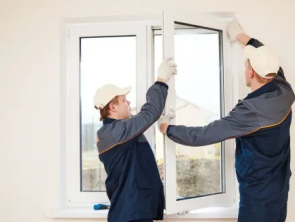
If you’re searching for the best windows to prevent dust in India, modern uPVC windows are one of the most effective solutions. They are designed with multi-point locking and tight sealing systems that significantly reduce air leakage.
This also answers a common question: do uPVC windows reduce dust? Yes, they help minimize dust entry by creating a much tighter seal compared to traditional wooden or aluminum windows.
How to Make Your House More Dust-Proof?
While the claims of 100% dust free homes are merely claims, as it’s not possible to keep any house 100% dust free. But you can definitely make it more dust-resistant by:
- Upgrading to airtight window systems
- Reduce clutter and fabric-heavy décor inside your house.
- Regularly cleaning surfaces using microfiber clothes
- Maintaining proper ventilation with filters
- Regularly checking and fixing leaks or gaps
If you’ve been wondering how to make house dust proof, the key is combining better infrastructure with smarter cleaning habits.
Even when they're closed, windows can be a common source of incoming dirt and can create dust problems in your home. If you're experiencing a continuous accumulation of dust or just can't figure out how to keep the inside of your house clean, you need to look at airflow, sealing, and what comes inside your home.
Once you understand the source of your dust, you'll be able to implement the appropriate solutions to substantially lower dust levels and develop a cleaner and healthier environment inside your home.