


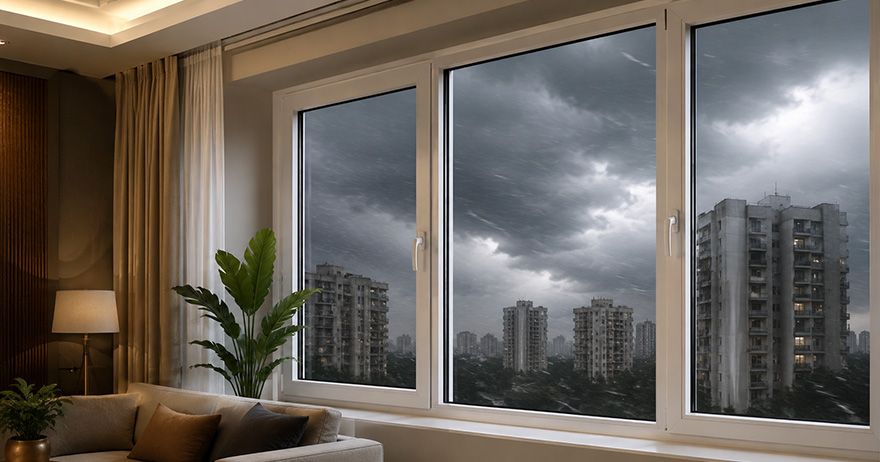
Windows rattling in wind or whistling during storms happen when air leaks through gaps, seals deteriorate, hardware becomes loose, or the window system cannot withstand wind pressure. High-rise apartments are especially vulnerable because wind speeds increase with building height.
Proper sealing, quality hardware, reinforced frames, and airtight window systems can significantly reduce wind noise, rattling, and air infiltration. Modern uPVC windows with multi-point locking systems and weather-resistant seals are designed to perform better during storms and high-wind conditions.
Why Do Windows Whistle And Rattle During High Winds?
If you are wondering why do windows whistle in the wind, it is because when wind hits your window at high speed, it creates a pressure difference between the outside and inside of your home. This difference in pressure pulls indoor air outward through any small gap it can find.
When air squeezes through a narrow opening, like a gap in your window frame or a worn-out seal, it creates small spinning air currents called vortex shedding. When these spinning currents repeat at a steady pace, they produce a clear whistling sound.
The size of the gap decides the pitch. A smaller gap gives a higher-pitched whistle. A larger gap gives a lower, rumbling windows rattling in wind.
How Wind Pressure Affects High-Rise Buildings
Wind speed increases with height. Air close to the ground is slowed down by trees, buildings, and other surfaces. As you go higher, there are fewer obstacles, so wind moves faster and hits your windows with more force.
High-rise buildings also experience the stack effect, where warm air inside rises and escapes through upper-floor gaps, while outside air gets pulled in through lower floors. This constant movement of air through any available gap in your window seal makes whistling worse, especially during monsoon storms or winter months when the temperature difference between inside and outside is bigger.
Common Causes Of Windows Rattling In Wind
Wind noise coming through windows could be because of any of the following reasons.
Air Leaks Around Window Frames
The most common reason windows whistle is a gap between the window frame and wall. Over time, the filler material (putty or sealant) around the frame dries out, cracks, and falls away. This leaves a direct path for wind to enter. Even a gap of a few millimetres is enough to cause a whistle at wind speeds above 30 to 40 km/hr.
Damaged Weather Seals
Weather seals are the rubber or foam strips that run along the edges of your window. These seals compress when you close the window, blocking air. With regular use and sun exposure, they harden, shrink, or tear. Once they lose their ability to compress properly, air slips through and whistles.
Loose Window Installation
Latches, hinges, and handles keep the window pressed tightly against its frame. When these become loose or worn, the window sits slightly away from the frame even when closed. The small gap is all wind needs to get in.
Poor Window Installation
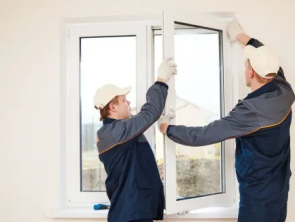
If you are wondering why do windows shake in strong winds, rattle or whistle, it is because of poor installation. A window that is not installed properly starts to whistle and rattle for its entire life. If the frame is not perfectly level and square within the wall opening, or if the gap between the frame and wall is not sealed properly, air will find its way through.
Structural Movement
Buildings expand and contract with temperature changes throughout the year. In India, where temperatures can swing between 10°C in winter and 45°C in summer, this movement is very likely to happen. Over the years, it slowly shifts window frames out of alignment, opening up new gaps and loosening seals that were once tight.
How To Stop Windows Rattling In Wind?
Here is how to stop windows rattling during storms.
- First things first, tighten any loose screws on latches and hinges. Press the window firmly shut and check if the rattle stops. If it does, the latch just needs adjustment or replacement.
- Next, look for the exact source of the leak. Hold a thin strip of paper or a stick of incense near the edges of your window on a windy day. Wherever the paper moves or the smoke bends, that is your leak points. Mark those points.
- Once you know where the gaps are, clean the area, remove any crumbling old sealant, and apply a fresh layer of silicone sealant along the outside edge. For gaps between the moving sash and the frame, replace or add weather stripping.
This is how to fix air leaks around windows, which will prevent rattling.
Best Sealing Solutions For Windows Rattling In Wind
Here are the top three window sealing solutions.
- Silicone sealant: It is the best choice for sealing the gap between the window frame and the wall. It stays flexible, does not crack in heat, and lasts for several years. Apply it to the outer edges. This is the best window sealing for high winds.
- Foam tape: It is a self-adhesive strip you stick along the inner edges of the frame where the sash closes against it. It is inexpensive, easy to apply, and works well for small and uneven gaps. It lasts one or two years before it needs to be replaced.
- Rubber or EPDM bulb sets: These are more durable than foam tape and create a tighter compression seal. They can last for five years or more with regular use. This is how to reduce wind noise through windows.
Weather Stripping Vs Complete Window Replacement
Go with weather stripping for windows if,
- Your window frame is in good condition
- The glass is intact
- Hardwares work properly
- The whistling started recently and happens only in very strong winds
Go for window replacement if,
- The frame is warped, cracked, or rotted
- The glass is single-pane, because of which you lose a lot of heat or cool air
- You have tried sealing, but the problems keep coming back
- Your electricity bills keep increasing despite trying every other window sealing solution
Why Airtight Windows Reduce Wind Noise
When the windows are fully airtight, there is no path for air to push through, so there is no vortex shedding and no whistle. Though the glass itself can vibrate in very strong winds, it is far quieter than air being pushed through a narrow gap.
If you are looking for good-quality airtight windows for noise reduction, uPVC windows with multi-chamber frames and compressed rubber seals are noticeably quieter than standard aluminium windows. The seal quality is the difference, not just the glass.
Best Windows For High Rise Apartments
For high-rise apartments, these features matter the most.
- uPVC or thermally broken aluminium frames: They do not expand and contract as much as aluminium. They keep the seals tight through seasonal temperature changes.
- Double-glazed glass: It uses two panes of glass with a sealed air or gas gap between them. This not only reduces noise but also keeps interiors cooler in summer by blocking heat transfer.
- Multi-point locking systems: They press the window sash against the frame at multiple points along the height, not just at one central latch. This ensures the entire seal is compressed evenly, removing the small gaps that cause whistling.
Storm-Resistant Window Features To Look For
If you are from coastal cities or areas prone to cyclones and heavy monsoons, you should be getting windows that are storm-resistant. Here are some features to look for,
- Impact-rated or laminated glass
- Fusion-welded frame corners on uPVC windows
- Test wind load ratings on product specifications
- Drainage systems built into the sill
Why Should You Replace Old Windows?
Replace your windows when you see any of these signs.
- Your window frame is visibly warped, soft to touch, or shows rot.
- You see fogging or condensation between two panes of glass in a double-glazed unit.
- The windows cannot close fully, or the latch no longer holds it shut.
- Water is getting inside your home around the window frame even after you have re-sealed the outer edges.
- Your current windows are single-pane aluminium, are more than 15 years old, and the seals, hardware, and frame alignment have degraded.
If your windows are in any of these conditions, replace them with uPVC double-glazed windows with proper seals and multi-point locking systems to reduce whistling and rattling during storms.