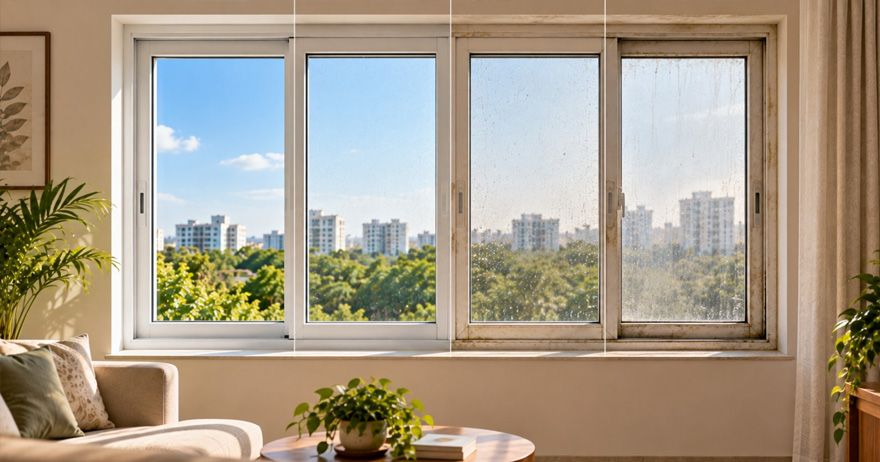




Choosing the right track system depends on room size, ventilation needs, and budget. In
What Are Sliding Window Track Systems?
When you slide a window open, it moves along grooves built into the frame. Those grooves are called tracks. The number of tracks a window has determines how many panels it can hold and how wide you can open it.
In India, you can see homes using one of these three options: 2-track, 2.5 track, and 3 track windows. Each one suits a different need, and choosing the wrong one can lead to poor ventilation, no mosquito protection, and a waste of money.
In this blog, we will explore the differences between 2 track vs 3 track windows.
What Is A 2 Track Sliding Window?
A 2 track sliding window has two grooves and two glass panels. One panel stays fixed, and the other slides. When you fully open it, half the window is open, and the other half is still, covered by the fixed glass. It works well for kitchens, smaller bedrooms, and rooms where the window opening is not very wide.
Keep in mind that there is no groove for a mosquito mesh in a 2 track window. If you want mesh protection, you have to add a separate frame outside.
What Is A 2.5 Track Window?
A 2.5 track sliding window looks similar to a 2 track window but has one extra narrow groove for the mosquito mesh panel. You can find two glass panels that slide and a mosquito mesh sliding windows that slides separately on its own groove. You can open the glass, slide the mesh across, and keep insects out without any extra fitting outside the window.
2 track window design works well for bedrooms and balconies where you want to keep the window open but do not want mosquitoes to come in.
Keep in mind that the glass still opens only halfway, just like a 2 track window. The extra groove is just for the mesh and does not improve ventilation.
What Is A 3 Track Sliding Window?
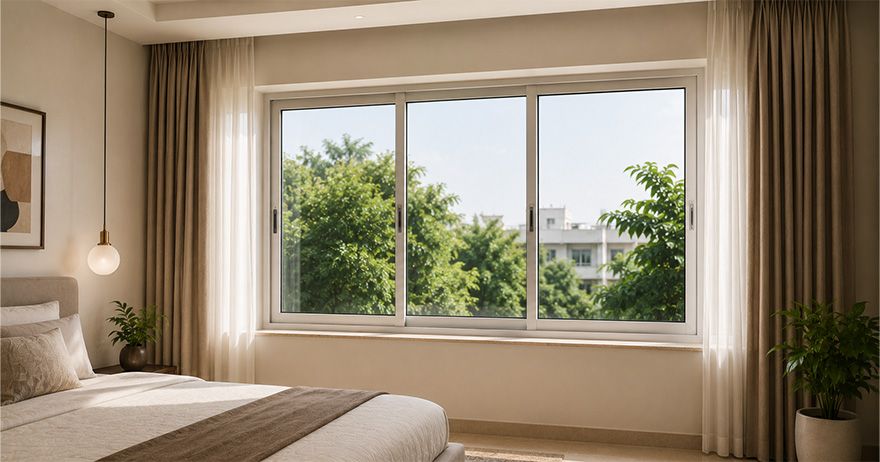
A 3 track sliding window has three full grooves, each wide enough to hold a glass panel. This means two panels can slide open at the same time, and you can open the window much wider, about two-thirds of the total width instead of half. 3 track sliding windows benefits also include a mosquito mesh on one of the three grooves.
It works well for licing rooms, large balconies, and any room where you want good airflow throughout the day.
Keep in mind that the frame is thicker from front to back, so it needs a slightly deeper wall opening.
Key Differences Between 2, 2.5 & 3 Track Windows
Here is the difference between 2 and 3 track windows.
| Feature | 2 Track | 2.5 Track | 3 Track |
|---|---|---|---|
| Number of grooves | 2 | 3 (one narrow) | 3 (all full-width) |
| Glass panels | 2 | 2 | 3 |
| Built-in mosquito mesh | No | Yes | Yes |
| How much it open | ~ 50% | ~ 50% | ~ 66% |
| Frame thickness | Thinnest | Medium | Thickest |
| Best suited for | Small rooms | Bedrooms; balconies | Living rooms; wide openings |
| Cost | Lowest | Mid | Highest |
2 Track Vs 3 Track Windows: Which Window Track System Offers Better Ventilation?
A 3 track window system offers better ventilation because its two panels can slide open at the same time. A 2 track or 2.5 track window can only open halfway.
While a 2.5 track window system is a practical choice for most Indian homes, if your room gets stuffy in the afternoon, or if you live in a hot city, a 3 track window system will genuinely make your room feel more comfortable.
Space, Mesh & Maintenance Comparison
Does it fit your wall?
A 2 track and 2.5 track window fits even thin walls without any issue.
A 3 track window needs a slightly deeper wall because of the extra groove.
Mosquito mesh
A 2 track window has no built-in mosquito mesh. You have to attach one separately from outside, which looks bulkier and is less convenient to use.
A 2.5 track and 3 track window comes with a sliding mesh panel that is part of the window itself.
Cleaning and upkeep
More grooves mean more places for dust and dirt to collect.
A 2 track or 2.5 track window is the easiest to clean.
A 3 track window needs more frequent attention, especially the grooves, to keep the panels sliding smoothly without getting stuck.
Cost Difference Between Sliding Window Track Types
Here is the cost difference between 2 track vs 3 track windows.
| Window Type | Approximate Price Range |
|---|---|
| 2 Track (No mesh) | INR 500 to INR 700 per sq ft |
| 2 Track (With external mesh) | INR 600 to INR 800 per sq ft |
| 2.5 Track (With built-in mesh) | INR 650 to INR 900 per sq ft |
| 3 Track (With mesh) | INR 900 to INR 1200 per sq ft |
In the sliding window comparison, the cost difference between a basic 2 track and a 3 track window works out roughly to INR 3,000 to INR 8,000 per window.
Which Track Window Is Best For Your Home?
If you are wondering which one to choose between 2 track vs 3 track windows,
- Go with a 2 track sliding window if your room is small, your budget is tight, and you do not need a built-in mesh. It is simple, affordable, and easy to maintain.
- Go with a 2.5 track sliding window if you want mosquito protection without paying for a full 3 track setup. It is the most sensible choice for bedrooms, kitchens, and mid-sized balconies.
- Go with a 3 track sliding window if you have a large living room or a wide balcony, and airflow is important to you. Though it costs more, the ventilation is great for sunny afternoons. It is the best sliding window track system overall.