


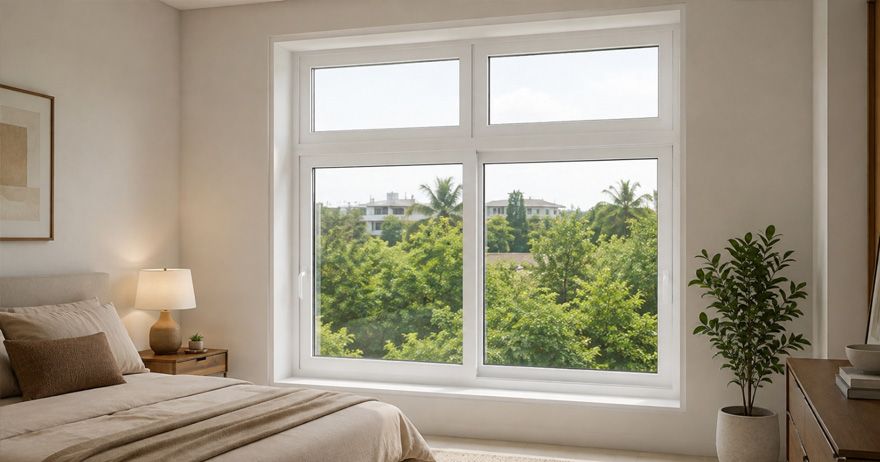
What Are uPVC Combination Windows?
As the name suggests, uPVC combination windows combine 2 or more window styles or typologies made from uPVC profiles into a single integrated window.
Why Choose Combination Windows for Your Home?
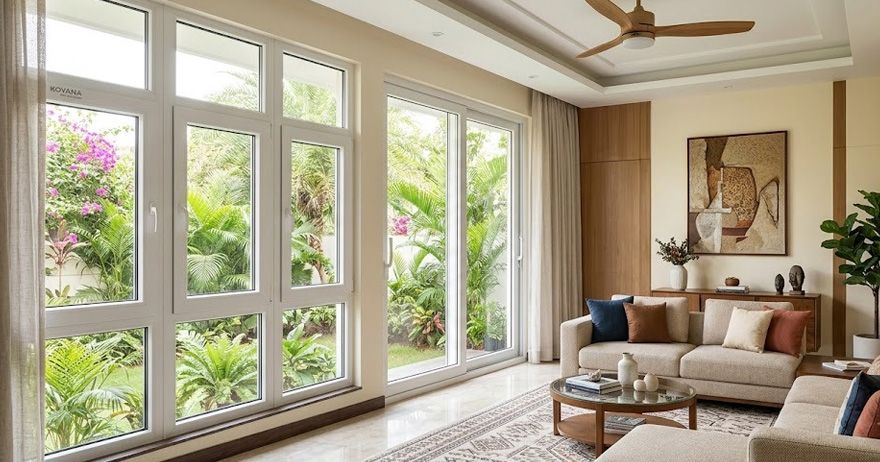
Combination Windows give you the flexibility to customise your facade’s aesthetics and functionality according to your needs. Combination windows work well when you need a balance of light and ventilation inside your home, reducing unwanted heat transfer and cooling and resulting in energy savings. Instead of relying on a single window typology and adjusting your needs around it, you can choose from 2 or more combinations, giving you flexibility in your light and ventilation.
For instance, if you need a 12 ft floor-to-ceiling window but do not need or have the provision for a balcony or window railing, yet you want something to function as a railing, the best option is to have fixed windows equivalent to the dimensions of a railing (say 4 ft height), and the above can be either a casement window or a sliding window.
Popular Types of uPVC Combination Windows
The number of combinations of 2 or more uPVC windows is endless. While we suggested one already, here are a few more for you to
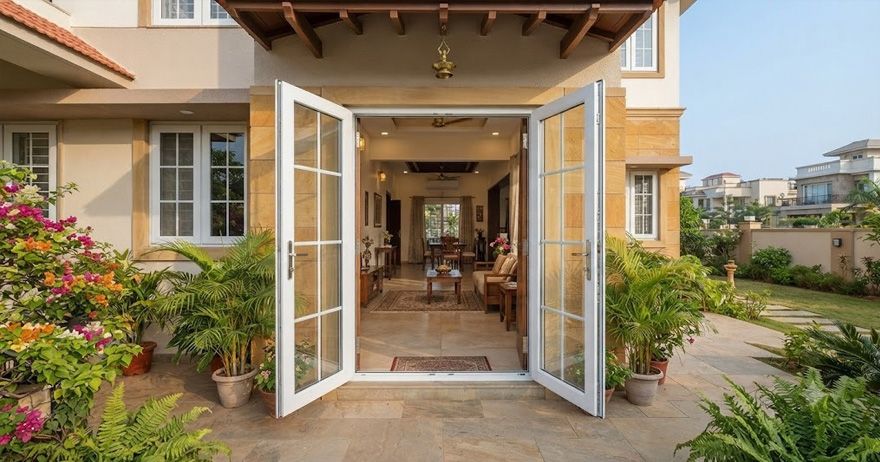
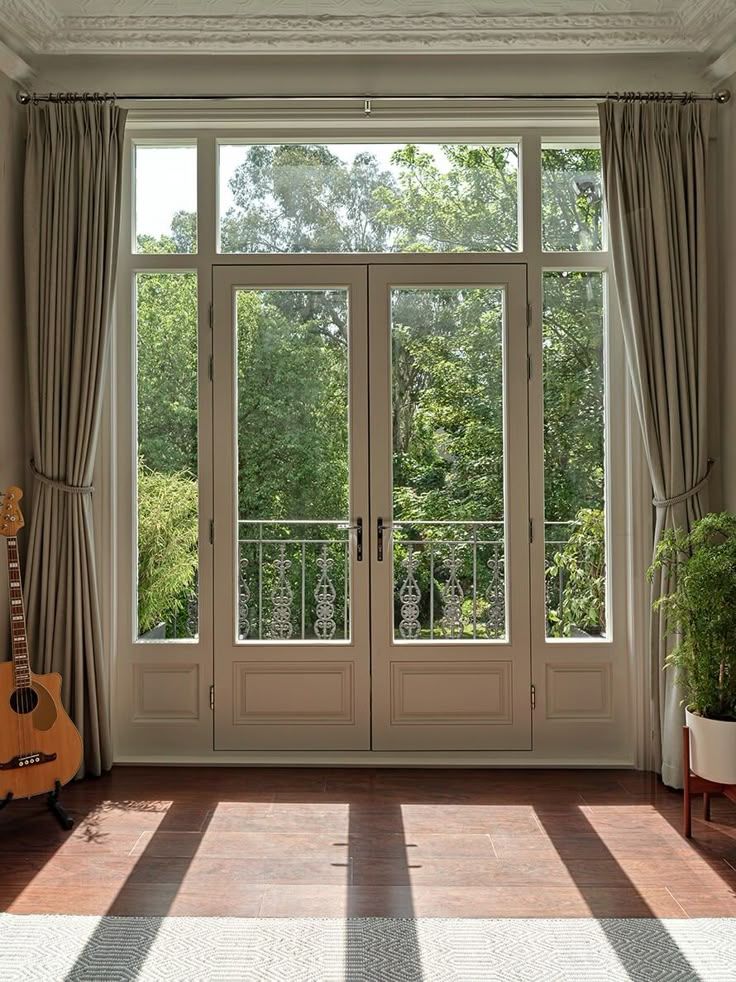
Fixed + Casement + Fixed – This combination is called a French Window with Sidelights, where a fixed glass panel is paired on either side with an operable casement section.
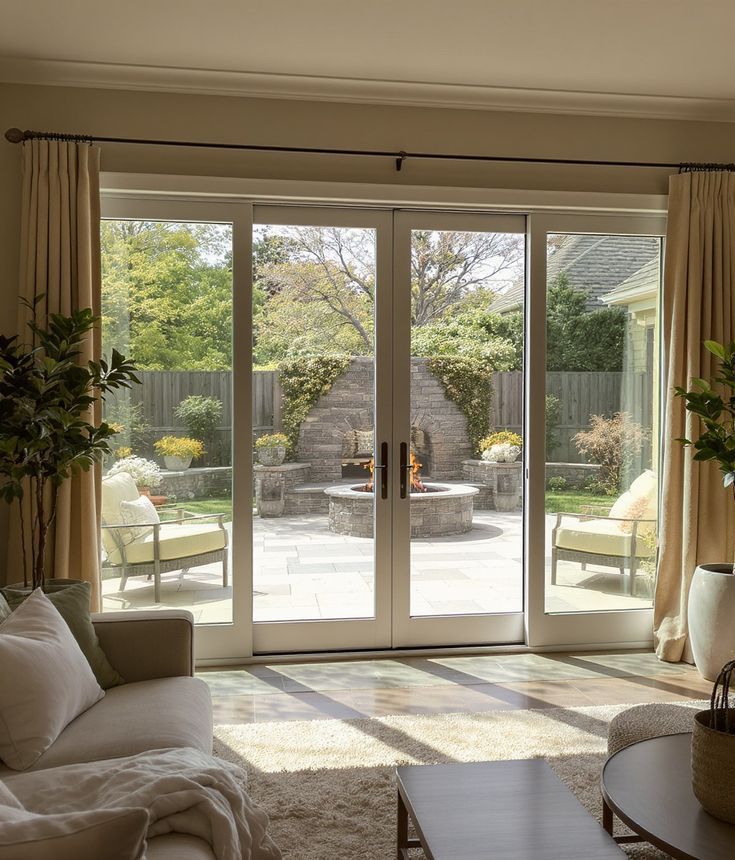
Fixed + Sliding + Fixed – This combination of Fixed and sliding windows is called a Sliding Window with Sidelights, in which a fixed panel on each side is paired with one or more sliding sashes.
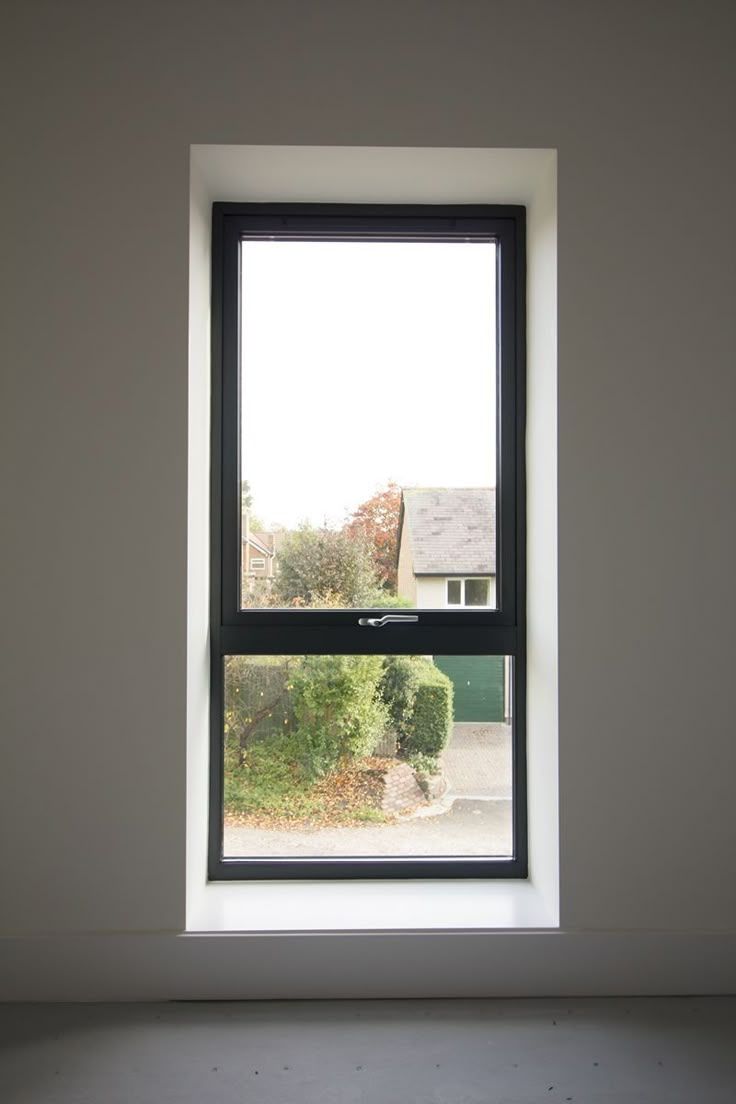
Top-Hung + Fixed – A top-hung opening section paired with a fixed glass panel below, often used where ventilation is needed without opening the entire window. Usually found in office buildings or residential apartments with an uninterrupted facade.
Vertical Slider + Fixed + Vertical Slider – A larger combination where operable vertical sliding windows flank a fixed central panel. Usually seen in bay windows.
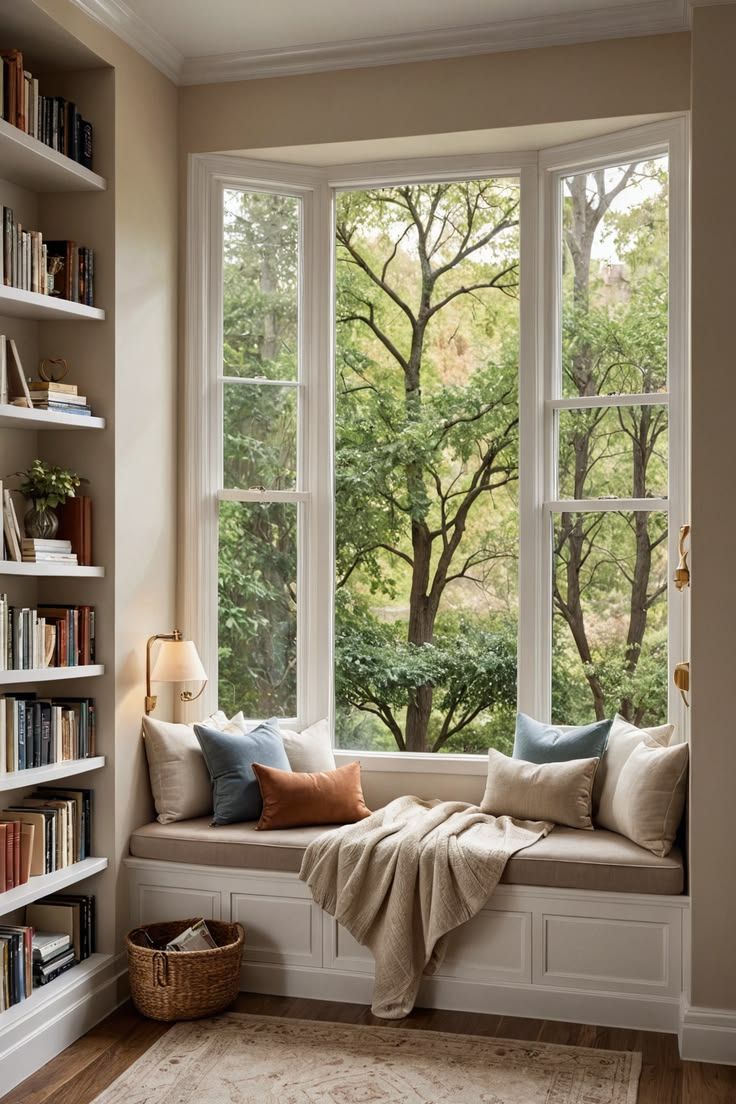
Best Combination Window Designs for Different Rooms
There is no single or limited answer to that question. This is because no two rooms or homes require the same amount of ventilation, light, thermal insulation, or sound insulation, depending on the window's direction or the house's geographic location. Your home layout and aesthetics also influence what combination suits your home. Therefore, it is in our mutual best interest to speak with your architect first and consult us on the best combination of window designs for your room(s).
uPVC Combination Windows vs Standard Windows
| Factor | uPVC Combination Windows | Standard uPVC Windows |
|---|---|---|
| Configuration | Combines two or more window typologies such as fixed casement sliding or top-hung sections within the same opening | Typically uses a single-window typology throughout the opening |
| Design Flexibility | Offers greater flexibility to create different configurations based on the size shape and requirements of the opening | Has fewer configuration options as the opening generally follows a single window style |
| Ventilation | Allows different sections to serve different ventilation requirements depending on the combination of operable typologies used | Ventilation is determined primarily by the opening mechanism of the chosen window type |
| Natural Light | Combines large fixed-glazed and operable sections to balance daylight ventilation and views | The amount of glazing and ventilation depends mainly on the selected window typology |
| Large Openings | Particularly useful for larger openings where a single window type may not adequately meet all functional requirements | Better suited to openings where a single-window typology meets the requirements |
| Aesthetic Possibilities | Creates more scope for customised layouts proportions and visual divisions within a single opening | Generally offers a more uniform and straightforward appearance |
| Best Suited For | Any room with multiple functional requirements | Everyday residential openings where a straightforward window solution is sufficient |
| Complexity | Requires more planning because multiple window typologies need to work together within the same opening | Simpler to specify manufacture and install when the opening has straightforward requirements |
| Overall Advantage | Greater functional and design flexibility within a single window opening | Simplicity and practicality for standard window requirements |
Glass Options for Combination Windows
| Glass Option | Suitable For | Why |
|---|---|---|
| Non-Toughened / Annealed | Standard-sized windows and smaller glazing areas | Suitable where very large glazing sizes are not required and standard glass performance is sufficient |
| Toughened | Large windows sliding doors/windows façades and staircases | Better suited to larger glazing sizes and applications requiring greater resistance to impact and thermal stress |
| Non-Toughened Laminated | Large windows balconies and railings | Holds broken glass together making it suitable where post-breakage safety is important |
| Toughened Laminated | Large balconies façades railings and larger glazed areas | Combines the benefits of toughened and laminated glass for larger glazing with enhanced safety and strength |
| Non-Toughened DGU | Homes and spaces with noisy surroundings | Provides the benefits of double glazing including improved thermal and acoustic performance |
| Toughened DGU | Larger windows homes façades and spaces needing better insulation | Combines toughened glass with DGU construction making it suitable for larger glazed areas where safety and insulation are both important |
Things to Consider Before Choosing a Combination Window
| Factor | What to Consider | ||
|---|---|---|---|
| Geography & Climate | Consider the home's location and typical weather conditions including heat rainfall humidity wind exposure and coastal conditions. These factors can influence the choice of glass hardware sealing and overall window performance. | ||
| Elevation & Orientation | Window direction and elevation affect exposure to sunlight heat wind and rain. Highly exposed elevations may require different glass hardware sealing and performance than sheltered locations. | ||
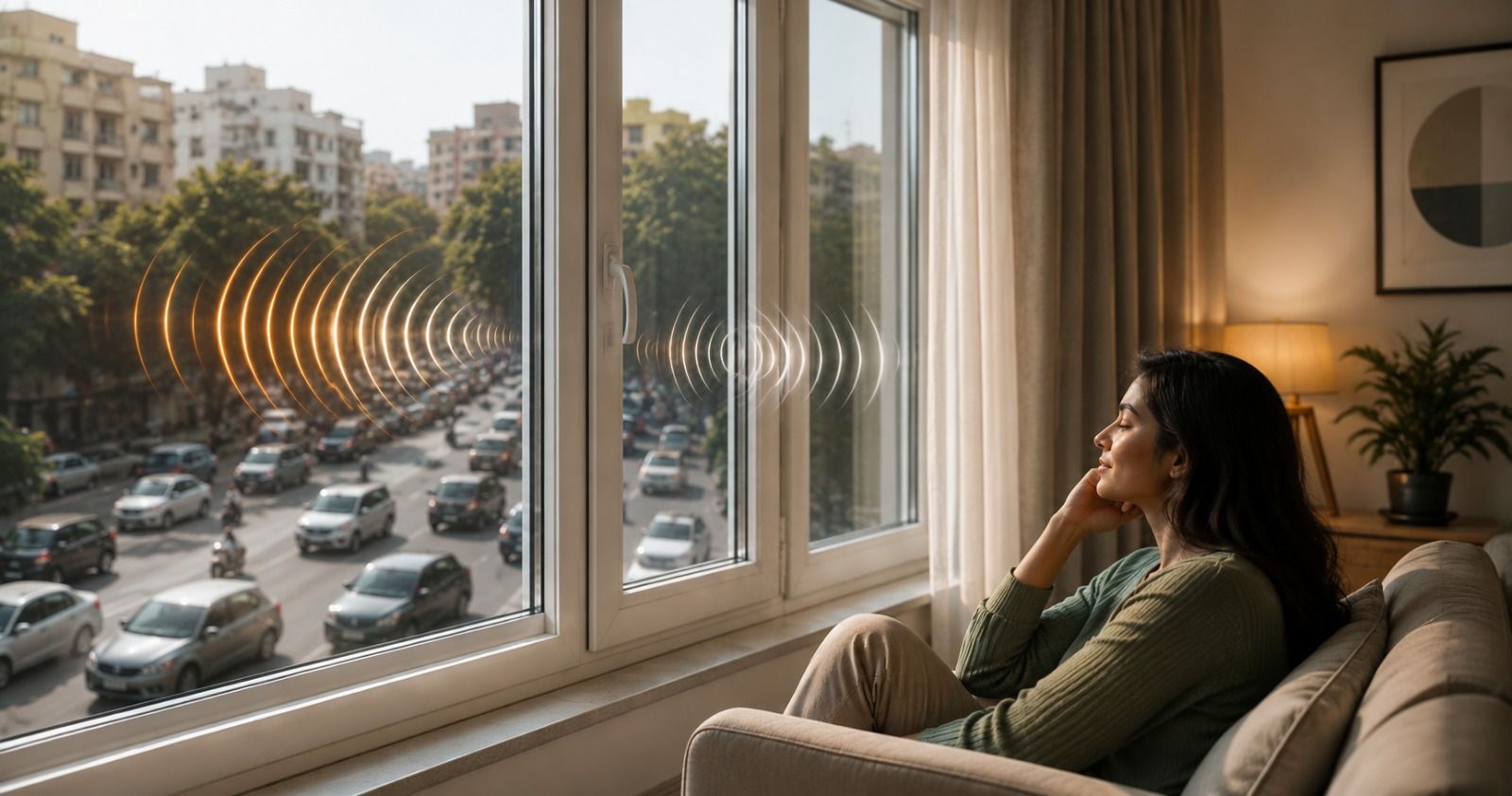
| Surroundings & External Exposure | Consider whether the window faces a busy road neighbouring building garden balcony or open landscape. This affects the need for sound reduction privacy ventilation views and glazing area. | ||
| Room & Intended Use | Each room has different priorities. Living rooms may need daylight and views | bedrooms may need privacy and ventilation | and kitchens may need better airflow. Choose the combination accordingly. |
| Opening Size & Architectural Design | The dimensions and proportions of the opening along with the elevation design determine how much glazing can be accommodated and which typologies can work together without compromising the façade's visual balance. | ||
| Ventilation & Natural Light | Decide how much of the opening needs to remain fixed and how much needs to be operable. This helps balance uninterrupted daylight and views with the amount of ventilation the space requires. | ||
| Glass & Performance Requirements | Select glass based on the opening size location and performance requirements. Consider factors such as safety acoustic insulation solar control and thermal performance before finalising the combination. | ||
| Usage Accessibility & Maintenance | Consider how often the window will be operated who will use it and whether all sections can be comfortably reached for opening cleaning and future maintenance. |
Common Mistakes to Avoid When Installing Combination Windows
| Mistake | What Can Go Wrong | |
|---|---|---|
| Installing Without Checking the Opening | If the opening is not checked for dimensions level plumb and structural readiness the finished window may not sit correctly resulting in alignment and fitting problems | |
| Inadequate Support for the Frame | Combination windows may have multiple sections and significant glass weight. Insufficient support or poorly positioned fixings can stress the frame and affect long-term stability. | |
| Incorrect Packing & Fixing | Packers and fixing points need to be positioned correctly to distribute the load and keep the frame stable. Poor packing or fixing can lead to frame movement distortion or operational problems | |
| Poor Joining of Window Sections | Where different window sections meet incorrect joining or alignment can create gaps uneven sightlines and weak points in the overall installation | |
| Inadequate Sealing at Joints & Perimeter | Poorly sealed junctions between sections or around the frame can allow air dust and water to enter particularly during heavy rain or strong winds | |
| Incorrect Drainage Provision | Drainage paths must remain clear and correctly positioned so that water collected within the window system can exit safely rather than accumulate inside the frame or enter the building | |
| Damage During Handling & Installation | Large combination windows can be difficult to transport and position. Rough handling can damage glass profiles hardware seals or finished surfaces before the window is even put into use | |
| Allowing Finishing Work to Interfere | Plaster tiles flooring or other finishing materials should not cover drainage paths restrict sash movement or make hardware and serviceable components inaccessible | |
| Not Testing the Completed Installation | After fixing the window | test every operable section for smooth movement alignment locking sealing and drainage. Inspect the overall finish before considering the installation complete. |
Why uPVC Combination Windows Are Ideal for Indian Homes
India’s diverse climate and architectural styles mean that the same window configuration may not work equally well for every home. Choosing combination windows gives you the flexibility to select different window typologies within the same opening, allowing you to balance natural light, ventilation, thermal comfort, and sound insulation based on your home’s location, orientation, and surroundings. Plus, uPVC offers exceptional durability, superior thermal and acoustic insulation, and requires virtually no maintenance. They withstand extreme weather without rotting, rusting, or fading, making them a cost-effective, long-lasting choice for modern homes.
Whether your home faces harsh sunlight, heavy monsoons, busy streets, or an open landscape, you can configure the window to suit the conditions of that particular space rather than adapting your needs to a single window typology. This makes combination windows a practical choice for Indian homes, where climate, geography, room requirements and façade design can vary significantly from one home to another.
Final Thoughts
Combination windows give you the freedom to move beyond a single window typology and create an opening that works around your home, rather than making your home work around the window. From balancing light and ventilation to responding to the elevation, room requirements, surroundings and climate, the right combination can bring both functionality and visual flexibility to the space.
And there is no fixed formula for what a combination window has to look like. With IndiFrame, you can bring your desired combination to life—whether you want to combine fixed, casement, sliding, top-hung or other window typologies. Connect with IndiFrame to explore the possibilities and create a combination that works for your home, design, and needs.