



What Are Soundproof Windows?
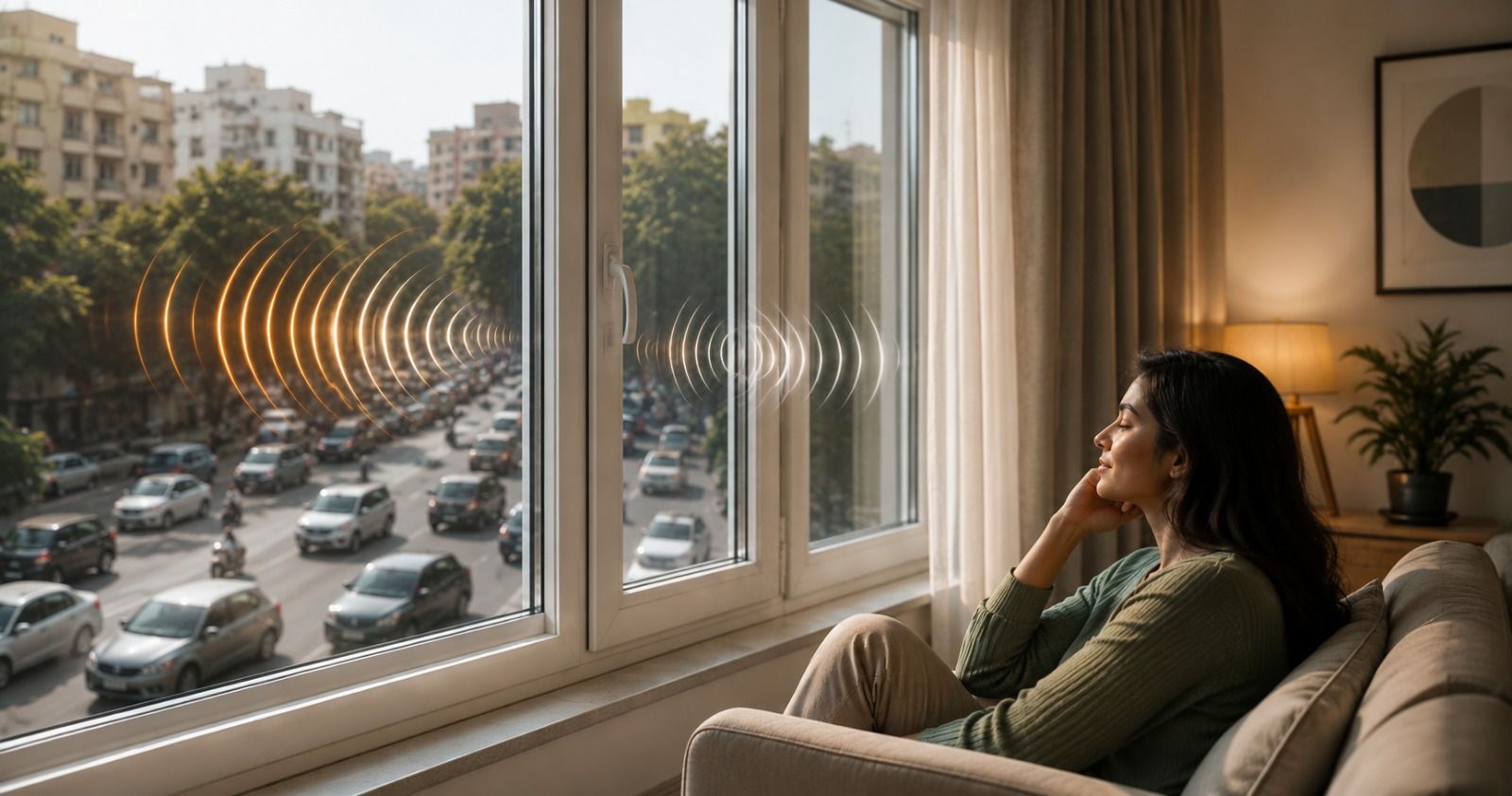
Soundproof windows reduce outside noise by combining high-performance glazing, well-engineered uPVC profiles, precision fabrication, insulated air gaps, and airtight sealing systems. These components work together to weaken sound vibrations before they enter a room. These features work together to absorb, block, and weaken sound waves before they enter a room. Modern soundproof uPVC windows are especially effective at blocking traffic and construction noise, as well as urban disturbances, because they minimise vibration transfer and eliminate air leaks. While no window is completely soundproof, high-performance acoustic window systems can significantly improve indoor comfort and create a quieter living environment.
How Sound Travels Through Windows
Sound travels through the air as vibrations. When these sound waves reach a window, they can enter a room in three primary ways: through the glass, through gaps around the window, and through the frame.
The glass is the largest part of any window and the main path for sound transmission. When sound waves hit the glass, the glass vibrates, allowing those vibrations to pass through and become audible indoors. Thinner glass generally transmits more sound than thicker glass.
Sound also enters through small gaps between the window sash and frame. Even tiny openings can act as direct pathways for airborne noise, allowing external sounds to bypass the glass altogether.
The window frame can also transmit sound. Vibrations from outside can travel through the frame material and contribute to the overall noise heard indoors, particularly if the frame itself offers little resistance to sound transmission.
The Science Behind Window Sound Insulation
Window sound insulation is based on reducing the amount of sound energy that passes through a window system. Since sound travels as vibrations, these vibrations must either be blocked, absorbed, or weakened before they reach the indoor space.
When sound waves strike a window, part of the energy is reflected, part is absorbed by the window material, and the remaining portion passes through as vibrations. The amount of sound transmitted depends on the complete window system, including the type of glass, the quality of the uPVC profile, the precision of fabrication and installation, the number of glazing layers, the air gap between panes, and how effectively the window seals against air leaks. All of these components work together to determine the overall acoustic performance.
Different sound frequencies also behave differently. High-frequency sounds, such as bird calls or conversations, are generally easier to reduce. In contrast, low-frequency sounds, such as heavy traffic, construction equipment, or aircraft noise, contain longer wavelengths and require more advanced window systems to limit their transmission.
Because sound can travel through every component of a window—not just the glass—the overall acoustic performance depends on how the entire window system responds to sound vibrations. Even if one component performs well, sound can still enter through other parts of the window if they offer less resistance.
How Double Glazed Windows Reduce Noise
Double-glazed windows are two-glass-paned windows with an air- or gas-filled gap separating the panes that helps reduce noise. Instead of sound passing directly through a single pane, it must travel through multiple layers, which weakens sound vibrations before they reach the indoors.
The insulating gap between the two panes acts as a barrier against outside disturbances, helping reduce the intensity of traffic, construction, and other environmental noise. This layered construction creates a quieter and more comfortable indoor environment than single-glazed windows.
IndiFrame offers 20mm ± 0.5mm double glazing for sliding, slide-and-fold, tilt-and-turn, and casement windows.
Why Acoustic Glass Performs Better Than Regular Glass
Acoustic glass is specifically engineered to reduce sound transmission more effectively than standard glass. While regular glass mainly acts as a physical barrier, acoustic glass is designed to absorb and dampen sound vibrations as they pass through the window.
It typically consists of more than 2 glass panes bonded with a special acoustic interlayer. This interlayer disrupts sound waves, reducing the amount of vibration that passes through the glass. As a result, acoustic glass is particularly effective at reducing everyday noise from traffic, construction, aircraft, and urban activity.
Unlike standard glass, which transmits vibrations more readily, acoustic glass is designed to perform across a wider range of sound frequencies, including many low-frequency noises that are more difficult to control. When combined with a high-quality window system, it delivers significantly better acoustic performance, creating a quieter indoor environment.
The Role of Airtight Seals in Noise Reduction
Even the highest-performing glass cannot effectively reduce noise if sound can enter through gaps around the window. Airtight seals play a critical role by closing the small gaps between the window sash and frame, preventing airborne sound from leaking into the room.
When a window is closed, the sealing system creates a continuous barrier around its perimeter. This helps limit the direct passage of sound through joints and openings that would otherwise compromise the window's acoustic performance.
The effectiveness of these seals depends on their quality, durability, and the precision with which the window is manufactured and installed. Worn, damaged, or poorly fitted seals can allow sound to bypass the glazing, reducing the overall noise insulation of the entire window system.
Soundproof Windows vs Standard Windows
| Feature | Soundproof Windows | Standard Windows |
|---|---|---|
| Glass | Double-glazed with acoustic or laminated glass | Usually single glazing or standard double glazing |
| Noise Reduction | Designed to reduce external noise significantly | Provides limited sound insulation |
| Air Gap | Optimised air or gas-filled gap between panes to reduce sound transmission | Smaller or no insulating gap |
| Sealing | Airtight seals minimise sound leakage | Basic seals may allow noise through gaps |
| Frame | Precision-engineered frames designed to limit vibration and air leakage | Standard frames with lower acoustic performance |
| Performance | Reduces a wider range of sound frequencies including traffic and urban noise | Primarily acts as a weather barrier with minimal acoustic control |
| Indoor Comfort | Creates a quieter more peaceful living environment | Outside noise remains more noticeable indoors |
| Best Suited For | Homes near busy roads airports railways or commercial areas | Homes in relatively quiet neighborhoods |
How Much Noise Can Soundproof Windows Reduce?
Depending on the glazing specification and the overall window system, IndiFrame's sound-insulated uPVC windows can reduce external noise by up to 30–40 dB. While no window is completely soundproof, this level of noise reduction significantly improves indoor comfort in most residential environments.
Best Soundproof uPVC Windows for Homes
The best soundproof uPVC windows are those that provide an airtight seal when closed while accommodating high-performance glazing. Among the different window styles we offer, casement windows generally provide better sound insulation than sliding windows because they close by compressing against the frame, creating a tighter airtight seal. Their dual-layer gasket system helps minimise sound leakage around the sash, making them more effective at reducing external noise. Tilt-and-turn windows and fixed windows also offer excellent acoustic performance for the same reason.
Sliding windows also provide good sound insulation when paired with high-performance glazing and quality sealing systems. However, because the sashes slide rather than compress tightly against the frame, they typically do not achieve the same level of airtightness as casement windows.
Regardless of the window type, the overall acoustic performance depends on the complete window system. Double glazing, acoustic glass, multi-chamber uPVC profiles, airtight gaskets, and precision installation all help reduce sound transmission and create a quieter indoor environment.
Are Noise-Proof Windows Worth the Investment?
For homes exposed to constant external noise, soundproof windows can be a worthwhile long-term investment. While they typically cost more than standard windows, they offer benefits that extend beyond noise reduction. By creating a quieter indoor environment, they can improve everyday comfort, enhance privacy, and make living or working spaces more conducive to relaxation and concentration.
The value of noise-proof windows is especially noticeable in homes located near busy roads, railway lines, airports, schools, or commercial areas, where outside noise is a persistent concern. In addition to reducing sound transmission, many soundproof window systems improve thermal insulation and energy efficiency, helping maintain comfortable indoor temperatures year-round.
Ultimately, the return on investment depends on the quality of the complete window system. High-performance glazing, well-engineered uPVC frames, airtight seals, and proper installation work together to deliver lasting acoustic performance, making soundproof windows a practical upgrade for homeowners seeking greater comfort and peace indoors.