



What Are Tilt & Turn Windows?
Scandinavian architecture often features tilt-and-turn windows, but German engineers originated them. German hardware manufacturers in the early 20th century developed a mechanism that lets a single window sash both tilt inward for controlled ventilation and swing inward for full opening. By introducing this system, they revolutionised window operation and paved the way for the tilt-and-turn design. People adopted it widely across Europe because it offers practicality, energy efficiency, and ease of use, especially in regions with demanding climates.
How Do Tilt & Turn Windows Work?
1. Locked Position (Handle Down)
When the handle is pointed downward, the window remains fully locked. Multiple locking points engage around the frame, creating a secure seal that improves insulation, weather resistance, and security.
2. Turn Mode (Handle Horizontal)
Rotate the handle 90° to the horizontal position, and the window opens inward from the side like a conventional casement door. This provides maximum ventilation, makes cleaning the exterior glass easier from inside the home, and allows for a wider opening when required.
3. Tilt Mode (Handle Up)
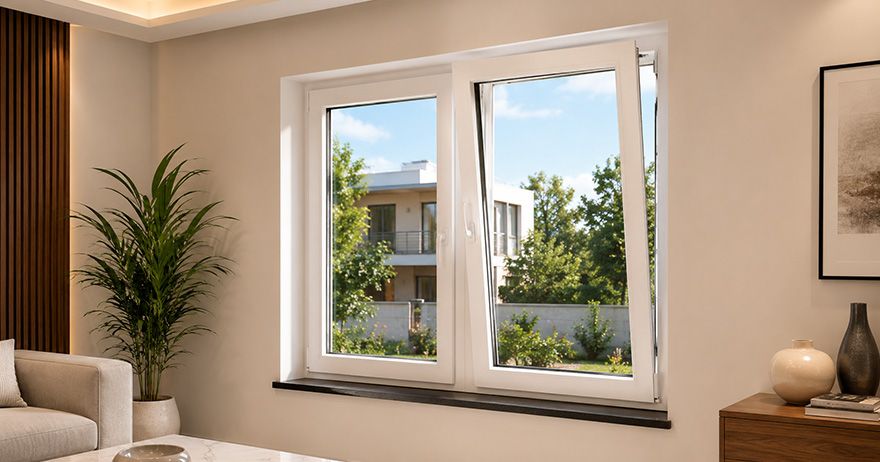
Turn the handle another 90°, so it points upward, and the top of the window tilts inward while the bottom stays securely locked. This creates a controlled opening that allows fresh air to circulate without fully opening the window, making it ideal for everyday ventilation, light rain, or added security while airing out the room.
Benefits of Tilt and Turn Windows
1: Better Ventilation Throughout the Year
The tilt position allows warm air to escape and fresh air to enter gently, even during light rain. For example, many homeowners in cities such as Mumbai use the tilt setting during the monsoon season to allow ventilation while preventing raindrops from entering their living spaces. The turn position fully opens the window for complete air exchange within minutes.
2: Improved Home Security
Tilt-and-turn windows use multi-point locks around the frame, offering enhanced resistance to forced entry compared to standard single-point locking windows. For example, even when the window is set to the ventilation tilt position, the bottom and side locks remain securely engaged. This means that, unlike traditional casement windows that may be vulnerable when partially open, the tilt feature provides ventilation without substantially compromising home security.
3: Energy Efficient Windows for Homes
Compression seals and tight hardware prevent air leaks, thereby improving insulation and helping to maintain more stable indoor temperatures. For example, homeowners using tilt-and-turn windows with high-quality double- or triple-glazing often experience reduced summer heat gain and reduced winter heat loss, resulting in increased indoor comfort and lower energy bills.
4: Easy Cleaning and Maintenance
The inward-opening turn mode allows homeowners to clean the window's exterior pane from inside the house, simplifying maintenance and eliminating the need for ladders. For instance, residents living in high-rise apartments can conveniently access both sides of the glass without leaning out of the window or relying on professional cleaning services, thereby enhancing safety and making routine cleaning tasks much easier.
5: Modern Design for Contemporary Homes
With minimalist lines and large glass panels, tilt-and-turn windows provide a sleek, modern aesthetic well-suited to contemporary Indian homes. Their design offers unobstructed views and thin frames, aligning with the architectural preferences of many urban Indian residences seeking both style and functionality.
Why uPVC Tilt & Turn Windows Are Popular in India
India's growing preference for uPVC Tilt & Turn Windows reflects the way people live, build, and experience their surroundings.
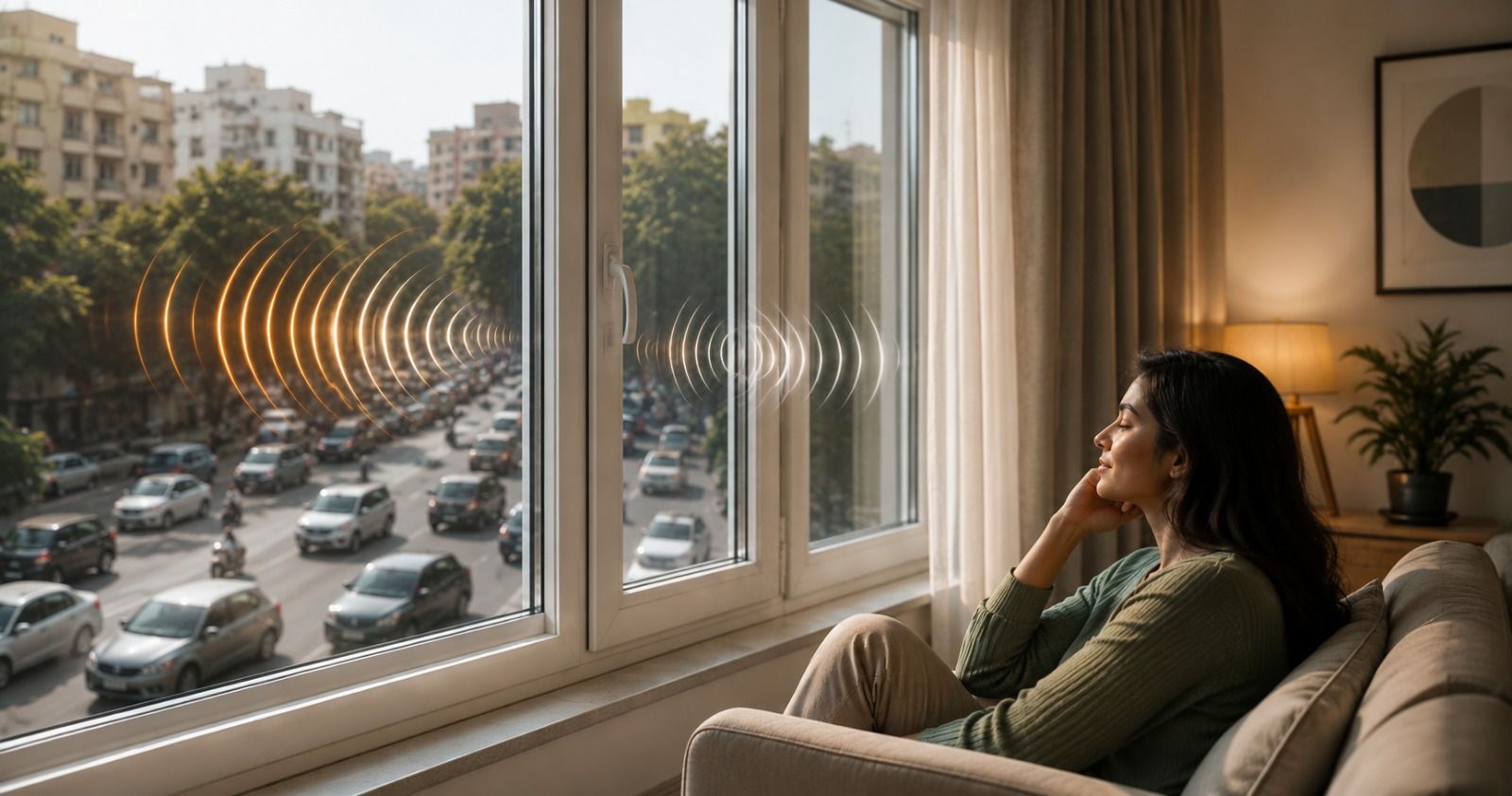
In many Indian cities, people contend with traffic noise, dust, pollution, and crowded neighbourhoods. Keeping windows fully open often invites these elements indoors, while shutting them can make spaces feel stuffy. The tilt function overcomes this challenge by letting you open the window slightly at the top, bringing in fresh air without creating a large opening. This feature proves especially useful during light rain, at night, or whenever you want ventilation without compromising comfort or security.
India's climate also drives this choice of window. From scorching summers and humidity to intense monsoons, homeowners need windows that adapt to changing weather. The tilt mode provides controlled ventilation during hot, humid periods, while the turn mode lets you open the window fully to maximise airflow. When you close it, the sash compresses tightly against the frame, blocking out rain, wind, and dust.
The inward-opening design allows both sides of the glass to be cleaned safely from inside the home, making it especially practical for high-rise apartments. When fully opened, the window also enables rapid air circulation, helping refresh indoor spaces more effectively.
Tilt & Turn vs Regular Windows
| Feature | Tilt & Turn Windows | Regular Windows |
|---|---|---|
| Opening Style | Opens in two ways with tilt and turn modes | Opens outward or inward on side hinges in a single motion |
| Ventilation | Controlled ventilation in tilt mode and maximum airflow in turn mode | Provides maximum airflow only when fully opened |
| Rain Protection | Tilt position allows ventilation while helping reduce rain entry during light showers | Usually needs to be closed during rain to prevent water ingress |
| Safety | Tilt mode allows ventilation while limiting outside access and reducing the risk of falls for children | Must be opened fully for ventilation which can raise safety concerns |
| Cleaning | Inward-opening sash makes both sides of the glass easy to clean from inside | Exterior glass may be difficult to clean on upper floors |
| Clearance Required | Requires indoor clearance when opened in turn mode | Requires outdoor clearance when opened outward |
| Sealing | Multi-point locking around the frame creates a tighter seal | Good sealing but typically locks at fewer points |
| Noise Reduction | Tighter sealing can help improve acoustic performance | Provides noise reduction depending on frame and glazing specifications |
| Security | Multi-point locking system enhances security | Generally uses fewer locking points than tilt and turn systems |
| Best For | High-rise apartments urban homes noisy dusty areas and varying weather conditions | Villas independent homes and spaces where simple operation is preferred |
Are Tilt & Turn Windows Worth the Investment?
For homeowners and developers seeking long-term value, Tilt-and-Turn windows can be a worthwhile investment. Priced from ₹800 per sq. ft., uPVC frames combine controlled ventilation, weather protection, security, easy maintenance, and improved acoustic and thermal performance within a single window system.
Unlike conventional windows that require trade-offs, Tilt and Turn windows let you switch between secure everyday ventilation and full opening as your needs change. The versatility of tilt-and-turn windows makes them well-suited to India’s diverse climates and dense urban landscapes, making them a practical choice as homeowners’ needs continue to change.